The best focus and concentration tools match the kind of help you need: practical exercises, a structured plan, ADHD-oriented strategies, or a broader look at what disrupts attention. Focus: Mastering Attention with Mental Clarity is my best overall pick for readers seeking a broad guide, while Five-Minute Focus stands out for short practice sessions and Concentration and Focus Training Grids for hands-on attention drills. The main tradeoff is between reading about focus and practicing specific techniques; some options also address ADHD or learning needs more directly than others. No single tool suits every routine or source of distraction. Read on for the full breakdown and a guide to choosing the format and approach that fit you.

Get workout gear delivered free with Prime
- Fast, free delivery on millions of items
- Prime Video, Amazon Music and more included
- Member-only deals all year
Complete the kit


Key Takeaways
- Broad guidance versus practice is the main split: Focus: Mastering Attention with Mental Clarity offers a wide-ranging starting point, while Five-Minute Focus and Concentration and Focus Training Grids emphasize doing short exercises.
- Short sessions can lower the barrier to starting: Five-Minute Focus is suited to readers who want small, repeatable practice rather than a long study plan.
- ADHD-specific titles serve a narrower purpose: ADHD Tools for Men and The Focus Formula for ADHD address attention through an ADHD-oriented lens, unlike the general concentration guides.
- Formats shape the experience: Improve Memory & Focus: The Practice Workbook and Concentration: 90+ Activities to Improve Focus center on active work; Alpha, Beta and Gamma Waves for Focus and Productivity takes an audio-based approach.
- Understanding distraction is different from training attention: Stolen Focus offers a wider discussion of attention, while titles such as Fast Focus and Powerful Focus emphasize personal routines and action.
| Focus: Mastering Attention with Mental Clarity, Eliminating Distractions, and Improving Concentration |  | Best for Broad Focus Fundamentals | Format: Book | Series: Thriving Life Books | Primary topic: Focus and attention | VIEW ON AMAZON | See Our Full Breakdown |
| Five-Minute Focus: Exercises to Reduce Distraction, Improve Concentration, and Increase Performance |  | Best for Short Practice Sessions | Format: Book | ASIN: 1641527110 | Practice format: Brief exercises | VIEW ON AMAZON | See Our Full Breakdown |
| Concentration: 90+ Activities to Improve Focus |  | Best for Activity Variety | Format: Book | ASIN: B0CZD9F1NG | Activity count: 90+ | VIEW ON AMAZON | See Our Full Breakdown |
| Concentration: Maintain Laser-Sharp Focus and Attention for 5 Hours or More |  | Best for Readers Seeking Extended-Focus Guidance | ASIN: B088FWRW23 | Format: Not specified | Product title: Concentration | VIEW ON AMAZON | See Our Full Breakdown |
| Powerful Focus: A 7-Day Plan to Develop Mental Clarity and Build Strong Focus |  | Best for a Defined One-Week Plan | Format: Book | ASIN: B099929M3M | Series: Productivity Series | VIEW ON AMAZON | See Our Full Breakdown |
| Focused Mind: Sharpen Your Concentration To Achieve More |  | Best for Goal-Oriented Focus | Format: Not specified | Primary focus: Concentration and mental focus | Stated aim: Sharpen concentration to achieve more | VIEW ON AMAZON | See Our Full Breakdown |
| Focus: Best Ways to Improve Your Concentration and Learning |  | Best for Students and Learners | Format: Not specified | Primary focus: Concentration and learning | Study coverage: Study strategies | VIEW ON AMAZON | See Our Full Breakdown |
| Alpha, Beta and Gamma Waves for Focus and Productivity |  | Best Audio Option for Focus Sessions | Format: Digital audio | Named wave types: Alpha, beta, and gamma | Audio approach: Binaural beats and brainwave entrainment | VIEW ON AMAZON | See Our Full Breakdown |
| Improve Memory & Focus: The Practice Workbook |  | Best for Short Daily Practice | Format: Practice workbook | Series: The 7 Step Reset Series | Daily practice time: 10–15 minutes | VIEW ON AMAZON | See Our Full Breakdown |
| ADHD Tools for Men: 9 Biology-Based Tools to Improve Focus Without Medication |  | Best for Men Seeking Non-Medication Strategies | Format: Book | Series: Men’s Mental Health Short Practical Guides | Series number: 4 | VIEW ON AMAZON | See Our Full Breakdown |
| The Focus Formula for ADHD: Tools to Manage Distractions, Improve Productivity, and Build Routines |  | Best for ADHD Routine-Building | Title: The Focus Formula for ADHD: Tools to Manage Distractions, Improve Productivity, and Build Routines | ASIN: B0H56D9JB1 | Subject: Focus and concentration for people with ADHD | VIEW ON AMAZON | See Our Full Breakdown |
| Concentration and Focus Training Grids: Training Yourself to Engage in the Present Moment and Increase Your Attention and Awareness |  | Best for Structured Attention Practice | Title: Concentration and Focus Training Grids: Training Yourself to Engage in the Present Moment and Increase Your Attention and Awareness | ASIN: 1499306628 | Format: Book | VIEW ON AMAZON | See Our Full Breakdown |
| Stolen Focus: Why You Can’t Pay Attention–and How to Think Deeply Again | 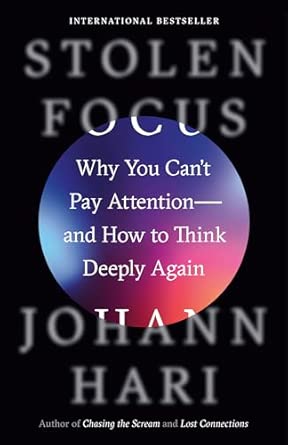 | Best for Understanding Modern Distraction | Title: Stolen Focus: Why You Can’t Pay Attention–and How to Think Deeply Again | ASIN: 0593138538 | Subject: Attention and focus | VIEW ON AMAZON | See Our Full Breakdown |
| Fast Focus: A Quick-Start Guide To Mastering Your Attention, Ignoring Distractions, And Getting More Done In Less Time! |  | Best for a Quick-Start Productivity Approach | Title: Fast Focus: A Quick-Start Guide To Mastering Your Attention, Ignoring Distractions, And Getting More Done In Less Time! | ASIN: 1520488874 | Format: Book | VIEW ON AMAZON | See Our Full Breakdown |
| focus and concentration tools for | Format | ASIN |
|---|---|---|
| Focus: Mastering Attention wit | Book | — |
| Five-Minute Focus: Exercises t | Book | 1641527110 |
| Concentration: 90+ Activities | Book | B0CZD9F1NG |
| Concentration: Maintain Laser- | Not specified | B088FWRW23 |
| Powerful Focus: A 7-Day Plan t | Book | B099929M3M |
| Focused Mind: Sharpen Your Con | Not specified | — |
| Focus: Best Ways to Improve Yo | Not specified | — |
| Alpha | Digital audio | — |
| Improve Memory & Focus: The Pr | Practice workbook | — |
| ADHD Tools for Men: 9 Biology- | Book | — |
| The Focus Formula for ADHD: To | — | B0H56D9JB1 |
| Concentration and Focus Traini | Book | 1499306628 |
| Stolen Focus: Why You Can’t Pa | — | 0593138538 |
| Fast Focus: A Quick-Start Guid | Book | 1520488874 |
More Details on Our Top Picks
Focus: Mastering Attention with Mental Clarity, Eliminating Distractions, and Improving Concentration
Focus: Mastering Attention with Mental Clarity, Eliminating Distractions, and Improving Concentration is the broadest starting point in this group: its stated scope brings attention, mental clarity, and distraction reduction together rather than centering on a short challenge or a large activity collection. That makes it a reasonable fit for readers who want a general introduction to focus habits. Compared with Five-Minute Focus, it does not promise brief exercises, so readers looking for ready-made, bite-sized practice may prefer that title. Its strength is also its limitation: the available description does not explain its specific methods, structure, or intended audience. I’d treat it as a topic-led introduction, not a proven step-by-step program, and choose it when the broad subject matters more than a clearly specified format.
Pros:- Covers concentration alongside mental clarity
- Addresses distraction reduction as part of focus
- Broad subject scope suits readers still defining their needs
Cons:- Available information does not identify particular methods or exercises
- No stated schedule or program structure to guide regular practice
Best for: Readers seeking a general introduction to concentration, mental clarity, and ways to reduce everyday distractions
Not ideal for: Readers who need described exercises, a fixed schedule, or evidence of specific techniques before choosing a focus guide
- Format:Book
- Series:Thriving Life Books
- Primary topic:Focus and attention
- Additional topic:Mental clarity
- Distraction coverage:Strategies for eliminating distractions
- Stated goal:Improve concentration
Our verdict“Choose this for a broad focus introduction, but pick Five-Minute Focus if you want explicitly described short exercises.”
Five-Minute Focus: Exercises to Reduce Distraction, Improve Concentration, and Increase Performance
Five-Minute Focus stands out for the format its title promises: brief exercises intended to reduce distraction and build concentration. That makes it a more practice-oriented choice than Focus: Mastering Attention with Mental Clarity, Eliminating Distractions, and Improving Concentration, whose description outlines broad themes but no exercise format. Short sessions can be easier to fit into a busy day, though the supplied information does not say how many exercises there are, what they involve, or how the book measures progress. Its performance goal may appeal to readers who want focus practice tied to getting more done, but it is not presented as a long-term curriculum. I’d favor it for people willing to try concise exercises; readers who want a defined multi-day plan may find Powerful Focus a clearer fit.
Pros:- Designed around short exercises that may fit into busy routines
- Targets distraction reduction directly
- Connects concentration practice with performance goals
Cons:- Available details do not describe the exercises or their progression
- No stated long-term schedule or specific audience
Best for: Busy students and working adults who can make room for brief, structured concentration exercises
Not ideal for: Readers seeking a detailed long-term curriculum or a clearly documented progression of techniques
- Format:Book
- ASIN:1641527110
- Practice format:Brief exercises
- Exercise duration:Five-minute sessions, as indicated by the title
- Primary focus:Reducing distraction
- Stated outcomes:Improve concentration and increase performance
Our verdict“Pick this if brief focus exercises suit your routine; choose Powerful Focus instead if you prefer a stated seven-day plan.”
Concentration: 90+ Activities to Improve Focus
Concentration: 90+ Activities to Improve Focus is the clearest choice here for readers who want a substantial number of activities rather than a general discussion of attention. Its stated collection of more than 90 activities gives it a different role from Five-Minute Focus, which emphasizes brief exercises but does not specify how many it contains. A large activity count may offer more ways to practice, yet the available description does not explain the activities, their difficulty, or whether they are intended for children or adults. That uncertainty makes this a less precise choice for buyers with a particular focus challenge. I’d choose it for variety and the freedom to sample different activities, while readers who want a defined schedule could be better served by Powerful Focus and its seven-day structure.
Pros:- Includes more than 90 activities
- Centers the material on improving focus
- Activity-led format offers an alternative to broad conceptual guides
Cons:- Available information does not describe the activities or their difficulty
- Intended audience and suggested sequence are not specified
Best for: Readers who prefer trying a wide range of focus activities and choosing which ones suit them
Not ideal for: Buyers who need age guidance, activity descriptions, or a clearly sequenced practice plan before selecting a book
- Format:Book
- ASIN:B0CZD9F1NG
- Activity count:90+
- Primary topic:Concentration
- Stated purpose:Improve focus
- Activity details:Not provided
Our verdict“Choose this for a large stated activity collection, not for a detailed program or clearly explained method.”
Concentration: Maintain Laser-Sharp Focus and Attention for 5 Hours or More
Concentration: Maintain Laser-Sharp Focus and Attention for 5 Hours or More makes a specific promise about sustained attention, setting it apart from the shorter-practice emphasis of Five-Minute Focus. That stated ambition may catch the eye of readers whose work involves long, uninterrupted periods. However, the supplied product information does not identify its format, techniques, or how it approaches a five-hour focus span, so the title alone cannot tell buyers whether its advice is practical or relevant to their routines. That is a larger information gap than with Powerful Focus, which at least specifies a seven-day plan. I’d regard this as a niche option for readers curious about extended concentration, not a reliable pick for those who need a transparent method, manageable practice steps, or detail about the material before buying.
Pros:- Focuses specifically on sustained attention
- Sets an explicit extended-duration goal in its title
- Offers a different emphasis from short-session exercise books
Cons:- Available data does not specify the product format
- No techniques, structure, or supporting details are provided
- The five-hour goal may not match readers seeking shorter, flexible focus sessions
Best for: Readers specifically looking for guidance framed around sustaining attention across extended work periods
Not ideal for: Buyers who need a clearly described format, practical techniques, or a transparent step-by-step structure
- ASIN:B088FWRW23
- Format:Not specified
- Product title:Concentration
- Primary topic:Focus and attention
- Stated duration goal:Five hours or more
- Techniques:Not specified
Our verdict“Consider this only if extended-focus guidance is your priority and you are comfortable with limited information about its approach.”
Powerful Focus: A 7-Day Plan to Develop Mental Clarity and Build Strong Focus
Powerful Focus is the most clearly time-bounded option in this set: its seven-day plan gives readers a stated route through material on mental clarity and stronger focus. That structure makes it easier to start than Concentration: 90+ Activities to Improve Focus, which offers a large activity count but no described sequence. It also differs from Five-Minute Focus: rather than foregrounding short exercises, this book frames its guidance as a week-long plan. The drawback is that the available description does not identify the techniques or explain what happens after day seven, so the brief timeline may not suit readers looking for a lasting, detailed curriculum. Its placement in the Productivity Series, Book 3, may also make it less direct for someone wanting a standalone focus resource.
Pros:- Provides a clear seven-day structure
- Targets both mental clarity and focus
- Part of the Productivity Series, identified as Book 3
Cons:- Available details do not explain the specific techniques
- A seven-day plan may be too brief for readers seeking ongoing guidance
- Series position may be less appealing to readers who prefer standalone resources
Best for: Readers who want a short, scheduled entry point for working on mental clarity and concentration
Not ideal for: Readers seeking a fully described technique set, a long-term program, or a standalone book without series context
- Format:Book
- ASIN:B099929M3M
- Series:Productivity Series
- Series position:Book 3
- Plan length:7 days
- Stated goals:Develop mental clarity and build strong focus
Our verdict“Choose this for a defined one-week starting plan, but look elsewhere if you need detailed methods or sustained long-term guidance.”
Focused Mind: Sharpen Your Concentration To Achieve More
Focused Mind is the most direct fit for readers who want to connect better concentration with getting more done. Its stated aim is to sharpen focus and cognitive abilities, making it a straightforward starting point rather than a workbook or a narrowly defined study guide. Compared with Focus: Best Ways to Improve Your Concentration and Learning, this title puts more emphasis on concentration as a route to achievement, while the latter also covers learning, procrastination, and creativity. The tradeoff is limited detail in the available description: it does not identify particular exercises, a program length, or a target audience. Readers who want a structured daily routine may prefer Improve Memory & Focus: The Practice Workbook, which specifies short daily sessions; this is better suited to someone seeking broad strategies without that format.
Pros:- Directly targets concentration and mental focus
- Connects sharper focus with achieving more
- Broad cognitive-skills framing may suit readers seeking general guidance
Cons:- Available description does not identify specific techniques or exercises
- No stated practice schedule or intended reader profile
- Less explicit coverage of study habits and procrastination than Focus: Best Ways to Improve Your Concentration and Learning
Best for: Readers who want general concentration strategies tied to personal or work goals, without needing a specified practice schedule
Not ideal for: Buyers who want documented exercises, a defined schedule, or detailed coverage of a particular focus challenge
- Format:Not specified
- Primary focus:Concentration and mental focus
- Stated aim:Sharpen concentration to achieve more
- Approach:Strategies for improving concentration
- Cognitive emphasis:Sharpening cognitive abilities
- Practice duration:Not specified
Our verdict“Choose this guide for broad, achievement-oriented focus advice, but pick a workbook if you want a clearly scheduled practice routine.”
Focus: Best Ways to Improve Your Concentration and Learning
Focus: Best Ways to Improve Your Concentration and Learning earns a distinct place for readers whose attention problems show up during studying or learning new material. Alongside concentration, it addresses study strategies, procrastination, and creativity, giving it a wider learning-centered scope than Focused Mind: Sharpen Your Concentration To Achieve More, which frames focus around accomplishing more. That breadth can help readers connect distraction with the habits surrounding a study session, rather than treating attention as an isolated skill. The tradeoff is that the available description gives no detail about specific exercises, structure, or how much space each topic receives. Readers wanting a hands-on daily format may find Improve Memory & Focus: The Practice Workbook easier to turn into a routine, while this guide is the better match for a broader mix of learning concerns.
Pros:- Pairs concentration guidance with learning and study strategies
- Addresses procrastination as a barrier to focused work
- Includes creativity among its focus-related topics
Cons:- Available description does not specify exercises or a step-by-step plan
- No practice duration or format details are provided
- Its wide topic range may be less targeted than a guide devoted to one specific focus problem
Best for: Students and independent learners who want concentration guidance alongside help with study habits and procrastination
Not ideal for: Readers seeking a defined exercise plan, a short daily workbook, or focus advice limited to workplace productivity
- Format:Not specified
- Primary focus:Concentration and learning
- Study coverage:Study strategies
- Additional topics:Procrastination and creativity
- Practice duration:Not specified
- Intended use:Improving concentration and learning
Our verdict“Pick this guide if you want focus advice connected to studying, procrastination, and creativity rather than concentration alone.”
Alpha, Beta and Gamma Waves for Focus and Productivity
Alpha, Beta and Gamma Waves for Focus and Productivity is the only audio-based option in this group, so it suits listeners who would rather start a study or work session with sound than read a guide or complete written exercises. Its use of binaural beats and brainwave entrainment is presented as support for concentration, mental clarity, and flow; those claims describe the intended experience, not a guaranteed result. Compared with Improve Memory & Focus: The Practice Workbook, this requires listening rather than active daily practice, but it offers less information about how to build skills over time. The available details do not specify runtime, track selection, or listening requirements, which makes it harder to judge fit for a particular routine. It makes most sense as an optional focus aid, not a substitute for structured training.
Pros:- Offers an audio-based alternative to books and workbooks
- Uses binaural beats and brainwave entrainment as its stated approach
- Designed around concentration, mental clarity, and study efficiency
Cons:- Available information does not provide track length or audio specifications
- The stated focus and flow benefits are not detailed as guaranteed outcomes
- Listening may not suit people who need silence or prefer active exercises
Best for: Students or desk workers who prefer audio during study or work sessions and are curious about binaural-beat focus tracks
Not ideal for: Readers who want evidence of a structured skill-building program, precise audio specifications, or a silent workspace
- Format:Digital audio
- Named wave types:Alpha, beta, and gamma
- Audio approach:Binaural beats and brainwave entrainment
- Stated focus:Concentration and mental clarity
- Additional intended use:Study efficiency and flow state
- Runtime:Not specified
Our verdict“Choose this audio product as a listening companion for focus sessions, not as a clearly structured concentration-training program.”
Improve Memory & Focus: The Practice Workbook
Improve Memory & Focus: The Practice Workbook stands out for making time commitment explicit: its guided training is designed for 10–15 minutes a day. That gives it a more actionable routine than Focused Mind: Sharpen Your Concentration To Achieve More, whose available details describe strategies but no schedule. Its scope also links memory, attention, mental clarity, and cognitive skills, which may appeal to readers who want more than concentration tips alone. The tradeoff is that the description does not name the exercises or explain how the seven-step sequence is organized, so buyers cannot judge the training style in advance. Compared with the audio-based Alpha, Beta and Gamma Waves for Focus and Productivity, this asks for active participation rather than passive listening. It is the clearest pick here for readers ready to practice regularly.
Pros:- Provides guided training rather than focus advice alone
- Sets a manageable daily practice target of 10–15 minutes
- Covers memory, attention, mental clarity, and cognitive skills
- Identified as part of The 7 Step Reset Series
Cons:- Available description does not list the workbook’s specific exercises
- The sequence and progression of the seven steps are not explained
- Daily practice requires more active participation than an audio focus aid
Best for: Readers who can set aside a brief daily block for guided practice targeting attention and memory
Not ideal for: People who prefer audio aids, want a detailed preview of exercises, or are unwilling to follow a recurring practice routine
- Format:Practice workbook
- Series:The 7 Step Reset Series
- Daily practice time:10–15 minutes
- Training style:Guided training
- Primary skills:Memory and attention
- Additional skills:Mental clarity and cognitive skills
Our verdict“Choose this workbook if a short, repeatable practice routine matters more to you than a detailed preview of the exercises.”
ADHD Tools for Men: 9 Biology-Based Tools to Improve Focus Without Medication
ADHD Tools for Men is the most specifically targeted guide in this set: it is framed for men with ADHD who want focus strategies that do not involve medication. Its promise of nine biology-based tools gives it a more defined scope than Focused Mind: Sharpen Your Concentration To Achieve More, which offers general concentration guidance without naming an audience or method. It also differs from Focus: Best Ways to Improve Your Concentration and Learning, whose topics include study habits and creativity rather than an ADHD-specific, men’s mental-health focus. That specificity is useful for readers seeking a relevant starting point, but the available description does not name the nine tools or explain their evidence, so buyers cannot evaluate the advice in advance. It is a self-help guide, not a replacement for individualized professional care.
Pros:- Clearly targets focus challenges in men with ADHD
- Promises nine practical, biology-based tools
- Explicitly focuses on approaches that do not involve medication
- Part of the Men’s Mental Health Short Practical Guides series
Cons:- Available description does not identify the nine tools
- The basis and evidence for the biology-based approaches are not detailed
- Its audience and non-medication focus may not match readers seeking broader or individualized guidance
Best for: Men with ADHD who want a practical, non-medication-focused guide to potential focus strategies
Not ideal for: Readers seeking medication guidance, individualized clinical care, or a focus guide not centered on men’s mental health
- Format:Book
- Series:Men’s Mental Health Short Practical Guides
- Series number:4
- Target audience:Men
- Focus:Nine biology-based tools for improving focus without medication
- Topic:Men’s mental health
Our verdict“Choose this guide if you are a man with ADHD seeking non-medication focus strategies, while looking elsewhere for clinical or individualized advice.”
The Focus Formula for ADHD: Tools to Manage Distractions, Improve Productivity, and Build Routines
ADHD-focused strategies and routine-building give this book a distinct place among the roundup’s general concentration guides. It is aimed at readers who want practical ways to manage distractions while creating more consistent work habits, rather than attention exercises alone. Compared with ADHD Tools for Men: 9 Biology-Based Tools to Improve Focus Without Medication, its described emphasis is broader productivity and routines, not specifically biology-based approaches or a particular audience. That makes it a plausible fit for readers looking for day-to-day structure, though the available description does not identify particular tools, exercises, or a step-by-step method. Readers who want a clearly defined practice format may prefer Concentration and Focus Training Grids. This pick is best approached as a topic-specific guide, with limited product details available to judge its depth or format.
Pros:- Addresses distraction management specifically for people with ADHD
- Connects focus strategies with productivity
- Includes routine-building as part of the focus approach
Cons:- The available description does not name specific tools or explain how to use them
- Format and other publication details are not provided
Best for: Readers with ADHD who want guidance centered on handling distractions and building steadier productivity routines.
Not ideal for: Readers seeking detailed evidence-based explanations, a specified set of exercises, or a clearly documented step-by-step program.
- Title:The Focus Formula for ADHD: Tools to Manage Distractions, Improve Productivity, and Build Routines
- ASIN:B0H56D9JB1
- Subject:Focus and concentration for people with ADHD
- Key focus:Managing distractions
- Additional focus:Productivity improvement
- Routine emphasis:Building better routines
Our verdict“Choose this if ADHD-aware distraction strategies and routine-building matter more to you than a clearly specified exercise program.”
Concentration and Focus Training Grids: Training Yourself to Engage in the Present Moment and Increase Your Attention and Awareness
Training grids and present-moment practice make this the most exercise-oriented choice in this group. Instead of framing focus mainly as a productivity problem, the book centers on practicing attention and awareness through grid activities. That gives it a more concrete practice angle than Stolen Focus, which examines broader reasons attention is difficult in modern life and discusses ways to reclaim deeper thinking. Readers who want background and cultural analysis may find that broader book more satisfying; those who prefer a repeatable task may gravitate here. The tradeoff is that the supplied description does not specify the number or difficulty of exercises, or how a reader should progress through them. It is a focused option for people willing to practice, but less clearly suited to someone seeking a wide-ranging productivity plan.
Pros:- Uses training grids as a practical focus exercise
- Centers attention and concentration rather than general productivity
- Emphasizes present-moment awareness
Cons:- The available description does not explain exercise count, progression, or difficulty
- Its grid-based approach may feel narrow to readers seeking varied focus strategies
Best for: Readers who prefer hands-on concentration practice and want activities that direct attention to the present moment.
Not ideal for: Readers looking primarily for an explanation of digital-era distraction or a broad productivity and routine system.
- Title:Concentration and Focus Training Grids: Training Yourself to Engage in the Present Moment and Increase Your Attention and Awareness
- ASIN:1499306628
- Format:Book
- Subject:Concentration and focus training
- Practice method:Training grid exercises
- Stated aim:Engage in the present moment
- Related skill:Attention and awareness
Our verdict“Pick this for a practice-first approach to attention, but choose a broader guide if you want more than grid exercises.”
Stolen Focus: Why You Can’t Pay Attention–and How to Think Deeply Again
Big-picture analysis of attention is the reason this book earns a different role from the roundup’s exercise-led options. It examines why focus is difficult in the digital age and pairs that analysis with strategies for restoring deeper thought and cognitive resilience. Compared with Fast Focus, which promises a quick-start route to ignoring distractions and getting more done, this is better suited to readers who want to understand the wider problem as well as consider ways to respond. The tradeoff is that its analytical framing may feel less direct to someone who simply wants a compact routine or a set of drills. The provided description also notes that some material may feel repetitive to readers already familiar with productivity writing. Choose it for context and perspective, not as a narrowly defined workbook.
Pros:- Examines attention challenges associated with the digital age
- Connects analysis of distraction with strategies for deeper thinking
- Addresses cognitive resilience as well as immediate focus
Cons:- May feel repetitive to readers familiar with productivity literature
- The described approach is broader and less exercise-specific than training-grid books
Best for: Readers who want to understand modern causes of distraction and explore ways to recover deeper thinking.
Not ideal for: Readers who want a short, exercise-based manual or who already know the common arguments in productivity literature.
- Title:Stolen Focus: Why You Can’t Pay Attention–and How to Think Deeply Again
- ASIN:0593138538
- Subject:Attention and focus
- Central topic:Modern attention challenges
- Context:Distraction in the digital age
- Stated aim:Reclaiming deep thinking
- Related focus:Cognitive resilience
Our verdict“Choose this for a broad account of why attention suffers and how to think more deeply, rather than a quick drill-based plan.”
Fast Focus: A Quick-Start Guide To Mastering Your Attention, Ignoring Distractions, And Getting More Done In Less Time!
Quick-start strategies and productivity goals set this guide apart for readers who want an action-oriented entry point. Its stated focus is mastering attention, ignoring distractions, and getting more done in less time, rather than exploring the wider causes of attention problems. That makes it a more direct alternative to Stolen Focus, whose appeal lies in analysis and deeper thinking. It also differs from Concentration and Focus Training Grids: the latter centers on a defined exercise method, while this title presents itself as a broader quick-start guide. The main tradeoff is depth; the supplied description notes that readers seeking advanced psychological techniques may find it limited. Specific methods and publication details are not provided, so buyers should not assume a particular framework beyond its stated practical focus.
Pros:- Positions itself as a quick-start approach to improving focus
- Targets distraction management directly
- Links attention control with productivity and mental discipline
Cons:- May lack depth for readers seeking advanced psychological techniques
- The available description does not identify specific strategies or exercises
Best for: Busy readers who want an introductory, action-oriented guide to handling distractions and improving work focus.
Not ideal for: Readers seeking advanced psychological techniques, detailed research, or a well-specified exercise program.
- Title:Fast Focus: A Quick-Start Guide To Mastering Your Attention, Ignoring Distractions, And Getting More Done In Less Time!
- ASIN:1520488874
- Format:Book
- Approach:Quick-start guide
- Core subject:Mastering attention
- Distraction focus:Ignoring distractions
- Productivity aim:Getting more done in less time
- Related skill:Mental discipline
Our verdict“Pick this for a direct introductory focus guide, but choose a deeper or more structured book if you want detailed methods.”

How We Picked
I compared the 14 titles by the kind of help they promise and how clearly a reader can put that help into practice. My criteria included clarity of focus, usefulness of exercises or routines, suitability for beginners, fit for specific needs such as ADHD or study, and the amount of commitment implied by the format. I also looked at whether a title functions mainly as a guide, a workbook, a set of activities, an audio aid, or a wider exploration of attention.
The ranking favors options with a clear audience and an approachable route to action, while still recognizing that a specialist tool can be the better choice for a specific reader. The broad guide Focus: Mastering Attention with Mental Clarity leads as the most versatile starting point; short exercises, grids, and workbooks rank well for readers who want active practice. ADHD-focused books, long-session claims, and audio tools rank according to how closely their distinct approach matches a buyer’s needs—not as universal substitutes for a general focus guide.
| focus and concentration tools for | Format |
|---|---|
| Focus: Mastering Attention wit | Book |
| Five-Minute Focus: Exercises t | Book |
| Concentration: 90+ Activities | Book |
| Concentration: Maintain Laser- | Not specified |
| Powerful Focus: A 7-Day Plan t | Book |
| Focused Mind: Sharpen Your Con | Not specified |
| Focus: Best Ways to Improve Yo | Not specified |
| Alpha | Digital audio |
| Improve Memory & Focus: The Pr | Practice workbook |
| ADHD Tools for Men: 9 Biology- | Book |
| The Focus Formula for ADHD: To | — |
| Concentration and Focus Traini | Book |
| Stolen Focus: Why You Can’t Pa | — |
| Fast Focus: A Quick-Start Guid | Book |
Factors to Consider When Choosing 14 Best Focus And Concentration Tools For
Before choosing, decide what kind of change you want from a focus tool. A book that explains attention, a workbook that prompts regular practice, and audio meant to support a work session solve different problems. These factors can help you choose a format you will actually use, rather than collecting advice that does not fit your day.
Choose Between Learning and Practicing
Start by asking whether you want to understand why attention slips or build a habit through repetition. A broad guide or a book such as Stolen Focus may suit readers who want context, while workbooks and training grids ask for active participation. A common mistake is choosing a practice-heavy tool when you are still unsure what is making focus difficult—or choosing another explanatory book when you already know you need a routine. If you are undecided, favor a format that pairs brief explanations with concrete tasks. The best match is the one that addresses your current obstacle, not the one with the most ambitious-sounding promise.
Match the Time Commitment to Your Routine
Be realistic about how much time you can give a tool on an ordinary day, not on an unusually productive one. Five-minute exercises can be easier to repeat, while a structured plan may suit readers who want a defined sequence and room for reflection. Longer practice claims may appeal to people planning extended work sessions, but they should not be confused with a guaranteed ability to concentrate for that duration. Check whether you prefer small daily tasks, a multi-day program, or activities you can pick up when needed. A modest routine you can maintain often beats a demanding plan that quickly becomes another abandoned task.
Look for a Specific Fit, Not a Broad Promise
Consider whether your challenge is general distraction, studying and memory, or focus associated with ADHD. A title written for a specific audience may offer more relevant language and tools, but it may not fit readers outside that audience. ADHD-oriented self-help books can support personal organization and routine-building; they are not a substitute for professional assessment or care. For learning goals, memory-and-focus practice may be a closer fit than a general productivity guide. Read the framing and intended audience before choosing, especially when the title makes a strong promise about attention.
Decide Whether You Want a Page, a Prompt, or Audio
Format affects where and how a tool fits into your day. A workbook or grid gives you a visible task and may suit someone who wants a screen-free activity, while a conventional guide is easier to read in longer stretches. Audio tools can be convenient when you want sound during work, but they may distract readers who need quiet or find background audio intrusive. Think about whether you work at a desk, study on the move, or prefer to practice without a device. Choosing based on your actual setting helps prevent a format mismatch from undermining the method.
Separate a Useful Method from a Big Claim
Titles that promise dramatic productivity or unusually long focus periods can sound appealing, but a headline alone does not tell you whether the approach fits your needs. Look for a clear method, realistic steps, and a way to adapt the advice to different workloads. One common buying error is expecting a book to remove every distraction, including interruptions or environmental demands beyond your control. A tool can help you plan, practice, or respond to distractions; it cannot promise the same results for every reader. Favor a concrete and usable approach over a sweeping promise.
Choose How Much Structure You Need
Some readers want a quick-start route, while others prefer a seven-day plan or a collection of activities they can revisit. More structure can reduce the effort of deciding what to do next, but a strict sequence may feel limiting if your schedule changes often. Flexible books and activity collections give you choice, though that freedom can make it harder to keep a steady practice. Decide whether you benefit more from assigned steps or from selecting an exercise as needed. This preference matters as much as the subject matter: a method is only useful if its structure works with your habits.
Frequently Asked Questions
Which of these tools makes the best starting point if I am not sure why I get distracted?
A broad guide such as Focus: Mastering Attention with Mental Clarity is the most versatile starting point in this lineup because it is not framed around one narrow use case. If you want to start by doing rather than reading, Five-Minute Focus offers a more practice-led route. Readers who suspect a specific learning or ADHD-related concern may prefer a title focused on that area instead of assuming a general guide will cover it. Think about whether you need explanation, exercises, or targeted strategies before choosing. If attention problems are persistent or disruptive, a book should not be your only source of support.
Should I choose Five-Minute Focus or Concentration and Focus Training Grids?
Choose Five-Minute Focus if you want short exercises that may be easier to fit into a daily routine. The grids are a better match if you prefer a direct visual task centered on attention and present-moment engagement. Neither format is automatically better: brief exercises can vary the practice, while a grid-based activity may feel repetitive to readers who want more variety. Consider whether you are more likely to follow a short prompt or sit down with a focused exercise. The format you will return to is a stronger guide than the title’s promise.
Are the ADHD-focused books suitable for anyone who struggles with concentration?
They may offer useful ideas about routines and distraction management, but their framing is designed for readers interested in ADHD-related strategies. Someone with general study or work distractions may find a broad focus guide or workbook more directly relevant. The two ADHD titles also differ in emphasis: one is framed around biology-based tools for men, while the other centers on tools, routines, and productivity. Self-help reading cannot confirm whether someone has ADHD or replace clinical guidance. Choose based on your needs, and seek qualified advice for concerns about diagnosis or treatment.
Is an audio tool a good choice if I need to concentrate while working?
It depends on how you respond to sound and what kind of task you are doing. Alpha, Beta and Gamma Waves for Focus and Productivity is the audio-oriented option here, so it may appeal to readers who want to try sound as part of a work routine. Some people find background audio intrusive, particularly during reading, writing, or tasks that already demand close listening. If you are unsure, try the format during a low-stakes task before relying on it for demanding work. A workbook or silent exercise is a more direct alternative if you prefer quiet.
How should I choose between a quick-start guide and a structured multi-day plan?
A quick-start guide such as Fast Focus suits readers who want an immediate entry point and a concise route into attention-management ideas. Powerful Focus offers a seven-day plan, which may appeal if you prefer a sequence that gives each day a defined role. A structured plan can make it easier to get started, but it requires enough consistency to follow through; a quick guide gives flexibility but may leave more decisions to you. Consider your schedule and whether external structure helps you maintain a habit. If you often stop when a routine becomes demanding, favor the format with the smallest sustainable commitment.
Conclusion
For most readers seeking one flexible starting point, I recommend Focus: Mastering Attention with Mental Clarity as the best overall pick. Five-Minute Focus is my best value in terms of low-commitment practice, while Stolen Focus is the best premium-style choice for readers who want a broader discussion of attention rather than a workbook-first approach. Beginners who want a clear, manageable entry point should start with Fast Focus; readers who learn by doing may prefer Concentration: 90+ Activities to Improve Focus. For specific needs, choose The Focus Formula for ADHD or ADHD Tools for Men for ADHD-oriented strategies, Improve Memory & Focus: The Practice Workbook for active memory practice, or Alpha, Beta and Gamma Waves for Focus and Productivity if you want to try audio. Pick the format and audience that fit your actual routine, rather than the broadest promise.
Fall Picks
fall essentials
As an affiliate, we earn on qualifying purchases.