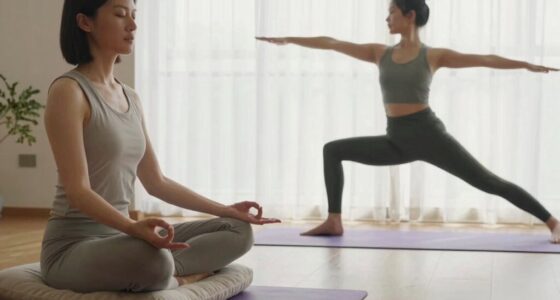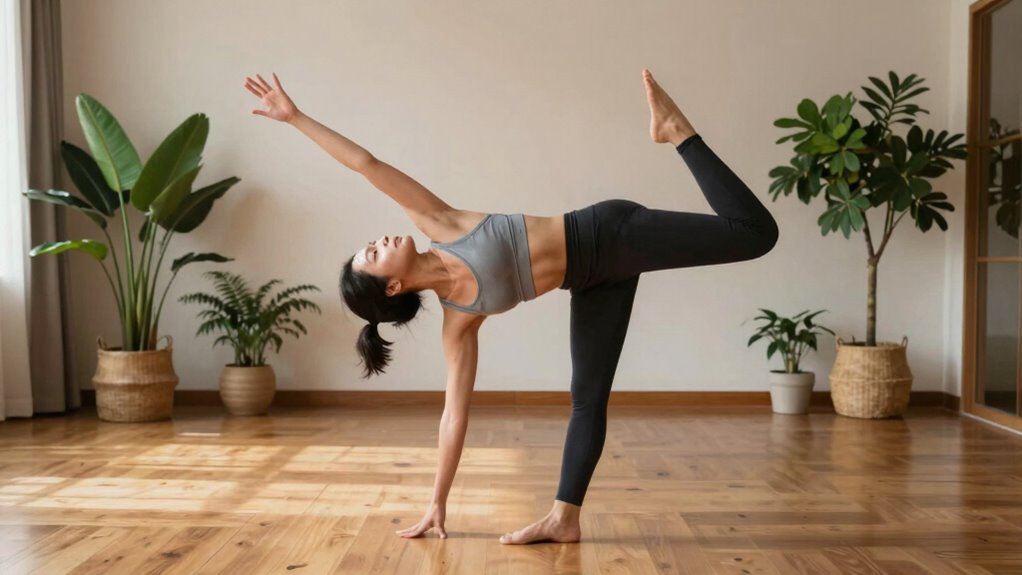

To improve your balance with yoga, focus on controlling your breath to stay calm and centered during poses. Pay attention to your posture, aligning your body properly, and remain mindful of subtle sensations. Developing a strong mind-body connection through meditation and awareness boosts stability and coordination. Incorporate calming elements like natural surroundings to foster a peaceful mindset. By consistently practicing these techniques, you’ll strengthen your balance, and there’s much more to explore to enhance your practice even further.

Get workout gear delivered free with Prime
- Fast, free delivery on millions of items
- Prime Video, Amazon Music and more included
- Member-only deals all year
Key Takeaways
- Focus on controlled, steady breathing to enhance stability and calmness during poses.
- Incorporate mindfulness and meditation to improve mental clarity and body awareness for better balance.
- Maintain proper posture alignment to reinforce stability and prevent misalignment.
- Use landscaping elements or calming surroundings to promote focus and connection to nature.
- Practice balancing poses regularly to develop coordination, strength, and confidence over time.

Ever wonder how yoga can help you stand taller and move more confidently? One of the key aspects of improving your balance with yoga lies in mastering breath control and meditation techniques. When you focus on your breath, you enhance your mind-body connection, which is essential for stability. Controlled breathing calms your nervous system, reduces anxiety, and sharpens your focus—all of which contribute to better balance. As you practice, you’ll learn to breathe deeply and steadily, helping you stay centered during challenging poses. This mindfulness of your breath anchors your awareness, making it easier to maintain stability when your body shifts. Incorporating landscaping elements into your practice space can also promote a sense of calm and connection to nature, further supporting your balance. Additionally, understanding how posture alignment impacts your overall stability can help you develop habits that reinforce your balance outside of your yoga sessions.
Focusing on your breath enhances stability, calmness, and body awareness, making it easier to hold challenging yoga poses with confidence.
Incorporating meditation techniques into your yoga routine further strengthens your sense of balance. Meditation helps you develop mental clarity, concentration, and patience. By setting aside time to meditate, you train your mind to stay present, which is crucial when holding poses that require steadiness. When your mind is clear, you’re less likely to be distracted by thoughts or external stimuli, allowing you to engage your core muscles more effectively and maintain proper alignment. Over time, this mental discipline translates into improved physical balance, as your body learns to respond calmly and precisely to different postures. Additionally, understanding the importance of mind-body connection can deepen your practice and enhance your overall stability. Practicing mindfulness techniques can also help you cultivate a heightened awareness of subtle bodily sensations, which is vital for refining balance and coordination.
Products Worth Considering

Oral-B iO5 Rechargeable Electric Toothbrush with 5 Cleaning Modes and Travel Case, White

Garmin Forerunner 55 GPS Running Smartwatch, Black

Levoit Core 400S-P Smart Air Purifier for Large Rooms
As an affiliate, we earn on qualifying purchases.
Frequently Asked Questions
Can Yoga Help With Vertigo or Dizziness?
Yes, yoga can help with vertigo or dizziness by supporting your vestibular health and aiding symptom management. Certain gentle poses improve your inner ear balance and strengthen muscles that stabilize you. Practicing regularly can reduce dizziness episodes and boost confidence in movement. Always consult your healthcare provider before starting, especially if you have underlying conditions. With consistent effort, yoga becomes a helpful tool for managing vertigo and enhancing overall balance.
How Often Should I Practice Yoga to See Balance Improvement?
Think of your balance journey as tending a delicate garden—you’ll see blossoms with regular care. Practice yoga 3 to 5 times a week, weaving in breathing techniques and meditation practices to nurture your stability. Consistency is your sunlight, helping strength and focus grow. Over time, these mindful sessions will anchor your body and mind, transforming your balance from wavering to steady as a mountain.
Are There Specific Yoga Poses for Seniors?
Yes, there are specific yoga poses for seniors. You should focus on gentle stretches and chair modifications to guarantee safety and comfort. Poses like seated cat-cow, gentle twists, and leg lifts help improve balance without strain. Using a chair for support allows you to practice these poses confidently. Always listen to your body, and consider working with a certified instructor to adapt poses to your needs and abilities.
Do I Need Prior Fitness Experience to Start Yoga for Balance?
Starting yoga for balance is like building a sturdy house—you don’t need a solid foundation from the start. You don’t need prior fitness experience; beginner modifications make poses accessible. You can use props like chairs or blocks for support, requiring minimal equipment. Focus on gentle movements, and over time, your balance and confidence will strengthen, just like a house standing tall with steady beams.
Can Yoga Improve Balance for Athletes or Dancers?
Yes, yoga can considerably improve your balance as an athlete or dancer. It enhances flexibility benefits, allowing your muscles and joints to move more freely, which boosts stability. Plus, yoga promotes mental clarity, helping you focus better during performances. Regular practice challenges your equilibrium and coordination, making you more agile. Incorporating yoga into your routine can elevate your skills, reduce injury risk, and improve overall performance.
Conclusion
By regularly practicing yoga, you’ll notice your balance improving with each session. Remember, even the greatest warriors faced setbacks, but they persisted—just like you. Keep showing up on your mat, embrace the journey, and trust that your stability will grow stronger over time. Before you know it, you’ll be standing tall, steady as a knight of old, ready to face whatever challenges come your way. Stay committed, and watch your balance flourish.