
To prevent chafing while running, wear moisture-wicking, seamless, and tight-fitting clothing to reduce skin-to-skin contact. Choose well-fitting shoes that provide support and prevent rubbing, and use anti-chafing balms or petroleum jelly on prone areas. Keep your skin dry with powders, stay hydrated, and shower promptly after running to maintain skin health. Paying attention to your body’s signals and addressing discomfort early can make a big difference in avoiding irritation—more helpful tips await you.
Key Takeaways
- Wear moisture-wicking, seamless clothing to reduce skin friction and keep skin dry during runs.
- Choose well-fitting, supportive shoes to prevent unnecessary rubbing and skin irritation.
- Apply anti-chafing balm or petroleum jelly to vulnerable areas before running.
- Stay hydrated and maintain good skin hygiene to minimize irritation risks.
- Monitor your skin during runs and reapply protective products as needed.
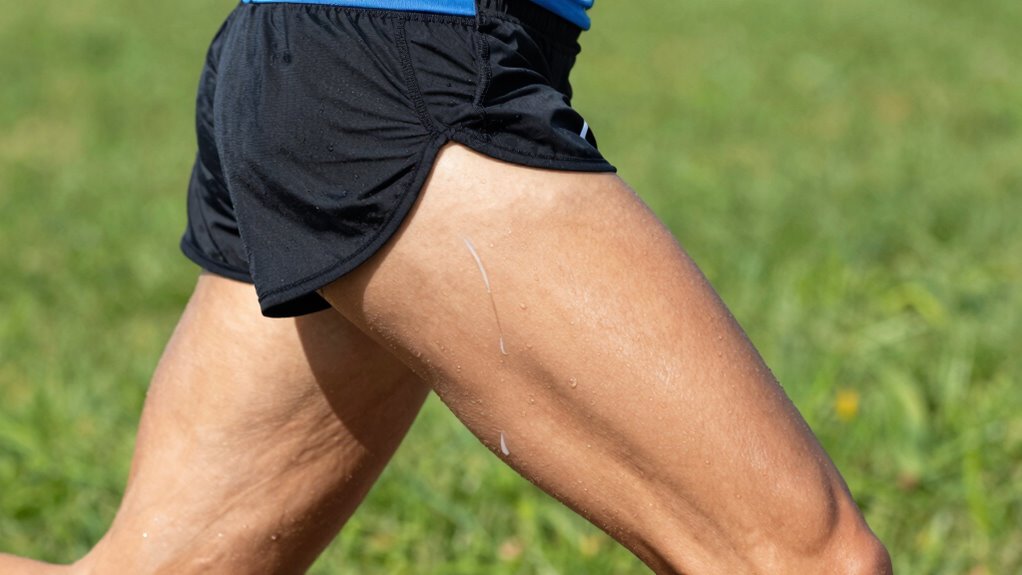
Chafing while running can quickly turn an enjoyable workout into an uncomfortable ordeal, but with the right precautions, you can prevent it from happening. The key lies in choosing the right running gear and focusing on skin protection. When you gear up properly, you minimize friction and keep your skin safe, making your runs more comfortable and enjoyable.
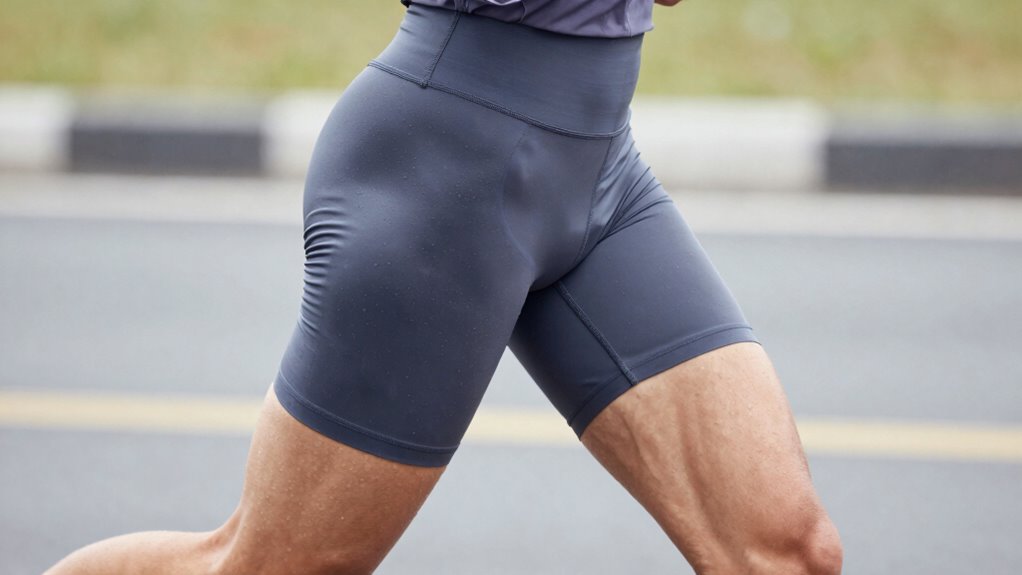
Start with your running gear. Opt for moisture-wicking clothing made from technical fabrics designed to keep sweat away from your skin. Avoid cotton, as it traps moisture and increases chafing risk. Tight-fitting but not restrictive clothes help reduce skin-to-skin contact, especially around sensitive areas like thighs, underarms, or the groin. Seamless or flat-seam apparel can further prevent irritation caused by rubbing. Consider wearing compression shorts or tights, which provide a protective barrier between your skin and any potential chafing points, while also improving circulation and muscle support. Using the proper fabric technology in your clothing can significantly enhance your comfort and reduce irritation. Additionally, choosing high-quality materials can help maintain durability and moisture management during long runs. Incorporating breathable fabrics can further improve airflow and keep your skin dry, and selecting the right materials can also help prevent fabric-related chafing issues.
Choose moisture-wicking, seamless, and well-fitting gear to reduce skin contact and prevent chafing during your run.
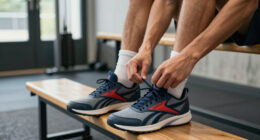
Your choice of shoes also matters. Well-fitting running shoes with adequate support reduce unnecessary movement and friction. Ill-fitting shoes can cause your foot to slide or rub, leading to hotspots that develop into painful chafing. Make sure your shoes are appropriate for your foot type and replace them regularly to maintain optimal support.
In addition to your gear, skin protection is crucial. Before heading out, apply a dedicated anti-chafing balm or petroleum jelly to areas prone to chafing, such as thighs, underarms, nipples, or the groin. These products create a barrier that reduces friction and prevents skin irritation. Reapply during longer runs if necessary, especially if you’re sweating heavily. Keep your skin dry as much as possible. Use powders or antiperspirants on areas prone to excessive sweating to absorb moisture and keep your skin dry. Staying hydrated helps regulate your body temperature and sweat levels, reducing the likelihood of chafing caused by excessive moisture. Additionally, considering proper footwear and selecting the right materials can further enhance your comfort and prevent irritation. Being attentive to body signals during your run can also help you address chafing issues promptly before they worsen.
Pay attention to your body’s signals during your run. If you notice chafing starting to develop, slow down or take a break to address it before it worsens. After your run, shower promptly and gently pat your skin dry. Applying a soothing lotion or healing ointment can help repair any irritation caused during your workout. Maintaining good skin hygiene and keeping your skin moisturized will also help prevent future chafing episodes.

BOOJO 5 Pack Workout Shirts for Men-Quick Dry Black Gym Moisture Wicking Short Sleeve T-Shirts for Running Athletic Casual
- Comfortable & Flexible Fabric: Soft, breathable, and stretchy material
- Moisture-Wicking & Quick Dry: Keeps you dry and cool during workouts
- Enhanced Fabric 2.0: Lightweight, wrinkle-resistant, and durable
As an affiliate, we earn on qualifying purchases.
As an affiliate, we earn on qualifying purchases.
Frequently Asked Questions
Can Chafing Occur During Short Runs?
Yes, chafing can happen during short runs if your running gear isn’t right or your skin isn’t prepared. Even brief runs can cause irritation if your clothes rub against your skin or if you’re sweaty. To prevent this, choose moisture-wicking gear and do proper skin preparation beforehand. Applying anti-chafing balm or powder can also help, ensuring you stay comfortable and avoid irritation during any run length.
Are There Specific Fabrics That Reduce Chafing?
Imagine you’re gearing up for a long run and want to avoid chafing. You should choose moisture-wicking fabrics like polyester or nylon, which keep sweat away from your skin. Seamless clothing also helps prevent friction and irritation. For example, a runner who switched to seamless, moisture-wicking shirts found that chafing markedly decreased, making their runs more comfortable. These fabrics and styles are your best defenses against chafing.
How Often Should I Apply Anti-Chafing Products?
You should apply anti-chafing products like skin barrier creams before every run, especially if you’re prone to chafing or running long distances. Reapply as needed during extended runs or if you notice discomfort. Wearing anti chafing clothing helps reduce friction, but a fresh layer of skin barrier cream provides extra protection. Regular reapplication keeps your skin protected, ensuring a comfortable, chafe-free run every time.
Does Hydration Affect Chafing Risk?
Hydration impacts chafing risk by maintaining skin moisture, preventing dryness and irritation. When you stay well-hydrated, your skin remains supple and less likely to chafe during runs. Dehydration causes skin to become brittle and more prone to friction, increasing chafing chances. So, drink plenty of water before, during, and after your run to keep your skin soft, smooth, and resilient against chafing, boosting your comfort and confidence.
Can Diet Influence Skin Sensitivity to Chafing?
Yes, your diet impact can influence skin sensitivity to chafing. Eating foods rich in vitamins A, C, and E helps keep your skin healthy and resilient, reducing irritation. Conversely, a diet high in processed foods and sugar may increase inflammation, making your skin more prone to chafing. Staying hydrated and maintaining a balanced diet supports skin strength, so you’re less likely to experience discomfort during runs.
As an affiliate, we earn on qualifying purchases.
Conclusion
To keep chafing at bay, stay proactive with proper clothing, moisturize dry areas, and stay hydrated. Remember, over 60% of runners experience chafing at some point—so you’re not alone. By taking these simple steps, you can enjoy your runs comfortably and avoid those painful rashes. Keep these tips in mind, and you’ll be hitting the pavement pain-free, ready to conquer every mile ahead!
supportive running shoes for women
As an affiliate, we earn on qualifying purchases.
As an affiliate, we earn on qualifying purchases.
As an affiliate, we earn on qualifying purchases.