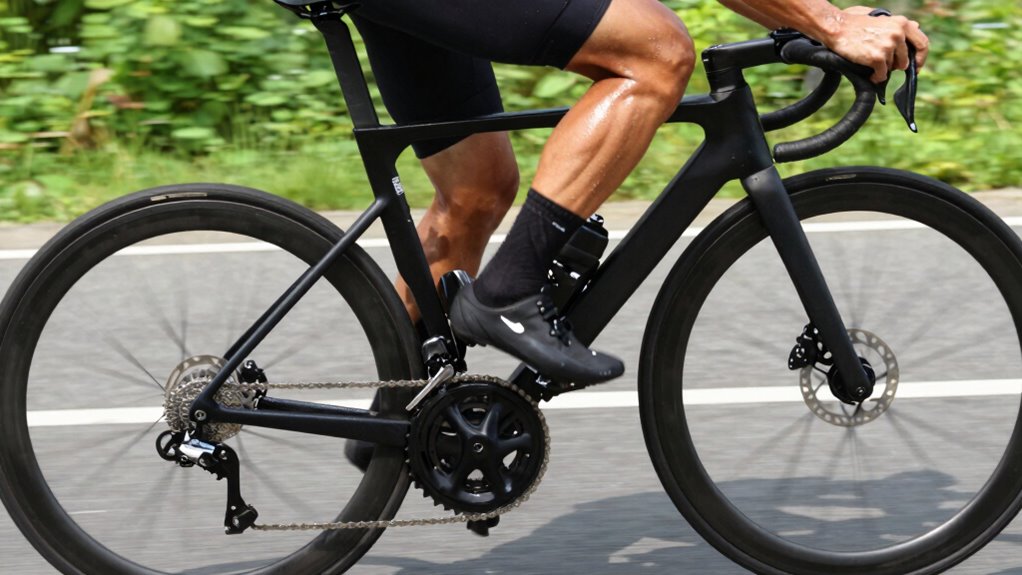

When choosing between cadence and speed, focus on maintaining an efficient cadence that matches your terrain and effort level. Higher speed isn’t always better if your cadence becomes irregular or taxing, leading to fatigue. Keeping a steady, sustainable cadence helps optimize power transfer, prevent exhaustion, and extend your ride. Speed will follow naturally when your cadence is balanced and efficient. Want to discover how to fine-tune your cycling for better endurance? Keep exploring.

Get workout gear delivered free — and shop member deals
- Fast, free delivery on millions of items
- Access to Prime Big Deal Days deals on October 6–7
- Prime Video, Amazon Music and more included
Key Takeaways
- Cadence determines pedaling rhythm, but speed depends on gear choice, terrain, and power output.
- Maintaining an optimal cadence enhances efficiency, allowing for sustained speed with less fatigue.
- Speed can increase with higher cadence or gear, but only if muscles can handle the effort sustainably.
- Proper cadence helps optimize energy use; speed should be a result of efficient cadence and gear selection.
- Focusing solely on speed may lead to fatigue; balancing cadence ensures longer, more comfortable rides.
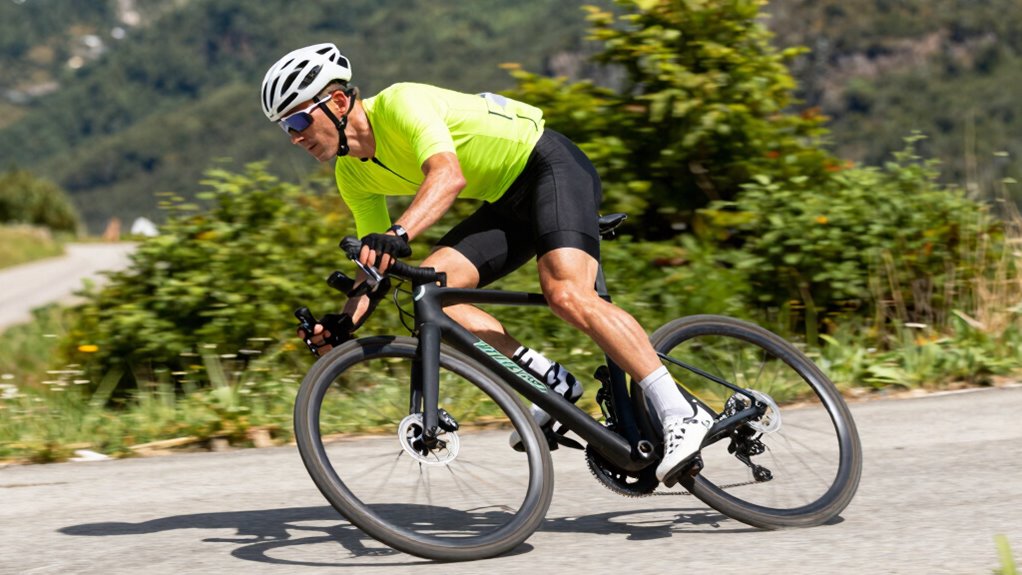
Understanding the relationship between cycling cadence and speed can help you ride more efficiently and comfortably. When you focus on how fast your legs turn over—your cadence—you can find a rhythm that maximizes your gear efficiency and reduces fatigue. It’s not just about pedaling faster; it’s about finding the sweet spot where your muscles work best without overexertion. By maintaining a consistent cadence, you can optimize power transfer and conserve energy, making longer rides feel less taxing. This balance also influences your gear choices, allowing you to shift smoothly and keep your pedaling economy high.
Your gear efficiency plays a crucial role in this dynamic. When you select the right gear, you keep your cadence within a range that feels natural and sustainable. Shifting gears appropriately lets you avoid grinding or spinning too quickly, both of which can sap your energy prematurely. A gear that’s too high forces you to push hard, leading to quick fatigue; a gear too low makes you pedal rapidly with little power transfer, also tiring you out. Striking the right balance between cadence and gear selection enhances your overall efficiency, enabling you to maintain a steady speed with less effort. Over time, this improves your endurance, especially on longer rides or challenging terrains.
Managing fatigue is another critical aspect of balancing cadence and speed. If you pedal at a very high cadence, you might feel like you’re moving faster, but your muscles tire quickly because they’re working in a less efficient zone. Conversely, a very low cadence with high resistance can cause your legs to become overly strained, leading to quicker exhaustion. The key is to find a cadence that feels smooth and controlled, allowing your muscles to work in their optimal range. This approach helps you stay comfortable and avoid burnout, especially during sustained efforts. When you’re mindful of maintaining a consistent cadence, you prevent sudden spikes in effort that can drain your energy reserves, giving you better control over your fatigue levels. Additionally, understanding how cadence influences fatigue can help you develop better pacing strategies for long rides. Incorporating muscle efficiency into your training can further improve your ability to sustain a steady cadence over extended periods. Recognizing how gear ratio impacts your pedaling dynamics is also essential for optimizing your riding technique and energy expenditure. Furthermore, paying attention to terrain variations can help you adapt your cadence effectively to different riding conditions, promoting better energy conservation. Recognizing the importance of pedaling technique can also contribute to smoother, more efficient riding.
Ultimately, the relationship between cadence and speed isn’t about pushing as hard as possible or constantly chasing higher numbers. Instead, it’s about tuning your pedaling rhythm to match your riding conditions and personal fitness. By focusing on gear efficiency and fatigue management, you can ride more effectively without sacrificing comfort or energy. Whether you’re climbing hills, cruising on flat roads, or sprinting to the finish, maintaining a balanced cadence aligned with your gear choices will help you ride smarter. Remember, the goal isn’t just to go faster; it’s to ride longer and stronger, enjoying every mile without unnecessary exhaustion.
As an affiliate, we earn on qualifying purchases.
Frequently Asked Questions
How Does Riding Terrain Affect Optimal Cadence and Speed?
Riding terrain greatly influences your ideal cadence and speed. On varied terrain, you should adapt your cadence to maintain efficiency and control. Uphill sections require lowering your cadence and pushing harder, while downhill or flat areas allow for increased cadence and speed. By adjusting to terrain variability, you guarantee smoother rides and better endurance. Focus on cadence adaptation to match terrain changes, helping you conserve energy and enhance performance across different cycling conditions.
Can Training at Different Cadences Improve Overall Cycling Performance?
Training at different cadences can definitely improve your overall cycling performance. By varying your gear selection and cadence, you challenge your muscles and cardiovascular system differently. This helps you become more efficient and adaptable, reducing fatigue and optimizing your heart rate during rides. Incorporating diverse cadence drills into your training keeps you prepared for various terrains and conditions, ultimately making you a stronger, more versatile cyclist.
What Are Common Mistakes When Trying to Increase Cadence?
When trying to increase cadence, you often make mistakes like selecting the wrong gear, which can cause you to overexert or lose efficiency. You might also neglect proper pedal technique, leading to uneven pedaling or unnecessary strain. Focus on smooth, consistent movements and choose gear that allows you to spin comfortably without forcing your legs. Pay attention to your form, and gradually increase cadence to avoid injury and improve performance.
How Does Cycling Cadence Influence Muscle Fatigue?
You push your pedals faster, and suddenly, muscle fatigue sneaks up on you. Higher cadence can boost muscle endurance by training your muscles to work more efficiently, but it also risks quick fatigue if you push too hard. Managing your cadence carefully helps you optimize fatigue management, allowing sustained effort without burning out prematurely. The key is balancing speed and endurance, so your muscles stay strong throughout your ride.
Is There an Ideal Cadence for Long-Distance Cycling?
The ideal cadence for long-distance cycling varies, but staying around 80-100 RPM often helps. You should focus on gear selection to maintain a steady heart rate and avoid fatigue. If your heart rate spikes, lower your gear to spin more comfortably. Adjust your cadence based on terrain and your comfort level, ensuring you conserve energy for the duration of your ride. Listening to your body is key.
As an affiliate, we earn on qualifying purchases.
Conclusion
Ultimately, whether you focus on cadence or speed, remember they’re like two sides of the same coin—each fueling your ride’s rhythm. Find what pushes your pedal and ignites your passion, because cycling is your journey, not just a race. Embrace the dance of cadence and speed, and let your love for the ride be the wind beneath your wings. Keep pedaling forward, and your best ride is always just around the bend.
indoor cycling trainer with cadence
As an affiliate, we earn on qualifying purchases.
As an affiliate, we earn on qualifying purchases.
As an affiliate, we earn on qualifying purchases.
Fall Picks
fall essentials
As an affiliate, we earn on qualifying purchases.