
You should consider restraining your tennis racket when your strings feel dull, lose tension, or you notice a decrease in power and control. Fraying or frequent breaking signals worn-out strings, while a muted contact sound indicates reduced responsiveness. Over time, your shots may become less accurate and less spin-friendly. Paying attention to these signs guarantees your game stays sharp. Keep going, and you’ll discover more tips to keep your racket in top shape.

Get workout gear delivered free with Prime
- Fast, free delivery on millions of items
- Prime Video, Amazon Music and more included
- Member-only deals all year
Key Takeaways
- Notice a decrease in shot power and control during play.
- Observe fraying, fracks, or frequent string breakage during matches.
- Detect a dull or muted sound upon ball contact, indicating tension loss.
- Restring every 2–4 months for regular players or when performance declines.
- Increased string breakage or loss of elasticity signals it’s time for restringing.
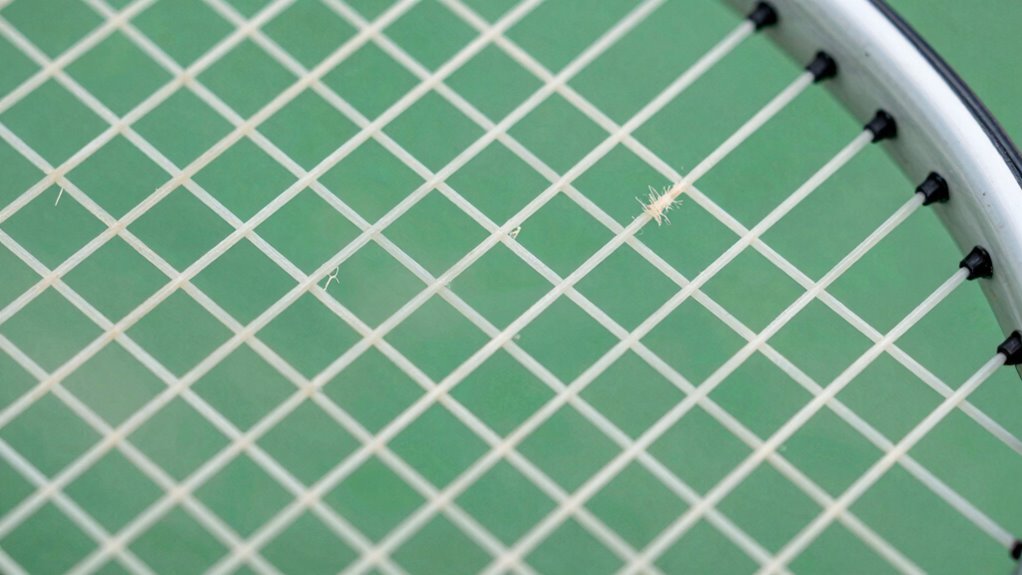
Knowing when to restring your tennis racket is essential for maintaining ideal performance on the court. Over time, the string tension loosens, and your racket’s responsiveness diminishes. When the strings lose tension, the ball doesn’t rebound with the same power, and your control decreases. This impacts your shots, making it harder to place the ball accurately or generate the spin you want. If you notice your shots aren’t as consistent or powerful as they used to be, it’s a clear sign that your string tension has dropped below optimal levels. Restringing restores the tension, ensuring your racket performs as intended and that you maintain your competitive edge.
Knowing when to restring your tennis racket keeps your game sharp and maximizes performance on the court.
Another key indicator that it’s time to restring is racket durability. Worn-out strings are more prone to breaking, especially during intense rallies or long matches. If you find yourself frequently snapping strings or experiencing fraying, it’s a sign that the tension has weakened significantly. When strings are at the end of their lifespan, they lose their elasticity and resilience, making them more susceptible to breaking under pressure. Regularly checking the condition of your strings can save you from unexpected breaks during critical moments in a match. Keeping the strings in good shape also prolongs the overall life of your racket, as excessive string breakage can sometimes lead to damage to the frame itself.
You might also notice a change in how your racket feels when you hit the ball. Instead of the familiar crisp response, you might experience a dull or muted sound on contact, which indicates that the string tension has decreased. This lack of feedback can make it harder to judge your shots accurately. Additionally, if your shots lack the usual pop or if you’re not feeling the racket’s usual “bite,” it’s time to consider restringing. The tension influences how the strings transfer energy to the ball, impacting both power and control. When the tension drops, your ability to hit with precision and power diminishes, and your overall game suffers.
Finally, consider your playing frequency. If you play regularly, you’ll need to restring more often—perhaps every 2 to 4 months—especially if you notice these signs. Less frequent players might stretch out their restringing intervals, but it’s still important to pay attention to how the racket feels and performs. Maintaining proper string tension not only optimizes your game but also helps preserve your racket’s durability, preventing unnecessary wear and tear. By staying attentive to these signs, you ensure your racket remains in top shape, ready to deliver peak performance whenever you step onto the court.
Tennis racket string restringing kit
As an affiliate, we earn on qualifying purchases.
As an affiliate, we earn on qualifying purchases.
Frequently Asked Questions
How Often Should I Restring My Tennis Racket for Optimal Performance?
You should restring your tennis racket every 40 to 60 hours of play for best performance. String durability decreases with use, affecting shot accuracy and power. Keep an eye on racket tension, as it loosens over time, reducing control. Restringing regularly ensures your racket maintains consistent tension, enhances durability, and improves overall gameplay. If you notice a loss of control or a change in feel, it’s time for a restring.
Can I Restring My Tennis Racket Myself at Home?
Restringing your tennis racket yourself is like attempting to perform open-heart surgery with a butter knife—possible, but highly impractical. While DIY restringing might seem tempting for racket maintenance, it’s best left to professionals who have the right tools and expertise. Mistakes can compromise your racket’s tension and performance, so unless you’re experienced, save yourself the frustration and seek expert help to keep your game sharp and your equipment in top shape.
Does Restringing Affect the Weight or Balance of My Racket?
Restringing your tennis racket can slightly affect its weight and balance, mainly due to changes in string tension. When you tighten the strings, the racket often feels more head-heavy, impacting your swing. Additionally, proper restringing helps maintain racket durability by preventing excessive wear and tear. If you notice shifts in how your racket feels or performs, it’s a sign that restringing might be needed to restore ideal string tension and balance.
What Types of Strings Are Best for Different Playing Styles?
For aggressive players, polyester strings with high durability and firm string tension provide power and control, while softer nylon strings suit players seeking more comfort and spin. If you prefer long-lasting strings, choose ones with high durability, but remember they may compromise feel. Adjust string tension based on your style—lower for more power, higher for control. Experiment to find the perfect balance that complements your playing style and enhances your performance.
How Much Does Professional Restringing Typically Cost?
Professional restringing usually costs between $20 and $50, depending on the shop and string type. You’ll want to take into account the string tension, as higher tension offers more control, while lower tension provides power. Keep in mind, better quality strings often have improved durability, meaning they last longer before needing a restring. Regular restringing ensures your racket maintains ideal performance and string tension, helping you play at your best.
Tennis racket string tension tester
As an affiliate, we earn on qualifying purchases.
As an affiliate, we earn on qualifying purchases.
Conclusion
Restringing your tennis racket is like tending to a trusted instrument—neglecting it can lead to missed opportunities and lost harmony on the court. When you notice signs of wear, it’s a reminder that your performance depends on the care you give. Think of restringing as renewing your connection to the game, restoring the rhythm and strength you need. Keep your equipment tuned, and you’ll stay in sync with your potential, ready to hit your best shot every time.
Tennis racket string replacement set
As an affiliate, we earn on qualifying purchases.
As an affiliate, we earn on qualifying purchases.
As an affiliate, we earn on qualifying purchases.
Halloween Picks
halloween
As an affiliate, we earn on qualifying purchases.