
TL;DR
Physical therapist Raj Suppiah recommends a half-kneeling hip flexor stretch, a figure-four glute stretch and an all-fours adductor stretch for stiffness associated with prolonged sitting. He says to keep the movements comfortable and not rely on stretching alone; the report does not present them as a treatment for every cause of hip pain.
Physical therapist Raj Suppiah has recommended three stretches that target the front, back and inner thigh areas around the hip for people who feel stiff after sitting for long periods, including a beginner Pilates flow for back and hip stiffness. In a report by Fit&Well, he also cautioned that stretching is only one part of supporting hip mobility and that the movements should stay within a comfortable range.

Get workout gear delivered free with Prime
- Fast, free delivery on millions of items
- Prime Video, Amazon Music and more included
- Member-only deals all year
The exercises are a half-kneeling hip flexor stretch, a figure-four glute stretch and an all-fours adductor stretch. Suppiah, co-founder of Foundation Physiotherapy & Wellness, said he commonly recommends the trio because together they address different areas around the hip rather than focusing only on its front or back.
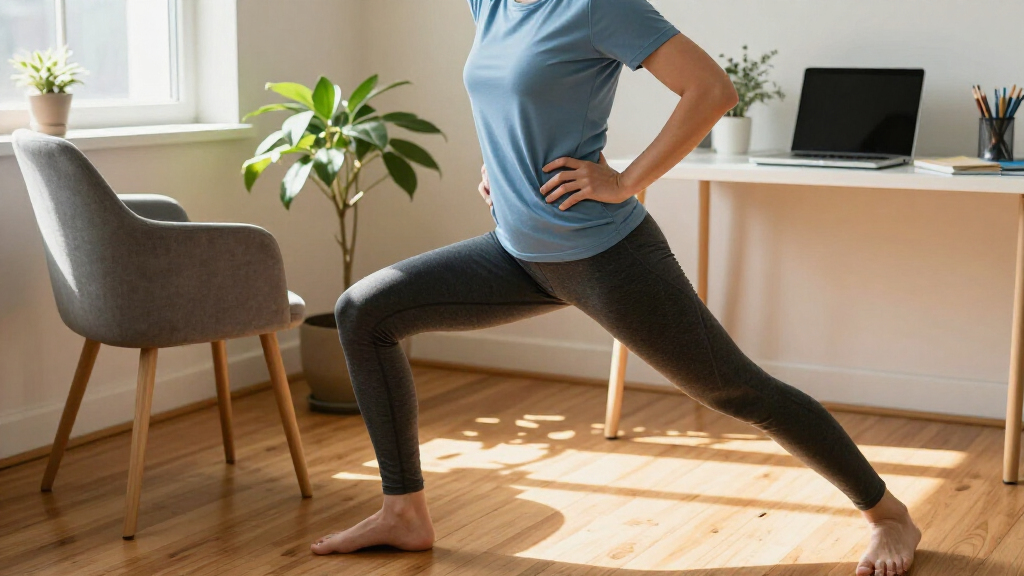
For the half-kneeling stretch, place one knee on the floor and the other foot in front, with that knee bent. Gently tuck the pelvis and lean forward until a stretch is felt at the front of the hip on the kneeling side. The supplied instructions suggest five to six repetitions per side, holding each for 10 seconds, and warn against arching the lower back.
For the figure-four stretch, lie on your back with knees bent, cross one ankle over the opposite thigh, and draw the supporting leg toward you by holding behind its thigh. The suggested dose is five to six repetitions per side, held for 10 seconds. For the adductor stretch, start on hands and knees, extend one leg out to the side with the foot on the floor, and slowly rock the hips back while keeping the back neutral. The report suggests eight to 10 repetitions per side, held for six seconds.
Three Hip Areas, One Short Routine
The advice gives readers a short set of movements they can try when stiffness follows long periods in a seated position. The exercises use distinct positions to bring the hip through a comfortable range: a forward shift for the front of the hip, a lying figure-four for the back and outside, and a rock-back movement for the inner thigh.
Suppiah’s explanation also broadens the issue beyond sitting alone. He says discomfort can arise when the body is asked to handle more activity than it is prepared for, such as a sudden increase in running or a long recreational sports session after a mostly sedentary week. For readers, that is a reminder that a stretch routine is not a guarantee against pain and should not replace gradual changes in activity or attention to symptoms.
The report does not provide clinical trial findings or evidence that these specific stretches prevent or treat a diagnosed condition. Its value is as practical guidance attributed to a physical therapist, with an explicit instruction to stop short of pain and seek advice if the movements cause pain.
Products Worth Considering

Withings Sleep Under-Mattress Sleep Tracking Pad

Levoit Core 300S-P Smart Wi-Fi Air Purifier

Oura Ring 5 Smart Ring – Silver, Size 9
As an affiliate, we earn on qualifying purchases.
Sitting Is Not the Only Cause
Suppiah describes hip pain as potentially reflecting a mismatch between what the body is prepared to do and the demands placed on it. He gives examples including sitting for much of the week before playing several hours of pickleball, suddenly increasing running mileage, or beginning a gym program at a much higher level than usual. The report’s framing is that activity changes and prolonged sitting can both be relevant, not that sitting is the sole explanation for hip discomfort.
He also names other possible contributors: arthritis, irritated tendons around the hip, and pain originating in the lower back that is felt around the hip. These possibilities matter because stiffness and pain can have different causes. The article offers general stretching instructions, not an assessment that can determine which cause applies to an individual.
Suppiah says the hip needs movement, strength and suppleness to tolerate everyday demands. He recommends not relying on stretching alone, and points to strength work such as squats as one part of supporting the hips, back and core. The report does not set out a full strengthening program or specify how often readers should do these exercises.
“A mismatch between what your body is currently prepared to handle and what you’re asking it to do.”
— Raj Suppiah, physical therapist and co-founder of Foundation Physiotherapy & Wellness, speaking to Fit&Well
When Stiffness Needs Assessment
The report does not establish that the three stretches will relieve everyone’s symptoms, nor does it identify a single cause for hip stiffness. Suppiah notes that arthritis, tendon irritation and lower-back problems can also contribute to pain, but the supplied material does not offer guidance for distinguishing those conditions from stiffness related to inactivity or changes in exercise.
It also does not specify how long readers should continue the routine before judging its effect, or provide a schedule for repeating it. The instructions are general and call for a comfortable stretch, not pain. Anyone whose symptoms are painful or persist should seek individualized advice rather than assuming the exercises address the cause.
Use Comfort as the Guide
The immediate next step described in the report is to perform the stretches gently, using the stated repetitions and hold times as guidance, and to stop if a movement causes pain. Readers can also consider their recent activity levels: Suppiah’s examples suggest that abrupt increases in sport, running or gym work may place demands on the hips beyond what they are accustomed to.
Suppiah advises pairing mobility work with strength exercises rather than relying on stretching alone. The source points to squats as one example but does not prescribe a particular plan. It gives no announced follow-up study, trial or later milestone; the guidance remains a set of expert recommendations published by Fit&Well.
Key Questions
Which three exercises does the physical therapist recommend?
Raj Suppiah recommends the half-kneeling hip flexor stretch, figure-four glute stretch and all-fours adductor stretch. He says the three movements target the front, back and inner area of the hip.
How many repetitions should I do?
The report suggests five to six repetitions per side for the half-kneeling and figure-four stretches, holding each for 10 seconds. For the all-fours adductor stretch, it suggests eight to 10 repetitions per side, holding each for six seconds.
Should these stretches hurt?
No. The report says to stay within a comfortable range and seek advice if an exercise causes pain. The instructions describe feeling a stretch, not pushing into pain.
Can stretching alone keep hips healthy?
Suppiah says stretching may help maintain mobility but should not be the only approach. He also identifies strength and capacity as important and mentions exercises such as squats as an example of strength work.
Does sitting always cause hip pain?
No. Suppiah says prolonged sitting can be associated with stiffness, but he also names sudden increases in activity, arthritis, irritated tendons and pain referred from the lower back as possible contributors. The report does not diagnose the cause of an individual’s symptoms.
Source: rss