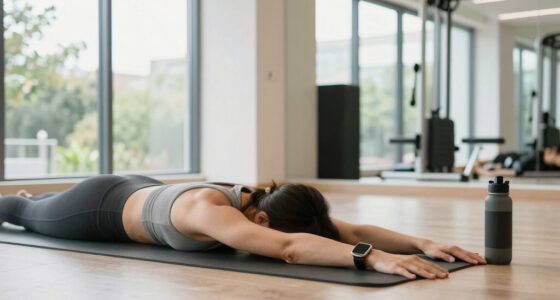
TL;DR

Get workout gear delivered free with Prime
- Fast, free delivery on millions of items
- Prime Video, Amazon Music and more included
- Member-only deals all year
An Arizona State University study using data from more than 55,000 U.S. adults found that yoga and Pilates participation were associated with lower risks of death over roughly a decade. The observational findings do not show that either practice caused people to live longer, and researchers say other differences between practitioners and non-practitioners may explain some or all of the association.
Researchers at Arizona State University found that yoga and Pilates participation were associated with lower mortality risk in an analysis of more than 55,000 U.S. adults, the study’s report says. The results identify an association, not proof that either practice extends life, and come as researchers say evidence for many popular wellness activities remains limited.
The researchers examined 21 alternative health practices and compared participation with mortality records tracked over about a decade. Yoga was associated with a 27% lower risk of death, while Pilates was associated with a 36% lower risk, according to the report. The other practices examined were not linked to a significantly lower risk of death in the analysis.
The study drew on nationally representative data, according to the report. Researchers accounted for several factors that could affect mortality, including income, education, exercise, smoking, body mass index and self-rated health. Those adjustments strengthen the analysis but cannot rule out other explanations or establish that practicing yoga or Pilates caused the difference.
Study co-author Connor Sheehan, an associate professor at ASU, said the two practices stood out because they involve movement. He also pointed to possible contributions from strength, balance, fitness, breathing and stress management. These are proposed explanations for the association, not mechanisms proven by this study to reduce mortality.
Movement Practices Stand Out
The findings offer a data-based comparison of popular wellness practices, but they do not amount to a prescription for longevity. For readers weighing the claims made about health routines, the main takeaway is narrower: in this analysis, yoga and Pilates were the only practices among 21 associated with significantly lower mortality risk.
The results may add to interest in both activities, but they do not show how much, how often or what kind of yoga or Pilates would be needed to produce a health effect. Nor do they establish that starting either practice would change an individual’s lifespan. The difference between an observed association and a proven cause matters when wellness marketing presents practices as routes to longer life.
Sheehan suggested that classes may combine physical activity, stress management and social connection. That is a possible interpretation, not a separate finding that social participation caused lower mortality. Readers should treat the study as one contribution to a still-limited evidence base rather than a guarantee of benefit.
As an affiliate, we earn on qualifying purchases.
Testing Wellness Claims Against Mortality Data
The research was prompted by the growing range of complementary and alternative health practices used by Americans and uncertainty about their long-term outcomes. Sheehan told Athletech News that more than 40% of U.S. adults use at least one such practice, citing activities that include acupuncture, chiropractic care and specialized diets. The study set out to compare multiple practices against mortality rather than assess yoga or Pilates in isolation.
The analysis reflects behavior recorded in a large U.S. adult population and deaths tracked over approximately 10 years. That scale allows researchers to look for population-level patterns, but it does not make the results equivalent to a controlled trial. Participants were not randomly assigned to take up a practice, and people who choose yoga or Pilates may differ in ways that are difficult to measure fully.
The report also places the findings within a fast-growing wellness market. It cites an industry projection that the Pilates and yoga market could reach $521 billion by 2035. That figure is a market forecast, not a measure of the study’s findings or evidence that the practices extend life.
“Maybe the sickest people are too unhealthy to do yoga or Pilates to begin with, so the practice looks protective when really it’s just excluding the least healthy.”
— Connor Sheehan
As an affiliate, we earn on qualifying purchases.
Association Does Not Prove Cause
The analysis cannot establish whether yoga or Pilates lowers mortality, or whether people who practice them already have characteristics linked to better health. Sheehan cited possible influences including health-care access, genetics and economic circumstances, as well as differences in how people care for their health. He also raised reverse causation: people in poorer health may be less able to participate in these activities in the first place.
The source material does not provide the full study citation, publication date, precise definitions of participation, or details such as how often participants practiced. It also does not specify the absolute number of deaths or provide enough information to assess the precision of the reported percentages. The percentages describe relative associations; they do not tell readers an individual’s personal risk or expected change in lifespan.
It is also unclear from the available report which of the other 19 practices were assessed and how their use was measured. The findings should not be read as showing that those practices are harmful, or that yoga and Pilates are the only activities with potential health benefits.
As an affiliate, we earn on qualifying purchases.
Further Study Needed on Wellness
The next step is further research that can test whether the observed relationship persists in other groups and clarify what may account for it. Studies with more detail about frequency, duration and style of practice could help answer questions this report does not resolve. Research designs that better address differences in participants’ health and circumstances would also help distinguish cause from selection effects.
Sheehan called for more study of changing wellness habits, including practices such as cold plunging, red-light therapy and supplements. No follow-up study or research timetable is specified in the source material. Until stronger evidence is available, the reported results remain an association that may inform discussion but does not establish a longevity benefit from starting yoga or Pilates.
As an affiliate, we earn on qualifying purchases.
Key Questions
Does the study prove yoga or Pilates makes people live longer?
No. It found that participation was associated with lower mortality risk, but the observational analysis cannot show that either practice caused the difference.
How large were the reported associations?
The report says yoga was associated with a 27% lower risk of death and Pilates with a 36% lower risk. These are relative associations; the report does not provide an individual’s absolute risk or expected added lifespan.
How many practices did researchers examine?
Researchers examined 21 alternative health practices. Yoga and Pilates were the only two reported as associated with a significantly lower risk of death.
What could explain the findings besides the practices themselves?
Practitioners may differ in health, income, access to care or other factors that are not fully captured in the analysis. Sheehan also said people who are too unwell to participate could make the activities appear protective.
Source: rss
Fall Picks
fall essentials
As an affiliate, we earn on qualifying purchases.