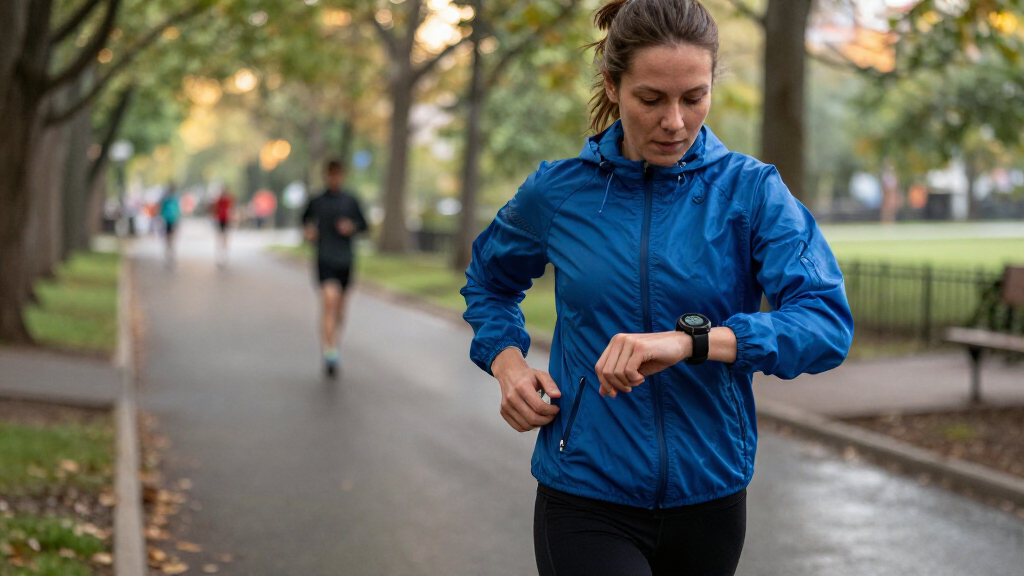

The best running watch for most runners is the Garmin Forerunner 165, which balances run-focused features, an AMOLED display, and everyday smartwatch functions. The COROS PACE 4 stands out for runners who want a lightweight sports watch, while the Garmin Forerunner 970 suits those seeking a premium training and triathlon tool. The main tradeoffs are price tier, display and case size, and whether you need advanced training features or just reliable pace and distance tracking. This roundup also includes older and renewed models that may fit simpler needs, but they offer a different feature set from newer watches. Read on for the full breakdown and help matching a watch to your training priorities.

Get workout gear delivered free with Prime
- Fast, free delivery on millions of items
- Prime Video, Amazon Music and more included
- Member-only deals all year
Complete the kit


Key Takeaways
- The Forerunner 165 is the strongest all-around fit: it adds an AMOLED display and smartwatch functions while staying more focused on running than the vívoactive 5.
- The PACE 4 and Garmin Forerunners serve different training styles: COROS is the lightweight sports-watch alternative, while Garmin’s lineup spans beginner, multisport, and everyday-use priorities.
- Premium models are not automatic upgrades for every runner: the Forerunner 970 and 965 make the most sense when their broader training or multisport capabilities match your routine.
- Several listings represent the same Forerunner 55 family: compare condition and listing details carefully rather than treating renewed, standard, and smartwatch-labeled versions as wholly different watches.
- Case size and display deserve as much attention as features: the 39 mm Forerunner 45S and 42 mm options may suit smaller wrists better than the 47 mm premium models.
| Garmin Forerunner 55 GPS Running Watch, Black (Renewed) |  | Best for Adaptive Training on a Budget | Display: 1.04-inch MIP, 208 × 208 pixels | Battery life: Up to 2 weeks in smartwatch mode; up to 20 hours in GPS mode | Weight: 37 g | VIEW LATEST PRICE | See Our Full Breakdown |
| Garmin Forerunner 55 GPS Running Watch, Black |  | Best Value for Everyday Running | Display: Round display | Battery life: Up to 2 weeks in smartwatch mode; up to 20 hours in GPS mode | GPS: Built-in GPS | VIEW LATEST PRICE | See Our Full Breakdown |
| Garmin Forerunner 70 GPS Running Watch, 1.2-Inch AMOLED Display, Whitestone |  | Best AMOLED Training Watch | Display: 1.2-inch AMOLED touchscreen | Controls: Touchscreen and 5 physical buttons | Case diameter: 43 mm | VIEW LATEST PRICE | See Our Full Breakdown |
| COROS PACE 4 Ultralight Sport GPS Watch, Black Silicone |  | Best for Long GPS Sessions | Display: 1.2-inch AMOLED touchscreen | Weight: 32 g with nylon band | Thickness: 11.8 mm | VIEW LATEST PRICE | See Our Full Breakdown |
| Garmin Forerunner 45S GPS Running Watch, 39 mm, Black |  | Best Compact Watch for New Runners | Case size: 39 mm | Display: 1.04-inch color TFT, 208 × 208 pixels | Battery life: Up to 7 days | VIEW LATEST PRICE | See Our Full Breakdown |
| Garmin Forerunner 165 GPS Running Smartwatch, 43 mm, Black |  | Best for Everyday Training | Display: AMOLED touchscreen | Case size: 43 mm | GPS battery life: Up to 19 hours | VIEW LATEST PRICE | See Our Full Breakdown |
| Garmin Forerunner 70 GPS Running Smartwatch, 43 mm, Tidal Blue |  | Best for Multisport Variety | Display: AMOLED touchscreen with button controls | Case size: 43 mm | GPS systems: GPS, GLONASS, and Galileo | VIEW LATEST PRICE | See Our Full Breakdown |
| Garmin Forerunner 570 GPS Running Smartwatch, 42 mm, Aluminum, Whitestone/Cloud Blue |  | Best Compact Premium Pick | Display: AMOLED touchscreen with button controls | Case size: 42 mm | Bezel: Aluminum | VIEW LATEST PRICE | See Our Full Breakdown |
| Garmin Forerunner 970 GPS Running and Triathlon Smartwatch, 47 mm, Carbon Gray Titanium, Black/Whitestone |  | Best Premium for Triathletes | Display: AMOLED touchscreen with button controls | Case size: 47 mm | Bezel and lens: Titanium bezel and sapphire lens | VIEW LATEST PRICE | See Our Full Breakdown |
| Garmin Forerunner 965 Running Smartwatch, 47 mm, Black/Powder Gray |  | Best for Long GPS Training | Display: AMOLED touchscreen with button controls | Case size: 47 mm | Bezel: Titanium | VIEW LATEST PRICE | See Our Full Breakdown |
| Garmin Forerunner 170 GPS Running Watch, 1.2-Inch AMOLED, Black/Amp Yellow, with Charging Dock and Accessories |  | Best for Button-and-Touch Control | Display: 1.2-inch AMOLED touchscreen, 390 × 390 pixels | Controls: Touchscreen and 5 physical buttons | Satellite systems: GPS, GLONASS, Galileo, BeiDou, and QZSS | VIEW LATEST PRICE | See Our Full Breakdown |
| Garmin Forerunner 55 GPS Running Smartwatch, Black |  | Best for Beginner Training Plans | Display: 1.04 inches | Water resistance: 50 meters | Weight: 37 g | VIEW LATEST PRICE | See Our Full Breakdown |
| Garmin Forerunner 165 GPS Running Smartwatch, Whitestone, Bundle |  | Best AMOLED Running Watch for Daily Training | Display: 1.2-inch AMOLED, 390 × 390 | Satellite systems: Built-in GPS, GLONASS, and Galileo | Battery life: Up to 11 days smartwatch mode; up to 19 hours GPS mode | VIEW LATEST PRICE | See Our Full Breakdown |
| Garmin vívoactive 5 GPS Smartwatch, 42 mm, Ivory |  | Best for Running Plus Everyday Fitness | Display: AMOLED touchscreen | Case size: 42 mm | Battery life: Up to 11 days smartwatch mode; up to 5 days with always-on display | VIEW LATEST PRICE | See Our Full Breakdown |
| Garmin Forerunner 245 Music GPS Running Smartwatch, Black |  | Best for Music-Free Phone Running | Display lens: Corning Gorilla Glass 3 | Bezel material: Fiber-reinforced polymer | Band material: Silicone | VIEW LATEST PRICE | See Our Full Breakdown |
| running watch | Display | Water resistance |
|---|---|---|
| Garmin Forerunner 55 GPS Runni | 1.04-inch MIP, 208 × 208 pixels | — |
| Garmin Forerunner 55 GPS Runni | Round display | 50 meters |
| Garmin Forerunner 70 GPS Runni | 1.2-inch AMOLED touchscreen | — |
| COROS PACE 4 Ultralight Sport | 1.2-inch AMOLED touchscreen | 5-meter depth rating |
| Garmin Forerunner 45S GPS Runn | 1.04-inch color TFT, 208 × 208 pixels | Listing states IPX5 and 50-meter depth |
| Garmin Forerunner 165 GPS Runn | AMOLED touchscreen | 50 meters |
| Garmin Forerunner 70 GPS Runni | AMOLED touchscreen with button controls | 50 meters |
| Garmin Forerunner 570 GPS Runn | AMOLED touchscreen with button controls | — |
| Garmin Forerunner 970 GPS Runn | AMOLED touchscreen with button controls | 50 meters |
| Garmin Forerunner 965 Running | AMOLED touchscreen with button controls | 50 meters |
| Garmin Forerunner 170 GPS Runn | 1.2-inch AMOLED touchscreen, 390 × 390 pixels | — |
| Garmin Forerunner 55 GPS Runni | 1.04 inches | 50 meters |
| Garmin Forerunner 165 GPS Runn | 1.2-inch AMOLED, 390 × 390 | 5 ATM; 50 meters |
| Garmin vívoactive 5 GPS Smartw | AMOLED touchscreen | 50 meters |
| Garmin Forerunner 245 Music GP | — | 50 meters |
More Details on Our Top Picks
Garmin Forerunner 55 GPS Running Watch, Black (Renewed)
The Forerunner 55 (Renewed) covers the core running needs well: built-in GPS records pace, distance, and routes, while suggested workouts draw on training history, fitness level, and recovery. That makes it a more guided choice than the simpler Forerunner 45S, particularly for runners who want help structuring sessions rather than only logging them. Its 20-hour GPS battery life is ample for ordinary training and many long runs, and the 37 g body stays light on the wrist.
The tradeoff is the renewed condition: it is professionally inspected, but comes with a 90-day limited warranty, shorter than the one-year warranty listed for the Forerunner 45S. It also lacks course-compatible PacePro guidance, and wrist heart-rate readings are estimates, not medical measurements. I’d choose this over the newer AMOLED Forerunner 70 when training prompts and battery endurance matter more than a brighter screen.
Pros:- Suggested workouts use training history, fitness level, and recovery
- Up to 20 hours of GPS battery life supports long training sessions
- Light 37 g design and multiple activity profiles suit regular training
- Tracks GPS pace, distance, routes, and wrist-based heart rate
Cons:- Renewed condition comes with a 90-day limited warranty
- PacePro is not compatible with on-device courses
- Wrist heart-rate readings are not a substitute for medical measurements
Best for: Runners who want GPS, adaptive workout suggestions, and long battery life without needing a new-condition watch
Not ideal for: Buyers who want a longer warranty, an AMOLED display, or PacePro guidance with on-device courses
- Display:1.04-inch MIP, 208 × 208 pixels
- Battery life:Up to 2 weeks in smartwatch mode; up to 20 hours in GPS mode
- Weight:37 g
- GPS:Built-in GPS
- Connectivity:Bluetooth
- Storage:32 MB
- Water activities:Pool swimming profile
- Condition and warranty:Renewed; 90-day limited warranty
Our verdict“Choose the renewed Forerunner 55 if adaptive training and long GPS sessions matter more to you than a longer warranty or a newer display.”
Garmin Forerunner 55 GPS Running Watch, Black
The standard Garmin Forerunner 55 is a strong starting point for runners who want reliable GPS and training guidance without moving to a more feature-heavy watch. It tracks pace, distance, and route, then adds suggested workouts based on training history and recovery—more coaching support than the Forerunner 45S offers in this lineup. Its 50-meter water resistance and pool-swim profile also make it more versatile than a run-only tracker.
Battery life reaches 20 hours in GPS mode, a useful margin for training and longer outings, while smartwatch mode can last up to two weeks. The compromises are a basic 32 MB storage capacity and no course-compatible PacePro guidance. Adding Connect IQ content also requires a compatible smartphone app. Compared with the renewed Forerunner 55, this version avoids the renewed-condition caveat; the tradeoff is that it still has the same core limitations and does not offer the AMOLED screen of the Forerunner 70.
Pros:- Built-in GPS tracks running pace, distance, and route without a phone
- Suggested workouts adjust to training history and recovery
- Up to 2 weeks of smartwatch battery life and 20 hours of GPS use
- 50-meter water resistance and pool-swim activity profile
Cons:- PacePro is not compatible with on-device courses
- Downloading Connect IQ content requires a compatible smartphone app
- 32 MB of storage limits room for onboard content
Best for: New and recreational runners seeking built-in GPS, adaptable workout prompts, and pool-swim tracking in a straightforward watch
Not ideal for: Runners who want an AMOLED display, extensive onboard storage, or advanced course-based pacing guidance
- Display:Round display
- Battery life:Up to 2 weeks in smartwatch mode; up to 20 hours in GPS mode
- GPS:Built-in GPS
- Water resistance:50 meters
- Storage:32 MB
- Connectivity:Bluetooth
- Band and case:Silicone band; resin case
- Activity profiles:Running, cycling, track run, virtual run, pool swim, Pilates, HIIT, and breathwork
Our verdict“Pick the standard Forerunner 55 for an approachable GPS running watch with coaching prompts and broad everyday training utility.”
Garmin Forerunner 70 GPS Running Watch, 1.2-Inch AMOLED Display, Whitestone
The Forerunner 70 is the display-focused choice here: its 1.2-inch AMOLED touchscreen makes training data more vivid than the MIP screen on the Forerunner 55, while five physical buttons give runners an alternative to touchscreen control during workouts. It combines that modern interface with adaptive plans, suggested sessions, recovery and sleep insights, and running metrics. Multi-system satellite support—GPS, GLONASS, Galileo, BeiDou, and QZSS—adds flexibility for tracking routes.
This watch makes more sense for runners who value a bright screen and a broader set of training and wellness metrics than for those chasing maximum battery life. It lasts up to 23 hours in GPS-only mode, but smartwatch life falls to five days with the display always on; the Forerunner 55 can last longer between charges. At 40 g, it is still light, though the COROS PACE 4 is lighter at 32 g with its nylon band. The included screen protectors and service plan add bundle-specific support, but recovery and health metrics remain estimates.
Pros:- AMOLED touchscreen presents workout data more vividly than the Forerunner 55’s MIP display
- Five physical buttons provide an alternative to touchscreen controls
- Multi-system satellite support includes GPS, GLONASS, Galileo, BeiDou, and QZSS
- Includes screen protectors, silicone dust covers, and a 26-month service protection plan
Cons:- Always-on display use reduces smartwatch battery life to up to 5 days
- At 40 g, it is heavier than the 32 g COROS PACE 4 with nylon band
- Health and recovery metrics are estimates rather than medical measurements
Best for: Runners who want an AMOLED training display, physical-button backup, and detailed recovery and sleep insights
Not ideal for: Runners who prioritize the longest battery life, the lightest possible watch, or medical-grade health readings
- Display:1.2-inch AMOLED touchscreen
- Controls:Touchscreen and 5 physical buttons
- Case diameter:43 mm
- Weight:40 g
- GPS battery life:Up to 23 hours in GPS-only mode
- Smartwatch battery life:Up to 13 days; up to 5 days with always-on display
- Satellite systems:GPS, GLONASS, Galileo, BeiDou, and QZSS
- Included accessories:Charging/data cable, screen protectors, and 3 silicone dust covers
- Service plan:26-month extended service protection
Our verdict“Choose the Forerunner 70 if a bright AMOLED screen and richer training insights matter more than lighter weight or longer battery life.”
COROS PACE 4 Ultralight Sport GPS Watch, Black Silicone
The COROS PACE 4 stands out for runners who want a light watch that can stay on the wrist through long training days. At 32 g with a nylon band and 11.8 mm thick, it is lighter and thinner than the 40 g Forerunner 70. Its headline advantage is GPS endurance: up to 41 hours of continuous GPS use, well beyond the listed 23 hours for the Forerunner 70 and 20 hours for the Forerunner 55. The AMOLED touchscreen, voice controls, and voice recording add convenience for runners who want to capture notes without typing.
Daily battery life reaches up to 19 days, and 4 GB of storage gives it more room than the Forerunner 55’s 32 MB. The tradeoff is a stated water-resistance depth of just 5 meters, so it is a less reassuring choice for swimming than watches with explicit pool-swim support or 50-meter resistance. I’d favor it for long GPS outings and light fit, not for buyers seeking the broader activity profile list of the Forerunner 55.
Pros:- Up to 41 hours of continuous GPS use exceeds the listed runtime of the Garmin options here
- 32 g with nylon band and 11.8 mm thickness make for a light, slim fit
- Voice recording and controls can capture notes and commands hands-free
- 4 GB storage and up to 19 days of daily battery life
Cons:- Water resistance is specified to a depth of 5 meters
- GPS runtime is shorter than its 19-day daily-use battery figure may suggest
- Its listed feature set is less focused on broad activity profiles than the Forerunner 55
Best for: Distance runners and endurance athletes who value long GPS runtime, low weight, and voice notes
Not ideal for: Runners who swim regularly or want a watch with a clearly stated 50-meter water-resistance rating
- Display:1.2-inch AMOLED touchscreen
- Weight:32 g with nylon band
- Thickness:11.8 mm
- GPS battery life:Up to 41 hours
- Daily battery life:Up to 19 days
- Storage:4 GB
- Water resistance:5-meter depth rating
- Features:Built-in GPS, Bluetooth, voice control, voice recording, and heart-rate monitoring
Our verdict“Choose the PACE 4 for long GPS sessions and a light fit, but look elsewhere if regular swimming is part of your routine.”
Garmin Forerunner 45S GPS Running Watch, 39 mm, Black
The Forerunner 45S suits runners who want the basics in a compact 39 mm case. Built-in GPS tracks pace, distance, and intervals, while wrist-based heart-rate monitoring and Garmin Coach plans give newer runners useful training structure. Smart notifications, music controls, and incident detection add everyday functions without pushing it toward the broader training-and-recovery feature set of the Forerunner 70. Its 1.04-inch color display is modest, but the 208 × 208 resolution keeps the interface focused on essential run data.
Battery life reaches up to seven days, less than the two weeks listed for either Forerunner 55, and the available details don’t list adaptive suggested workouts like those on the 55. Music controls also require a paired compatible smartphone, so this is not a standalone music solution. The stated water information is inconsistent: the listing gives both IPX5 and 50-meter water resistance. I’d pick it over the Forerunner 55 when a smaller case and Garmin Coach support are the priority, not when battery life or richer training prompts lead the decision.
Pros:- Compact 39 mm case is suited to runners seeking a smaller watch
- Built-in GPS tracks pace, distance, and intervals
- Supports Garmin Coach training plans and wrist-based heart-rate tracking
- Includes smart notifications and incident detection
Cons:- Up to 7 days of battery life is shorter than the Forerunner 55’s listed two weeks
- Music controls require a paired compatible smartphone
- Water-resistance details conflict, listing both IPX5 and a 50-meter depth
Best for: New runners or buyers with smaller wrists who want GPS tracking, Garmin Coach plans, and basic smartwatch functions
Not ideal for: Runners seeking two-week battery life, adaptive suggested workouts, or standalone music features
- Case size:39 mm
- Display:1.04-inch color TFT, 208 × 208 pixels
- Battery life:Up to 7 days
- Connectivity:GPS and Bluetooth
- Water resistance:Listing states IPX5 and 50-meter depth
- Band and case:Silicone band; stainless steel case
- Compatibility:Android and iOS smartphones
- Warranty:1-year limited warranty
Our verdict“Choose the Forerunner 45S for a compact entry-level running watch with Garmin Coach, but favor the Forerunner 55 for longer battery life and adaptive workout suggestions.”
Garmin Forerunner 165 GPS Running Smartwatch, 43 mm, Black
The Forerunner 165 is a strong fit for runners who want useful training guidance and a clear AMOLED screen without moving to a larger, multisport-focused watch. Its personalized workout suggestions and recovery insights help turn everyday runs into a more informed routine, while button controls alongside the touchscreen give runners a practical way to operate it on the move. Compared with the Forerunner 70, it has fewer activity profiles and shorter stated battery life, but its 25-plus profiles and up to 19 hours in GPS mode are ample for many run-focused users. The tradeoff is that safety features depend on a paired phone and network coverage, and Garmin Pay works only with supported payment networks and regions. I’d choose it over the Forerunner 970 for a lighter, less feature-heavy training companion.
Pros:- Personalized workout suggestions and adaptive training plans support consistent progress.
- Lightweight 43 mm design combines touchscreen convenience with physical buttons.
- Tracks heart rate, sleep, stress, hydration, and recovery-related health information.
- Up to 19 hours of GPS-mode battery life suits many training schedules.
Cons:- Safety features rely on a paired smartphone and network coverage.
- Garmin Pay availability depends on region and supported payment networks.
- Its 25-plus activity profiles and GPS battery life are less suited to extensive multisport training than the Forerunner 70 or 970.
Best for: Runners who want adaptive training and recovery guidance in a lightweight watch, plus an AMOLED display for everyday wear.
Not ideal for: Triathletes and runners who need built-in maps, extended GPS battery life, or advanced multisport tools; the Forerunner 970 is better equipped for those needs.
- Display:AMOLED touchscreen
- Case size:43 mm
- GPS battery life:Up to 19 hours
- Smartwatch battery life:Up to 11 days
- Activity profiles:More than 25
- Water resistance:50 meters
- Compatibility:Android and iPhone
Our verdict“Choose the Forerunner 165 for everyday running plans and health insights in a lightweight watch, not for advanced navigation or multisport needs.”
Garmin Forerunner 70 GPS Running Smartwatch, 43 mm, Tidal Blue
The Forerunner 70 earns its place for runners who want one lightweight watch to cover more than running. Its 80-plus activity profiles give it a wider activity range than the Forerunner 165, and its stated battery life also runs longer in both smartwatch and GPS modes. Built-in GPS supports GLONASS and Galileo as well, giving route tracking more satellite options. Training plans, recovery information, and sleep tracking add everyday coaching context, though the listed health and training metrics are estimates rather than definitive measurements. The main compromise is its relatively modest 512 MB of storage and Bluetooth connectivity; it is less appealing to buyers seeking broader connectivity or premium navigation features like the Forerunner 970’s built-in maps. Live location safety features also need a paired phone and network coverage.
Pros:- More than 80 activity profiles support a wide mix of workouts.
- Up to 23 hours of GPS-mode battery life exceeds the Forerunner 165’s stated 19 hours.
- Built-in GPS supports GLONASS and Galileo.
- Personalized training plans, recovery insights, and sleep tracking add coaching context.
Cons:- Health and training metrics are estimates.
- Live location safety features require a paired smartphone and network coverage.
- The 512 MB storage and Bluetooth connectivity provide a more limited setup than feature-rich alternatives.
Best for: Runners who mix in many other activities and want long battery life, built-in GPS, and training and recovery guidance in one watch.
Not ideal for: Runners who want built-in maps, a larger storage capacity, or higher-end multisport navigation; the Forerunner 970 offers a more advanced feature set.
- Display:AMOLED touchscreen with button controls
- Case size:43 mm
- GPS systems:GPS, GLONASS, and Galileo
- GPS battery life:Up to 23 hours
- Smartwatch battery life:Up to 13 days
- Activity profiles:More than 80
- Water resistance:50 meters
- Storage:512 MB
Our verdict“Pick the Forerunner 70 if you want a broad activity range and longer battery life, but choose the Forerunner 970 for maps and more advanced multisport features.”
Garmin Forerunner 570 GPS Running Smartwatch, 42 mm, Aluminum, Whitestone/Cloud Blue
The Forerunner 570 is the compact pick for runners who want a more polished, feature-rich watch without the 47 mm size of the Forerunner 970. Its 42 mm case, aluminum bezel, AMOLED display, and button-plus-touch controls make it a comfortable middle ground between the Forerunner 165 and Garmin’s larger premium models. Multi-band GPS and personalized Garmin Coach plans give it a stronger training and positioning focus than a basic run tracker, while its microphone and speaker add call support when a compatible phone is paired. That convenience comes with a clear limit: the watch itself does not replace a phone for calls or safety features. Battery life is also shorter than the Forerunner 70’s stated figures, with up to 18 hours in GPS mode. The supplied data gives conflicting water-resistance information, so I would verify suitability for water use before buying.
Pros:- Compact 42 mm case with an aluminum bezel offers a smaller alternative to the 47 mm Forerunner 970.
- Multi-band GPS supports more advanced positioning than basic built-in GPS.
- Garmin Coach plans and readiness insights help tailor training to performance and recovery.
- Microphone and speaker enable calls when paired with a compatible smartphone.
Cons:- Up to 18 hours of GPS-mode battery life is shorter than the Forerunner 70’s stated 23 hours.
- Calls and safety features require a compatible paired smartphone.
- The product details conflict on water resistance despite listing a 50-meter water-resistance depth.
Best for: Runners who prefer a smaller 42 mm watch but want multi-band GPS, personalized coaching, and phone-paired call support.
Not ideal for: Buyers who prioritize long GPS sessions or need confidently stated water-resistance guidance; the Forerunner 70 lists longer GPS battery life, while the supplied 570 details are inconsistent about water resistance.
- Display:AMOLED touchscreen with button controls
- Case size:42 mm
- Bezel:Aluminum
- GPS:Built-in multi-band GPS
- GPS battery life:Up to 18 hours
- Smartwatch battery life:Up to 10 days
- Activity profiles:More than 30
- Water resistance listed:50 meters; product information also states it is not water resistant
Our verdict“Choose the Forerunner 570 for a compact, more advanced training watch with multi-band GPS, after checking the water-resistance details for your intended use.”
Garmin Forerunner 970 GPS Running and Triathlon Smartwatch, 47 mm, Carbon Gray Titanium, Black/Whitestone
The Forerunner 970 is the premium choice here for runners who also train across disciplines and want navigation and durable materials on their wrist. Its multi-band GPS and built-in maps offer more route support than the Forerunner 570, while a sapphire lens and titanium bezel give this 47 mm watch a more rugged finish. The built-in LED flashlight is a useful extra for low-light moments, and the microphone and speaker support calls and voice assistant use when a smartphone is paired. Those extras do not make it the right fit for everyone: its larger case may feel like too much watch for runners who want a compact daily trainer, and some running metrics require a separately sold HRM 600 monitor. Its up-to-26-hour GPS battery life is also shorter than the Forerunner 965’s stated 31 hours.
Pros:- Built-in maps and multi-band GPS support route navigation and positioning.
- Sapphire lens and titanium bezel provide durable premium materials.
- LED flashlight adds practical visibility in low-light situations.
- Microphone and speaker support calls and voice assistant use with a paired smartphone.
Cons:- Some running metrics require a separately sold HRM 600 monitor.
- Calling and voice assistant functions depend on smartphone pairing.
- Up to 26 hours of GPS battery life is less than the Forerunner 965’s stated 31 hours.
Best for: Triathletes and serious runners who want built-in maps, multi-band GPS, durable materials, and multisport tracking in a premium watch.
Not ideal for: Runners who want a compact or simpler daily watch, or who need the longest GPS battery life in this lineup; the 47 mm case and Forerunner 965’s longer stated GPS runtime may be better suited to other buyers.
- Display:AMOLED touchscreen with button controls
- Case size:47 mm
- Bezel and lens:Titanium bezel and sapphire lens
- GPS:Built-in multi-band GPS
- GPS battery life:Up to 26 hours
- Smartwatch battery life:Up to 15 days
- Water resistance:50 meters
- Additional features:Built-in maps, LED flashlight, microphone and speaker, multisport tracking
Our verdict“Choose the Forerunner 970 if maps, multisport tools, and premium materials matter more than a smaller case or the Forerunner 965’s longer stated GPS runtime.”
Garmin Forerunner 965 Running Smartwatch, 47 mm, Black/Powder Gray
The Forerunner 965 stands out for runners and multisport athletes who want maps, training insights, and unusually long stated battery life in GPS mode. Its up to 31 hours of GPS use exceeds the Forerunner 970’s stated 26 hours, making it the stronger fit between those two for extended outings. Built-in full-color maps and multi-band GNSS help with route navigation, while the titanium bezel, AMOLED screen, and physical buttons balance a premium feel with practical controls. It also covers running, triathlon, swimrun, and customizable multisport sessions. The tradeoff is its 47 mm case, which may be cumbersome for runners who prefer the Forerunner 570’s smaller 42 mm format. Its 23-day smartwatch battery figure is distinct from GPS runtime, and some health and training metrics are estimates.
Pros:- Up to 31 hours of GPS-mode battery life exceeds the Forerunner 970’s stated 26 hours.
- Built-in full-color maps and multi-band GNSS support route navigation.
- Titanium bezel, AMOLED touchscreen, and traditional buttons combine premium materials with flexible controls.
- Running, triathlon, swimrun, and customizable multisport profiles cover varied training.
Cons:- The 47 mm case may feel large for runners who prefer a compact watch.
- GPS-mode battery life is much shorter than its up-to-23-day smartwatch-mode figure.
- Some health and training metrics are estimates.
Best for: Runners and triathletes who want built-in color maps, multisport support, and long GPS sessions between charges.
Not ideal for: Runners with smaller wrists or those seeking a compact watch; the 47 mm Forerunner 965 is substantially larger than the 42 mm Forerunner 570.
- Display:AMOLED touchscreen with button controls
- Case size:47 mm
- Bezel:Titanium
- GPS battery life:Up to 31 hours
- Smartwatch battery life:Up to 23 days
- Navigation:Built-in GPS, multi-band GNSS, and full-color maps
- Water resistance:50 meters
- Sports profiles:Running, triathlon, duathlon, brick workouts, swimrun, and customizable multisport
Our verdict“Pick the Forerunner 965 for long GPS training and built-in maps, but look to the Forerunner 570 if a smaller case matters more.”
Garmin Forerunner 170 GPS Running Watch, 1.2-Inch AMOLED, Black/Amp Yellow, with Charging Dock and Accessories
The Forerunner 170 pairs a bright 1.2-inch AMOLED screen with five physical buttons, giving runners a choice of touch input or controls that are easier to operate mid-run. Its suggested workouts and Garmin Coach plans make it more training-focused than the vívoactive 5, which covers a broader mix of sports and wellness features. Multi-band satellite options support activity tracking across several systems, while the listed battery life reaches 10 days in smartwatch mode or 20 hours in GPS-only mode. The tradeoff is that all-systems GNSS is listed at 14 hours, so runners who favor that setting for long outings have less reserve. The bundle’s dock and screen protection add practical extras, but Garmin Pay depends on a supported bank and payment network.
Pros:- AMOLED touchscreen plus five physical buttons gives flexible control during workouts.
- Daily suggested workouts and Garmin Coach plans support structured training.
- Multiple satellite systems provide options for GPS activity tracking.
- Bundle includes a charging dock, screen protectors, and silicone dust covers.
Cons:- All-systems GNSS battery life is listed at 14 hours, below its GPS-only figure.
- Garmin Pay requires a supported bank and payment network.
Best for: Runners who want an AMOLED display, physical workout controls, and guided training plans in one watch.
Not ideal for: Ultrarunners who expect to use all-systems GNSS for long events, or buyers who want Garmin Pay to work regardless of their bank.
- Display:1.2-inch AMOLED touchscreen, 390 × 390 pixels
- Controls:Touchscreen and 5 physical buttons
- Satellite systems:GPS, GLONASS, Galileo, BeiDou, and QZSS
- Battery life:Up to 10 days smartwatch mode; up to 20 hours GPS-only mode
- Case diameter:42.6 mm
- Weight:Approximately 40 g
- Heart rate sensor:Elevate V4 optical sensor
- Connectivity:ANT+ and Bluetooth
- Included accessories:Charging dock, 2 screen protectors, and 3 silicone dust covers
Our verdict“Choose the Forerunner 170 if you want training guidance and both touchscreen and button controls, but look elsewhere for longer all-systems GPS endurance.”
Garmin Forerunner 55 GPS Running Smartwatch, Black
The Forerunner 55 keeps the emphasis on running fundamentals: GPS tracking, daily workout suggestions, and plans for 5K, 10K, and half-marathon goals. That makes it a clearer entry point for new runners than the Forerunner 165, whose AMOLED display and recovery insights add more features and visual polish. The 55 also tracks everyday activity, sleep, and heart rate, so it can serve beyond scheduled runs. Its 50-meter water resistance and support for GPS, GLONASS, and Galileo add useful versatility. The compromise is a simpler 1.04-inch display with button-only input, rather than the 165’s touchscreen. The supplied information does not specify battery duration, so buyers comparing watches by time between charges have less detail to work with.
Pros:- Includes daily suggested workouts and plans for common road-running goals.
- Tracks running metrics alongside sleep, heart rate, steps, and calories.
- Supports GPS, GLONASS, and Galileo satellite systems.
- 50-meter water resistance suits swimming and wet-weather use.
Cons:- Button-only controls and the 1.04-inch display feel more basic than the Forerunner 165’s AMOLED touchscreen.
- The supplied product information does not state battery life.
Best for: New or returning runners following a first 5K, 10K, or half-marathon plan who prefer a straightforward watch.
Not ideal for: Runners who want an AMOLED touchscreen, a stated battery-life figure, or more advanced recovery insights.
- Display:1.04 inches
- Water resistance:50 meters
- Weight:37 g
- Band material:Silicone
- Case material:Resin
- Connectivity:Bluetooth
- Satellite systems:GPS, GLONASS, and Galileo
- Activity profiles:17
Our verdict“Pick the Forerunner 55 for approachable run guidance and essential tracking, but choose the Forerunner 165 if display quality and recovery features matter more.”
Garmin Forerunner 165 GPS Running Smartwatch, Whitestone, Bundle
The Forerunner 165 brings an AMOLED touchscreen, built-in GPS, adaptive training plans, and recovery insights into a 39-gram running watch. Its stated 11-day smartwatch battery life edges the Forerunner 170 by a day, though GPS mode is listed at 19 hours versus the 170’s 20-hour GPS-only figure. That split makes the 165 appealing for everyday wear and routine training, while the 170 offers more listed GPS-only time and includes a charging dock. The 165’s 5 ATM rating suits swimming and everyday water exposure, but not every water activity. This bundle adds screen protection, dust covers, and an extended warranty, which may appeal to buyers seeking extra coverage; runners who prioritize long GPS sessions should weigh its runtime before choosing.
Pros:- AMOLED touchscreen presents running data in a bright, readable format.
- Adaptive plans and recovery insights add guidance beyond basic activity tracking.
- Up to 11 days of smartwatch battery life supports regular wear between charges.
- Bundle includes screen protectors, silicone dust covers, and a two-year extended warranty.
Cons:- GPS mode is listed at up to 19 hours, less than the Forerunner 170’s GPS-only figure.
- The 5 ATM water rating does not cover every water activity.
Best for: Regular road runners who want a bright AMOLED screen, training and recovery guidance, and a lightweight watch for daily wear.
Not ideal for: Runners whose priority is maximizing GPS runtime for long events, or buyers who need a watch rated for every kind of water activity.
- Display:1.2-inch AMOLED, 390 × 390
- Satellite systems:Built-in GPS, GLONASS, and Galileo
- Battery life:Up to 11 days smartwatch mode; up to 19 hours GPS mode
- Water resistance:5 ATM; 50 meters
- Weight:39 g
- Case material:Fiber-reinforced polymer
- Band width:20 mm
- Operating system:GarminOS
- Included accessories:USB-C charging/data cable, 3 silicone dust covers, 2 screen protectors, and CPS 2-year extended warranty
Our verdict“Choose the Forerunner 165 for an AMOLED daily-training companion with recovery guidance, but favor the Forerunner 170 if listed GPS-only runtime is your priority.”
Garmin vívoactive 5 GPS Smartwatch, 42 mm, Ivory
The vívoactive 5 suits runners who want one watch for workouts and broader daily health tracking. Its AMOLED touchscreen, built-in GPS, more than 30 sports apps, sleep coaching, and nap detection cover a wider activity mix than the running-centered Forerunner 55. Music storage and Garmin Pay also make it more of an everyday smartwatch, while wheelchair mode adds tracking options that many running watches leave out. The tradeoff is that its appeal is breadth rather than a running-specific focus: buyers who want structured run plans and training guidance should compare it with the Forerunner models. Battery life is listed at up to 11 days in smartwatch mode, but drops to up to five days with the always-on display. Health metrics are estimates, not clinical measurements.
Pros:- More than 30 indoor and GPS sports apps support activities beyond running.
- Sleep coaching and nap detection extend its usefulness outside workouts.
- Music storage, smart notifications, and Garmin Pay add everyday smartwatch functions.
- Wheelchair mode tracks pushes and supports handcycling.
Cons:- Always-on display use cuts stated battery life to up to five days.
- Health metrics are estimates and should not be treated as clinical readings.
Best for: Runners who also want sleep coaching, varied sports tracking, music storage, and wheelchair activity support in an everyday smartwatch.
Not ideal for: Training-focused runners who want the clearest run-plan emphasis, or anyone expecting health metrics to serve as clinical measurements.
- Display:AMOLED touchscreen
- Case size:42 mm
- Battery life:Up to 11 days smartwatch mode; up to 5 days with always-on display
- GPS:Built-in
- Water resistance:50 meters
- Sports apps:More than 30 indoor and GPS sports apps
- Health tracking:Heart rate, calories burned, hydration, sleep, stress, HRV status, and fitness age
- Additional features:Music storage, Garmin Pay, smart notifications, and wheelchair mode
Our verdict“Choose the vívoactive 5 if running is one part of a broad fitness routine, but pick a Forerunner if run training is the main job.”
Garmin Forerunner 245 Music GPS Running Smartwatch, Black
The Forerunner 245 Music is the lineup’s clearest choice for runners who want stored music on their wrist, rather than relying on a phone for audio. It also tracks training status and advanced running dynamics, making it more performance-oriented than the broader vívoactive 5. Incident detection during select activities adds a safety feature when paired with a compatible smartphone. Its main limitation is endurance with music: GPS mode is listed at up to six hours, which may constrain long training days or events. Some advanced running dynamics also require a separately sold compatible sensor, so not every metric comes straight from the watch. The seven-day smartwatch figure is respectable, but this older-style feature set lacks the supplied AMOLED display details and broader daily wellness emphasis found on newer alternatives.
Pros:- Stores music and syncs with services such as Spotify for phone-free listening.
- Training status and advanced running dynamics offer performance-focused feedback.
- Incident detection is available during select activities when paired with a compatible smartphone.
- Up to seven days of smartwatch battery life is listed.
Cons:- GPS mode with music lasts up to six hours.
- Advanced running dynamics require a separately sold compatible sensor.
Best for: Runners who want to leave their phone behind for music and value training-status data and running dynamics.
Not ideal for: Long-distance runners who need extended GPS recording with music, or buyers who want all advanced running dynamics without an extra sensor.
- Display lens:Corning Gorilla Glass 3
- Bezel material:Fiber-reinforced polymer
- Band material:Silicone
- Battery life:Up to 7 days smartwatch mode; up to 6 hours GPS mode with music
- Water resistance:50 meters
- Connectivity:GPS and Bluetooth
- Storage capacity:64,000 MB
- Music support:Stores music and syncs with streaming services such as Spotify
- Compatibility:Smartphones
Our verdict“Pick the Forerunner 245 Music for phone-free listening and running-focused data, but skip it if long GPS sessions or sensor-free advanced metrics are priorities.”
How We Picked
I ranked these watches around the job a running watch needs to do: record runs reliably, make key information usable during training, and offer a feature set that matches the runner rather than adding complexity for its own sake. I compared the models by their stated running and multisport focus, display type, case size, everyday versatility, and the differences implied by their product tiers. I also treated listing details—such as renewed condition, bundles, and included accessories—as buying factors, not as proof of better performance.
The ranking favors a useful balance of running capability and daily usability, which puts the Forerunner 165 ahead of simpler entry-level models for many runners. Premium watches rank higher for specialized training and multisport needs, not simply because they sit at the top of a product family. Older, smaller, or renewed options remain relevant when their narrower feature set fits the buyer, but they rank lower for shoppers seeking a current, broadly capable watch. Similar Forerunner 55 listings are grouped by their shared role rather than given an artificial advantage for repeated appearances.
Factors to Consider When Choosing Best Running Watches
Before choosing from this lineup, decide what you need your watch to do on an ordinary run and what you expect it to add outside training. A feature list can make several models look interchangeable, but fit, interface, and buying condition can matter more than the number of functions.
Match Training Features to Your Running Routine
Start with the training decisions you want the watch to support: basic run tracking, structured workouts, multisport sessions, or a broader view of training. A beginner may gain little from a premium watch if the main need is recording distance and pace. On the other hand, a runner who regularly mixes running with triathlon training may value a model built for that broader use. Avoid choosing by feature count alone; extra functions matter only if you will use them during planning or workouts. A simpler watch can be easier to operate when all you want is a clear run screen. Spend more when a specific training capability solves a recurring problem, not because the model sits higher in a lineup.
Choose a Display You Can Read and Live With
An AMOLED screen can make information feel more vivid and polished, but display preference is personal and should not eclipse training needs. Think about whether you check data at a glance while moving, how much screen brightness matters to you, and whether you prefer a more traditional sports-watch presentation. A feature-rich interface is less useful if you find it distracting during a run. Compare the watch in the context of the data you actually want on screen, such as pace, elapsed time, or workout steps. Also consider how often you use the watch outside exercise, since daily notifications and other smartwatch functions may change what feels comfortable. Do not assume a newer display alone makes a watch the better running choice.
Treat Case Size as a Fit Decision, Not a Spec Detail
Case diameter affects more than appearance: it can influence comfort, how securely the watch sits, and how easy its screen is to read. The 39 mm Forerunner 45S and several 42 mm models offer alternatives to the larger 47 mm watches in this roundup. A larger display may be easier to scan, but a bulky fit can become irritating over a long run or during sleep tracking. Check the listed dimensions against a watch you already wear, and pay attention to band fit as well as the case. If possible, prioritize a secure, comfortable fit over a larger screen or a more premium-looking finish. Buyers with smaller wrists should not assume they must accept a large case to get useful running features.
Separate Running Watches From General Fitness Smartwatches
A watch with GPS and fitness tracking is not automatically the best match for someone who prioritizes run training. A general-purpose model such as the vívoactive 5 may appeal when wellness and everyday smartwatch use matter alongside exercise. A Forerunner model is more directly positioned around running, with higher-tier options also addressing multisport needs. Consider whether you want the watch to guide or organize training, or mainly to track activity across your day. This distinction can prevent paying for a broad set of lifestyle features when your priority is a dedicated running tool. It can also prevent choosing a running-focused model when you would rather have a more general fitness companion.
Check Listing Condition, Bundle Contents, and Model Overlap
This roundup includes a renewed Forerunner 55, standard Forerunner 55 listings, a bundle, and older models alongside newer generations. Those labels can change what you receive and what condition to expect, even when two listings share a model name. Read the listing details for included accessories, warranty terms, and the seller’s definition of renewed condition before buying. A bundle is useful only if its extras are items you would otherwise purchase. Do not treat a repeated model name as evidence of a separate feature tier; compare the exact product and package. When a watch is an older generation, decide whether its available functions meet your needs rather than assuming the model name tells the whole story.
Pay for Features You Will Use, Not the Highest Tier
The Forerunner 970 and 965 are the most compelling choices here for runners with advanced or multisport priorities, but their wider capabilities can be unnecessary for someone who mainly runs a few times a week. Entry-level and older models may be a better fit when clear run tracking is the main goal. A middle-tier watch can be the most sensible choice when you want a more polished display and broader daily use without moving to a premium training tool. Before spending more, name the feature you expect to use and how often it will change your routine. If you cannot identify a practical benefit, a less expensive tier may serve you just as well. Make the upgrade decision around your training habits, not the assumption that a higher model number always means a better match.
Frequently Asked Questions
Is the Forerunner 165 a better choice than the Forerunner 55 for a new runner?
The Forerunner 165 is the stronger fit if you want a more modern display and a broader smartwatch experience alongside running features. The Forerunner 55 makes more sense when you want a simpler entry into GPS run tracking and do not need the newer model’s presentation. New runners do not need to buy the most advanced watch to build a consistent routine. Decide whether the extra features will help you follow workouts or make the watch more useful between runs. If simple tracking is your priority, the 55 family remains relevant; if you want room to grow into more features, the 165 is the more versatile choice.
Should I choose the Forerunner 970 or 965 for running and triathlon training?
Both are positioned for serious running and multisport use, so the right choice depends on the specific capabilities and design details you value in each listing. The 970 is the newer premium option in this roundup, while the 965 remains a high-tier alternative. Compare the product specifications directly for the training functions, materials, and compatibility that matter to your routine. Do not pay for a newer model solely because it has a higher number if the 965 already covers your needs. If your training includes several disciplines and you will use advanced features regularly, either may be more suitable than a basic Forerunner.
Is a renewed Forerunner 55 worth choosing over a standard listing?
A renewed listing may appeal if you are comfortable buying a watch that has been previously owned or refurbished, but its condition and included coverage depend on the seller’s terms. Compare the exact listing with the standard Forerunner 55 product rather than assuming the devices differ in features. Check the stated condition, return window, warranty, battery information, and what accessories are included. The renewed model is a poor fit if you want the certainty of a new product or cannot verify the seller’s policies. For a straightforward purchase, the standard listing is easier to evaluate; for a renewed option, the listing details should drive the decision.
Is the Garmin vívoactive 5 suitable if running is my main sport?
The vívoactive 5 can suit someone who runs but also wants a broad everyday fitness watch. If your main goal is run-focused training, compare it with the Forerunner models, which are more directly built around running. The distinction matters most when you want workout-oriented features and a training-first interface rather than general activity tracking. A runner who values everyday wellness functions may prefer the vívoactive approach. Choose based on how you expect to use the watch on most days, not only on whether it includes GPS.
How do I choose between the Forerunner 165 and the COROS PACE 4?
These picks represent different priorities rather than a simple feature ladder. The Forerunner 165 is a strong all-around option for someone who wants an AMOLED display and a mix of running and smartwatch functions. The COROS PACE 4 stands out as a lightweight sports-watch alternative for runners focused on training use. Compare fit, interface preferences, and the running tools available in the exact versions you are considering. If daily smartwatch versatility matters, lean toward the Forerunner; if a lightweight, sport-first watch is your priority, give the PACE 4 closer attention.
Conclusion
For most runners, I recommend the Garmin Forerunner 165 for its balance of run-focused use, AMOLED display, and everyday features. For best value, consider the standard Forerunner 55 if basic GPS running is enough and a simpler feature set suits you; check renewed and bundle listings carefully. For a premium pick, choose the Forerunner 970 when advanced running or triathlon use justifies its broader tier, with the 965 as another high-end option to compare. For beginners, the Forerunner 55 offers a less complex starting point, while the COROS PACE 4 is a strong alternative for runners who prioritize a lightweight sports watch. For smaller wrists, compare the 45S and 42 mm models; for general fitness beyond running, the vívoactive 5 may fit better. The best choice is the one whose fit, training features, and daily interface match how you actually run.