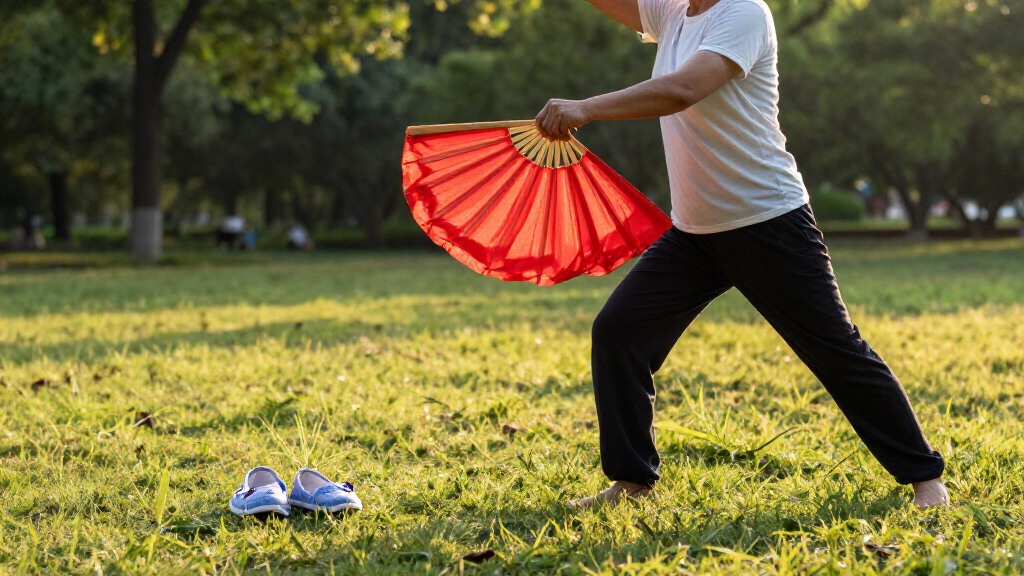

The best tai chi equipment depends on whether you want to practice ball-and-racket coordination, work with hand-sized Baoding balls, or use a simple training tool. I’d put the ZooBoo Tai Chi Ball Racket Set first for beginners seeking a dedicated practice set, while the Chiming Baoding Balls stand out for compact hand practice and the YUYTE Racket Set for buyers who want a ball and carrying bag included. These products serve different routines, so a racket set is not a substitute for Baoding balls or a wooden tool. The main tradeoffs are portability, included accessories, and how specifically each item supports your practice. Read on for the full comparison and guidance on choosing the right fit.

Get workout gear delivered free with Prime
- Fast, free delivery on millions of items
- Prime Video, Amazon Music and more included
- Member-only deals all year
Complete the kit



Key Takeaways
- ZooBoo is the clearest beginner-oriented racket option in this lineup, while the Chiming Baoding Balls serve a separate, hand-focused practice.
- Included gear changes the value proposition: YUYTE bundles a ball and carrying bag, whereas racket-only options may suit buyers who already have accessories.
- The Soft Strength racket’s silicone face gives it a distinct material profile compared with the lightweight aluminum set, so choose by feel and intended handling rather than assuming one material suits everyone.
- Baoding balls are the most compact choice here, but they do not provide the racket-and-ball coordination practice offered by the racket sets.
- The wooden training tool has a narrower role than a bundled racket set; it makes more sense for buyers who specifically want a standalone training implement.
| ZooBoo Tai Chi Ball Racket Set for Beginners |  | Best for Beginners | Brand: ZooBoo | Skill level: Beginner | Frame material: Aluminum alloy | VIEW LATEST PRICE | See Our Full Breakdown |
| Chiming Tai Chi Baoding Balls with Bamboo Stand, Medium (1.6 Inch) |  | Best for Hand-Focused Mindfulness | Size: Medium | Diameter: 1.6 inches | Design: Cloisonné enamel with Tai Chi and Yin Yang symbols | VIEW LATEST PRICE | See Our Full Breakdown |
| Soft Strength Tai Chi Racket with Silicone Face |  | Best for Solo Practice | Materials: Aluminum alloy and silicone | Approximate racket weight: 310 g | Package weight: 339 g | VIEW LATEST PRICE | See Our Full Breakdown |
| YUYTE Soft Strength Exercise Racket Set with Ball and Carrying Bag |  | Best for Low-Impact Portability | Brand: YUYTE | Materials: Aluminium alloy and silicone | Approximate weight: 310 g | VIEW LATEST PRICE | See Our Full Breakdown |
| Lightweight Aluminum Tai Chi Racket Set |  | Best for Ball Variety | Brand: EVTSCAN | Material: Aluminum alloy | Approximate weight: 473 g (16.7 oz) | VIEW LATEST PRICE | See Our Full Breakdown |
| Wooden Tai Chi Training Tool |  | Best for Slow, Solo Movement Practice | Material: Bamboo | Color: Brown | Package dimensions: 42 × 3 × 3 inches | VIEW LATEST PRICE | See Our Full Breakdown |
| tai chi equipment | Brand | Color |
|---|---|---|
| ZooBoo Tai Chi Ball Racket Set | ZooBoo | — |
| Chiming Tai Chi Baoding Balls | — | — |
| Soft Strength Tai Chi Racket w | — | As pictured |
| YUYTE Soft Strength Exercise R | YUYTE | As shown |
| Lightweight Aluminum Tai Chi R | EVTSCAN | — |
| Wooden Tai Chi Training Tool | — | Brown |
More Details on Our Top Picks
ZooBoo Tai Chi Ball Racket Set for Beginners
The ZooBoo set is the most ready-to-practice choice here for someone learning Tai Chi ball exercises with a partner. It includes two rackets and four balls, so you can start with shared practice rather than buying a second racket separately. Its 47 cm aluminum rackets have anti-slip handles, while the included inflator and bag make setup and storage simpler. Compared with the Soft Strength Tai Chi Racket with Silicone Face, ZooBoo is better suited to two-person drills, though it lacks that model’s silicone face and is less focused on single-player practice. The main limitation is its narrow purpose: these rackets serve Tai Chi ball exercises, not general training. I’d choose it for a beginner who wants a matched pair, but skip it if you need one compact racket for solo use.
Pros:- Two rackets support partner practice straight out of the package.
- Four included balls offer spares for practice.
- Lightweight aluminum frames and anti-slip handles suit beginner handling.
- Inflator and carrying bag simplify preparation and storage.
Cons:- Designed specifically for Tai Chi ball exercises, limiting its use for other training.
- The set may be more equipment than someone needs for solo practice.
Best for: New Tai Chi ball practitioners who want two rackets and enough balls to practice with a partner.
Not ideal for: Buyers seeking a general-purpose Tai Chi tool or a single racket for individual practice.
- Brand:ZooBoo
- Skill level:Beginner
- Frame material:Aluminum alloy
- Racket length:47 cm (18.5 in)
- Grip size:4 1/2 in
- Weight:600 g (21.8 oz)
- Package includes:2 rackets, 4 balls, 1 inflator, 1 bag
Our verdict“Choose ZooBoo if you’re a beginner who wants a complete two-person Tai Chi ball set rather than a solo racket.”
Chiming Tai Chi Baoding Balls with Bamboo Stand, Medium (1.6 Inch)
Unlike the racket sets in this roundup, the Chiming Baoding balls focus on slow hand movement rather than ball control through a racket. Their 1.6-inch size and rolling motion offer a tactile activity that can accompany quiet practice or gentle hand exercise, while the cloisonné Tai Chi and Yin Yang designs give them a display role between sessions. The included bamboo stand adds a place to keep them visible and together. Compared with the Lightweight Aluminum Tai Chi Racket Set, this is a much less active option: it does not offer racket drills or multiple types of balls, but it takes little space and keeps attention on hand coordination. The description does not identify the ball material, and medium sizing may feel small in larger hands. I’d pick these for mindful hand practice, not for movement-based Tai Chi drills.
Pros:- Rolling motion supports gentle hand movement and tactile focus.
- Cloisonné designs feature Tai Chi and Yin Yang symbols.
- Bamboo stand provides a dedicated display and storage spot.
Cons:- The 1.6-inch medium size may not suit people with larger hands.
- Ball material is not specified in the product details.
- Does not provide the active racket practice offered by the other sets.
Best for: Tai Chi practitioners who want a compact, tactile hand exercise or a quiet mindfulness aid between movement sessions.
Not ideal for: Buyers looking for racket-and-ball drills, larger hand-sized balls, or clearly specified ball materials.
- Size:Medium
- Diameter:1.6 inches
- Design:Cloisonné enamel with Tai Chi and Yin Yang symbols
- Included accessory:Bamboo stand
- Primary activity:Hand rolling, tactile meditation, and gentle hand exercise
- Ball material:Not specified
Our verdict“Choose these Baoding balls for compact, hand-centered practice, but choose a racket set for active Tai Chi ball drills.”
Soft Strength Tai Chi Racket with Silicone Face
The Soft Strength racket is the clearest fit for someone practicing alone: the package pairs one racket with one ball, and its silicone face is designed to absorb the ball on contact. At approximately 310 g, it is lighter than the 600 g ZooBoo set, though that comparison is between one racket package and a multi-piece set. The aluminum alloy handle gives it a sturdy frame without making it a heavy carry, and a bag is included for transport. Compared with the YUYTE Soft Strength Exercise Racket Set, the product details here provide package dimensions and describe cooler-condition use, which may help buyers judge portability and setting. Its tradeoff is clear: one racket and one ball do not support partner practice, and color options are unspecified. I’d favor it for solo drills, not group play.
Pros:- Approximately 310 g racket weight supports easy carrying.
- Silicone face is designed for ball absorption during practice.
- Aluminum alloy handle provides a sturdy grip structure.
- Includes one ball and a carrying bag.
Cons:- Single-racket package is intended for individual practice rather than group play.
- Color options are not specified.
- Includes only one ball, unlike multi-ball sets such as ZooBoo.
Best for: Practitioners who want one lightweight racket for individual Tai Chi ball practice and portable storage.
Not ideal for: People planning partner drills or anyone who needs a two-racket set with multiple balls.
- Materials:Aluminum alloy and silicone
- Approximate racket weight:310 g
- Package weight:339 g
- Package dimensions:19.69 x 8.27 x 3.15 inches
- Color:As pictured
- Package contents:1 racket, 1 ball, 1 bag
- Intended practice:Individual Tai Chi exercise
Our verdict“Choose this racket for lightweight solo drills with a ball-absorbing silicone face, not for partner practice.”
YUYTE Soft Strength Exercise Racket Set with Ball and Carrying Bag
The YUYTE Soft Strength set centers on a light, low-impact racket setup: an aluminum alloy frame, silicone face and grip, plus one ball and a carrying bag. At approximately 310 g, it is a portable alternative to the multi-racket ZooBoo package, and its soft-impact design is intended for indoor or outdoor practice. Compared with the Soft Strength Tai Chi Racket with Silicone Face, the listed materials and weight are similar, but YUYTE explicitly frames its use around low-impact exercise and does not provide package dimensions. That makes the broad portability claim useful, while leaving fit and storage planning less certain. The one-racket, one-ball package also favors solo sessions over partner drills. I’d select it for someone prioritizing a lightweight, soft-contact practice option, but not for buyers who need detailed sizing or a multi-person kit.
Pros:- Approximately 310 g weight supports portability.
- Silicone face is designed to absorb impact.
- Silicone grip and aluminum alloy handle combine soft contact with a structured handle.
- Includes a ball and carrying bag for basic practice.
Cons:- Racket dimensions are not specified, making fit and storage harder to judge.
- One racket and one ball are less suited to partner practice than ZooBoo’s set.
- Specific activity compatibility and experience level are not detailed.
Best for: Tai Chi practitioners seeking a lightweight, low-impact racket for solo indoor or outdoor sessions.
Not ideal for: Buyers who need racket dimensions before purchasing, multiple balls, or equipment for partner practice.
- Brand:YUYTE
- Materials:Aluminium alloy and silicone
- Approximate weight:310 g
- Color:As shown
- Package includes:1 racket, 1 ball, 1 carrying bag
- Intended use:Low-impact exercise and Tai Chi practice
- Racket dimensions:Not specified
Our verdict“Choose YUYTE for a lightweight, low-impact solo setup if the unspecified racket dimensions are not a concern.”
Lightweight Aluminum Tai Chi Racket Set
For buyers who want several kinds of balls to use with one racket, the EVTSCAN set offers a distinct advantage: it includes a ribbon ball, soft ball and plastic ball, along with a storage bag. That gives practice more equipment variety than the single-ball YUYTE Soft Strength Exercise Racket Set, though the product details do not explain how the balls differ in feel or intended drills. Its aluminum alloy construction and approximate 473 g weight make it lighter than ZooBoo’s listed 600 g package, but the figures describe different package contents, so they do not establish a direct racket-to-racket weight comparison. The set is described as suitable for Tai Chi practice and arm exercise, including use by older adults. Missing racket dimensions and adjustment details make fit harder to assess. I’d choose it for ball variety, not for buyers who need precise sizing information.
Pros:- Includes ribbon, soft and plastic balls for equipment variety.
- Aluminum alloy construction is described as lightweight.
- Storage bag supports keeping the set together.
- Designed for Tai Chi practice and arm exercise.
Cons:- Racket dimensions are not provided.
- Adjustment features are not specified.
- The ball descriptions do not explain differences in use or feel.
Best for: Tai Chi practitioners, including older adults, who want one racket and several ball types for arm exercise and practice.
Not ideal for: Buyers who need confirmed racket dimensions, adjustment features, or detailed guidance on how each included ball is used.
- Brand:EVTSCAN
- Material:Aluminum alloy
- Approximate weight:473 g (16.7 oz)
- Included racket:Tai Chi racket
- Included balls:Ribbon ball, soft ball, plastic ball
- Storage:Storage bag
- Intended use:Tai Chi practice and arm exercise
Our verdict“Choose this EVTSCAN set if multiple ball types matter more to you than detailed sizing or adjustment information.”
Wooden Tai Chi Training Tool
For practice centered on posture, balance, and controlled movement, this lightweight bamboo tool offers a different focus from the racket sets in this roundup. Its long, smooth shape supports flowing Tai Chi-inspired motions without adding the ball-handling demands of the ZooBoo Tai Chi Ball Racket Set for Beginners. At 12.8 ounces, it should be manageable for low-impact routines, while the included QR practice code gives buyers a starting point for learning movements. The tradeoff is that this is solo practice equipment, not a game or partner-training set. Its benefits also depend on regular practice, and the product details do not specify a step-by-step printed guide. I’d choose it for mindful movement rather than racket drills or hand-focused coordination work.
Pros:- Lightweight bamboo construction supports extended, low-impact movement practice.
- Smooth grip is suited to fluid handling and controlled motions.
- Designed to support balance, coordination, posture, mobility, and body awareness.
- QR practice code offers a route to guided exercises.
Cons:- Intended for solo practice rather than partner activities or racket games.
- Progress depends on consistent practice, so it is not a quick-use training solution.
- No printed instruction guide is listed among the included components.
Best for: Adults seeking a lightweight prop for individual Tai Chi-inspired balance, mobility, and posture routines, especially beginners who want QR-linked practice guidance.
Not ideal for: Buyers who want partner play, ball-and-racket drills, or hand-strength practice; this tool is designed for solo movement and does not include a ball.
- Material:Bamboo
- Color:Brown
- Package dimensions:42 × 3 × 3 inches
- Package weight:12.8 ounces
- Suggested users:Unisex adults
- Included component:QR practice code
- Warranty:1-year limited warranty
- Model name:swd tc
Our verdict“Choose this bamboo tool for quiet, individual movement practice; pick the ZooBoo set instead if you want ball-and-racket drills.”
How We Picked
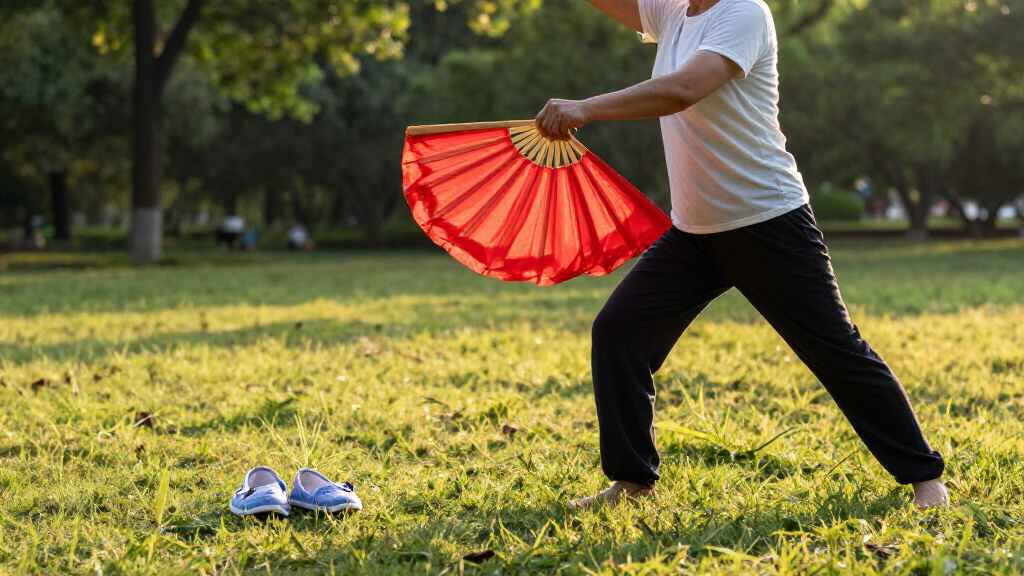
I compared these six options by the kind of tai chi practice they support, how approachable they appear for a new buyer, what comes in each set, and how easy the equipment may be to store or carry. I also looked for clear differentiators—such as the Baoding balls’ compact hand use, the Soft Strength racket’s silicone face, and the YUYTE set’s included ball and bag—rather than treating every item as interchangeable.
The order favors versatility and ease of entry for the broadest group of buyers, then separates options by their specific use. ZooBoo leads as a beginner-oriented racket set; Chiming ranks high for a distinct, compact practice; and YUYTE earns a place for its bundled accessories. The remaining picks are more specialized or have a narrower basis for comparison, so I rank them below the more clearly defined options. Where product details do not establish durability, performance, or exact fit, I avoid making claims beyond the information provided.
| tai chi equipment | Brand | Color |
|---|---|---|
| ZooBoo Tai Chi Ball Racket Set | ZooBoo | — |
| Chiming Tai Chi Baoding Balls | — | — |
| Soft Strength Tai Chi Racket w | — | As pictured |
| YUYTE Soft Strength Exercise R | YUYTE | As shown |
| Lightweight Aluminum Tai Chi R | EVTSCAN | — |
| Wooden Tai Chi Training Tool | — | Brown |
Factors to Consider When Choosing Best Tai Chi Equipment
Before choosing, match the equipment to the movement you plan to practice. A product described as tai chi equipment may support a particular drill rather than a full routine, and buying a set with extra pieces is useful only if you will use them.
Choose the Practice Before the Product
Start by deciding whether you want a racket-and-ball activity, hand practice with Baoding balls, or a standalone training implement. These are different tools, not stages in a single required progression. A common mistake is to buy the most complete-looking set before checking whether its activity matches your lessons or personal routine. If a class or instructor recommends a specific type of equipment, follow that guidance before choosing a substitute. Buyers who are still exploring can favor a clearly beginner-oriented set, while those with an established practice should choose for the drill they already intend to do. This decision matters more than collecting several kinds of equipment at once.
Check What the Set Actually Includes
Set names can imply completeness, but the included pieces determine what you can use right away. Check whether the listing specifies a ball, carrying bag, stand, or other accessory, and do not assume an item is included because it appears in a product name or image. Bundled accessories can simplify storage and reduce the need to source matching pieces separately. On the other hand, a bundle may add little value if you already own the accessories or do not plan to use them. Compare the contents against your intended practice rather than counting components. For a first purchase, a set with clearly stated contents can make setup easier.
Treat Material as a Feel and Handling Choice
Material labels are useful starting points, but they do not by themselves prove comfort, durability, or suitability for every routine. The lineup includes a racket with a silicone face, a lightweight aluminum racket set, Baoding balls, and a wooden tool, each with a different form and handling purpose. Think about the type of contact and grip your practice involves, then check available product details for dimensions and care instructions. A common buying error is selecting a material based only on a presumed performance advantage. If you are sensitive to weight or surface feel, favor listings with clear specifications and return terms. Avoid paying extra for a material distinction that does not affect your intended use.
Account for Storage and Portability
Consider where the equipment will live between sessions and whether you need to carry it to a class or outdoor practice. Compact hand-held items are easier to store than a racket set, while a carrying bag can help keep a bundled kit together. Still, a bag does not tell you how large the equipment is, so check dimensions before buying if storage space is tight. Buyers often focus on portability only after a purchase, then find the tool inconvenient to bring along. If the equipment will stay at home, storage may matter more than a travel accessory. If you practice in several locations, choose a format and package that fit your actual routine.
Buy for Skill Level Without Overbuying
Beginner-friendly labeling can be useful, but it does not guarantee that a tool suits every learner or every tai chi style. Newcomers should prioritize a clear purpose and straightforward set contents over specialized extras. More experienced buyers may prefer a narrower tool that matches a known drill, rather than a general starter bundle. A common mistake is treating a larger set as automatically better for learning. If you are unsure which practice you will continue, start with one tool aligned to a specific activity and add equipment only when a real need appears. That approach limits clutter and makes it easier to tell whether the chosen tool supports your routine.
Compare Long-Term Use, Not Just the First Session
Think about maintenance, replacement needs, and whether the product information explains how to care for the equipment. The provided descriptions do not establish how each item holds up over time, so check manufacturer guidance rather than relying on material names alone. Ask whether the item can serve your routine repeatedly or whether it is intended for a narrow exercise. A bundle may be worthwhile when its pieces will all see regular use; otherwise, a simpler option can be the more sensible purchase. Also consider whether accessories can be stored together and whether the product has a clear use in your existing practice. Choosing for sustained use helps prevent buying equipment that is appealing at first but does not fit your habits.
Frequently Asked Questions
Should I buy a tai chi racket set or Baoding balls first?
Choose based on the practice you want to do, since these options serve different activities. A racket set is the more direct fit if you want ball-and-racket coordination; Baoding balls are compact hand tools for a separate kind of practice. Neither is a universal prerequisite for learning tai chi, and one does not replace the other. If an instructor has suggested a specific tool, use that recommendation to guide your first purchase. If you are choosing independently, pick the activity you are more likely to practice consistently.
Is a bundled racket set a better first purchase than a racket alone?
A bundle can be easier for a new buyer when it clearly includes the pieces needed for the intended activity. The YUYTE set lists a ball and carrying bag, while other racket options in this lineup have different distinguishing features. A bundle is not automatically a better buy if you already own compatible accessories or will not use them. Check the stated contents and any fit or size information before deciding. The best first purchase is the one that lets you begin the practice you actually want without paying for unused extras.
Can Baoding balls replace a tai chi racket for practice?
No: they are different kinds of equipment and support different activities. The Chiming Baoding balls are designed for hand-held practice, while a racket set is intended for ball-and-racket work. Choosing one as a substitute for the other may leave you without the tool needed for a particular drill. If you follow a class or instructional program, check what it calls for before buying. Buyers who want both forms of practice may eventually choose both, but there is no need to purchase them together without a clear use for each.
What should I check before choosing a racket material?
Look for specific details about the racket’s construction, dimensions, weight, and care, rather than relying on a material label alone. This roundup includes a silicone-face racket and a lightweight aluminum set, but those descriptions do not establish which will feel better or last longer for a particular buyer. If surface feel or handling matters to you, check the product information and any seller guidance before ordering. Consider where and how you will practice, since your routine may shape what feels comfortable. Avoid assuming that a material is automatically more durable or suitable without supporting product details.
Is the wooden training tool a good choice for someone new to tai chi?
It may suit a beginner who already knows the specific practice for which the tool is intended, but its description gives less information about a bundled starter experience than the ZooBoo or YUYTE racket sets. New buyers should identify the tool’s intended use and confirm that it matches their lessons before choosing it. If you want a clearly defined set of equipment to begin racket-and-ball practice, a racket set is the more direct option in this roundup. If your instructor recommends a wooden tool, that guidance can make it a sensible focused purchase. Check dimensions and usage details before buying, since the product name alone does not explain how it fits your routine.
Conclusion
For the broadest beginner appeal, I’d choose the ZooBoo Tai Chi Ball Racket Set as the best overall and best for beginners. The YUYTE Exercise Racket Set is my best value-style pick for buyers who want a stated ball and carrying bag in one package, while the Soft Strength Racket with Silicone Face is the more specific choice for shoppers drawn to that face material. For compact hand practice, choose the Chiming Baoding Balls; for a lightweight racket option, compare the Aluminum Tai Chi Racket Set; and pick the Wooden Training Tool only when its focused role matches your routine. No premium choice is clearly established by the supplied product details, so I would not label one best premium without stronger evidence about construction or performance. Match the tool to the practice you will actually do, then verify dimensions and included pieces before ordering.