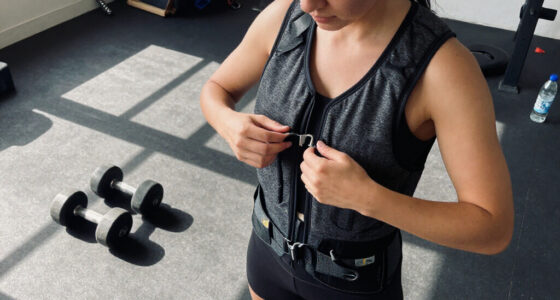
The best marathon running gear balances comfort, reliable access to fuel and water, and a secure fit over many miles. My best overall pick is the MOKURA Running Hydration Vest for runners who want a flask and phone storage together; the Honey Stinger Organic Fruit Smoothie Energy Gel stands out for portable fueling, while Body Glide Original is a simple choice for reducing friction. The main tradeoff is how much you carry: belts feel lighter, while vests offer more room and hydration options. Chafe protection and visibility also matter, but the right choices depend on your route, weather, and tested race-day routine. Read on for the full breakdown and guidance on building a setup that fits your marathon.

Get workout gear delivered free with Prime
- Fast, free delivery on millions of items
- Prime Video, Amazon Music and more included
- Member-only deals all year
Complete the kit



Key Takeaways
- The MOKURA vest leads for all-around carrying: it pairs a 500 ml soft flask with phone storage, while the WATERFLY and Slim belts suit runners who want less gear against the body.
- Hydration capacity changes the feel of a setup: the 500 ml vests and two-bottle AiRunTech belt support modest carry needs; the Zelvot bladder offers more capacity but asks runners to carry more bulk.
- Fueling is personal, not interchangeable: Honey Stinger offers an organic fruit-smoothie-style gel, while HNY+ adds electrolytes and 50 mg of caffeine, which may not suit every runner.
- Chafe prevention calls for a backup plan: Body Glide covers broader skin areas, while NipEAZE targets nipple friction; using either on race day should follow prior training runs.
- Storage and visibility solve different problems: the MVRK chest pack emphasizes water-resistant organization, while the ISEYOU light vest addresses low-light visibility rather than hydration or fueling.
| WATERFLY Adjustable Running Belt with Phone Holder |  | Best for Minimalist Storage | Brand: WATERFLY | Model: ONJ22-01 | Waist size: 27–48 inches | VIEW LATEST PRICE | See Our Full Breakdown |
| Honey Stinger Organic Fruit Smoothie Energy Gel, 12 Pack |  | Best Organic Marathon Fuel | Flavor: Fruit smoothie | Pack size: 12 gels | Total weight: 13.2 ounces | VIEW LATEST PRICE | See Our Full Breakdown |
| SWIFTVEST Reflective Running Hydration Vest with 500 ml Soft Flask |  | Best for Hydration and Carrying Essentials | Brand: SWIFTVEST | Model: SV01 | Material: Neoprene | VIEW LATEST PRICE | See Our Full Breakdown |
| New Balance Lightweight Unisex Running Skull Cap |  | Best for Cool-Weather Coverage | Fabric: 86% polyester, 14% spandex | Construction: 3D stretch | Fit: One size fits most adults | VIEW LATEST PRICE | See Our Full Breakdown |
| NipEAZE Original Anti-Chafe Nipple Covers for Men and Women |  | Best for Targeted Chafe Prevention | Fabric: Latex-free | Origin: Made in the USA | Material properties: Transparent, breathable, sweat and water resistant | VIEW LATEST PRICE | See Our Full Breakdown |
| Body Glide Original Anti-Chafe Balm, 1.5 oz |  | Best for Preventing Chafing | Product type: Anti-chafe balm stick | Size: 1.5 oz | Formulation: No petroleum or oil | VIEW LATEST PRICE | See Our Full Breakdown |
| MOKURA Running Hydration Vest with 500 ml Soft Flask and Phone Holder |  | Best Compact Hydration Vest | Weight: Under 10 oz | Included flask capacity: 500 ml | Flask material: BPA- and PVC-free | VIEW LATEST PRICE | See Our Full Breakdown |
| HNY+ Buzz Organic Honey Energy Gel with Electrolytes and 50 mg Caffeine, 12 Count |  | Best Caffeinated Honey Fuel | Pack count: 12 | Main ingredient: Organic wildflower honey | Caffeine: 50 mg from green tea | VIEW LATEST PRICE | See Our Full Breakdown |
| Slim Running Belt with Expandable Phone Pocket |  | Best Low-Profile Phone Belt | Brand and model: U·LANARO U99 | Material: Polyester | Weight: 2.4 oz | VIEW LATEST PRICE | See Our Full Breakdown |
| ISEYOU 500-Lumen Rechargeable Running Light Vest |  | Best for Dark-Route Visibility | Brightness: 500 lumens | Beam angle: 45° adjustable | Lighting modes: 6: four white and two red | VIEW LATEST PRICE | See Our Full Breakdown |
| AiRunTech Hydration Running Belt with Two Water Bottles |  | Best for Carrying Two Bottles | Material: Neoprene | Water resistance: Water-resistant | Fit range: 18–51.2 inches (46–130 cm) | VIEW LATEST PRICE | See Our Full Breakdown |
| IRAMY Women’s Compression Ankle Support Socks |  | Best for Ankle and Arch Support | Fabric: 50% nylon, 40% Coolmax, 10% spandex | Fit: Regular | Sizes: Small, Medium, Large, X-Large | VIEW LATEST PRICE | See Our Full Breakdown |
| Zelvot Running Hydration Vest with 2L Water Bladder |  | Best for Long, Self-Supported Runs | Capacity: 2 liters | Weight: 0.65 kg | Material: 900D Oxford fabric, polyester | VIEW LATEST PRICE | See Our Full Breakdown |
| MVRK Water-Resistant Running Chest Pack |  | Best Compact Essentials Carrier | Material: Cordura nylon | Dimensions: 4 × 7 inches | Depth: 0.75 inches | VIEW LATEST PRICE | See Our Full Breakdown |
More Details on Our Top Picks
WATERFLY Adjustable Running Belt with Phone Holder
For marathon runners who want essentials close without wearing a vest, the WATERFLY running belt offers a lighter, simpler setup. Its three zippered pockets separate a phone, keys, and small fuel packets, while the stretch strap and buckle let runners adjust the fit across a broad waist range. At 3.35 ounces, it carries less bulk than the SWIFTVEST hydration vest, but it also lacks that vest’s included flask and multiple storage zones. The water-resistant construction may help with light exposure to moisture, though it is not a substitute for a waterproof phone pouch. Its main tradeoffs are hand-wash-only care and a fit range capped at 48 inches. I’d choose it for a phone-and-fuel setup, not for carrying hydration or extensive supplies.
Pros:- Three zippered pockets keep a phone and small essentials separated.
- Stretch strap and secure buckle allow an adjustable fit.
- Lightweight, breathable, sweat-wicking design suits running.
- Reflective logo and headphone port add practical running details.
Cons:- Does not include a water bottle or hydration reservoir.
- Hand-wash-only care is less convenient than easier-cleaning gear.
- Fit is limited to the listed 27–48-inch waist range.
Best for: Marathon runners who want a lightweight waist pack for a phone, keys, and a few gels without carrying a hydration vest.
Not ideal for: Runners who need water storage, extensive gear capacity, or a belt that fits beyond the listed 27–48-inch waist range.
- Brand:WATERFLY
- Model:ONJ22-01
- Waist size:27–48 inches
- Dimensions:15.74 × 0.6 × 4.33 inches
- Weight:3.35 ounces
- Pockets:3 zippered pockets
- Material:Nylon
- Water resistance:Water resistant
- Care:Hand wash only
Our verdict“Choose the WATERFLY belt if you want low-bulk storage for a phone and a few essentials, but pick the SWIFTVEST if carrying water matters more.”
Honey Stinger Organic Fruit Smoothie Energy Gel, 12 Pack
The Honey Stinger Organic Fruit Smoothie Energy Gel is the straightforward pick here for runners who want a portable carbohydrate serving they can plan into a race-fueling schedule. Each packet provides 24g of carbohydrates, and the 12-pack format makes it easy to portion supplies for training and race day. It is USDA Organic, gluten-free, and caffeine-free, with potassium included. That makes it a different choice from the HNY+ Buzz Organic Honey Energy Gel, which includes caffeine; this option suits runners who want to avoid caffeine in their fuel, while those seeking a caffeinated gel should compare the HNY+ instead. These packets are designed as workout fuel, not an everyday snack, and the product data does not specify sodium or a broader electrolyte profile. I’d match it to a rehearsed fueling plan rather than rely on it as a complete nutrition strategy.
Pros:- Provides 24g of carbohydrates per serving in a portable packet.
- USDA Organic and gluten-free.
- Caffeine-free for runners avoiding stimulants during a race.
- Includes potassium.
Cons:- Designed as workout fuel rather than a general-purpose snack.
- Does not provide caffeine, unlike the HNY+ Buzz gel in this roundup.
- Product details do not specify sodium or a broader electrolyte amount.
Best for: Marathon runners who want a portable, caffeine-free carbohydrate gel and prefer USDA Organic fueling options.
Not ideal for: Runners looking specifically for caffeine or a gel with a clearly specified broader electrolyte profile.
- Flavor:Fruit smoothie
- Pack size:12 gels
- Total weight:13.2 ounces
- Carbohydrates:24g per serving
- Dietary attributes:USDA Organic, gluten-free, caffeine-free
- Potassium:Included
Our verdict“Pick this gel if your marathon plan calls for portable, caffeine-free carbohydrates, and compare the HNY+ Buzz option if you want caffeine.”
SWIFTVEST Reflective Running Hydration Vest with 500 ml Soft Flask
For runners who want water and organized storage in one piece of gear, the SWIFTVEST hydration vest is the most complete carry option among these picks. It includes a 500 ml soft flask and six pockets, so gels, keys, and compatible phones have dedicated places rather than competing for room in a belt like the WATERFLY running belt. Adjustable front and side straps help tailor the fit, and reflective details on the front and back support visibility in low light. The waterproof phone pouch fits devices up to 18 × 10 cm, a real limit for runners with larger phones. At 230 g, it also carries more material than a minimalist belt, and the listed neoprene construction may feel warm on hot runs. I’d favor it for training routes where carrying water and supplies matters more than a barely-there feel.
Pros:- Includes a 500 ml soft flask that compresses as it empties.
- Six pockets provide organized storage for running essentials.
- Waterproof zippered phone pouch fits compatible phones up to 18 × 10 cm.
- Adjustable straps and reflective details support fit and visibility.
Cons:- The phone pouch does not fit devices beyond 18 × 10 cm.
- Neoprene may feel warm during hot-weather runs.
- Heavier and more substantial than the WATERFLY running belt.
Best for: Marathon runners who want an included soft flask, multiple storage pockets, and a dedicated phone pouch for training or race-day essentials.
Not ideal for: Runners who prefer a minimal waist pack, carry a phone larger than 18 × 10 cm, or tend to overheat in neoprene gear.
- Brand:SWIFTVEST
- Model:SV01
- Material:Neoprene
- Weight:230 g
- Dimensions:11 in W × 14 in H
- Capacity:500 ml (17 oz)
- Number of pockets:6
- Phone pouch capacity:Phones up to 18 × 10 cm
- Sizes:XS–S, M–L, L–XL
Our verdict“Choose the SWIFTVEST if you need water and organized storage on your run, but opt for the WATERFLY belt for a lighter, simpler carry.”
New Balance Lightweight Unisex Running Skull Cap
The New Balance Lightweight Unisex Running Skull Cap fills a different need from the hydration and fueling gear in this roundup: it adds lightweight head coverage for cooler runs and can also sit beneath a helmet. Its polyester-spandex stretch fabric is designed to wick moisture while staying breathable, making it a simpler option than adding a bulkier layer. Compared with the WATERFLY running belt, this cap does nothing for carrying essentials; its value is comfort and coverage rather than storage. The one-size-fits-most design keeps sizing simple, but it may not feel secure or tailored on every head. It also calls for spot or wipe cleaning rather than a more convenient full wash. I’d consider it for runners who want a basic, packable head layer, while warm-weather runners may have little reason to carry it.
Pros:- Lightweight polyester-spandex fabric is breathable and moisture-wicking.
- 3D stretch construction supports a close fit.
- Can be worn alone or beneath a helmet.
- Pull-on design keeps use simple.
Cons:- One size may not provide a secure, tailored fit for every adult.
- Requires spot or wipe cleaning.
- Offers no storage or hydration function compared with gear such as the WATERFLY belt.
Best for: Runners who want lightweight head coverage for cool-weather training or a breathable layer beneath a helmet.
Not ideal for: Runners who need storage or hydration gear, or those who want a tailored fit and machine-wash convenience.
- Fabric:86% polyester, 14% spandex
- Construction:3D stretch
- Fit:One size fits most adults
- Closure:Pull-on
- Color:Black
- Care:Spot or wipe clean
- Origin:Imported
Our verdict“Choose this cap for lightweight coverage on cool runs or under a helmet, and skip it if your marathon kit needs storage rather than another clothing layer.”
NipEAZE Original Anti-Chafe Nipple Covers for Men and Women
For runners prone to nipple irritation over long distances, NipEAZE Original Anti-Chafe Nipple Covers offer targeted protection without adding a garment layer. The transparent, breathable covers are sweat and water resistant, and the latex-free material suits runners seeking an alternative to adhesive products containing latex. Their fit guidance matters: each cover should contact the areola only, not the surrounding skin, so runners need to select the suitable size and place them carefully. Unlike Body Glide Original Anti-Chafe Balm, another option in this roundup, NipEAZE uses adhesive covers rather than a balm applied to a broader area. That focused approach can suit a specific problem, but it is less versatile for chafing elsewhere. The two size options also have different pair counts, and the covers need cool, dry storage.
Pros:- Latex-free material.
- Transparent, breathable design is discreet under running clothes.
- Sweat and water resistant for exercise.
- Designed to remove in the shower without shaving.
Cons:- Requires careful placement on the areola only, not surrounding skin.
- Pair count differs between the regular and extra sizes.
- Protects a targeted area rather than offering the broader application of Body Glide balm.
Best for: Runners who experience nipple chafing and want discreet, latex-free adhesive protection for long training runs or race day.
Not ideal for: Runners seeking an all-purpose anti-chafe product, or anyone unable to fit the covers so they contact the areola only.
- Fabric:Latex-free
- Origin:Made in the USA
- Material properties:Transparent, breathable, sweat and water resistant
- Regular size:3/4 inch; 15 pairs
- Extra size:1 inch; 12 pairs
- Fit guidance:Should contact the areola only, not the surrounding skin
- Intended use:Nipple chafing prevention and concealer
- Care:Store in a cool, dry place
Our verdict“Choose NipEAZE if nipple chafing is your specific concern and you can follow the fit guidance; choose Body Glide for a more general anti-chafe application.”
Body Glide Original Anti-Chafe Balm, 1.5 oz
For marathoners who lose comfort to rubbing before fatigue sets in, Body Glide Original offers a simple barrier for skin, clothing, shoes, and protective gear. Its all-over-body use makes it more versatile than NipEAZE Original Anti-Chafe Nipple Covers, which address one specific source of friction. The stick format is portable, and the balm contains no petroleum or oil; it also washes off with soap after a run. That broad coverage suits runners who want one product for several known hot spots, but the product details don’t identify its ingredients beyond excluding petroleum and oil. It also needs soap to wash away, so it may be less convenient for runners who want a quick water-only cleanup. This is friction protection, not hydration, cushioning, or fuel.
Pros:- Helps protect against friction from skin, clothing, shoes, and gear
- Suitable for all-over-body use
- Contains no petroleum or oil
- Portable 1.5 oz stick washes off with soap
Cons:- Soap is needed to wash it off
- Product details do not specify ingredients beyond excluding petroleum and oil
Best for: Marathon runners who experience rubbing in multiple areas and want a portable balm they can apply wherever friction occurs.
Not ideal for: Runners seeking a product with a fully specified ingredient list or a targeted nipple-only solution; NipEAZE is more specialized for that use.
- Product type:Anti-chafe balm stick
- Size:1.5 oz
- Formulation:No petroleum or oil
- Use:Barrier against rubbing, chafing, pinching, and friction
- Application:Suitable for all-over-body use
- Cleanup:Washes off with soap
Our verdict“Choose Body Glide if you want one portable barrier for several potential marathon chafing points rather than a single-area solution.”
MOKURA Running Hydration Vest with 500 ml Soft Flask and Phone Holder
The MOKURA vest is a compact option for marathon training runs where carrying a drink and essentials matters more than packing a large water supply. It weighs under 10 oz and includes a 500 ml soft flask, a sweatproof phone holder, front pockets, and a rear mesh pocket. Compared with the Zelvot Running Hydration Vest with 2L Water Bladder, MOKURA’s smaller flask setup is less suited to long stretches without refill access, but it avoids centering the carry system on a large bladder. Three adjustable chest straps and stretch waist panels let runners tune the fit to help limit bounce; that setup takes adjustment, and a vest that isn’t fitted carefully can be distracting over marathon distance. Reflective accents and a two-year warranty add practical support, though the listed storage and capacity remain modest.
Pros:- Under-10-ounce construction with breathable mesh
- Includes a 500 ml BPA- and PVC-free soft flask
- Phone holder and multiple pockets keep essentials close
- Adjustable chest straps and stretch waist panels allow fit tuning
Cons:- 500 ml capacity may be limiting on long routes without refill points
- Three chest straps require careful adjustment to reduce bounce
Best for: Marathon trainees who want a lightweight vest for carrying a 500 ml drink, phone, and a few small essentials on supported routes.
Not ideal for: Runners who need substantial water capacity for long, remote runs; the Zelvot vest’s 2L bladder is better suited to that need.
- Weight:Under 10 oz
- Included flask capacity:500 ml
- Flask material:BPA- and PVC-free
- Materials:Neoprene and breathable mesh
- Fit:Unisex, three adjustable chest straps, stretch waist panels
- Storage:Sweatproof phone holder, two front pockets, rear mesh pocket
- Visibility:Reflective accents on front and back
- Warranty:2 years
Our verdict“Pick MOKURA for a lighter, compact carry setup when a 500 ml flask is enough and a larger bladder would be unnecessary.”
HNY+ Buzz Organic Honey Energy Gel with Electrolytes and 50 mg Caffeine, 12 Count
HNY+ Buzz stands apart for marathoners who prefer honey-based fuel and want caffeine included in a single-serve pouch. Each gel uses organic wildflower honey with 50 mg of green tea caffeine, plus sea salt, magnesium, potassium, and trace minerals. The smooth, jelly-like texture and pocketable packaging suit runners who want fuel they can carry without extra containers. Compared with the Honey Stinger Organic Fruit Smoothie Energy Gel, HNY+ makes caffeine and its honey base explicit differentiators; the tradeoff is that caffeine is built into every serving, so it is a poor fit for runners limiting stimulants or managing intake carefully during a race. Its naturally sweet flavor may also be tiring over repeated marathon servings. The product details do not give carbohydrate or calorie amounts, making it harder to compare fueling capacity by the numbers.
Pros:- Single-serve pouches are easy to carry during a run
- Made with organic wildflower honey
- Includes 50 mg caffeine from green tea
- Provides sea salt, magnesium, potassium, and trace minerals
Cons:- Caffeine may not suit runners avoiding stimulants or controlling intake
- Naturally sweet honey flavor may become tiring across repeated servings
- Product details do not list carbohydrate or calorie amounts
Best for: Marathon runners who like honey-based gels, want a portable caffeinated option, and have already planned for caffeine in their race fueling.
Not ideal for: Runners avoiding caffeine, sensitive to sweet honey flavors, or needing clearly stated carbohydrate and calorie amounts to plan intake.
- Pack count:12
- Main ingredient:Organic wildflower honey
- Caffeine:50 mg from green tea
- Electrolytes:Sea salt, magnesium, potassium, and trace minerals
- Texture:Smooth, jelly-like
- Gluten free:Yes
- Packaging:Single-serve gel pouches
- Listed exclusions:No maltodextrin, seed oils, dairy, nut ingredients, or artificial additives
Our verdict“Choose HNY+ Buzz if you want honey-based marathon fuel with built-in caffeine and are comfortable planning around its stimulant content.”
Slim Running Belt with Expandable Phone Pocket
For marathoners who want their phone close without wearing a vest, the U·LANARO U99 keeps the carry system simple: one expandable, zippered pocket on an adjustable elastic belt. At 2.4 ounces, it is a lighter, less involved alternative to the MOKURA Running Hydration Vest, but it does not provide a flask or several separate storage areas. The pocket is described as roomy enough for phones with cases and everyday essentials, while its water-resistant inner layer and zipper help shield contents from moisture. Reflective strips support low-light visibility, though they are not a substitute for a dedicated light such as the ISEYOU 500-Lumen Rechargeable Running Light Vest. A single compartment can mean digging around for small items, and hand-wash-only care adds a maintenance step. This belt suits runners who carry a phone and little else.
Pros:- Lightweight 2.4-ounce design
- Expandable pocket accommodates smartphones with cases
- Adjustable strap fits 27–46-inch waists
- Water-resistant inner layer, zipper, and reflective strips
Cons:- One pocket offers limited organization
- Hand wash only
- Does not include a hydration container or active light
Best for: Marathon runners who carry a phone and a few small essentials but don’t need a hydration vest or separate storage compartments.
Not ideal for: Runners who need to carry water, organize several items, or want a dedicated illumination source for dark routes.
- Brand and model:U·LANARO U99
- Material:Polyester
- Weight:2.4 oz
- Waist fit:27–46 inches
- Strap length:46 inches
- Pockets:1 expandable pocket
- Closure:Zipper
- Water resistance:Water resistant
- Care:Hand wash only
Our verdict“Choose this belt if your marathon carry needs are limited to a phone and small essentials in a low-profile package.”
ISEYOU 500-Lumen Rechargeable Running Light Vest
When marathon training includes unlit roads or pre-dawn miles, the ISEYOU provides both forward illumination and reflective visibility. Its 500-lumen light has a 45° adjustable beam, and six modes let runners choose between four white-light and two red-light settings. Compared with the U·LANARO Slim Running Belt, which adds reflective strips but no active illumination, this is the more capable choice for seeing the route as well as being seen. The tradeoff is weight: at 236 g, it is a more substantial piece of gear than a simple belt. Its built-in battery charges by USB-C and offers 4–9 hours in white mode, so runners should match charge and mode to their outing; the battery is non-removable. IPX4 water resistance supports use in wet conditions, but this is not a water-sealed design.
Pros:- 500-lumen light with a 45° adjustable beam
- Six white and red lighting modes
- Reflective elements support visibility from multiple directions
- USB-C rechargeable battery with adjustable shoulder and waist straps
Cons:- At 236 g, it is heavier than a simple reflective belt
- White-mode runtime is listed as 4–9 hours
- Built-in battery is non-removable
Best for: Marathon trainees who run in low-light conditions and want an adjustable forward beam plus reflective visibility in one wearable setup.
Not ideal for: Runners who train mainly in daylight, want a very lightweight carry option, or need a removable battery for longer outings.
- Brightness:500 lumens
- Beam angle:45° adjustable
- Lighting modes:6: four white and two red
- Battery:1800 mAh rechargeable lithium-ion
- Charging:USB-C; 3–4 hours
- Runtime:4–9 hours in white mode; up to 16 hours in red mode
- Water resistance:IPX4
- Weight:236 g
- Strap ranges:Waist: 31–51 in; shoulders: 12–24 in
Our verdict“Choose the ISEYOU for marathon training on dark routes when active illumination matters more than a lighter, simpler accessory.”
AiRunTech Hydration Running Belt with Two Water Bottles
For marathon runners who want water on their waist rather than a pack on their back, the AiRunTech belt offers a simple middle ground: two included 175 ml bottles plus a pocket for a phone and small essentials. Its adjustable anti-slip design is aimed at reducing bounce, while the removable bib toggles make it more race-ready than a basic storage belt such as the WATERFLY Adjustable Running Belt. The tradeoff is capacity: 350 ml total is useful for short stretches between aid stations, but it cannot match the Zelvot Running Hydration Vest and its 2-liter bladder for long, self-supported runs. The water-resistant neoprene pocket fits phones up to 6.5 inches, though runners should wash the bottles several times before first use and follow the gentler care guidance for the belt.
Pros:- Includes two BPA-free 175 ml bottles with push-pull nozzles
- Adjustable anti-slip fit is designed to limit bounce and chafing
- Pocket accommodates phones up to 6.5 inches and small essentials
- Removable bib toggles and reflective tab suit race-day and low-light use
Cons:- Combined bottle capacity is limited for long stretches between refill points
- Bottles need several washes before first use
- Care calls for hand washing or a delicate cycle and air drying
Best for: Marathon runners who want a phone pocket and small, refillable water supply without wearing a hydration vest
Not ideal for: Runners planning long stretches without aid stations or those who need more than 350 ml of carried water
- Material:Neoprene
- Water resistance:Water-resistant
- Fit range:18–51.2 inches (46–130 cm)
- Bottles:2 × 175 ml (6 oz), BPA-free
- Pocket capacity:Phones up to 6.5 inches
- Weight:6 oz
- Features:Anti-slip fit, headphone opening, removable race bib toggles, reflective tab
Our verdict“Choose this belt if you want two small bottles and race-day storage without the bulk of a hydration vest.”
IRAMY Women’s Compression Ankle Support Socks
The IRAMY compression socks focus on foot comfort rather than carrying gear, making them a targeted choice for runners who want ankle and arch support through marathon training. Their six compression rings, cushioned construction, and reinforced heel and toe offer more structured support than a standard running sock, while Coolmax fabric and ventilated mesh help move sweat away. Compared with the Body Glide Original Anti-Chafe Balm, which addresses skin friction, these socks are a wearable support option; they do not replace anti-chafe protection where skin rubs. The main uncertainty is fit: the listing gives general sizes but no measured compression level, so runners seeking a specific pressure or medical-grade support should look elsewhere. Care is straightforward with machine washing, but sizing needs attention because it affects the compression feel.
Pros:- Compression rings provide support around the ankle and arch
- Coolmax fabric and ventilated mesh help wick moisture and release heat
- Reinforced heel and toe are designed for added durability
- Machine-washable construction simplifies routine care
Cons:- No specific compression measurement is provided
- Sizing needs careful selection because it affects the compression level
Best for: Women runners seeking cushioned ankle and arch support for training and everyday athletic wear
Not ideal for: Runners who need a specified compression rating or prefer an unstructured, low-compression running sock
- Fabric:50% nylon, 40% Coolmax, 10% spandex
- Fit:Regular
- Sizes:Small, Medium, Large, X-Large
- Construction:200-needle knit with six ankle compression rings
- Features:Moisture-wicking, ventilated mesh, reinforced heel and toe
- Care:Machine wash
- Origin:Imported
Our verdict“Pick these socks if ankle and arch support matter more to you than a clearly quantified compression rating.”
Zelvot Running Hydration Vest with 2L Water Bladder
Among these four products, the Zelvot hydration vest is the strongest fit for marathon training routes where carrying a meaningful water supply matters more than keeping gear minimal. Its 2-liter bladder and high-flow bite valve offer far more capacity than the AiRunTech belt’s two small bottles, while three front zippered pockets and two large back pockets leave room for essentials or an extra layer. Adjustable shoulder straps and a waist belt help manage movement, and breathable mesh and reflective details support outdoor use. That storage has a cost: at 0.65 kg, it is substantially more gear to carry than a belt, and the listed chest ranges come in only XS/S and M/L. The detachable holster is described as fitting small to mid-sized pistols, so it adds little value for runners who want a dedicated running accessory.
Pros:- Included 2-liter BPA- and PVC-free bladder has a high-flow bite valve
- Three front zippered pockets and two large back pockets provide versatile storage
- Adjustable shoulder straps and waist belt help limit shifting
- Breathable mesh and reflective details support outdoor running
Cons:- At 0.65 kg, it carries more weight than a simple running belt
- Chest fit is limited to the listed XS/S and M/L ranges
- Detachable holster is specified for small to mid-sized pistols, limiting its usefulness for many runners
Best for: Marathon trainees on long routes with limited refill access who want substantial water capacity and organized storage
Not ideal for: Runners who prioritize a minimal, lightweight setup or whose chest measurement falls outside the two listed fit ranges
- Capacity:2 liters
- Weight:0.65 kg
- Material:900D Oxford fabric, polyester
- Water bladder:Food-grade, BPA- and PVC-free
- Pockets:3 waterproof zippered front pockets and 2 large back pockets
- Chest fit range:XS/S: 25–35 in; M/L: 29–41 in
- Straps:Adjustable shoulder straps and waist belt
- Warranty:2 years
Our verdict“Choose the Zelvot when carrying two liters and extra gear outweighs the desire for a light, minimal race setup.”
MVRK Water-Resistant Running Chest Pack
The MVRK chest pack is for marathon runners who want to keep small essentials close without carrying water or wearing a full vest. At 22.68 g and just 4 × 7 inches, it is the most compact storage-focused choice in this group; three zippered compartments can separate keys, cards, and a small phone. Compared with the AiRunTech belt, it has no included bottles or race bib toggles, and its device limit is smaller at 5.5 inches. The Cordura nylon shell is water-resistant, not a substitute for waterproof storage, and the non-stretch fabric may feel less forgiving when packed tightly. Neoprene padding at contact points and adjustable cross-body straps help with fit, while reflective detailing adds visibility. I’d choose it for light carry, not for runners who need hydration or a larger phone pocket.
Pros:- Lightweight 22.68 g construction keeps the carry burden low
- Three zippered compartments help separate small essentials
- Water-resistant Cordura nylon and reflective detailing suit outdoor use
- Adjustable straps and neoprene contact padding support a more comfortable fit
Cons:- Maximum compatible device size is 5.5 inches
- No stretch in the fabric limits flexibility when compartments are full
- Hand-wash-only care is less convenient than machine-washable gear
Best for: Runners who carry a compact phone and a few small essentials and want a lightweight, organized chest pack
Not ideal for: Runners who need carried hydration, a phone larger than 5.5 inches, or flexible storage that stretches around bulky items
- Material:Cordura nylon
- Dimensions:4 × 7 inches
- Depth:0.75 inches
- Weight:22.68 g
- Storage volume:28 cubic inches
- Compartments:3 zippered compartments
- Maximum compatible device size:5.5 inches
- Water resistance:Water-resistant
- Care:Hand wash only
Our verdict“Choose this pack for compact, organized storage on runs where you do not need to carry water.”
How We Picked
I compared these 14 items as parts of a marathon setup, prioritizing race-day usefulness over feature counts. The main criteria were carry comfort and stability, practical access to water and fuel, storage for a phone and essentials, visibility in low light, and targeted friction protection. I also considered how much bulk or routine each item adds, since extra capacity only helps when a runner will use it comfortably over a long distance.
The ranking reflects differences in role and versatility, not a claim that one product suits every runner. The MOKURA vest ranks highest as a balanced carry option; the hydration-specific picks follow according to capacity and format, while the belts favor a lighter setup. Fuel, anti-chafe, clothing, support, lighting, and chest storage are ranked for their narrower needs. Product details provided here do not establish fit on every body, real-world durability, or compatibility with a runner’s established fueling plan, so I treat those as items to check before race day.
Factors to Consider When Choosing Best Marathon Running Gear
A marathon kit is a system, not a pile of individually useful products. I would choose it around the route, weather, race aid stations, and what has already worked during long training runs. These broader checks can help prevent buying overlapping gear or carrying more than the race calls for.
Match Hydration to the Route, Not Just the Container
Start by checking the race’s aid-station spacing, cup availability, and rules before choosing a vest, bladder, or bottle belt. Carrying water can help on sparse or hot routes, but extra liquid adds weight and may bounce if the fit is poor. A 500 ml flask, two small bottles, and a 2L bladder represent different carrying habits, not a simple progression from worse to better. Runners who drink comfortably at aid stations may prefer a lighter belt or no personal water carrier. Practice drinking while moving so the setup does not interrupt pace or cause spills. Also check how a container is cleaned and dried after training, since a hard-to-maintain system can be unpleasant to reuse.
Plan Storage Around Access and Bounce
List what you actually need during the race: phone, keys, identification, gels, or other small essentials. A roomy pocket can be less useful than a smaller one if items shift, press against the body, or require awkward access. Chest packs, waist belts, and hydration vests distribute weight differently, so clothing layers and body shape can change which feels stable. Try the loaded setup at marathon pace rather than judging it empty in a shop. Keep frequently used fuel easy to reach, and avoid packing objects that could rub or become uncomfortable over time. If your phone is essential, check that its case fits and that the pocket closes securely.
Use Training Runs to Set a Fueling Plan
Energy gels differ in flavor, ingredients, and stimulant content, so a product name alone cannot tell you whether it will work for your stomach. Check the label for carbohydrate content, caffeine, electrolytes, and any ingredients you avoid, then test it during training. Do not add caffeine on race day for the first time; its effects and suitability vary by runner. Plan when to take fuel around your pace, aid stations, and personal tolerance rather than relying on a single gel to cover a full marathon. Carry only the amount your plan calls for, since unused packets add clutter. Pair the plan with the race’s available fluids and your usual hydration routine.
Prevent Chafing Before It Starts
Friction can arise from clothing seams, straps, sweat, and repeated movement, so prevention should target the likely contact points. A balm can suit broader areas of skin, while nipple covers address a more specific source of irritation. Neither approach replaces checking whether a shirt, vest, or bra fits and moves comfortably. Apply or place protection as directed and test it on a long run, since sweat and fabric can affect how it holds. Avoid introducing unfamiliar products on race morning, especially if your skin is sensitive. If chafing repeatedly occurs in the same spot, review the garment and fit as well as the protective product.
Choose Visibility and Clothing for Conditions
Early starts, dark routes, and poor weather can make visibility and temperature management part of a safe race setup. A light vest addresses being seen or illuminating a path, while a cap or skull cap is mainly about comfort in particular conditions; these items do not replace one another. Check race rules for lighting requirements and consider whether the course is already well lit. Layering too warmly can lead to discomfort once the body heats up, so use training runs in similar weather to decide what to wear. Water resistance can protect belongings from light exposure, but it does not automatically mean a pack is waterproof. Prioritize visibility where needed without adding layers that interfere with movement.
Pay More Only for a Need You Can Name
A premium-feeling setup is not automatically a better marathon setup if it adds capacity or complexity you will not use. Spending more may make sense when a particular fit, storage arrangement, or hydration format solves a recurring problem. For a first marathon, a simple belt and familiar fuel may be easier to manage than a high-capacity vest. Compare the full kit rather than buying several products that all carry the same phone or water. Consider cleaning, battery charging, replacement needs, and how often each item will be used after race day. The best value is the configuration that works reliably for your routine without unnecessary weight or duplicate gear.
Frequently Asked Questions
Do I need to carry water during a marathon?
Not always. Check aid-station spacing, what fluids the race provides, and whether you can drink comfortably while running. A personal bottle or vest may help on a hot course, a route with limited stations, or if you prefer a familiar drink. Carrying water you do not need adds weight and can make a setup less comfortable. Test your choice on long runs that resemble race conditions.
Should I choose a running belt or a hydration vest?
Choose based on the amount of water and gear you need, plus how each format sits on your body. A belt often suits runners carrying a phone and a small number of essentials, while a vest can distribute more storage across the torso and hold a flask or bladder. Neither is automatically more comfortable; bounce, pressure points, and access can vary by fit and clothing. Load each option as you would for race day and run in it before deciding. If aid stations cover your needs, the lighter format may be enough.
Is a caffeinated energy gel a good choice for race day?
It can suit a runner who already tolerates caffeine and has practiced using that product during training. Check the label for caffeine amount and other ingredients, and account for any caffeine you get from drinks or other gels. A 50 mg serving is not automatically right for every runner, since sensitivity and overall intake differ. Do not try a caffeinated gel for the first time during the marathon. If you are unsure about caffeine or have a health concern, seek advice from a qualified clinician.
Can I rely on anti-chafe balm or nipple covers without testing them first?
I would not make race day the first test of any anti-chafe product. Sweat, fabric, fit, and distance can affect whether balm stays in place or covers feel comfortable. Try the product on a long training run while wearing the same shirt or vest you plan to race in. A balm may cover several friction zones, while nipple covers target one specific area, so the source of irritation should guide the choice. If friction continues, adjust the clothing or straps as well as the product.
Which items should a first-time marathon runner buy first?
Start with the items that solve a known problem in training: comfortable clothing, a way to carry essentials, and fuel you have already tolerated. Add personal hydration only if the route or your drinking habits call for it, rather than assuming a large bladder is necessary. Anti-chafe protection can be useful if you know your friction points, but test it before race day. A light or weather-specific head covering depends on conditions and race timing. Build the kit gradually through long runs so you avoid carrying duplicate or unfamiliar gear.
Conclusion
For most runners seeking one balanced carry option, I recommend the MOKURA Running Hydration Vest as the best overall pick, while the WATERFLY belt is a better value-style choice for those who want a simpler setup. Beginners should start with familiar, easy-to-manage gear and tested fuel rather than a high-capacity system they may not need. For a more specialized premium-style setup, choose the Zelvot bladder vest only if its extra water capacity fits the route and your training routine. Runners focused on low-light visibility can look to the ISEYOU light vest; those managing friction can pair targeted protection from Body Glide or NipEAZE with better-fitting clothing. The best marathon kit is the smallest reliable combination you have practiced using, not the one with the most features.