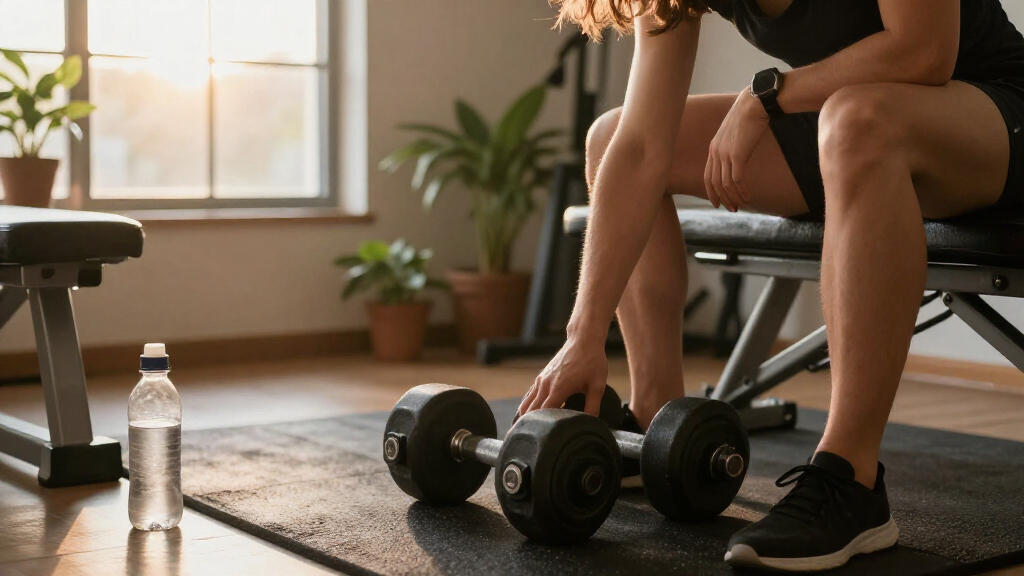

Set up adjustable dumbbells for safe, flexible strength training at home. This beginner guide helps you choose a suitable weight range, prepare a workout area, adjust the dumbbells, and check that each change is secure before lifting. Allow 30-60 minutes to set up your equipment and about 30-45 minutes for a workout.

Get workout gear delivered free with Prime
- Fast, free delivery on millions of items
- Prime Video, Amazon Music and more included
- Member-only deals all year

LifeOG 2026 FDB2 Adjustable Dumbbell Set of 2 (5-in-1, 4-25 lbs Each)
- ✔ Weight range: 4–25 lb per dumbbell
- ✔ Total set weight: 50 lb
- ✔ Adjustment: Five settings; one-second mechanism; change on base

UNNMIIY 5-in-1 Adjustable Dumbbell Set (45lb Pair)
- ✔ Weight range: 2–22.5 lb per dumbbell
- ✔ Total weight: 45 lb pair
- ✔ Configurations: Dumbbells, barbell, kettlebells, push-up stands

FITPLAM 5-in-1 Adjustable Dumbbell Set with Dual-Lock Nuts
- ✔ Dumbbell range: 6–22.5 lb per hand
- ✔ Total weight options: 20, 35, 45, 55, 70, or 90 lb
- ✔ Barbell range: 7.5–45.8 lb
Difficulty: Beginner | Time: 30-60 minutes for setup; 30-45 minutes per workout
What You’ll Need
Tools & Materials:
- Adjustable dumbbell set with its original adjustment mechanism
- Level, stable floor space
- A rack, tray, or clear storage area for the dumbbells
- Workout clothes and supportive shoes
Knowledge:
- Basic familiarity with common strength exercises such as rows, presses, and squats
- Ability to lift and lower a manageable weight with control
Read the manufacturer’s manual before assembling or adjusting the set. Dumbbell designs differ: some use selector dials, others use threaded collars or locking pins. Follow the instructions for your model, including its weight limits and care requirements. If you have an injury, a medical restriction, or are unsure which exercises are suitable for you, seek guidance from a qualified health professional.
LifeOG 2026 FDB2 Adjustable Dumbbell Set of 2 (5-in-1, 4-25 lbs Each)
For a home gym where workouts shift quickly between movements, LifeOG’s one-second adjustment mechanism is its clearest advantage. It offers five settings from 4 to 25 lb per dumbbell, edging past the two convertible sets’ 22.5 lb maximum. That difference is modest, but useful for buyers whose current exercises are approaching the top of those lighter ranges.The set’s automatic dual-lock safety system is described as engaging when the dumbbell is lifted, which helps keep plates secure during movements such as overhead presses. Its textured, 33 mm silicone grip also distinguishes it from UNNMIIY’s ABS handles and FITPLAM’s foam-wrapped bar connector. The tradeoff is that adjustments can only be made with the dumbbell seated on its base; that means each change requires a place to set it down, so it may be less convenient when floor space is crowded. Although the product is described as 5-in-1, the supplied details focus on dumbbell use, while FITPLAM and UNNMIIY explicitly list more conversion formats. Choose LifeOG for efficient dumbbell-focused sessions; skip it if you need a single kit that clearly converts into a barbell or kettlebell.
Pros:
- Five stated weight settings from 4 to 25 lb per dumbbell
- One-second adjustment mechanism supports quicker exercise transitions
- Automatic dual-lock system is designed to secure plates when lifted
- Textured 33 mm silicone grips offer a distinct alternative to foam or ABS handles
Cons:
- Weight changes require the dumbbell to be placed on its base
- 25 lb per hand may limit continued strength progression
- Supplied details do not specify the other configurations implied by the 5-in-1 description
Best for: Home lifters who want quick changes between dumbbell exercises and a slightly higher maximum weight than the other two sets.
Not ideal for: Buyers who need a barbell or kettlebell configuration, or who expect to progress beyond 25 lb per hand.
Bottom line: LifeOG is our best overall match for home dumbbell workouts when fast changes and a 25 lb per-hand ceiling meet your training needs.
“LifeOG is our best overall match for home dumbbell workouts when fast changes and a 25 lb per-hand ceiling meet your training needs.”
UNNMIIY 5-in-1 Adjustable Dumbbell Set (45lb Pair)
UNNMIIY starts at 2 lb per dumbbell, the lowest entry point in this comparison. That makes it better suited than LifeOG or FITPLAM for light exercises, gradual loading, and sessions where a 6 lb starting weight would be too much. Its stated maximum of 22.5 lb per hand matches FITPLAM and sits just below LifeOG, so its biggest distinction is the range at the light end rather than heavier training.The set is listed for use as dumbbells, a barbell, kettlebells, and push-up stands, giving beginners several ways to vary a small home workout setup. Thick foam connectors and non-slip ABS handles add comfort-oriented details, and the PE exterior is described as helping protect floors. Compared with FITPLAM, UNNMIIY provides a lighter minimum weight but does not list weight plates as a separate use. Its cement and iron sand core may also make the weights bulkier than traditional iron plates, while plastic and foam pieces may wear sooner than all-metal components. It makes sense for lighter, adaptable home training; choose a different set if compact, quick-to-adjust dumbbells or a more robust all-metal design are your priority.
Pros:
- Starts at 2 lb per dumbbell, lower than the other sets listed
- Can be configured as dumbbells, a barbell, kettlebells, and push-up stands
- 20 mm foam connectors and non-slip ABS handles add comfort-focused features
- PE exterior is described as helping protect floors from abrasion
Cons:
- Maximum of 22.5 lb per hand may not support advanced strength work
- Cement-based weights are bulkier than traditional iron plates
- Plastic and foam components may wear faster than all-metal alternatives
Best for: Beginners or home exercisers who want a low starting weight and several configurations for general, lighter workouts.
Not ideal for: Experienced lifters who need heavier dumbbells, or buyers prioritizing compact plates and minimal plastic or foam components.
Bottom line: UNNMIIY is the most approachable pick here for light training and beginners who value a low starting weight and multiple workout formats.
“UNNMIIY is the most approachable pick here for light training and beginners who value a low starting weight and multiple workout formats.”
FITPLAM 5-in-1 Adjustable Dumbbell Set with Dual-Lock Nuts
FITPLAM is the most explicitly multi-format set in this lineup. Alongside dumbbells, it can be configured as a kettlebell, barbell, weight plates, and push-up stands. That breadth may matter in an apartment gym where one kit needs to cover more than standard dumbbell movements. Its listed storage footprint is under 2 square feet, and PE-coated plates are intended to reduce floor abrasion and noise.The dual-lock nuts are a practical feature for a plate-based kit, since they are designed to stop plates loosening or shifting during exercise. The bar has a steel core and foam covering, which adds a cushioned grip but may retain sweat or odor over time. Compared with UNNMIIY, FITPLAM starts at 6 lb per dumbbell rather than 2 lb, so it gives up some flexibility for light training. Its 22.5 lb per-hand limit also falls short of LifeOG’s 25 lb maximum, and the listed 45 lb item weight means the stated total weight options should be checked carefully against the particular set configuration. Choose FITPLAM when conversion options and compact storage take priority; look elsewhere if you want the lightest starting setting or quicker weight changes.
Pros:
- Converts into dumbbells, kettlebells, a barbell, plates, and push-up stands
- Dual-lock nuts are designed to keep plates secure
- Listed storage footprint is under 2 sq ft
- PE-coated iron sand plates are intended to protect floors and reduce noise
Cons:
- 6 lb minimum per dumbbell is heavier than UNNMIIY’s 2 lb starting point
- 22.5 lb maximum per hand is below LifeOG’s 25 lb ceiling
- Foam covering on the barbell connector may retain sweat or odors
Best for: Apartment dwellers who want one compact kit for dumbbell training and several additional exercise configurations.
Not ideal for: People who need very light starting weights, rapid adjustment changes, or more than 22.5 lb per hand.
Bottom line: FITPLAM is the strongest choice for a small home gym that needs multiple equipment formats from one compact kit, provided its weight range is sufficient.
“FITPLAM is the strongest choice for a small home gym that needs multiple equipment formats from one compact kit, provided its weight range is sufficient.”
As an Amazon Associate we earn from qualifying purchases.
Before You Start
Check the package for all handles, plates, collars, trays, and selector parts. Do not use a dumbbell with a cracked plate, damaged handle, worn thread, or faulty lock. Keep children and pets away while adjusting and lifting. Never lift a dumbbell by its plates or carry it with loose parts. Start with a light load so you can learn how the adjustment system works before exercising.
Step-by-Step Instructions
Step 1: Choose a weight range that fits your training
List the exercises you plan to do and the heaviest weight you expect to need for each hand. Compare that list with the set’s minimum and maximum weight and available increments. For general strength training, choose a set that lets you start light and increase the load gradually. Check the weight of one dumbbell against the product listing; some sets quote the combined weight of both dumbbells.
Tip:If you are new to lifting, prioritize a light starting weight and small increments. A very heavy maximum weight is less useful if the first setting is too difficult to control.
Check: You can identify the lightest and heaviest setting for one dumbbell, and the available increments cover the exercises you plan to perform.
Step 2: Prepare a stable workout area
Place the dumbbell tray or rack on a flat, firm surface with room on both sides to pick up and return the weights. Move furniture, cords, rugs that slide, and other trip hazards out of your lifting path. Leave enough overhead and side clearance for presses and other movements. Keep the floor dry and position the storage tray so you can set the dumbbells down without twisting or reaching across your body.
Tip:Use the supplied tray when the design requires it for plate alignment or selector operation. Do not adjust or store a selector dumbbell on an uneven surface.
Check: The tray sits without rocking, the route to and from it is clear, and you can stand or sit for your planned exercises without hitting nearby objects.
Step 3: Assemble and inspect the set
Assemble the handles, plates, and storage tray exactly as shown in the manual. Check that plates sit in the correct orientation and that collars, pins, or selector parts are present. Inspect each handle and plate for cracks, bending, or damage. For a threaded design, confirm that the threads turn smoothly; for a selector design, confirm that the dial moves through the marked settings without forcing it.
Tip:Do not substitute collars or parts from another set unless the manufacturer confirms they are compatible. A part that looks similar may not lock properly.
Check: The assembled components match the manual, all parts are undamaged, and the adjustment mechanism operates smoothly without binding.
Step 4: Set a light starting weight
Return the dumbbell to its tray before changing its load. Use the manual’s method to select a low weight: align the handle with the intended plates, turn the selector, or add plates and tighten the collars as directed. Set both dumbbells to the same weight for exercises that use a pair. Keep fingers clear of plate gaps and moving selector parts.
Tip:Never turn a selector dial while holding the dumbbell or when it is off the tray if the manual requires tray alignment. Do not force a dial that stops between settings.
Check: The selected weight is clearly indicated, the dumbbell remains seated correctly in its tray, and both dumbbells show the same setting if you are using a pair.
Step 5: Verify that the load is locked
Check the locking indicator, selector position, collar tightness, or pin placement as specified for your model. Lift the dumbbell only a short distance over the tray and lower it again. Listen and feel for loose plates, shifting, or rattling. If anything moves unexpectedly, return the dumbbell to the tray and reset the load before lifting it for exercise.
Tip:Do not shake or drop the dumbbell to test it. A controlled check over the tray is enough to reveal an incomplete lock without adding impact.
Check: The lock or selector shows the chosen setting, and the plates stay in place during a careful lift and return.
Step 6: Warm up and test the movement
Warm up with several minutes of easy movement, then rehearse each exercise without weight or with the lightest setting. Keep your back in a comfortable position, move through a range you can control, and lower the dumbbells smoothly. Use a load that lets you complete the planned repetitions without swinging, holding your breath, or changing your form to finish.
Tip:Stop if you feel sharp pain, dizziness, or unusual shortness of breath. Reduce the load or end the session if you cannot keep control of the movement.
Check: You can complete the test repetitions with steady balance, controlled lowering, and no plate movement or contact with nearby objects.
Step 7: Adjust the weight between exercises
Finish the set and return both dumbbells fully to their trays before changing the load. Select the next setting using the model’s instructions, then repeat the lock check. Increase weight only when you can complete your current repetitions with consistent technique. If your set has limited increments, use the same load and adjust repetitions or exercise difficulty rather than adding an unapproved plate.
Tip:Record the setting used for each exercise. This makes it easier to repeat a workout and notice when a small increase is appropriate.
Check: Each new setting is secured before the next set, and you can control the added load throughout the movement.
Step 8: Store the dumbbells after training
Return the handles and plates to their designated tray or rack. Set each dumbbell down gently and leave selector dials or collars in the storage position specified by the manual. Wipe sweat from the handles and tray with a suitable cloth, then store the set in a dry place where it cannot be knocked over.
Tip:Avoid leaving adjustable dumbbells on the floor where someone may trip over them or where plates can be bumped out of alignment.
Check: All parts are accounted for, the dumbbells rest securely in storage, and the workout area is clear.
Common Mistakes to Avoid
- Changing the weight while the dumbbell is raised or away from its tray. — Return the dumbbell fully to its tray before using a dial, pin, or collar. Follow the model-specific adjustment instructions.
- Using mismatched weights for an exercise that requires a pair. — Check the setting on both dumbbells before the set, especially after changing weights.
- Choosing a load that causes swinging, shortened movement, or loss of balance. — Begin with a light setting and increase only when you can complete the movement smoothly and with control.
- Forcing a selector, pin, or collar that does not line up. — Reseat the dumbbell in its tray, check plate alignment, and retry according to the manual. Stop if the mechanism still binds.
Troubleshooting
Problem: The selector dial will not turn to the desired setting.
Solution: Place the dumbbell fully in its tray and check that the handle and plates are aligned. Confirm that the chosen setting is available, then turn the dial as the manual directs. Do not force it; stop using the set if it remains stuck or appears damaged.
Problem: A plate shifts or rattles when the dumbbell is lifted.
Solution: Lower the dumbbell into its tray immediately. Recheck the selector, pin, or collar and confirm that each plate is seated correctly. Do not exercise with it until the load stays fixed during a careful test lift.
Problem: The dumbbell rocks in its tray or does not sit flush.
Solution: Move the tray to a level, firm floor and remove debris from the tray and plate slots. Reseat the dumbbell and check alignment. If it still rocks or a part is bent, stop using it and contact the manufacturer.
Problem: The available weight jumps feel too large.
Solution: Stay at the lighter setting until you can complete the exercise with good control. Add repetitions gradually or choose a variation that is harder without exceeding the equipment’s limits. Do not add loose or incompatible plates.
What Success Looks Like
Your adjustable dumbbells are assembled without visible damage, rest securely in a stable workout area, and change settings according to the manufacturer’s instructions. Before each set, the chosen load is locked, matching settings are used when needed, and you can complete the exercise with controlled movement. After training, every component is stored safely.
Next Steps
Write down your exercises, weights, and repetitions after each session. Increase a setting only when your form remains steady across the planned repetitions. Inspect locks, collars, plates, and the tray regularly, and follow the manufacturer’s cleaning and maintenance schedule. Stop using a damaged or unreliable dumbbell until it has been repaired or replaced.
Frequently Asked Questions
What weight should a beginner start with?
Choose a load that lets you complete the exercise with control and consistent form. The right starting weight varies by exercise and person, so test a light setting first and adjust gradually. You may need a different setting for presses, rows, and lower-body movements.
Can I adjust dumbbells while holding them?
Most adjustable sets should be changed while fully seated in their tray, and some mechanisms require it. Follow the manual for your exact model. Returning the dumbbell to its tray before adjusting helps keep plates aligned and prevents an incomplete lock.
How do I know a selector dumbbell is locked?
Check the setting indicator and any lock cues described in the manual. Lift the dumbbell a short distance over its tray and lower it again. If a plate shifts, rattles, or hangs loose, reseat the dumbbell and correct the setting before use.
Do both dumbbells need to have the same weight?
Use equal settings for exercises where you lift a pair together. Some training plans use one dumbbell at a time, but keep the load appropriate for each side and follow your exercise instructions.
How often should I inspect adjustable dumbbells?
Check the plates and locking parts before each workout. Clean the handles and tray after use as directed by the manufacturer, and give the set a closer inspection regularly for cracks, worn threads, bent parts, or a selector that no longer locks smoothly.