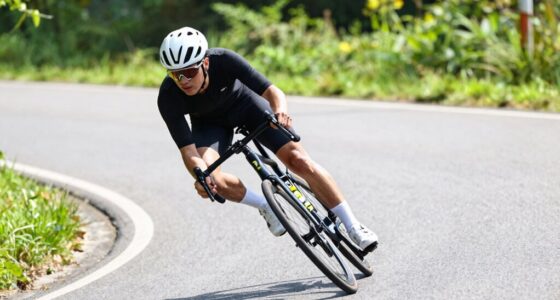

Choosing between clipless and flat pedals depends on your riding style, terrain, and experience. If you want better power transfer, control, and efficiency, clipless pedals are ideal, especially for performance or longer rides. Flat pedals offer quick foot release, stability, and are great for beginners or casual cycling. To find which suits your needs best, consider your comfort, safety, and terrain—there’s more to discover below.
Prime for Young Adults — start your free trial
Fast free delivery, streaming and member deals for eligible 18–24 year olds.
As an affiliate, we earn on qualifying purchases.
Key Takeaways
- Flat pedals offer quick foot release and are ideal for beginners, casual riding, and unpredictable terrains.
- Clipless pedals improve pedaling efficiency and power transfer, suited for performance-focused cycling and experienced riders.
- Flat pedals are more forgiving in wet or muddy conditions, providing better control and safety for varied environments.
- Clipless pedals require proper technique and footwear but provide a secure connection for sustained, high-efficiency riding.
- Choose based on riding style, terrain, safety needs, and comfort preferences to determine the best pedal type for you.
As an affiliate, we earn on qualifying purchases.
Understanding the Basics of Pedal Types

To understand the differences between clipless and flat pedals, it’s essential to first grasp the basics of pedal types. Pedal mechanics vary considerably: flat pedals have a simple design, offering a stable platform that allows quick foot placement and removal. They typically feature a broad surface, making them suitable for casual riding and tricks. In contrast, clipless pedals use a mechanism that secures your shoe to the pedal, improving pedaling efficiency. When considering pedal aesthetics, flat pedals often look straightforward and rugged, while clipless pedals tend to have a sleeker, more streamlined appearance. Understanding these fundamental differences helps you decide which style aligns with your riding needs and preferences, whether you prioritize ease of use or enhanced performance.
As an affiliate, we earn on qualifying purchases.
How Clipless Pedals Enhance Performance
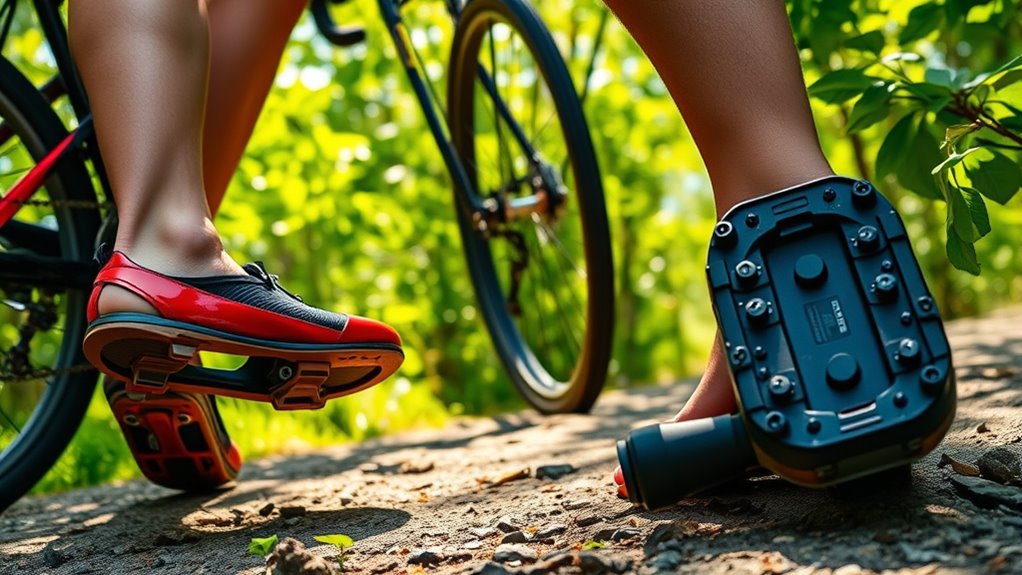
Clipless pedals improve your cycling performance by providing a more direct connection between your shoes and the bike, which increases pedaling efficiency. When your feet stay securely attached, you can apply power more consistently throughout the pedal stroke, reducing energy loss and boosting overall performance. This setup encourages you to engage your leg muscles fully, giving you better control and more power transfer. Additionally, clipless pedals enhance rider comfort by allowing a natural foot position and reducing foot fatigue on long rides. With a secure connection, you’re less likely to shift or slip, which helps maintain a smooth pedaling rhythm. Overall, clipless pedals optimize your pedaling mechanics, making every pedal stroke more effective and comfortable. Incorporating pedaling efficiency techniques can further improve your cycling experience and safety, especially when combined with proper cycling biomechanics. Understanding your riding style can help determine if clipless pedals are the right choice for you.
As an affiliate, we earn on qualifying purchases.
The Advantages of Flat Pedals for Casual Riding

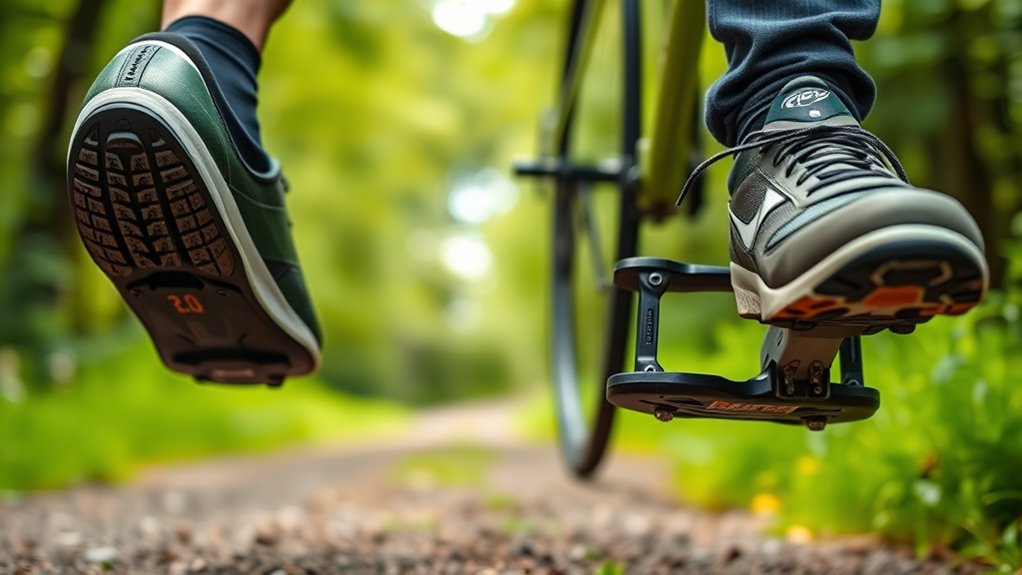
Flat pedals are simple to use, making them ideal for casual rides when you want to get on and go. They allow for quick foot removal if you need to stop suddenly or shift your position. With fewer restrictions, flat pedals give you more freedom and ease during relaxed cycling sessions. Additionally, their straightforward design often makes them more cost-effective compared to clipless pedals. Moreover, their user-friendly nature makes them especially popular among beginners and those seeking a hassle-free riding experience. For many riders, flat pedals also contribute to a more comfortable riding posture, reducing strain during longer or more leisurely rides. Their minimal setup requirements also mean less time spent adjusting or maintaining equipment.
Ease of Use
For casual riders, flat pedals offer a straightforward and hassle-free experience. You don’t need to worry about pedal installation complexities or clipping in and out. Flat pedals are simple to use, making your ride smoother and more enjoyable. Their lightweight design means they don’t add unnecessary strain or fatigue, allowing you to ride longer comfortably. Because they’re easy to get on and off, you can quickly adjust your foot position or stop without fuss. This simplicity is especially helpful if you’re just starting out or riding casually. You won’t have to master complicated techniques or worry about losing your clipless shoes. Additionally, flat pedals often have enhanced grip features, which improve safety and control during casual rides. Their ease of use makes them an ideal choice for beginners or those who prefer a more relaxed riding style. Furthermore, pedal design considerations influence how comfortable and secure your ride feels over time. A lightweight design further contributes to comfort by reducing rider fatigue during extended rides. Overall, flat pedals give you an accessible, low-maintenance option that keeps your focus on riding rather than gear adjustments. An ergonomic design can further enhance comfort during extended rides.
Quick Foot Removal
When you need to stop suddenly or quickly adjust your footing, flat pedals make it easy to free your foot instantly. Unlike clipless pedals, you’re not locked in, so you can react faster in unexpected situations. Here are some advantages:
- Instant Foot Release – No need to click out; just lift your foot.
- Light Pedal Weight – Many flat pedals are lightweight, reducing fatigue.
- Enhanced Pedal Aesthetics – Flat pedals often look more casual and stylish.
- Better for Casual Riders – Quick removal helps maintain balance and confidence.
- Support for Focused Workspaces – Flat pedals foster a distraction-free environment, allowing riders to concentrate on their ride without worrying about foot retention. Additionally, their market popularity among casual riders continues to grow due to their ease of use.
These features make flat pedals ideal for casual riding, where safety and ease of foot removal are priorities. Plus, their pedal aesthetics can complement a relaxed, versatile bike style.
As an affiliate, we earn on qualifying purchases.
Comparing Safety and Control in Different Conditions
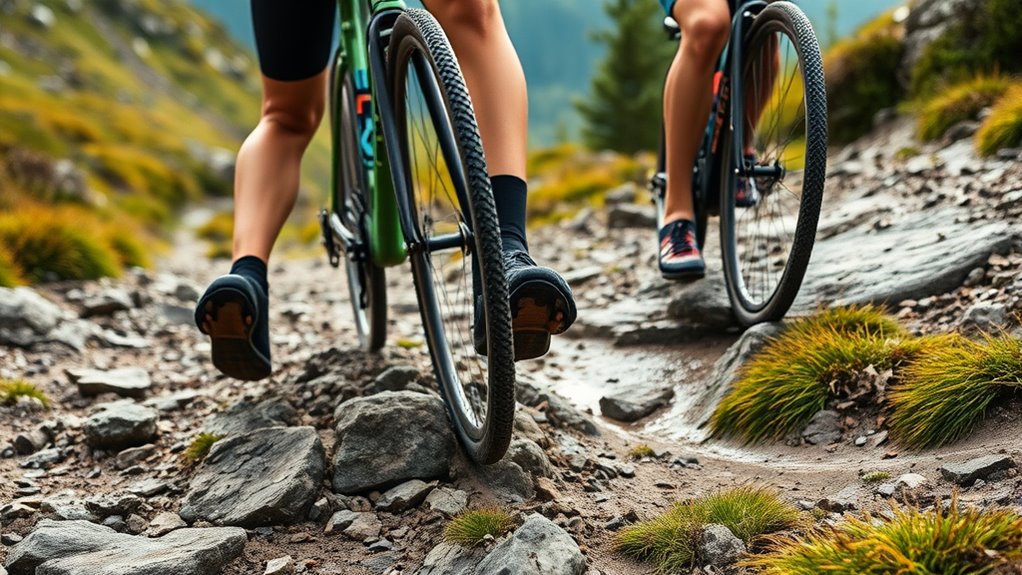
While clipless pedals often provide better security during rides, their safety and control can vary considerably depending on the riding conditions. In wet or muddy environments, their pedal ergonomics can become less reliable, increasing the risk of slipping if you’re not careful. Heavier pedal weight can also make quick maneuvers more challenging, especially on technical terrain. Flat pedals, with their larger contact area, offer more immediate control and stability in unpredictable conditions, though they might feel less secure at high speeds. Conversely, clipless pedals excel on smooth surfaces and steady rides, giving you more precise power transfer. Proper pedal ergonomics and weight considerations are essential factors to evaluate for maintaining safety and control in diverse environments. Moreover, selecting appropriate jewelry materials that are lightweight and durable can improve overall comfort and safety during activities. Additionally, understanding auditory processing skills can help improve your coordination and awareness during rides, especially in noisy or complex environments. Being aware of how different pedal types interact with environmental factors can further inform your choice and enhance safety. Recognizing environmental conditions that influence pedal performance can help riders adapt their techniques for safer rides.
Compatibility and Ease of Use for Beginners
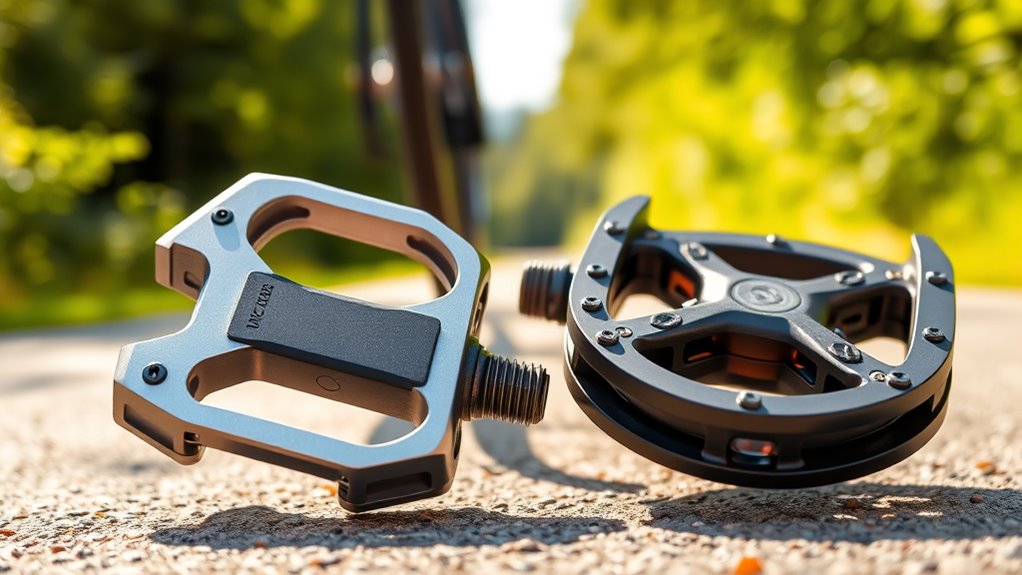
Beginners often find flat pedals more straightforward to use because they don’t require special shoes or clip-in mechanisms. They are generally more compatible with a wide variety of footwear, making pedal compatibility less of a concern. Flat pedals also offer beginner-friendly features, such as a larger platform for stability and easier foot placement. To help you decide, consider these points: 1. Flat pedals work with most shoe types, simplifying pedal compatibility. 2. They allow quick foot removal, ideal for beginners learning balance. 3. The design offers a stable platform, boosting confidence. 4. No need to adjust or clip in, reducing initial complexity. Additionally, flat pedals often feature a larger surface area, providing better control and comfort for new riders. Recognizing pedal types can help you make more informed choices tailored to your riding style. Understanding footwear compatibility can further enhance your riding experience and safety.
Maintenance and Durability Considerations

You’ll want to think about how quickly pedals wear out and how often you need to replace cleats or platforms. Damage to these parts can affect your riding safety and performance, so inspecting them regularly is key. Keep in mind that maintenance costs and effort vary between clipless and flat pedals, impacting your overall durability. Additionally, considering the wear and tear of pedal components can help you determine the best option for long-term use.
Pedal Wear and Tear
Pedal wear and tear directly impact your bike’s performance and safety, making maintenance essential regardless of whether you ride clipless or flat pedals. Over time, pedal durability varies based on usage, terrain, and quality. To keep your pedals in top shape, watch for these signs:
- Visible corrosion or rust on metal parts
- Loose or wobbly pedals during rides
- Worn or damaged pedal surfaces affecting grip
- Difficulty clipping in or out smoothly
Regular inspection helps you catch pedal wear early, preventing accidents. Proper maintenance, like cleaning and lubricating bearings, extends pedal lifespan. Choosing high-quality pedals can also improve durability, reducing the frequency of replacements. Staying attentive to these factors keeps your rides safe and efficient.
Cleat and Platform Damage
Cleat and platform damage can critically affect your bike’s safety and performance, making regular inspection and maintenance essential. With clipless pedals, cleat damage is common if you frequently clip in and out or ride on rough terrain. Worn or cracked cleats can cause slipping or poor engagement, compromising control. For flat pedals, platform wear occurs over time, especially on rough surfaces, leading to reduced grip and stability. Check your cleats regularly for cracks or excessive wear, replacing them before they fail. Similarly, inspect the platform for signs of deterioration, such as chipped edges or worn tread. Addressing cleat damage and platform wear promptly ensures continued safety, improves pedaling efficiency, and extends the lifespan of your pedals. Keep a close eye on these components for top riding performance.
Maintenance Frequency and Cost
When considering maintenance frequency and cost, clipless pedals generally require more ongoing attention and expense due to their delicate cleats and complex mechanisms. You’ll need to regularly check and replace pedals when they show signs of wear, especially the cleats. A proper lubrication schedule helps prevent squeaking and ensures smooth engagement.
Here are four key points:
- Expect more frequent pedal replacement if you ride often or on rough terrain.
- Regularly lubricate moving parts to extend pedal lifespan.
- Cleats may need replacement every few thousand miles, adding to costs.
- Flat pedals typically need less maintenance but may still require occasional cleaning and lubrication.
Choosing the Right Pedals for Your Riding Style
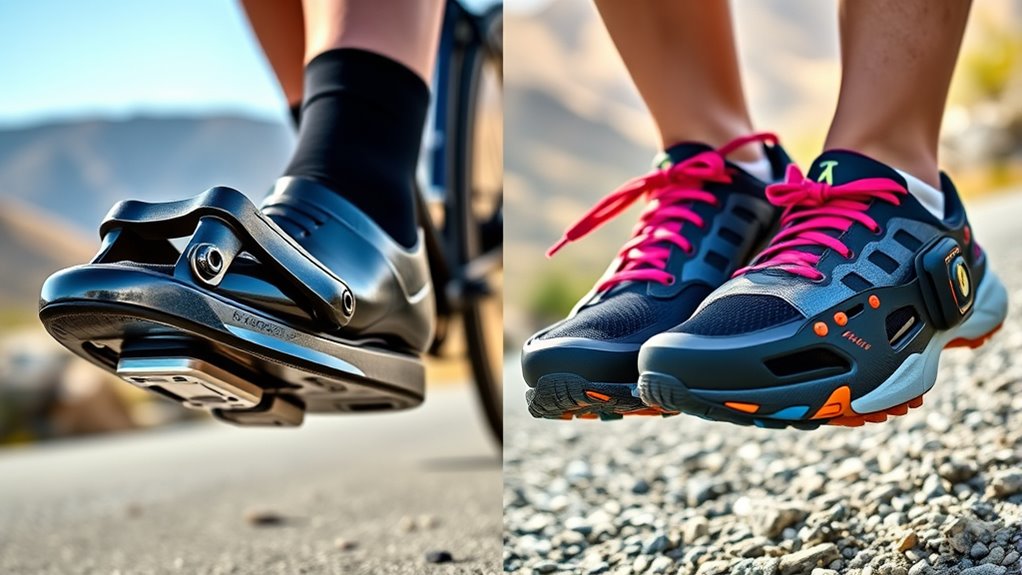
Choosing the right pedals depends largely on your riding style and the terrain you ride on. If you prioritize comfort and control, pedal ergonomics should be a top consideration, ensuring your feet feel secure without discomfort. For long rides or mountain biking, pedal weight matters; lighter pedals reduce fatigue and improve handling. Flat pedals often excel in versatility, offering easy foot placement and quick releases, ideal for casual or technical terrain. Clipless pedals, however, provide a more efficient transfer of power, suited for racing or aggressive riding. Think about how much you value ease of use versus performance. Your riding style—whether relaxed, competitive, or technical—will guide you toward the pedal type that best fits your needs, maximizing comfort and efficiency on every ride.
Making the Transition: Switching Between Pedal Types

Switching between pedal types can seem intimidating at first, but with the right approach, it becomes a manageable shift. To start, consider the pedal installation process and how your bike’s setup might change. Flat pedals are generally easier to install and adjust, especially if you’re switching from clipless. Pay attention to pedal weight; lighter pedals can improve your ride’s efficiency, but heavier ones might offer more durability. Here are some tips to help you transition smoothly:
- Practice riding with the new pedal type in a safe, flat area.
- Adjust your cleats or pedal straps for comfort.
- Be patient as you build confidence.
- Test different pedal weights to find what feels best for your riding style.
Frequently Asked Questions
Which Pedal Type Is Better for Mountain Biking?
For mountain biking, clipless pedals often give you better control and power transfer, thanks to their clipless advantages like secure footing and efficient pedaling. However, flat pedal drawbacks include less secure foot positioning, which can be risky on tricky terrains. If you’re a beginner or prefer quick foot release, flats might suit you better. Ultimately, choose based on your riding style and comfort level for the best experience.
Can I Use Clipless Pedals on a Road Bike?
You can definitely use clipless pedals on a road bike, and they offer major advantages like better power transfer and secure foot placement. While flat pedals benefit casual riders with quick foot release, clipless pedals make every pedal stroke more efficient and smooth. Think of clipless as the upgrade that turns your ride into a high-performance machine. So, if you’re serious about speed and control, go for clipless on your road bike!
Are Flat Pedals Suitable for Competitive Racing?
Flat pedals aren’t ideal for competitive racing because they lack the clipless advantages like secure foot placement and better power transfer. In races, you want control and efficiency, which flat pedals can’t provide due to their drawbacks, such as less connection to your bike. While flat pedals are great for casual riding and tricks, for competitive racing, clipless pedals offer the performance edge you need.
How Do Pedal Types Affect Bike Weight?
Pedal types impact your bike’s weight through material choices and design. Flat pedals are often heavier because they use durable materials like aluminum or plastic, but some lightweight options exist. Clipless pedals tend to be lighter due to streamlined designs and lighter materials such as carbon fiber. When selecting pedals, consider material considerations to balance weight savings with durability and performance, ensuring your bike feels responsive without adding unnecessary weight.
What Are the Best Pedal Options for Long-Distance Rides?
For long-distance rides, choose pedals that offer clipless compatibility for secure, efficient pedaling and comfort. Look for lightweight options with good grip and quick-release features. Prioritize pedals that are easy to maintain, with smooth bearings and corrosion resistance. Regular pedal maintenance guarantees longevity and performance. By selecting the right combination, you’ll enjoy a smoother, more comfortable ride, reducing fatigue and improving your overall endurance on extended journeys.
Conclusion
Think of choosing pedals like picking shoes for a journey. Clipless pedals are your sleek running shoes—boosting speed and efficiency but needing some practice. Flat pedals are like trusty sneakers—easy to hop on and off, perfect for casual rides. Whichever you choose, guarantee it fits your path. With the right pedals, every ride becomes a smooth walk in your favorite park, making your cycling adventure comfortable, confident, and enjoyable.
NFL season / tailgating Picks
team gear
As an affiliate, we earn on qualifying purchases.