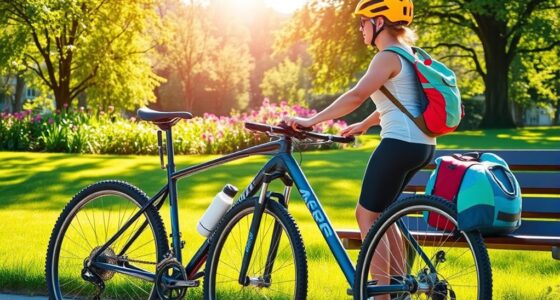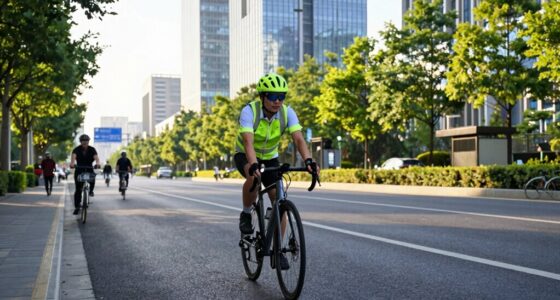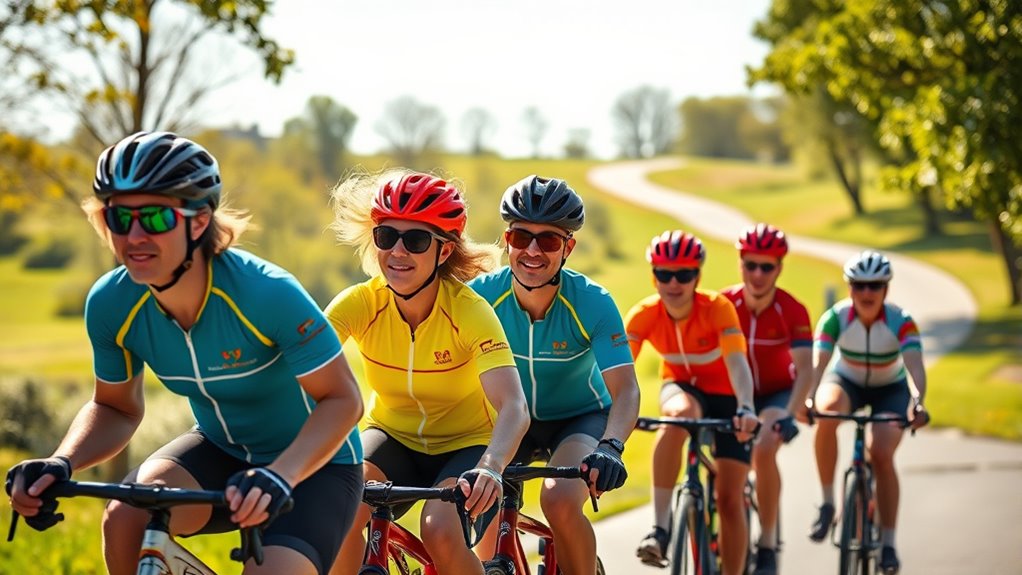

When cycling with others, it’s important to maintain a single file formation to reduce wind resistance and guarantee safety. Communicate openly with hand signals and verbal cues to signal turns or hazards. Keep a safe distance from the rider ahead to react quickly and avoid crashes. Always ride courteously, supporting each other and fostering camaraderie along the way. These guidelines enhance both safety and enjoyment, and you’ll find even more helpful tips to ride together effectively.
Get ready for Prime Big Deal Days — try Prime free
Exclusive member deals on October 6–7, plus fast free delivery. Cancel anytime.
As an affiliate, we earn on qualifying purchases.
Key Takeaways
- Always ride in a single file to reduce wind resistance and enhance safety, especially on busy roads.
- Communicate effectively with hand signals and verbal cues to indicate when pulling off the front.
- Maintain a safe distance from the rider ahead to allow for quick reactions to sudden changes.
- Be aware of your surroundings and call out hazards to alert those behind you.
- Foster group camaraderie by supporting each other and participating in interactive activities during stops.

When you hit the road with a group of riders, understanding group riding etiquette is essential to guarantee everyone’s safety and enjoyment. The way you ride together can make a world of difference, not just in terms of efficiency but also in ensuring that each member feels secure and comfortable. One key aspect is single file riding. When you ride in a line, it reduces the wind resistance and creates a streamlined formation. This is particularly important on busy roads or when you’re in a fast-paced ride. Staying in single file helps the entire group maintain a consistent speed and keeps you aligned, making it easier for everyone to navigate turns and obstacles.
Now, let’s talk about pace line etiquette. When you ride in a pace line, you’re sharing the workload, which means that each rider takes a turn at the front, breaking the wind for those behind. However, it’s essential to communicate effectively. Always let the group know when you’re about to pull off the front. A simple hand signal or verbal cue can prevent surprises and keep the rhythm steady. When it’s your turn to lead, maintain a steady pace; sudden changes can cause the riders behind you to brake unexpectedly, leading to accidents.
Another important rule in group riding is to keep your distance. You should maintain a safe gap between yourself and the rider in front of you. This distance allows for quick reactions if someone in front of you makes a sudden move or stops. If you’re riding too close, you risk a crash, which can take out several riders at once.
Don’t forget about your surroundings. Always be aware of what’s happening in the group and on the road. If you see a hazard, signal to the riders behind you, and call out any potential dangers. Clear communication can make all the difference in keeping everyone safe.
Finally, remember that riding in a group means riding together. Be courteous and respectful, whether it’s sharing the lead or waiting for someone who’s fallen behind. Group riding can be a blast, but it requires cooperation and mindfulness. By adhering to single file riding and pace line etiquette, you’ll enhance not only your own experience but that of every rider in the group. So gear up, communicate, and enjoy the ride! Additionally, consider incorporating interactive games during stops to foster camaraderie and strengthen group dynamics.
cycling group ride safety equipment
As an affiliate, we earn on qualifying purchases.
As an affiliate, we earn on qualifying purchases.
Frequently Asked Questions
What Should I Wear for a Group Ride?
For a group ride, you should wear comfortable cycling apparel like a breathable jersey and padded shorts to keep you comfortable. Don’t forget your safety gear—like a properly fitted helmet and, if it’s chilly or rainy, a lightweight jacket. Make sure to wear moisture-wicking socks and appropriate cycling shoes for better grip. Layering is key, so you can adjust as needed during the ride. Being prepared helps you enjoy the ride more!
How Do I Choose the Right Group for My Skill Level?
Choosing the right group for your skill level’s like picking the right dance partner; you want a match that keeps you in step. Start with a skill assessment—evaluate your comfort and abilities on the bike. Seek out groups that promote group compatibility, where everyone rides at a similar pace. Don’t hesitate to ask questions; finding the right fit will make your rides enjoyable and help you grow as a cyclist.
Can I Bring My Child on a Group Ride?
Yes, you can bring your child on a group ride, but check for any group age restrictions first. It’s important to prioritize child safety; make sure your child can handle the pace and distance of the ride. Equip them with a properly fitted helmet and ensure they understand basic riding rules. Communicating with the group leader about your child’s participation can help set expectations and guarantee everyone enjoys the ride safely.
What Should I Do if I Get a Flat Tire?
If you get a flat tire, don’t panic! First, signal to your group that you need to stop. Then, find a safe spot to pull over. Grab your bike repair kit and start by removing the wheel. Check the tire for sharp objects, replace the tube, and pump it up. Follow your emergency procedures to guarantee you’re ready to ride again. Once you’re fixed up, rejoin your group and keep going!
How Can I Improve My Cycling Speed in a Group?
To improve your cycling speed in a group, imagine yourself slicing through the wind like a sleek arrow. Practice aerodynamic positioning by lowering your torso and keeping your elbows in. Use drafting techniques to ride closely behind another cyclist, letting them break the wind for you. This not only conserves energy but also boosts your speed. Stay focused and communicate with your group, ensuring a smooth, fast ride together.
bike hand signals and communication devices
As an affiliate, we earn on qualifying purchases.
As an affiliate, we earn on qualifying purchases.
Conclusion
When you ride with others, remember that everyone’s safety and enjoyment rely on your actions. Just like a well-timed shift in gears, good group dynamics keep the ride smooth. If you signal a turn and the person behind you mirrors it, you’re creating a rhythm that benefits all. So, whether you’re climbing hills or cruising down a flat stretch, stay aware and communicate. Coincidentally, the more you respect each other, the more fun you’ll have together!
cycling safety gear for group riding
As an affiliate, we earn on qualifying purchases.
As an affiliate, we earn on qualifying purchases.
bike mirrors and hazard signaling tools
As an affiliate, we earn on qualifying purchases.
As an affiliate, we earn on qualifying purchases.
NFL season / tailgating Picks
team gear
As an affiliate, we earn on qualifying purchases.