To start cycling, choose a bike suited for beginners like an aluminum frame and proper size for your comfort. Plan safe, flat routes with low traffic, and wear essential protective gear like a helmet, gloves, and reflective clothing. Learn basic skills such as balance, braking, and signaling while following traffic rules. Regularly check and maintain your bike to keep it in good shape. Stick to a steady routine, and connect with fellow riders for extra motivation—there’s much more to explore ahead!
Key Takeaways
- Select a suitable beginner bike, considering frame material and gear ratios for comfort and ease of riding.
- Plan safe, flat routes with low traffic, using navigation tools to match your skill level and interests.
- Always wear a helmet and protective gear, and ensure your bike is well-maintained for safety and reliability.
- Practice basic riding skills, traffic rules, and hand signals in open spaces to build confidence and safety awareness.
- Join local cycling groups or events to gain experience, motivation, and connect with the cycling community.
Choosing the Right Bike for Beginners
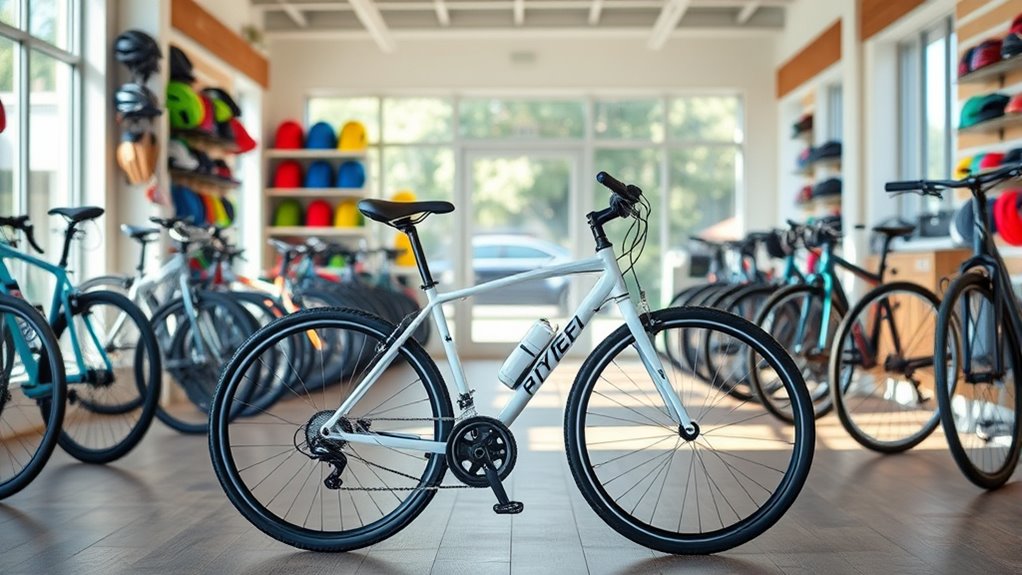
If you’re new to cycling, selecting the right bike can seem overwhelming, but it’s vital for a comfortable and enjoyable ride. Start by considering bike frame materials like aluminum, steel, or carbon fiber; each offers different weight, durability, and cost benefits. Aluminum frames are lightweight and affordable, making them a popular choice for beginners. Next, look at gear ratios, which determine how easily you can pedal uphill or accelerate. Bikes with a wide range of gear ratios help you handle various terrains comfortably. Bikes with properly matched gear ratios and a lightweight, durable frame guarantee smoother rides and less fatigue. Additionally, understanding Vetted – Tanning Trends can be a fun way to explore local folklore and add an interesting element to your cycling adventures. Take the time to test different options, and don’t hesitate to ask for advice at your local bike shop. Additionally, choosing a suitable bike size is crucial for comfort and efficiency during your rides. Being aware of the bike maintenance basics will also help keep your bike in top condition and extend its lifespan.
Essential Gear and Safety Equipment
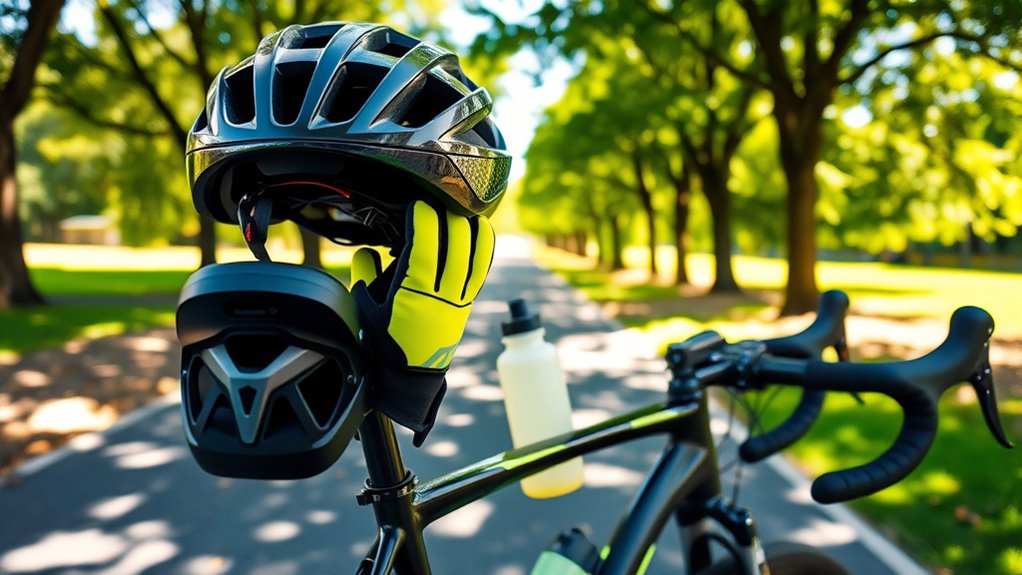
To stay safe while cycling, you need the right gear, starting with a good helmet and protective equipment. Adding lights and reflectors guarantees you’re visible to others, especially in low-light conditions. These essentials help you ride confidently and reduce the risk of injuries. For an enhanced riding experience, consider incorporating high-visibility features such as reflective clothing and surface reflectivity to ensure you are easily seen by others. Additionally, understanding Dozens of survival and preparedness techniques can help you be more self-reliant in unexpected situations. Incorporating natural materials in your gear can also improve comfort and sustainability during your rides. Moreover, selecting gear made from energy-efficient materials can contribute to a more environmentally friendly cycling experience. Developing knowledge of digital literacy can also assist in navigating modern cycling apps and safety tools effectively.
Helmet and Protective Gear
Wearing a helmet and protective gear is essential for staying safe while cycling. Helmet safety is a top priority, as it helps prevent head injuries in case of falls or accidents. Choose a helmet that fits snugly and meets safety standards. Besides a helmet, protective gear types include gloves, knee and elbow pads, and reflective clothing. These items protect your joints during falls and increase your visibility to drivers. Proper protective gear can boost your confidence and make riding more comfortable, especially as you learn. Remember, safety gear isn’t just for rough terrain or busy streets—it’s important for all cycling situations. Investing in quality gear and wearing it consistently helps keep you safe and encourages responsible riding habits. Additionally, understanding cycling safety tips and adhering to traffic rules can further reduce risks during your rides. Incorporating AI-powered safety features, such as smart helmets or reflective gear enhanced with technology, can also improve your safety on the road. Being aware of lifevest advisors and their guidance can help you make informed decisions about safety equipment and risk management.
Lights and Reflectors
Are your bike’s lights and reflectors enough to keep you visible and safe during your rides? Proper bike lighting is essential for visibility, especially at dawn, dusk, or nighttime. Make sure your bike has front lights that are bright enough to illuminate your path. Reflector placement is equally important; position reflectors on the wheels, pedals, and rear of your bike to maximize visibility from all angles.
- Use a powerful front light for clear visibility ahead.
- Attach a bright rear light to alert drivers behind you.
- Ensure reflectors are properly placed on wheels and pedals.
- Regularly check that lights and reflectors are clean and functioning.
Having effective bike lighting and strategic reflector placement keeps you safe and seen on every ride.
Learning Basic Riding Skills

Learning the basic riding skills is essential before hitting the road or trail. To build confidence, focus on mastering balance techniques, which help you stay steady on your bike. Practice riding in a flat, open space, gradually increasing your comfort level. When starting on hills, lean forward slightly and maintain a steady pedal stroke to prevent slipping. Use your brakes gently to control speed, especially when descending. Keep your eyes ahead to anticipate terrain changes and maintain proper posture. Developing good balance and control early on makes riding smoother and safer. Remember, consistency is key—practice these skills regularly to build muscle memory and confidence before tackling more challenging terrain or traffic situations. Additionally, understanding wave and wind conditions can be surprisingly helpful when preparing healthy snacks to keep your energy levels up during long rides. Being aware of road signs and signals also enhances safety and helps you navigate more confidently as you progress. Incorporating basic maintenance skills can further empower you to handle minor bike repairs and ensure your bike stays in good condition.
Understanding Traffic Rules and Riding Etiquette
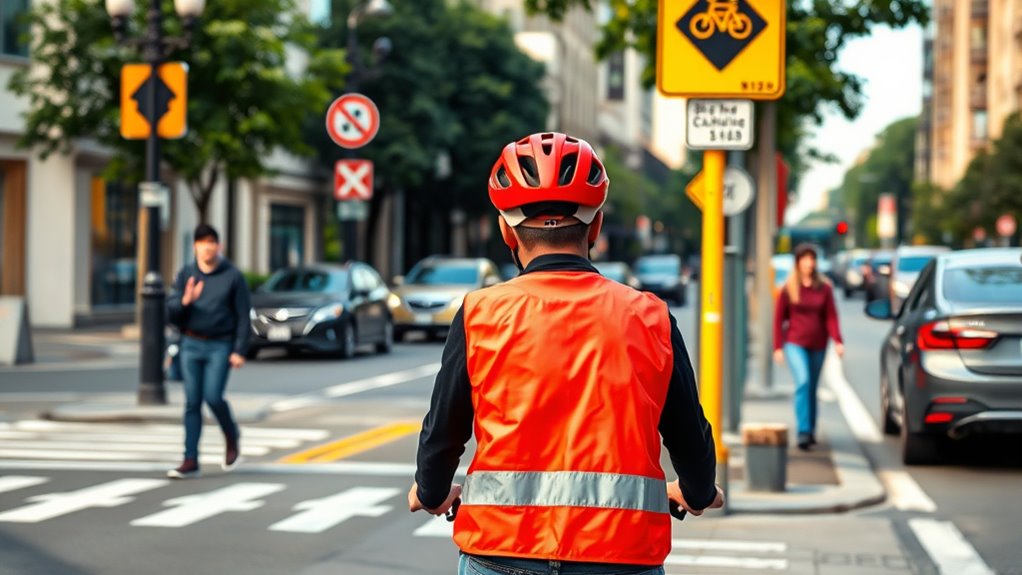
Understanding traffic rules and riding etiquette is essential for safe and confident cycling, especially when sharing the road with vehicles and pedestrians. To ensure road safety, always follow local traffic laws. Use hand signals to communicate your intentions clearly—like pointing left or right or stopping. Respect pedestrians and give them space when riding on shared paths. Keep to the right side of the lane and stay alert for turning vehicles. Remember, predictable actions help others anticipate your moves. Stick to designated bike lanes when available. Avoid sudden maneuvers and always check behind you before changing position. Be aware of Halloween Product Reviews that can influence your confidence and self-perception, which can impact your riding demeanor. Incorporate regular bike maintenance, including checking for piercings-body, to help keep your bike in optimal condition if you rely on electronic components or accessories. By understanding these rules and practicing proper riding etiquette, you contribute to a safer environment for everyone. Your awareness and respect make the roads safer for all cyclists and road users.
Planning Your First Rides
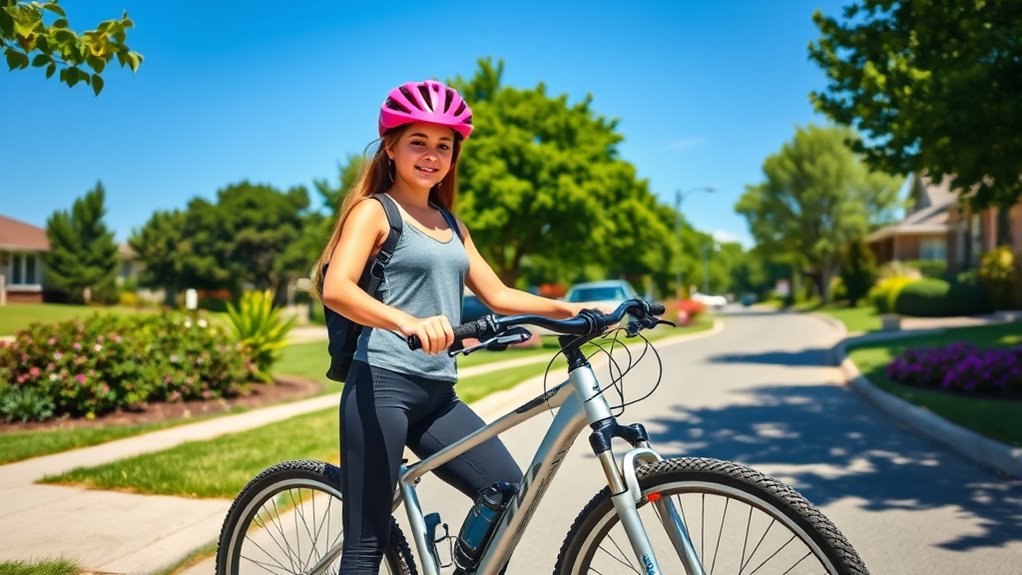
When planning your first rides, choose routes that are safe and manageable for your skill level. Consider the time of day and weather conditions to guarantee a comfortable experience. Additionally, being aware of modern cycling technology can enhance your safety and efficiency during rides. Using cycling apps to map out your route can also help you stay on track and avoid unfamiliar or hazardous areas. By staying mindful of these factors, you’ll set yourself up for enjoyable and confident cycling outings.
Route Selection Tips
Choosing the right route is essential for your first cycling experience, as it sets the tone for how enjoyable and comfortable your ride will be. To start, consider these tips:
- Opt for scenic routes or urban trails that are flat and well-maintained, reducing unnecessary challenges.
- Choose routes with low traffic to stay safe and stress-free.
- Check the distance—keep it manageable, especially if you’re new to biking.
- Use navigation apps or local maps to plan routes that match your skill level and interests.
Picking routes that match your comfort and curiosity will make your first rides more enjoyable. Whether you prefer scenic views or urban trails, selecting the right path helps build confidence and makes cycling fun from the start.
Time and Weather Planning
Planning your ride around the right time and weather conditions can make a big difference in your enjoyment and safety. Weather considerations, like wind, rain, and temperature, impact how comfortable and safe your ride will be. Check the forecast before heading out and choose a time when the weather is clear and mild. Seasonal riding tips are helpful, too; for example, in summer, ride early mornings or late evenings to avoid heat, while in cooler months, layer up to stay warm. Avoid riding in stormy or icy conditions, which can be dangerous. By selecting prime times and understanding weather patterns, you’ll enjoy your rides more and reduce risks, making cycling a safer, more enjoyable experience from the start.
Maintaining and Caring for Your Bike

Regular maintenance is essential to keep your bike running smoothly and guarantee your safety on the road. Proper bike maintenance involves routine checks and simple repair techniques to prevent breakdowns.
- Inspect tires regularly for wear and proper inflation to avoid flats and improve performance.
- Clean and lubricate the chain to ensure smooth shifting and reduce wear.
- Check brakes for responsiveness, adjusting or replacing pads as needed.
- Tighten loose bolts and bolts to maintain stability and safety.
Building Endurance and Improving Technique

Building endurance and improving your technique are essential steps to becoming a more confident and efficient cyclist. To do this, develop consistent training routines that gradually increase your distance and intensity. Incorporate interval training and hill repeats to boost stamina and strengthen muscles. Focus on maintaining proper form, such as correct pedal stroke and body positioning, to enhance efficiency and reduce fatigue. Nutrition strategies also play a pivotal role; eat a balanced diet rich in carbohydrates, protein, and healthy fats to fuel your rides and aid recovery. Hydration is key, so drink plenty of water before, during, and after cycling sessions. By combining tailored training routines with smart nutrition strategies, you’ll steadily build endurance and refine your technique, making every ride more enjoyable and effective.
Joining Cycling Communities and Finding Inspiration

Are you looking for ways to stay motivated and improve your cycling experience? Joining cycling communities can boost your enthusiasm and skills. Here are four ways to find inspiration:
- Attend cycling events to meet riders and learn from experienced cyclists.
- Join local riding groups to enjoy regular group rides and build camaraderie.
- Follow cycling clubs on social media for updates on events and challenges.
- Participate in charity rides or races to set goals and stay committed.
Connecting with others keeps your passion alive and offers new perspectives. Cycling communities provide support, encouragement, and a sense of belonging. Whether through group rides, events, or online forums, finding your community makes riding more fun and inspiring.
Frequently Asked Questions
How Do I Choose the Best Cycling Route for Beginners?
You should pick a cycling route that’s flat and has minimal traffic to guarantee cycling safety. Look for beginner-friendly paths like parks or dedicated bike lanes. Check the route’s terrain and length beforehand, and wear proper gear selection, like a helmet and reflective gear. Start with short rides, gradually increasing distance as you gain confidence. Always stay alert, follow traffic rules, and enjoy your ride while prioritizing safety.
What Should I Do if I Get a Flat Tire During a Ride?
Imagine your ride hits a snag, and suddenly, a flat tire appears like an unexpected puddle. First, find a safe spot and turn your bike upside down. Use your tools for flat tire repair—remove the wheel, deflate the tire, and check for sharp objects. Replace or patch the inner tube, then reassemble. Regular tire maintenance and quick flat tire repair skills keep your journey smooth and enjoyable.
How Can I Stay Motivated to Cycle Regularly?
To stay motivated to cycle regularly, join a cycling community where you can share your progress and find encouragement. Set clear, achievable goals that keep you focused and give you a sense of accomplishment. Celebrate small wins and track your improvements. Remember, consistency beats intensity—so enjoy your rides and stay connected with fellow cyclists to keep your passion alive and your motivation high.
Are There Specific Cycling Apps or Tools Recommended for Beginners?
You should try using cycling tracking and route planning apps like Strava, Komoot, or MapMyRide. These tools help you monitor your progress, set goals, and explore new routes, making cycling more engaging. They’re user-friendly and perfect for beginners. With real-time tracking and easy route creation, these apps keep you motivated and confident as you start your cycling journey. Give them a try and enjoy your rides!
How Do I Prevent Common Cycling Injuries?
Don’t let injuries catch you off guard—stay ahead of the game by ensuring a proper bike fit and always wearing protective gear. Adjust your seat and handlebars to avoid unnecessary strain, and wear a helmet, gloves, and pads to shield against falls. Listen to your body, start slow, and gradually increase intensity. Staying vigilant and prepared helps you enjoy cycling safely without hitting the bump in the road.
Conclusion
Starting your cycling journey might feel like stepping into a new chapter, but with each pedal stroke, you’ll find your rhythm and confidence blossoming. Embrace the small victories and gentle lessons along the way, knowing that every mile adds to your story. Soon, you’ll discover that cycling isn’t just about the ride—it’s about enjoying the breeze, the freedom, and the simple joy of moving forward. Keep pedaling, and let the adventure unfold naturally.