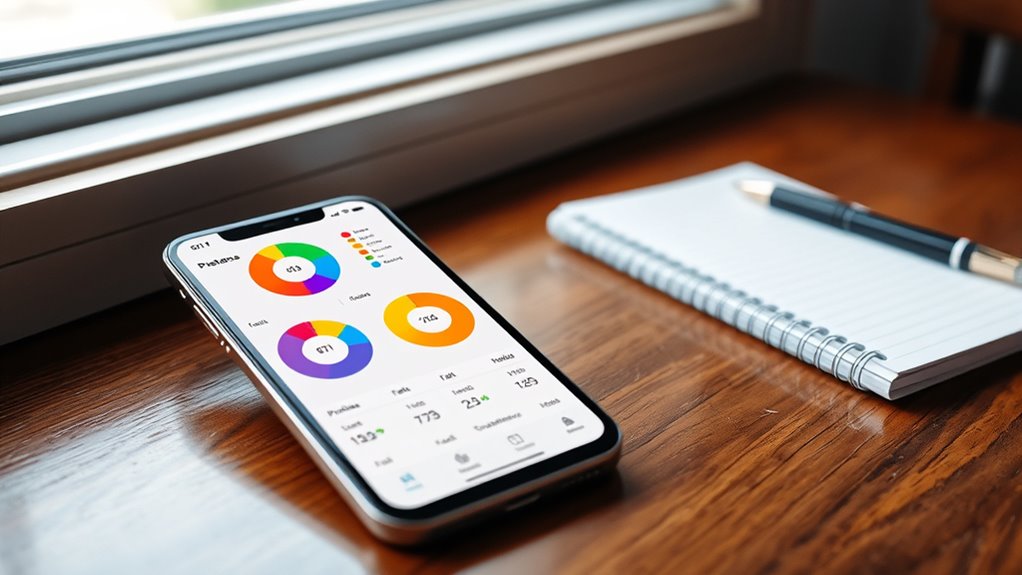

Calorie tracking apps focus on your total daily caloric intake, helping with weight loss, gain, or maintenance. In contrast, macro tracking apps analyze the breakdown of proteins, fats, and carbohydrates in your diet, supporting specific nutritional goals, like keto or paleo. While calorie apps are simpler, macro apps offer deeper nutritional insights and meal planning strategies. Each serves a purpose, depending on your health goals. Want to discover more about how these tools can benefit you?

Get workout gear delivered free with Prime
- Fast, free delivery on millions of items
- Prime Video, Amazon Music and more included
- Member-only deals all year
Key Takeaways
- Calorie tracking apps focus on total daily caloric intake, while macro tracking apps analyze the intake of proteins, carbs, and fats.
- Calorie apps support weight management through calorie balance, whereas macro apps help achieve specific nutrient distribution ratios.
- Calorie tracking offers a simple method for quick results, but macro tracking provides detailed nutrient analysis for better dietary control.
- Macro apps assist in following specialized diets, while calorie apps are more straightforward for general calorie management.
- Both tools enhance nutritional understanding, but macro tracking promotes better food choices by emphasizing the role of each macronutrient.

As you set out on your journey to better health, calorie and macro tracking apps can be your best allies. They simplify the process of meal planning, making it easier to stay on track with your dietary goals. With these apps, you can quickly log your meals and snacks while keeping a close eye on your nutrient intake. Whether you’re looking to lose weight, gain muscle, or maintain your current physique, understanding the difference between calorie tracking and macro tracking can guide you towards achieving your goals.
Calorie tracking apps focus primarily on the total number of calories you consume each day. They allow you to input the foods you eat and calculate your daily caloric intake. By monitoring your calories, you can create a caloric deficit for weight loss or a surplus for weight gain. This approach is straightforward, and many users find it effective for quick results. However, calorie counting alone doesn’t provide a complete picture of your nutritional health. It doesn’t account for the balance of macronutrients—protein, carbohydrates, and fats—your body needs to function at its best.
Calorie tracking apps offer a simple way to monitor daily intake, but they overlook essential macronutrient balance for optimal health.
On the other hand, macro tracking apps dig deeper into your nutrient analysis. They help you break down your calorie intake into specific macronutrient ratios. For instance, if you aim for a diet rich in protein to support muscle growth, a macro tracker can help you ensure that you’re hitting those protein goals while also managing your carbohydrate and fat intake. This level of detail can be particularly beneficial if you’re following a specific diet plan, like keto or paleo, where macronutrient ratios are vital.
When you use macro tracking, meal planning becomes a more strategic endeavor. You’ll find yourself thinking about not just how many calories are on your plate, but how those calories are distributed among the macronutrients. This shift in focus can lead to better food choices and a more balanced diet. By understanding the role of each macronutrient, you can tailor your meals to better suit your lifestyle and health goals. Additionally, tracking your macros can enhance your understanding of color accuracy in your diet, ensuring you’re not just counting numbers but also focusing on nutrient quality.
calorie tracking app for weight loss
As an affiliate, we earn on qualifying purchases.
As an affiliate, we earn on qualifying purchases.
Frequently Asked Questions
Can Calorie and Macro Tracking Apps Help With Weight Loss?
Yes, calorie and macro tracking apps can definitely help with weight loss. You’ll benefit from calorie counting by staying aware of your intake, which supports better portion control and mindful eating. However, macro tracking can present challenges, as it requires a deeper understanding of nutrients and their impact on your body. Balancing both can enhance your weight loss journey, helping you achieve your goals while keeping you informed about what you eat.
Are There Any Free Options for Calorie and Macro Tracking Apps?
Picture yourself effortlessly logging your meals, the sun shining through your kitchen window. There are plenty of free options for calorie and macro tracking apps! Apps like MyFitnessPal and Cronometer let you track your intake without spending a dime. While these free versions offer solid features, you might find yourself tempted by premium features that reveal advanced insights. But even without them, you can still make significant progress towards your health goals!
How Accurate Are the Food Databases in These Apps?
The food database accuracy in tracking apps can vary substantially. While some apps offer reliable data sourced from reputable nutritional databases, others might rely on user-generated entries, which can lead to inconsistencies. You’ll want to check user reviews and app ratings to gauge data reliability before committing. It’s crucial to cross-reference with trusted sources to guarantee you’re getting accurate nutritional information, especially if you’re serious about your health goals.
Can I Use Both Types of Apps Simultaneously?
Absolutely, you can use both types of apps simultaneously! Think of it like a superhero duo, each with unique powers. By combining them, you maximize tracking accuracy and app compatibility. One app can focus on calories while the other dives into macros, giving you a holistic view of your nutrition. Just make certain your data entries are consistent across both platforms, and you’ll conquer your health goals like a champion!
Do These Apps Sync With Fitness Trackers or Wearables?
Yes, many calorie and macro tracking apps offer syncing capabilities with fitness trackers and wearables. This wearable integration allows you to automatically import data like steps, heart rate, and calories burned, making it easier to monitor your overall health. By connecting these devices, you can get an all-encompassing view of your progress, helping you stay on track with your fitness goals. Just check the app’s compatibility before you start syncing!
macro tracking app for keto diet
As an affiliate, we earn on qualifying purchases.
As an affiliate, we earn on qualifying purchases.
Conclusion
In the world of fitness and nutrition, choosing between calorie tracking and macro tracking apps can significantly impact your goals. While calorie counting focuses on overall intake, macro tracking gives you a detailed look at protein, fats, and carbs. Interestingly, studies show that individuals who track their macros can lose up to 30% more weight than those who solely count calories. So, whether you’re aiming for weight loss or muscle gain, understanding the difference can help you achieve success faster.
As an affiliate, we earn on qualifying purchases.
As an affiliate, we earn on qualifying purchases.
Evergreen bestsellers Picks
bestsellers
As an affiliate, we earn on qualifying purchases.