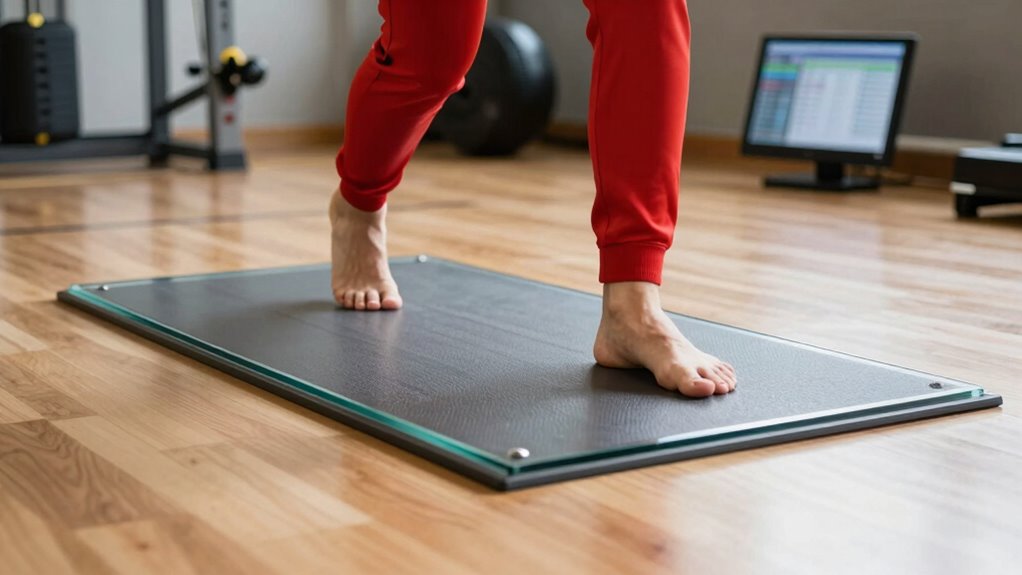
Force plates reveal how efficiently you move by measuring ground reaction forces during training and activity. They help identify subtle imbalances or asymmetries in your technique, allowing you to refine your performance and reduce injury risk. By analyzing force distribution, you can track progress over time and customize your training for better results. Continuing to explore this topic will uncover how force plates provide deep insights to optimize your athletic potential.
Key Takeaways
- Force plates measure ground reaction forces to analyze movement efficiency and identify asymmetries affecting athletic performance.
- They reveal subtle imbalances in force distribution, aiding technique refinement and muscle coordination understanding.
- Force data helps prevent injuries by detecting load imbalances and guiding tailored training modifications.
- They provide objective metrics for tracking progress, setting goals, and optimizing training outcomes over time.
- Force plates support recovery and longevity by informing personalized protocols based on biomechanical insights.
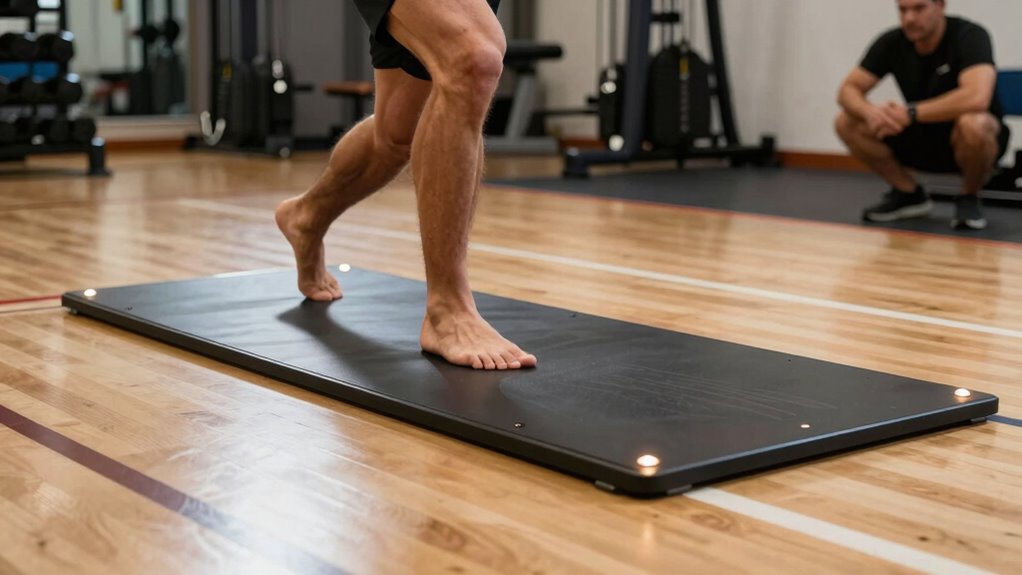
Force plates are powerful tools that help athletes optimize performance and prevent injuries by measuring ground reaction forces during movement. When you step onto a force plate, it captures detailed data about how your body interacts with the ground during various activities. This data serves as the foundation for biomechanical analysis, allowing you and your coaches to understand your movement patterns with precision. By examining the force exerted during jumps, sprints, or lifts, you can identify asymmetries or inefficiencies that might not be visible to the naked eye. Recognizing these subtle discrepancies early can be vital for refining technique and enhancing overall performance.
Force plates reveal subtle movement imbalances, helping athletes refine technique and boost performance through precise biomechanical insights.
Through biomechanical analysis, force plates provide insights into how your muscles and joints work together during different movements. For example, if your landing from a jump shows uneven force distribution, it could indicate an imbalance that may predispose you to injury. By pinpointing these issues, you can tailor your training to correct them before they develop into more serious problems. This proactive approach to injury prevention is one of the key benefits of integrating force plates into your training regimen. They help you understand the loads your body handles and how those loads change with different exercises, intensity levels, or fatigue states. Additionally, force plates can be integrated with cloud server solutions to securely store and analyze your data over time, enabling more comprehensive performance tracking. Regular use of force plates can also increase your awareness of your movement efficiency, allowing for more focused improvements.
Using force plates regularly also allows you to track your progress over time. As your strength and technique improve, you’ll notice changes in the force patterns and magnitudes during your movements. This feedback enables you to set targeted goals and adjust your training plans accordingly. Plus, because force plates deliver objective, quantifiable data, you can compare your performance across sessions and identify specific areas that need attention. This data-driven approach guarantees you’re making informed decisions that will boost your athletic performance and reduce the risk of injury. Incorporating performance metrics into your evaluation can further optimize your training outcomes. Furthermore, advancements in AI solutions are now enabling even more precise and automated analysis of force plate data, making it easier for athletes and coaches to interpret results and customize training programs effectively. Additionally, understanding the biomechanical data collected can help tailor recovery protocols and improve overall athletic longevity.

Isometric Strength Tester, 500kg Muscle Force Meter
- Maximum Load Capacity: Supports up to 500kg
- Durable & Portable Design: Heavy-duty PC housing with reinforced metal rings
- High-Precision Measurement: 0.1kg resolution with 250Hz sampling rate
As an affiliate, we earn on qualifying purchases.
As an affiliate, we earn on qualifying purchases.
Frequently Asked Questions
How Do Force Plates Differ From Other Motion Analysis Tools?
Force plates differ from other motion analysis tools because they directly measure biomechanical metrics like ground reaction forces with high data accuracy. While video or optical systems track movement patterns visually, force plates provide precise force data during activities like jumping or running. This allows you to analyze performance more accurately, identify weaknesses, and optimize training. Their real-time, detailed force measurement makes them a valuable tool compared to traditional motion analysis methods.
Can Force Plates Predict Injury Risk in Athletes?
Force plates can help predict injury risk in athletes by providing critical data for injury prevention and risk assessment. By analyzing how you generate force during movements, they identify imbalances or weaknesses that could lead to injury. This information allows you and your trainers to tailor training programs, improve biomechanics, and address potential issues early, ultimately reducing your chances of injury and enhancing overall performance.
What Is the Cost Range for Implementing Force Plate Technology?
The cost of implementing force plate technology typically ranges from $10,000 to $50,000, depending on the model and features. When you compare equipment expenses, higher-end force plates offer more advanced data, but they also cost more. If you’re on a tight budget, consider more basic models that still provide valuable insights. Overall, the investment varies based on your needs and the level of detail you require for performance analysis.
How Frequently Should Athletes Be Tested With Force Plates?
Imagine tuning a finely crafted instrument—your training protocols and recovery strategies need regular checks. You should test athletes with force plates every 4 to 6 weeks during the season. This frequency helps monitor progress, adjust training, and prevent injuries. Consistent testing offers insights into performance trends, ensuring you optimize each athlete’s development. Regular assessments keep your team in harmony and ready to perform at their peak.
Are Force Plates Suitable for All Sports and Athlete Levels?
Force plates are suitable for most sports and athlete skill levels because they reveal sport-specific adaptations and performance nuances. You can tailor testing protocols to match an athlete’s experience, ensuring valuable insights regardless of their level. While beginners might need simpler assessments, advanced athletes benefit from detailed analysis. Overall, force plates flexibly adapt to various sports and skill levels, making them a versatile tool for optimizing athletic performance.

Biomechanical Evaluation of Movement in Sport and Exercise (BASES Sport and Exercise Science)
As an affiliate, we earn on qualifying purchases.
As an affiliate, we earn on qualifying purchases.
Conclusion
Now that you’ve seen what force plates can reveal about your athletic performance, are you ready to uncover your true potential? The data they provide isn’t just numbers—it’s the key to understanding your strengths and pinpointing areas for improvement. Imagine the edge you’ll gain when you harness this insight. But there’s more to discover—hidden secrets that could elevate your game to new heights. Are you prepared to take that next leap? The future of your performance awaits.

Vertical Jump Measurement Device, Force RSI Ground Contact Time Height Monitoring Tester with Smart App, Real-Time Data Sensor, Jump Light Blanket Tester for Physical Fitness Assessment(Upgraded)
- Precise Motion Analysis: Captures take-off and landing details accurately
- Actionable Data Conversion: Converts jump metrics into useful training insights
- Advanced Sensor Technology: Provides consistent, accurate measurements
As an affiliate, we earn on qualifying purchases.
As an affiliate, we earn on qualifying purchases.

HCAUYNN 500kg Isometric Strength Tester, Push Pull Dynamometer with Wireless Data Tracking, Digital Force Gauge for Athletic Performance Testing, Explosive Power & Peak Force Measurement
- High Capacity: 500kg ultra-high capacity testing
- Precise Measurement: 0.1kg resolution with high-speed sampling
- Portable & Durable: Compact, heavy-duty design with reinforced housing
As an affiliate, we earn on qualifying purchases.
As an affiliate, we earn on qualifying purchases.