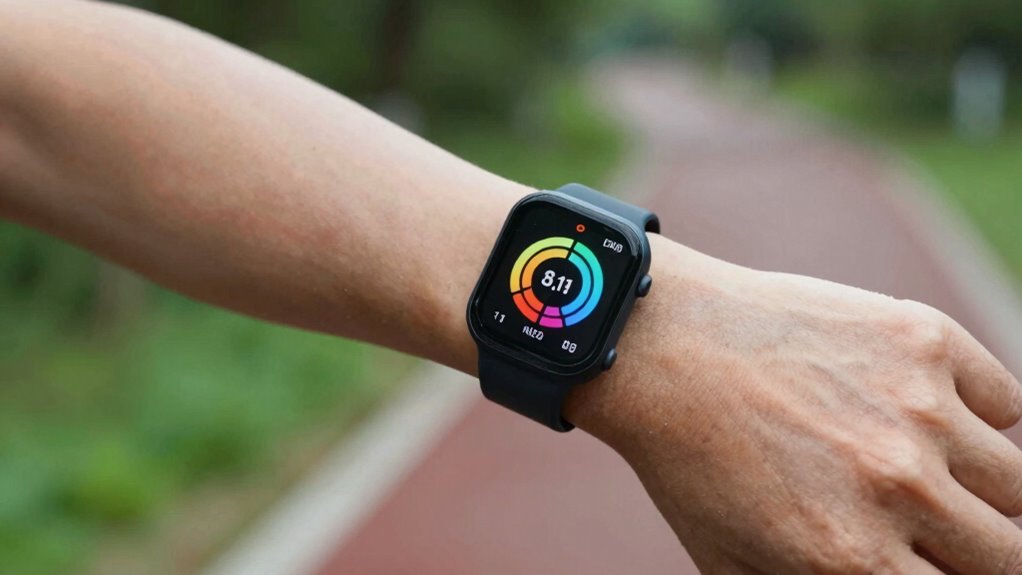

To use a heart rate monitor for training zones, start by calculating your maximum heart rate and setting your target zones. During workouts, keep an eye on your monitor to stay in the right zone—whether it’s aerobic for endurance or anaerobic for power. Monitoring helps you avoid overtraining and guarantees you’re challenging yourself appropriately. Stay consistent and track your progress over time; there’s more to discover if you keep going.

Get workout gear delivered free with Prime
- Fast, free delivery on millions of items
- Prime Video, Amazon Music and more included
- Member-only deals all year
Key Takeaways
- Determine your maximum heart rate through testing or age-based formulas to set accurate training zones.
- Calculate your training zones (aerobic, anaerobic) based on percentages of your maximum heart rate.
- Use the heart rate monitor to stay within specific zones during workouts for targeted training benefits.
- Regularly review heart rate data to ensure you’re training at the appropriate intensity and make adjustments as needed.
- Monitor heart rate variability and recovery signals to prevent overtraining and optimize training effectiveness.
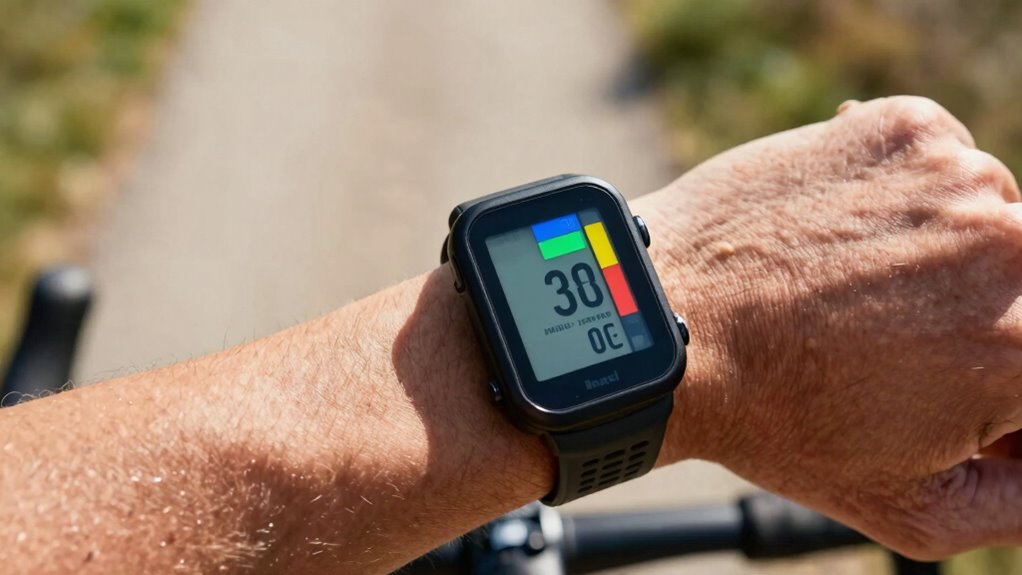
Using a heart rate monitor can markedly improve your training effectiveness by helping you stay within specific intensity zones. When you track your heart rate, you’re better able to manage your effort, guaranteeing you’re not overtraining or undertraining. This precision makes a noticeable difference in your progress over time. One key aspect to pay attention to is heart rate variability, which measures the fluctuations between heartbeats. Heart rate variability offers insights into your nervous system’s response to training, recovery status, and overall stress levels. If your variability is low, it suggests your body might be fatigued, and you should consider easing up to prevent injury or burnout. Conversely, high variability indicates good recovery and readiness for more intense workouts.
Monitoring heart rate variability reveals recovery status and stress levels, guiding safe, effective training adjustments.
By monitoring your heart rate, you reinforce training consistency, which is essential for sustained improvements. When you’re aware of your target zones, you can plan workouts that build endurance, strength, or speed without pushing too hard or not enough. For example, staying in the aerobic zone helps improve cardiovascular capacity, while training in the anaerobic zone boosts your power and speed. Accurate zone training ensures every session counts, and it allows you to track your progress objectively. Over time, you’ll notice how your heart adapts to different intensities, and this data can guide your training modifications. Additionally, understanding the impact of training zones can help you tailor your workouts more effectively.
Moreover, using your heart rate monitor consistently means you’re developing a better understanding of how your body responds to various workouts. This consistency helps you build a reliable training pattern, which is crucial for long-term gains. When your effort aligns with your intended zone, you avoid the pitfalls of inconsistent training, like plateaus or setbacks. It also helps you recognize signs of overtraining early, such as a persistently elevated heart rate or reduced heart rate variability, so you can adjust accordingly. Understanding heart rate variability can also provide early indicators of how well your body is adapting to your training load, allowing for better adjustments.
Incorporating heart rate data into your routine requires a bit of initial setup—finding your maximum heart rate and establishing your training zones—but once you do, it becomes an intuitive part of your workout. Regularly reviewing your heart rate logs enables you to see trends and identify what works best for you. Recognizing heart rate patterns can help you optimize your training schedule and avoid overexertion. Additionally, understanding the principles of heart rate training can support your efforts to improve endurance and performance more effectively. Ultimately, this focused approach fosters both heart health and fitness progress, as you develop training habits rooted in real-time physiological feedback. With patience and consistency, your use of a heart rate monitor will become a powerful tool in your fitness journey.
heart rate monitor for training zones
As an affiliate, we earn on qualifying purchases.
As an affiliate, we earn on qualifying purchases.
Frequently Asked Questions
Can I Wear a Heart Rate Monitor During Swimming?
Yes, you can wear a heart rate monitor during swimming if it’s swim waterproofed. Look for models designed specifically for swimmers, as they resist water and allow accurate readings. Wearing one helps you monitor your heart rate for stroke analysis and training zones. Just make certain it fits snugly to avoid slipping and check its waterproof rating to prevent water damage, so you can train effectively and safely in the pool.
How Often Should I Recalibrate My Heart Rate Monitor?
You should recalibrate your heart rate monitor every few months to maintain monitor accuracy, especially if you notice inconsistent readings. For example, a runner who recalibrates after a change in fitness level or equipment updates ensures accurate training zones. Regular calibration frequency helps prevent errors and guarantees your monitor provides reliable data, so you can train effectively without second-guessing your heart rate.
Is a Chest Strap More Accurate Than a Wrist Monitor?
A chest strap is generally more accurate than a wrist monitor because of better chest strap accuracy in detecting your heartbeats directly from your chest. Wrist monitors, while more convenient and reliable for casual use, can sometimes be affected by movement or poor fit, reducing their reliability. If you’re serious about precise training zones, investing in a chest strap offers better accuracy, helping you optimize your workouts effectively.
What Is the Best Heart Rate Zone for Fat Burning?
For fat burning, you should aim for a moderate exercise intensity, which typically falls within 50-70% of your maximum heart rate. This zone optimizes fat loss because your body burns a higher percentage of fat for energy during these efforts. Using your heart rate monitor helps you stay in this zone, ensuring you’re exercising at the right intensity for effective fat burning without overexerting yourself.
Can Heart Rate Zones Vary With Age or Fitness Level?
You might notice that heart rate zones do vary with age and fitness level—it’s like a coincidence that your body adapts over time. Age-specific training adjusts your target zones as you grow older, ensuring safe and effective workouts. Similarly, fitness level adjustments help you push harder or recover better. Recognizing these changes keeps your training personalized, maximizing results while reducing injury risk. Embrace the variation; it’s part of your fitness journey.
best heart rate monitor for athletes
As an affiliate, we earn on qualifying purchases.
As an affiliate, we earn on qualifying purchases.
Conclusion
Using a heart rate monitor helps you train more effectively by keeping your effort within ideal zones. When you stay in the right zone, you can boost endurance, burn fat, and improve performance faster. Did you know that athletes who train within their target heart rate zones see up to a 30% improvement in stamina? By understanding and applying these zones, you’re not just working harder—you’re working smarter for better results.
heart rate monitor with heart rate variability tracking
As an affiliate, we earn on qualifying purchases.
As an affiliate, we earn on qualifying purchases.
fitness tracker with heart rate zones
As an affiliate, we earn on qualifying purchases.
As an affiliate, we earn on qualifying purchases.
Halloween Picks
halloween
As an affiliate, we earn on qualifying purchases.