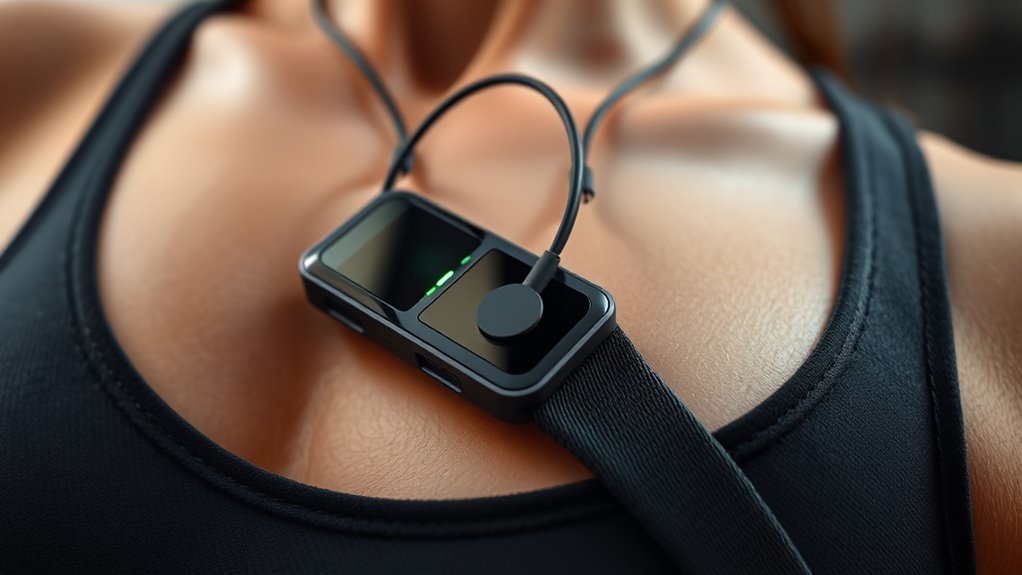
A heart rate monitor detects your heartbeat by measuring electrical signals or blood flow changes, often using sensors like optical (PPG) or electrical (ECG). Optical sensors shine light into your skin and analyze how blood flow alters the reflected light, while electrical sensors pick up tiny signals from your heart. The device filters, amplifies, and processes these signals to give you real-time heart rate data. Keep exploring to understand the fascinating science behind this technology.
Get ready for Prime Big Deal Days — try Prime free
Exclusive member deals on October 6–7, plus fast free delivery. Cancel anytime.
As an affiliate, we earn on qualifying purchases.
Key Takeaways
- Heart rate monitors detect blood flow changes using electrical signals (ECG) or optical sensors (PPG).
- Optical sensors emit light into the skin and measure reflected light to determine blood volume changes.
- Electrical signals from heart activity are captured via electrodes and converted into digital data.
- Signal processing filters out noise and identifies heartbeat peaks to calculate beats per minute (BPM).
- Data is transmitted wirelessly, ensuring real-time monitoring while maintaining security and accuracy.
As an affiliate, we earn on qualifying purchases.
Types of Heart Rate Monitoring Devices

There are several types of heart rate monitoring devices available, each designed to suit different needs and preferences. Some devices prioritize medical grade accuracy, making them ideal for clinical or precise fitness tracking. Chest strap monitors are renowned for their reliability and accuracy, often providing consistent readings during intense activity. Wrist-based monitors, including smartwatches, offer a balance of accuracy and user comfort, making them popular for everyday use. Finger and earlobe sensors provide quick measurements and are comfortable for short-term monitoring. When choosing a device, consider your need for medical-grade precision versus comfort for extended wear. Additionally, investing in sensor technology can significantly impact the quality of your heart rate data and overall monitoring experience. Understanding the importance of accuracy in heart rate monitoring can help you select the most suitable device for your specific needs. Additionally, recognizing the different device types and their features can guide you toward the most effective choice for your lifestyle. Moreover, understanding the reliability and precision of each device type can help you make a more informed decision aligned with your health and fitness goals.
As an affiliate, we earn on qualifying purchases.
The Role of Photoplethysmography (PPG) Technology

Photoplethysmography (PPG) technology plays a key role in modern heart rate monitoring by using light-based sensors to detect blood flow changes beneath the skin. This method often involves infrared sensors that shine light into your skin and measure how much is reflected or absorbed. PPG enables contactless measurement, making it comfortable and quick. Additionally, PPG sensors are frequently integrated into smart wearable devices, allowing for continuous health tracking. Here’s how it works for you: 1. Light from infrared sensors penetrates your skin, hitting blood vessels. 2. Blood flow variations change the amount of reflected light. 3. The device analyzes these changes to determine your heart rate accurately. This non-invasive technique provides real-time data, making it ideal for fitness trackers and medical devices alike. The underlying technology relies on optical sensing, which is fundamental to many modern health monitoring systems. It’s a simple yet powerful way to keep an eye on your heart health. Real-time monitoring capabilities
optical heart rate sensor device
As an affiliate, we earn on qualifying purchases.
As an affiliate, we earn on qualifying purchases.
How Light Is Used to Detect Heartbeat
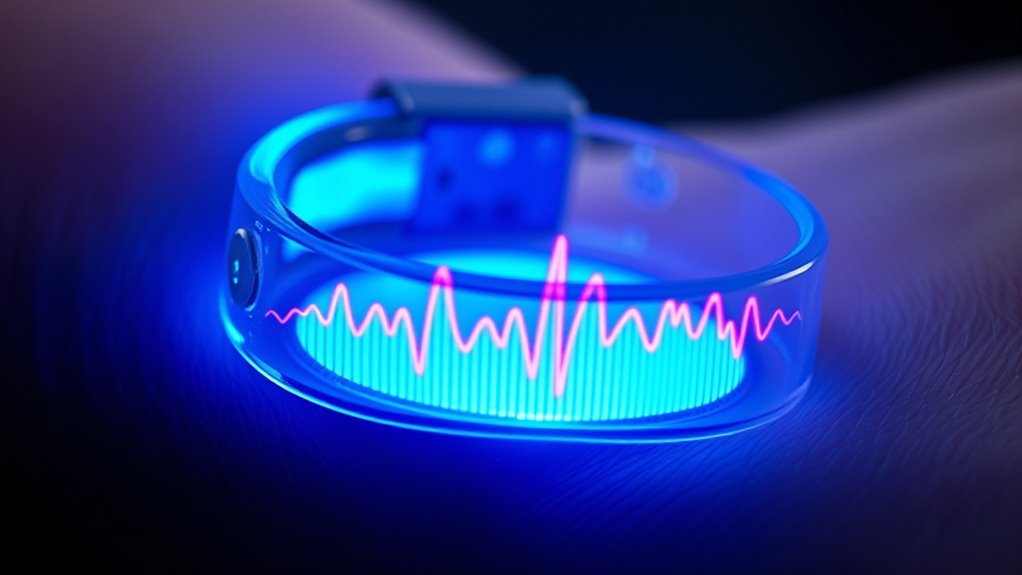
You use light to detect your heartbeat through a process called photoplethysmography. When the light reaches your skin, it’s either absorbed or reflected depending on blood flow. By analyzing these changes, the monitor can accurately measure your pulse in real-time. Proper placement of the sensor and understanding blood flow dynamics are essential for precise readings. Additionally, the technology often incorporates battery backup features to ensure continuous operation during power outages.
Principles of Photoplethysmography
Light-based heart rate detection relies on shining a specific type of light through your skin and measuring how much is reflected or absorbed. This is the core of photoplethysmography (PPG), which detects subtle physiological responses linked to your heartbeat. As your heart beats, blood volume in your vessels changes, affecting how light is reflected. These variations help monitor heart rate variability, giving insights into your autonomic nervous system. The accuracy of this method can be influenced by color accuracy, ensuring that the detected light corresponds precisely to physiological changes. Additionally, advancements in sensor technology continue to improve the precision and reliability of PPG measurements. Here’s how it works: 1. The sensor emits light, usually infrared or green, into your skin. 2. The reflected light fluctuates with blood flow, indicating heartbeat timing. 3. Analyzing these fluctuations reveals your heart rate, capturing physiological responses to stress or activity. Modern sensors leverage innovative materials and designs to enhance measurement stability and reduce interference, further advancing heart rate monitoring capabilities. Moreover, integrating AI-driven analysis can help interpret complex physiological data for more accurate health insights, and ongoing research into optical components aims to further refine PPG technology for consumer devices.
Light Absorption and Reflection
When light interacts with your skin, it can either be absorbed by tissues and blood or reflected back to the sensor. This process relies on the absorption properties of blood and skin, which vary with blood flow. During a heartbeat, blood volume increases, changing how much light is absorbed. Less light is reflected back when blood absorbs more, indicating a heartbeat. Conversely, when blood volume decreases, more light reflects to the sensor. Here’s a simplified view:
| Light Behavior | Tissue Response | Signal Change |
|---|---|---|
| Reflection | Less absorption | Increased signal |
| Reflection | More absorption | Decreased signal |
| Absorption | Blood flow variation | Heartbeat detection |
| Reflection | Skin properties | Baseline reading |
| Absorption | Blood oxygen levels | Additional info |
Understanding these light absorption and reflection properties helps heart rate monitors detect your pulse accurately.
As an affiliate, we earn on qualifying purchases.
The Process of Signal Acquisition and Processing

The process of signal acquisition and processing begins as the heart rate monitor detects electrical signals generated by your heart’s activity. These signals originate from blood flow dynamics and are captured through proper electrode placement. To guarantee accurate readings, the electrodes must be positioned correctly on your skin, usually along the chest or wrist. Here’s how it works:
- The electrodes pick up tiny electrical impulses produced during each heartbeat.
- These signals are transmitted to the monitor, which converts them into digital data.
- The device then processes the data to identify the heartbeat pattern, filtering out background noise.
- Understanding the importance of heart rate variability can help you interpret the data more effectively, as it reflects your body’s response to stress and physical activity.
- The accuracy of signal acquisition can be affected by factors such as environmental interference or improper electrode contact, emphasizing the need for proper device setup.
- Maintaining proper electrode contact can be challenging during movement, but using high-quality electrodes can improve signal clarity and reliability.
- Regularly checking the device calibration ensures consistent and accurate measurements over time. Additionally, advancements in signal processing algorithms have significantly improved the precision of modern heart rate monitors.
This sequence ensures your heart’s electrical activity is accurately recorded and prepared for further analysis, giving you reliable heart rate information.
Filtering and Amplifying Heartbeat Signals
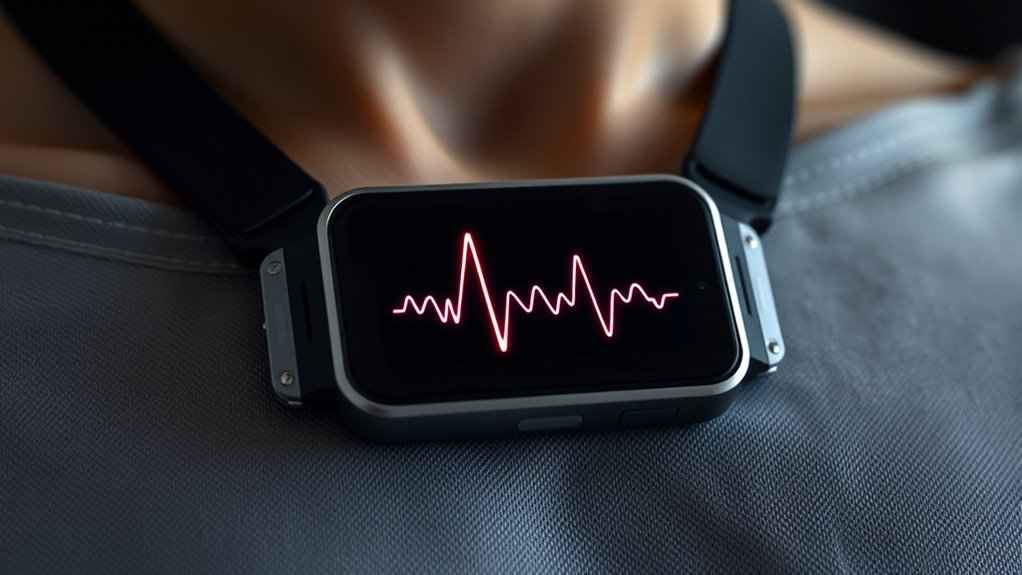
Once the heart signals are captured, filtering and amplifying them becomes essential to guarantee accurate detection. Electrical interference from nearby devices can introduce noise, making it harder to identify genuine heartbeat signals. Motion artifacts, caused by your movements or sensor shifts, also distort the data. To combat this, the monitor applies filters that remove high-frequency noise and smooth out irregularities. Amplification boosts weak signals, ensuring they stand out against background noise. This process helps isolate the real heartbeat signals from interference and artifacts, providing a clearer, more reliable reading. Proper filtering and amplification are vital for the monitor to accurately interpret your heart’s rhythm, enabling precise heart rate calculations and consistent performance during different activities. Additionally, understanding the importance of attention to detail in sensor calibration ensures the monitor maintains high accuracy over time. Moreover, consistent calibration practices help maintain measurement accuracy, which is crucial for reliable health monitoring.
Converting Signals Into Heart Rate Data
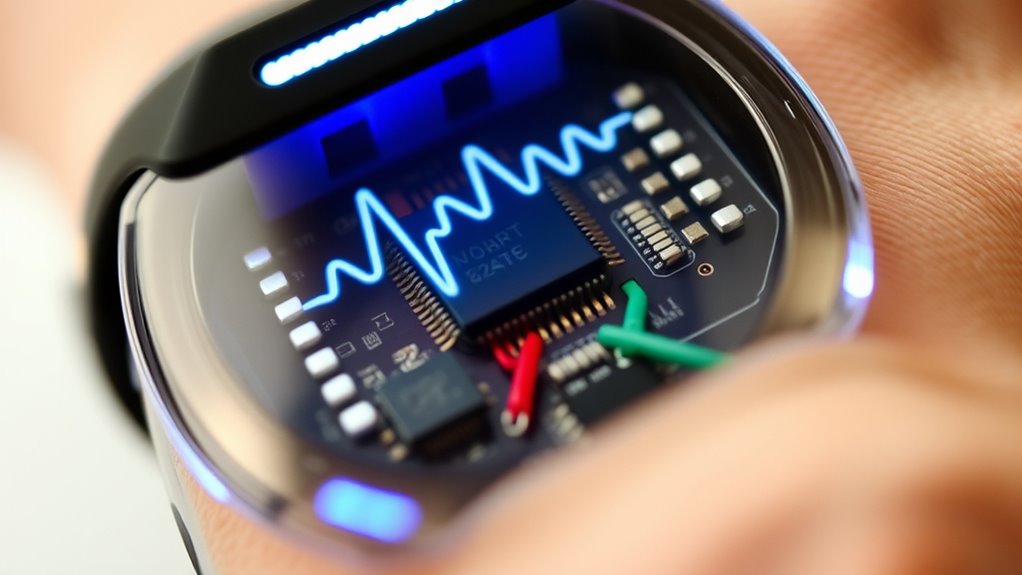
Once your heart’s signals are detected and amplified, they need to be processed into meaningful data. Signal filtering guarantees accurate readings by removing noise, while the calculation method converts these signals into a heart rate. Understanding these steps helps you see how raw data becomes your real-time heart rate.
Signal Detection and Amplification
To convert the tiny electrical signals generated by your heart into usable data, signal detection and amplification are essential steps. You need to identify the weak signals from your skin or wrist sensors and boost their strength for accurate readings. This process is crucial for biometric feedback and fitness tracking, helping you monitor your health effectively.
Here are the key steps:
- Detect the faint electrical signals amidst muscle noise and external interference.
- Amplify these signals to a level where they can be accurately processed.
- Filter out any irrelevant signals to ensure precise heart rate data.
Signal Filtering Processes
After the signals are amplified, filtering processes come into play to convert raw electrical data into meaningful heart rate information. You’ll see how filters remove noise, such as muscle movement or external interference, ensuring accurate readings. This step is crucial for biometric authentication, confirming your identity through unique heart patterns. Additionally, the filtered signals help in stress analysis, revealing your emotional state by analyzing heart variability. The process involves selecting specific frequency ranges and eliminating irrelevant data, so your monitor delivers reliable results. Here’s a visual to connect emotionally:
| Raw Signal | Filtered Signal | Heart Rate Data |
|---|---|---|
| Noise from movement | Clearer, focused data | Accurate beats per minute |
| External interference | Pure heart rhythm | Stress insights |
| Muscle activity | Precise pulse signals | Reliable biometric authentication |
| Data ready for analysis | Heart health assessment | Confidence in results |
Heartbeat Calculation Method
Converting filtered heart signals into accurate heart rate data involves detecting individual beats and calculating their frequency. Your heart rate monitor analyzes the electrical signals captured through electrode placement on your skin, often at specific points like the chest or wrist. Once the signals are clean, the device identifies the peaks corresponding to each heartbeat. These detected beats are then used to determine the heart rate variability, providing insight into your cardiovascular health. To guarantee accuracy, the device may use algorithms that account for irregularities in beat timing. Here are key steps:
- Detect peaks in the electrical signals representing each heartbeat.
- Calculate the time interval between beats (R-R interval).
- Convert these intervals into beats per minute (BPM). This process ensures you get precise heart rate data.
Wireless Transmission and Data Storage
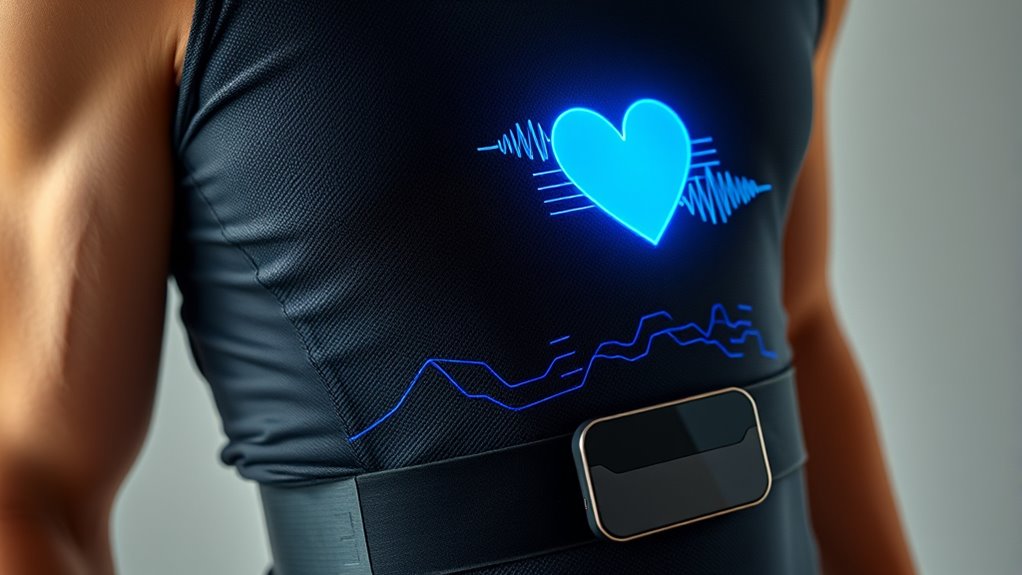
Have you ever wondered how your heart rate monitor instantly sends data to your device? It uses wireless transmission to relay your heart rate in real-time. This process involves sending signals via Bluetooth or ANT+ technology, which keeps your data secure and quick. Once transmitted, your device stores the information for tracking and analysis. Data storage options vary; some devices save data locally, while others sync with apps or cloud services. This seamless flow guarantees you can monitor your heart health without interruptions. Here’s a quick look:
| Aspect | Details |
|---|---|
| Wireless transmission | Bluetooth, ANT+ |
| Data transfer speed | Instant, real-time |
| Data storage location | Device, app, cloud |
| Data security | Encrypted signals |
| Storage capacity | Varies, from local to cloud |
This setup makes health monitoring simple and accessible.
Accuracy Factors and Limitations
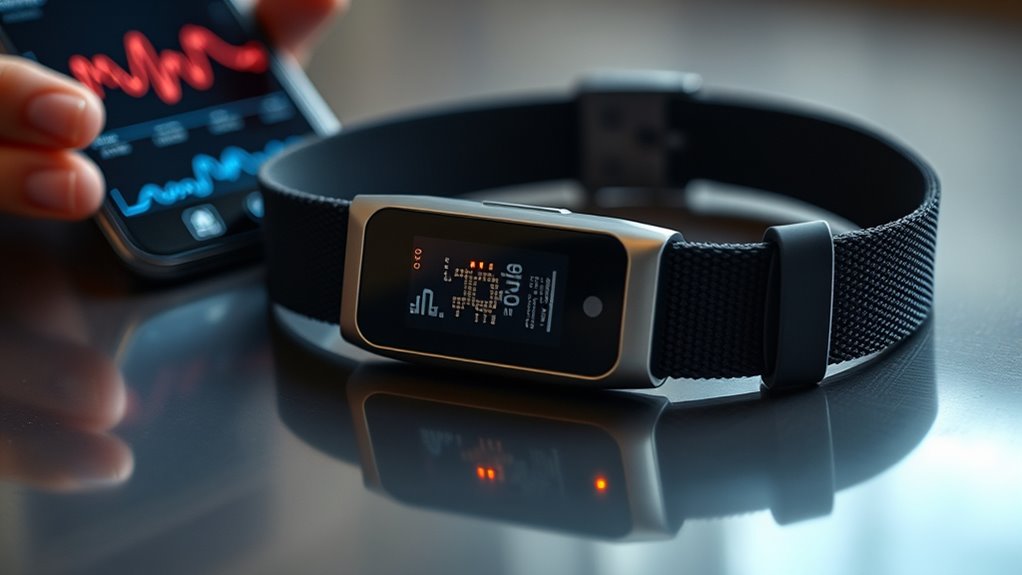
Ever wonder why sometimes your heart rate readings seem off or inconsistent? Several factors can affect their accuracy. First, improper accuracy calibration can cause discrepancies; ensure your device is correctly calibrated for reliable results. Second, device limitations might impact performance, especially in high-intensity workouts or unusual positions. Third, external factors like movement, skin contact, or sweat can interfere with sensors, leading to less precise readings. Keep in mind that optical sensors rely on light absorption, so poor skin contact or darker skin tones may reduce accuracy. Understanding these factors helps you interpret your data better and avoid unnecessary concerns. While heart rate monitors are generally reliable, recognizing these limitations guarantees you use them effectively and avoid overestimating their precision.
Advancements in Heart Rate Monitoring Technology

Recent advancements in heart rate monitoring technology focus on wearable sensor innovations and smarter AI algorithms. These improvements make tracking more accurate and reliable, even during intense activity. As a result, you can expect more precise data and better insights into your health and performance.
Wearable Sensor Innovations
How have wearable sensors transformed heart rate monitoring? They’ve made tracking your health easier, more accurate, and stylish. Today’s sensors are smaller, more comfortable, and integrate seamlessly into your daily life. You can now monitor your heart rate during workouts or daily activities without bulky devices. Innovations include flexible sensors that mold to your skin, ensuring better contact and more reliable data. These advancements align with current fashion trends, making wearable tech a statement piece rather than just a fitness tool. For athletes, these sensors enhance sports performance by providing real-time feedback, helping optimize training. Plus, they connect effortlessly with smartphones and other devices, keeping you informed and motivated. Wearable sensor innovations are truly revolutionizing how you stay healthy and perform at your best.
AI Algorithm Improvements
Advancements in AI algorithms have substantially enhanced the accuracy and reliability of heart rate monitoring. These improvements allow devices to better interpret signals, filter out noise, and adapt to individual variations, providing more precise readings. AI algorithm improvements also enable real-time analysis, offering immediate feedback during workouts or daily activities. As these algorithms become more sophisticated, they can distinguish between true heart rate signals and artifacts caused by movement or external factors. However, with increased data collection, maintaining data privacy remains essential. Manufacturers are implementing robust security measures to protect your personal health data. By integrating advanced AI and prioritizing data privacy, modern heart rate monitors deliver more accurate insights while ensuring your information stays secure.
Practical Applications and Future Developments
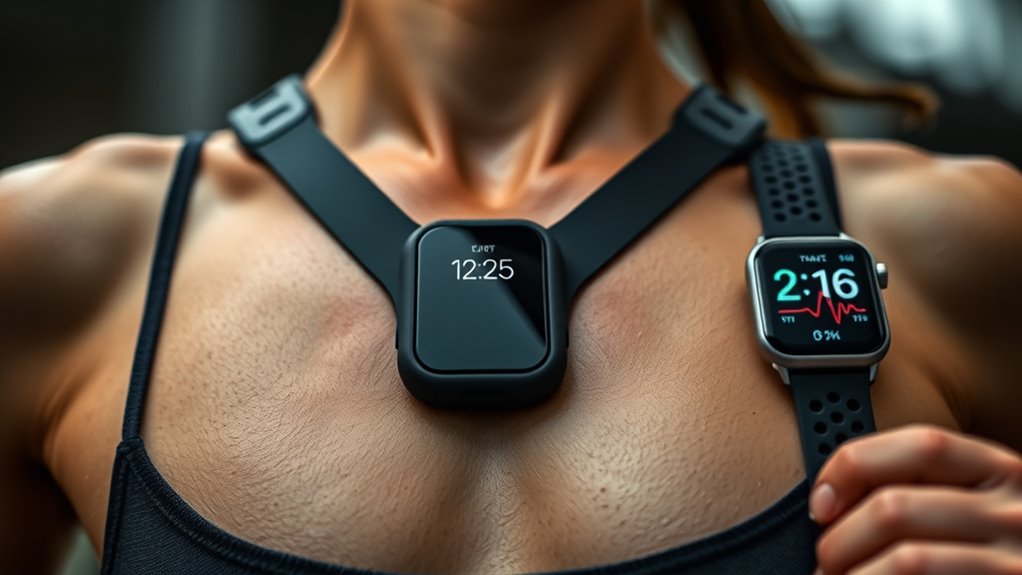
Heart rate monitors have become essential tools for athletes, fitness enthusiasts, and medical professionals, offering real-time insights into cardiovascular health and workout effectiveness. In clinical applications, they help monitor patient recovery and heart health, improving diagnosis accuracy. For fitness tracking, they enable you to optimize workouts by maintaining target heart rate zones. Future advancements include integrating heart rate data with AI for personalized health insights, increasing accuracy with wearable sensors, and expanding remote monitoring capabilities.
Here are some exciting possibilities:
- Enhanced clinical diagnostics for early detection of heart conditions
- Smarter fitness apps that adapt workouts based on your real-time heart rate
- Telemedicine tools allowing doctors to monitor your heart health remotely
These developments will make heart rate monitors more versatile and impactful for your health journey.
Frequently Asked Questions
How Do Different Heart Rate Monitoring Devices Compare in Accuracy?
Different heart rate monitoring devices vary in accuracy, mainly due to device calibration and user comfort. Chest straps generally offer the highest accuracy because they are well-calibrated and stay in place during activity. Wrist-based monitors are more comfortable but can be less precise, especially if not properly calibrated or if the user moves frequently. Your choice depends on balancing accuracy needs and comfort for your specific activity or daily use.
What Factors Can Cause Errors in Ppg-Based Heart Rate Detection?
Like a lighthouse flickering in a storm, errors in PPG-based heart rate detection occur when sensor placement shifts or skin tone absorbs signals differently. Poor placement, such as loose contact or movement, muddles the data. Additionally, darker skin tones can reduce light absorption and reflection, making it harder for the sensor to detect accurate pulse signals. Ensuring proper fit and considering skin tone variations helps improve measurement accuracy.
How Do Heart Rate Monitors Function During Intense Physical Activity?
During intense physical activity, your wearable technology uses optical sensors to detect changes in blood flow for accurate fitness tracking. It adjusts for movement by filtering out noise and rapid motion, ensuring reliable heart rate readings. You benefit from continuous monitoring, allowing you to optimize workouts and track progress seamlessly. This real-time data keeps you informed, helping you stay motivated and achieve your fitness goals effectively, even during vigorous exercises.
Can Heart Rate Monitors Detect Irregular Heartbeat Patterns?
Your heart rate monitor can detect irregular heartbeat patterns, like arrhythmias, especially if it uses ECG integration, which captures detailed electrical signals. These devices can spot abnormal rhythms and alert you early, preventing potential health issues. While some monitors excel at arrhythmia detection, others may not be as precise. Think of it as having a heartbeat superhero, catching those sneaky irregularities before they become serious.
What Are the Privacy Considerations for Storing and Transmitting Heart Rate Data?
You should be aware that storing and transmitting heart rate data involves privacy considerations. Always make sure your data is protected through data encryption, which helps prevent unauthorized access. Additionally, your device or app should obtain your user consent before collecting or sharing your heart rate information. By staying informed and choosing secure devices, you can better safeguard your sensitive health data and maintain control over your privacy.
Conclusion
Think of a heart rate monitor as your personal lighthouse, guiding you through the stormy seas of exercise and health. Just like a lighthouse’s beam cuts through fog to keep ships safe, these devices use light and signals to keep you informed. Whether you’re running or resting, they work silently in the background, helping you navigate your wellness journey. With technology advancing, your heart’s story becomes clearer, empowering you to stay on course toward better health.
NFL season / tailgating Picks
team gear
As an affiliate, we earn on qualifying purchases.