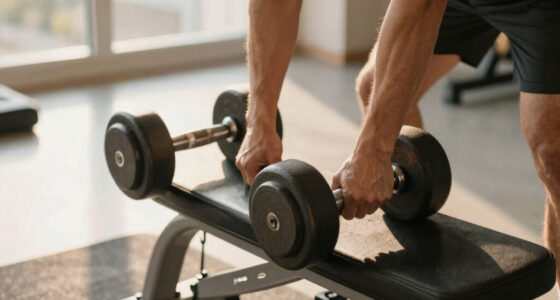
Don’t skip leg day! Lower-body training is essential for building strength in your quads, hamstrings, and calves. Strong legs enhance your stability, improve balance, and boost your athletic performance. They also help correct muscle imbalances that can lead to injury. Engaging those large leg muscles increases calorie burn and supports better performance in your upper body workouts. Discover how a solid leg routine can elevate your fitness journey even further and open new levels of performance.
Key Takeaways
- Lower-body training builds strength in essential muscles, improving overall athletic performance and daily task efficiency.
- Strengthening muscles around the knees enhances stability, reducing injury risks during sports and activities.
- Targeted lower-body exercises correct muscle imbalances, leading to better symmetry and reduced discomfort.
- Strong legs contribute to improved mechanics in upper-body workouts, enhancing overall lifting performance.
- Engaging large leg muscles boosts calorie burn, aiding weight management and promoting a leaner physique.

Have you ever wondered how lower-body training can transform your overall fitness? Many people focus on upper-body workouts, neglecting their legs, but that’s a mistake. When you prioritize lower-body training, you’re not just building strength in your quads and hamstrings; you’re laying the foundation for better performance in every physical activity. Strong legs contribute to improved balance, agility, and endurance, making everyday tasks easier and enhancing your athletic capabilities.
Prioritizing lower-body training builds strength, balance, and endurance, enhancing performance in all physical activities.
One essential aspect of lower-body training is knee stability. Your knees are critical joints that bear loads and absorb impact. By strengthening the muscles around your knees—like your quadriceps, hamstrings, and calves—you can considerably improve knee stability. This stability not only helps you perform exercises effectively but also reduces the risk of injury during sports or even while walking up stairs. When your knees are stable, you’ll notice you can move more freely and confidently, which can lead to better workouts and greater overall mobility.
Another benefit of lower-body training is its role in correcting muscle imbalances. Many people develop muscle imbalances due to various factors, such as poor posture or repetitive movements in daily life. These imbalances can lead to discomfort and even pain, making it essential to address them through targeted training. By incorporating exercises that focus on your glutes, hamstrings, and calves, you’ll help balance out the muscles in your legs. This not only improves your physique but also enhances functional strength and reduces the risk of injuries.
Furthermore, strong legs can elevate your performance in upper-body workouts. When your lower body is strong, you’ll generate more power during exercises like squats, deadlifts, and even bench presses. It’s all connected; a stable base allows for better lifting mechanics. You’ll find that your overall strength increases, and you may even break through plateaus you’ve been stuck at.
Lastly, lower-body workouts can considerably boost your metabolism. When you engage larger muscle groups in your legs, you burn more calories during and after your workout. This metabolic boost can assist in weight management and fat loss, providing you with a leaner physique over time. Lower-body strength training can also enhance your overall athletic performance, allowing you to perform better in various sports and activities.
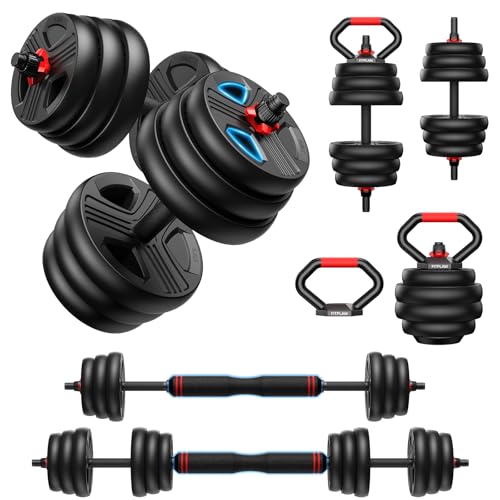
FDS1 Adjustable dumbbell set, 45lbs Free Weights set with upgraded nut, 5 in 1 Weight Set Used as Kettlebells, Barbell, Push up Stand, Fitness Exercise for Home Gym Suitable Men/Women
5-IN-1 MULTIFUNCTIONAL DUMBBELL SET: Easily converts into dumbbells, kettlebells, barbells, weight plates, and push-up stands. Perfect for presses,…
As an affiliate, we earn on qualifying purchases.
As an affiliate, we earn on qualifying purchases.
Frequently Asked Questions
Can I Train My Legs Every Day?
You can train your legs every day, but it’s vital to contemplate muscle recovery and training frequency. If you’re doing intense workouts, your muscles need time to recover to avoid overuse injuries. Instead, try alternating between heavy and light sessions or focusing on different muscle groups within your legs. This way, you’ll maintain consistency while allowing for adequate recovery, helping you achieve better strength and endurance in the long run.
What Are the Best Exercises for Beginners?
As a beginner, focus on simple exercises like squats, lunges, and leg presses. These exercise variations target major muscle groups effectively. Avoid common beginner mistakes, such as using too much weight or neglecting form. Start with bodyweight movements to build strength and confidence before progressing. Incorporating resistance bands can also add variety without overwhelming you. Remember, consistency is key, so aim for regular workouts to establish a solid foundation.
How Do I Prevent Injuries While Training Legs?
To prevent injuries while training legs, start with a proper warm-up to increase blood flow and prepare your muscles. Incorporate dynamic stretches, like leg swings or walking lunges, to enhance flexibility. Focus on your form during exercises, keeping your movements controlled. Gradually increase weights and intensity to avoid overexertion. Ultimately, listen to your body; if something feels off, take a break or adjust your routine. It’s all about staying safe while getting stronger!
Is Leg Training Effective for Weight Loss?
Absolutely, leg training can be a powerful ally in your weight loss journey. Think of your legs as a furnace, burning calories as you build muscle endurance. Each squat and lunge ignites your metabolism, helping you shed those stubborn pounds. You’re not just strengthening your legs; you’re stoking the fire of calorie burn throughout your body. So, lace up those sneakers and embrace leg day—your weight loss goals will thank you!
What Should I Eat for Optimal Leg Recovery?
To optimize leg recovery, focus on nutrition tips that include lean proteins, healthy fats, and complex carbohydrates. Recovery foods like chicken, quinoa, sweet potatoes, and leafy greens can help rebuild muscle and replenish energy. Don’t forget to hydrate with water or electrolyte drinks, too. Eating within 30 minutes post-workout can maximize recovery, so keep snacks like Greek yogurt or a protein shake handy to support your body’s healing process.

Fit Simplify Resistance Loop Exercise Bands with Instruction Guide and Carry Bag, Set of 5
High End Exercise Bands. Our 12"³ By 2"³ Heavy Duty Loop Resistance Bands Come In 5 Varying Resistance…
As an affiliate, we earn on qualifying purchases.
As an affiliate, we earn on qualifying purchases.
Conclusion
So, don’t overlook leg day; embrace it for strength, stability, and endurance. By dedicating time to your lower body, you’re not just building muscle; you’re enhancing your overall performance, boosting your metabolism, and preventing injuries. Remember, strong legs support strong bodies. When you commit to lower-body training, you’re investing in athleticism, improving your balance, and increasing your confidence. Make leg day a priority, and watch how it transforms your fitness journey. Every step counts!

JOMVD Knee Brace for Knee Pain, Meniscus Tear, Adjustable Knee Support with Side Spring Stabilizers for Meniscus Tear, ACL, Arthritis, Knee Pain Relief, Women and Men, Medium
60% Neoprene, 27% Nylon, 8% Polyester, 5% Spandex.
As an affiliate, we earn on qualifying purchases.
As an affiliate, we earn on qualifying purchases.
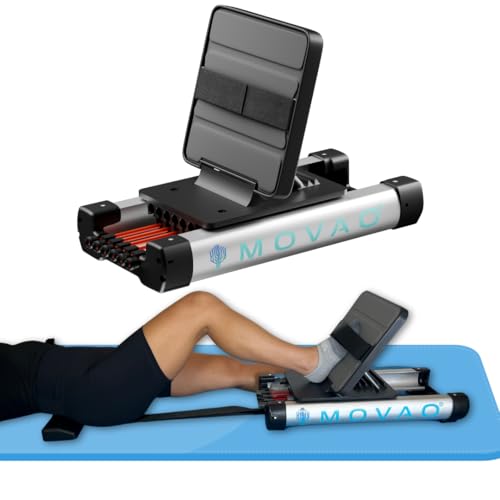
US Doctor Invented Mini in-Bed Leg Press Machine for Rehab | Low-Impact Leg Strength Trainer for Neurological & Orthopedic Recovery | Portable 9 lb PT Equipment with 6 Resistance Levels up to 66 lb
New and improved model (October 15, 2025) with stronger cords and greater resistance (0-65lbs)
As an affiliate, we earn on qualifying purchases.
As an affiliate, we earn on qualifying purchases.