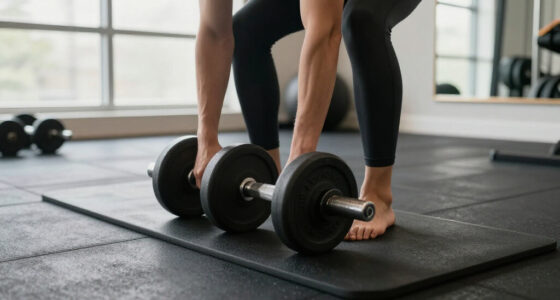
If you’re lifting too heavy, you’ll notice issues like strain in your form, persistent soreness, or taking longer breaks between sets. You might feel sharp pain during lifts or recognize that you’re unable to maintain proper posture. These are all signs of overexertion that can lead to serious injuries. If you want to lift safely, it’s essential to listen to your body. Keep going to discover more about staying safe while you work out.
Key Takeaways
- Noticeable changes in form, such as awkward twisting or compromised technique, indicate you’re lifting too heavy.
- Persistent muscle soreness and fatigue beyond normal recovery times signal potential overtraining.
- Extended recovery times between sets can suggest that your weights are too heavy for your current fitness level.
- Experiencing sharp pains during lifts is a clear warning sign to stop and reassess your weight choices.
- Prioritize safety by reducing weight and focusing on proper form to prevent injury and promote effective training.

When you push yourself in the gym, it’s easy to get caught up in the pursuit of strength, but lifting too heavy can lead to serious setbacks. You might not realize it at first, but ignoring your limits can turn into a significant training mistake. The thrill of lifting heavier weights can cloud your judgment, and before you know it, you’re putting yourself at a higher injury risk.
One of the first signs you’re lifting too heavy is a noticeable change in your form. If you find yourself straining to complete a lift or your body starts to twist and turn awkwardly, it’s time to reassess. Proper form is essential not just for effectiveness but also for safety. When you compromise form for the sake of weight, you increase the chances of pulling a muscle or straining a joint. You may think you’re making progress, but in reality, you’re setting yourself up for injury.
A shift in your form signals it’s time to reevaluate your weights for safety and effectiveness.
Another sign to watch out for is persistent fatigue or soreness that doesn’t seem to go away. If your muscles feel constantly drained or sore days after a workout, you might be pushing yourself too hard. It’s indispensable to listen to your body. While some soreness is normal, excessive discomfort can indicate that you’re overdoing it. It’s a clear signal that your body needs more recovery time. Ignoring this can lead to chronic injuries that could sideline you for weeks or even months.
You should also pay attention to how long it takes you to recover between sets. If you find that you need extended breaks just to catch your breath, it’s likely a sign you’ve overreached. Excessive recovery time can impede your workout flow and limit your overall progress. Instead of focusing on lifting heavier, consider lowering the weight and increasing the reps. This approach can help build endurance without sacrificing safety. Additionally, understanding the importance of proper form can enhance your lifting technique and decrease injury risk.
Finally, if you’re experiencing any sharp pains during your lifts, stop immediately. Pain is your body’s way of signaling that something’s wrong. Ignoring it can lead to severe injuries that may require medical intervention. It’s better to face the reality of your limits than to risk long-term damage.
adjustable weight lifting gloves
As an affiliate, we earn on qualifying purchases.
As an affiliate, we earn on qualifying purchases.
Frequently Asked Questions
How Can I Safely Increase My Lifting Weight?
To safely increase your lifting weight, focus on progressive overload. Start by gradually adding small increments to your current weights, ensuring you can maintain proper form. Listen to your body, and allow for adequate recovery between sessions to prevent injury. Track your progress and adjust your routine as needed, aiming for proper progression over time. This way, you’ll build strength effectively without risking your safety or overexertion.
What Warm-Up Exercises Should I Do Before Lifting?
Before lifting, you should focus on dynamic stretching and light cardio. Start with 5-10 minutes of light cardio, like jogging or jumping jacks, to get your heart rate up. Then, incorporate dynamic stretches, such as leg swings, arm circles, and torso twists. These movements will prepare your muscles and joints, improving your range of motion and reducing the risk of injury as you start your lifting session.
How Often Should I Change My Weightlifting Routine?
You should change your weightlifting routine every 4 to 6 weeks to ensure progression planning and workout variation. This keeps your muscles challenged and prevents plateaus. By mixing up exercises, adjusting weights, or altering rep schemes, you’ll stimulate growth and avoid boredom. Listen to your body; if you’re not seeing progress or feeling unmotivated, it’s time for a change. Keep your workouts fresh and exciting to stay engaged and achieve your fitness goals!
What Role Does Nutrition Play in Lifting Weights?
Nutrition’s your secret weapon in the weightlifting arena. Think of it as fuel for your strength engine. With proper macronutrient timing, you maximize muscle recovery and growth. Carbs before and protein after your workouts can transform your gains. Plus, the right supplements can skyrocket your effectiveness, turning good efforts into great results. So, pay attention to what you eat; it’s as vital as the weights you lift!
How Do I Know if I’m Ready for Heavier Weights?
You’ll know you’re ready for heavier weights when you can consistently perform your current sets with good form and without excessive fatigue. Conduct a strength assessment to evaluate your lifting capacity; if you can easily complete your reps and feel you could do more, it’s a sign to increase the weight. Listen to your body—if you’re feeling strong and confident, gradually add more resistance to challenge yourself safely.
As an affiliate, we earn on qualifying purchases.
Conclusion
If you’re experiencing pain, struggling with form, or feeling excessively fatigued after lifting, it’s time to reassess your weights. Remember, lifting too heavy can lead to injuries that sideline your progress. In fact, studies show that nearly 50% of gym injuries are linked to improper lifting techniques. Focus on mastering your form with lighter weights to build strength safely. Your body will thank you, and you’ll see better results in the long run.
As an affiliate, we earn on qualifying purchases.
As an affiliate, we earn on qualifying purchases.