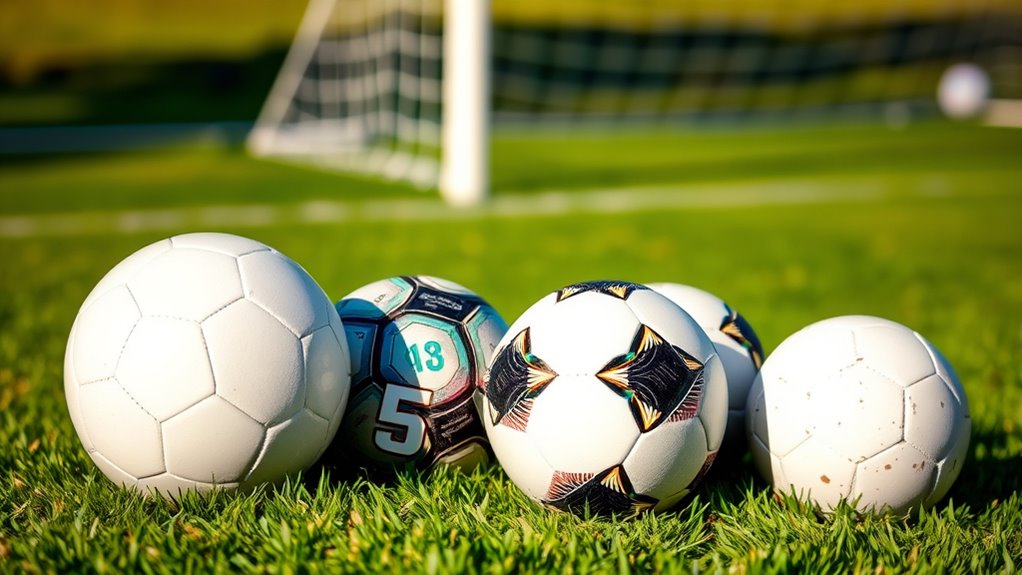

Choosing the right soccer ball starts with matching it to your playing environment—indoor balls are softer with lower bounce while outdoor balls are tougher and more durable. Consider the size too: size 3 is ideal for young kids and size 5 is for adults. Don’t forget to keep your ball well-maintained for better performance. Selecting the right ball can make a significant difference in your game, and there’s more to discover about how to optimize your experience.
Key Takeaways
- Select an indoor soccer ball for smoother surfaces and better control; choose outdoor balls for durability on grass or turf.
- Match the ball size to the player’s age: size 3 for younger players and size 5 for adults or older youth.
- Ensure the ball’s construction is suitable for your playing environment to enhance performance and longevity.
- Regularly check air pressure and clean the ball after outdoor use to maintain optimal handling and durability.
- Consider personal skill level and preferences when selecting a ball, as this improves enjoyment and development.
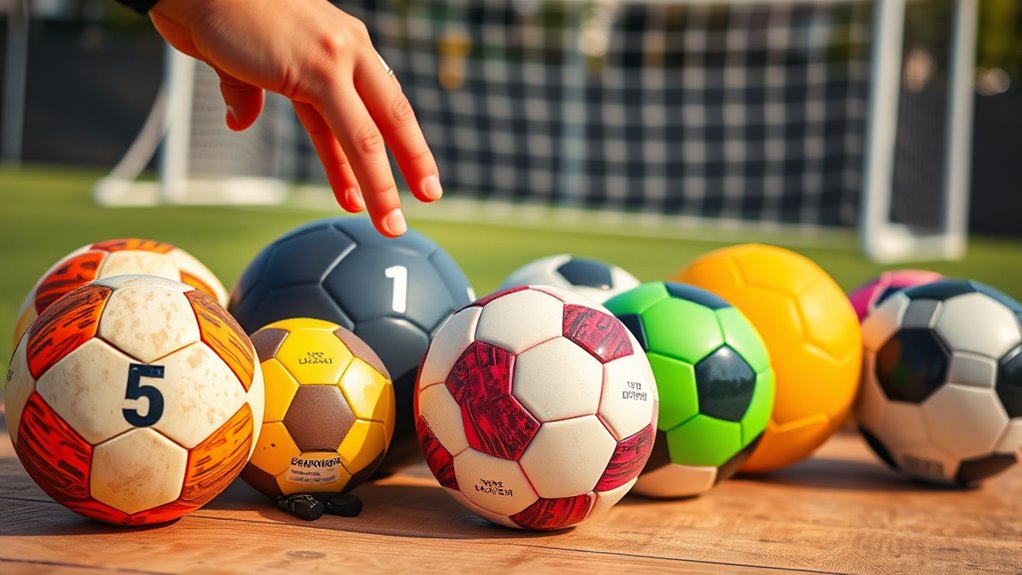
When you’re gearing up for a soccer match, choosing the right ball can make all the difference in your performance. The type of ball you select can influence your control, passing, and overall enjoyment of the game. So, whether you’re playing indoors or outdoors, understanding the specifics of soccer balls will help you elevate your game.
First off, consider where you’ll be playing. Indoor soccer balls are designed differently than outdoor balls. Indoor balls typically have a lower bounce, allowing for better control on the smoother surfaces of indoor arenas. They’re also often made with softer materials, which can reduce the risk of injury in close quarters. If you’re mainly playing indoors, look for a ball labeled as an indoor soccer ball to guarantee you get the best performance for that environment.
On the other hand, outdoor soccer balls are built to withstand tougher conditions, including grass, turf, and even gravel. They’re designed with a firmer outer shell, which helps them maintain shape and durability over time. If you’re playing primarily outdoors, you’ll want a ball that can handle the wear and tear of the elements. Check the ball’s construction and confirm it’s suited for outdoor use to boost your playing experience.
Now, don’t forget about size. Soccer balls come in different sizes, typically ranging from size 3 for younger players to size 5 for adults and older youth. If you’re buying for kids, make sure to select the right size based on their age. Using a ball that’s too big or too small can hinder their development and enjoyment of the game.
Once you’ve selected the right type and size of ball, focus on ball maintenance. Keeping your ball in good shape is vital for consistent performance. Regularly check the air pressure, as an under-inflated ball can lead to poor handling and decreased accuracy. Store your ball in a cool, dry place, and clean it after use, especially if you’ve played outdoors, to prolong its life.
Ultimately, choosing the right soccer ball is about matching it to your playing environment and personal needs. By considering factors like indoor vs outdoor, size, and maintenance, you’ll be well on your way to enhancing your soccer skills and enjoying every match to the fullest.
Top picks for "choose right soccer"
Open Amazon search results for this keyword.
As an affiliate, we earn on qualifying purchases.
Frequently Asked Questions
What Materials Are Soccer Balls Typically Made From?
Soccer balls are typically made from synthetic leather for the outer layer, providing durability and a good touch. Inside, they contain a rubber bladder that holds air, ensuring the ball maintains its shape and bounce. This combination of materials helps you enjoy a consistent playing experience on various surfaces. When choosing a soccer ball, knowing these materials can help you find one that suits your style and needs perfectly.
How Do I Properly Inflate a Soccer Ball?
So, you think you can just blow up a soccer ball like a birthday balloon? Think again! For proper inflation, grab a pump and a needle adapter—those are your inflation tools. Insert the needle into the valve and pump it until the ball feels firm but not rock-hard. Remember, soccer ball maintenance is key; over-inflating can ruin your game and your ball. Keep it at the recommended pressure, and you’re ready to score!
Can I Use a Training Ball for Matches?
You can use a training ball for matches, but it’s not ideal. Training balls are typically designed for practice, offering durability and better control, while match balls focus on performance and accuracy. Using a training ball might help improve your skills, but you won’t experience the same responsiveness as with a match ball. If you’re looking to perform at your best during a game, it’s best to stick with a proper match ball.
How Often Should I Replace My Soccer Ball?
You should replace your soccer ball every 1 to 2 years, depending on usage and condition. Regular ball maintenance, like cleaning and checking for air pressure, helps extend its life. Store your ball in a cool, dry place away from direct sunlight to prevent damage. If you notice any significant wear or loss of shape, it’s time for a new one. Keeping these tips in mind will guarantee peak performance on the field.
Are There Specific Brands Known for Quality Soccer Balls?
When it comes to selecting a quality soccer ball, you’ll find several brands renowned for their craftsmanship. Companies like Adidas, Nike, and Puma have established a strong brand reputation, often a reflection of their innovative designs and durable materials. While price comparisons can be enlightening, remember that investing in a reputable brand typically guarantees better performance and longevity. Therefore, opt for a brand that meets both your quality standards and budget.
Conclusion
In choosing the right soccer ball, remember that “the right tool for the job makes all the difference.” Whether you’re a beginner or a seasoned player, selecting the correct size and type enhances your game experience. Take the time to contemplate your age, skill level, and playing surface, ensuring you pick a ball that fits your needs. With the right soccer ball in hand, you’ll be ready to elevate your skills and enjoy the beautiful game even more!