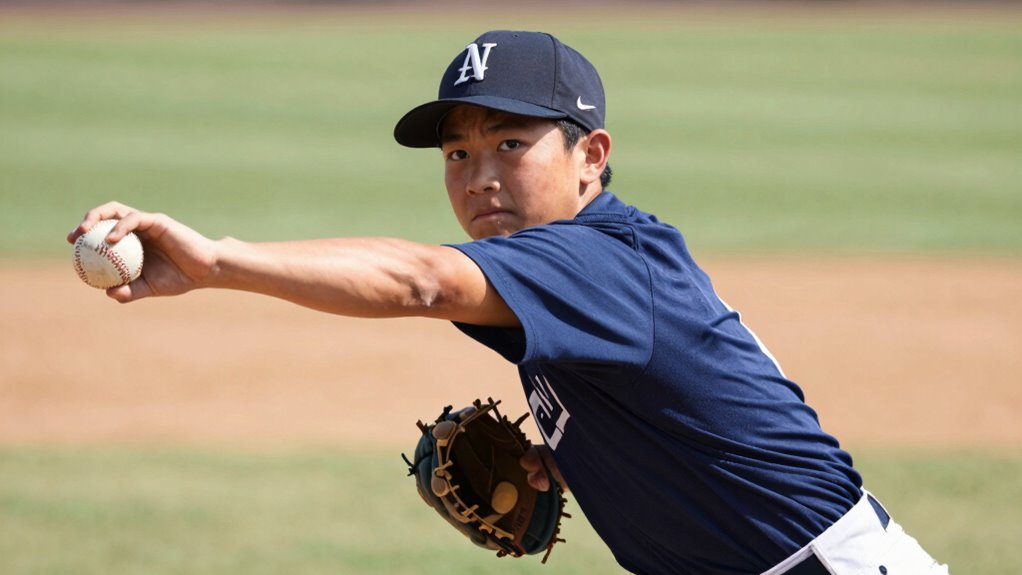

To improve your throwing arm, focus on targeted strength exercises like resistance band work, shoulder presses, and dumbbell rotations to build shoulder, forearm, and upper back muscles. You’ll want to practice proper mechanics, including grip and follow-through, to enhance accuracy and reduce injury risk. Consistently warm up and listen to your body to prevent strains. Developing resilience and control takes time—keep exploring these strategies to take your game to the next level.

Get workout gear delivered free with Prime
- Fast, free delivery on millions of items
- Prime Video, Amazon Music and more included
- Member-only deals all year
Key Takeaways
- Incorporate resistance training and shoulder exercises to build arm strength and resilience safely.
- Focus on proper throwing mechanics, including grip, stance, and follow-through, to improve accuracy and reduce injury risk.
- Warm up thoroughly with mobility drills and light throws before each practice to prepare arm muscles.
- Prioritize rest and listen to your body to prevent overuse injuries and promote recovery.
- Combine strength, technique, and consistent practice for gradual, sustainable improvements in throwing power and control.
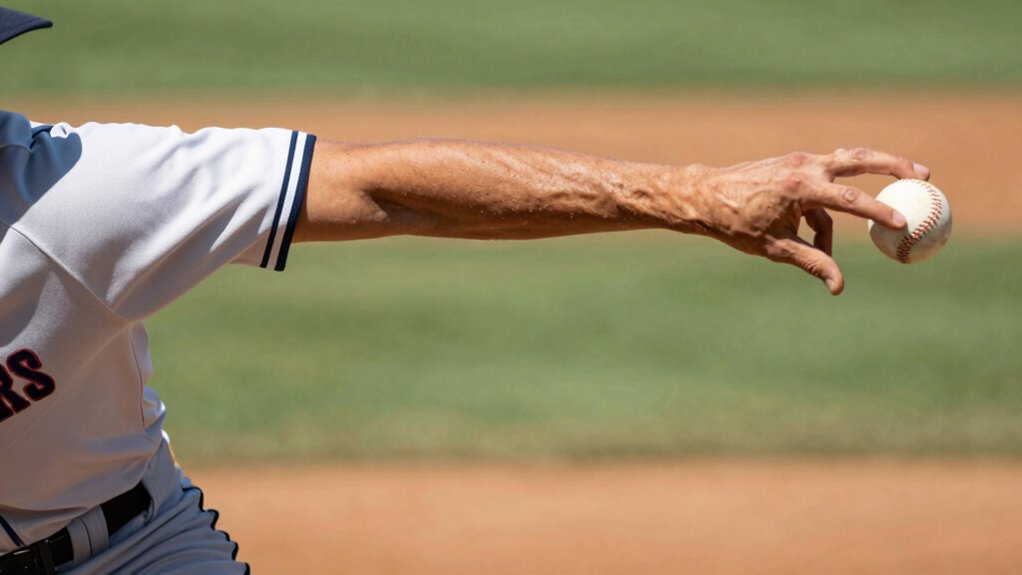
Improving your throwing arm requires more than just throwing regularly; it involves targeted exercises, proper technique, and consistent training. To truly boost your arm strength and throwing accuracy, you need personalized training that focuses on your specific needs and weaknesses. Every pitcher’s body responds differently, so tailoring your workout plan ensures you’re hitting the right muscles and avoiding injury. Arm strengthening should be a core component of your routine, targeting the shoulder, forearm, and upper back muscles, which all play an essential role in throwing power and control.
Start by incorporating exercises that build explosive strength, such as resistance band work, shoulder presses, and dumbbell rotations. These movements help develop the muscles involved in throwing, making your arm more resilient and capable of delivering higher velocity pitches. When doing arm strengthening exercises, pay attention to proper form, as improper technique can lead to strain or injury. Slow, controlled movements are more effective and safer, allowing you to maximize muscle engagement and increase endurance over time.
Consistency is key, so establish a regular training schedule that includes both resistance exercises and dynamic warm-ups. Warming up properly before throwing helps prepare your muscles and tendons, reducing the risk of tears or strains. Incorporate shoulder mobility drills and light throws to gradually build up your arm’s capacity before progressing to more intense sessions. Remember, personalized training means adjusting your workload based on how your arm feels; if you experience pain or fatigue, give yourself time to recover and consult a coach or trainer for guidance.
In addition to strength training, technique refinement plays a significant role. Focus on your throwing mechanics—proper grip, stance, and follow-through—to maximize efficiency and reduce unnecessary stress on your arm. Working with a coach or recording your throws can help identify and correct flaws that might hinder your progress or cause injury. Over time, as your arm becomes stronger and more conditioned, you’ll notice improvements in velocity, control, and endurance.
Ultimately, improving your throwing arm is a combination of dedicated arm strengthening, personalized training, and technical mastery. It’s a gradual process that demands patience and perseverance. By consistently working on targeted exercises, maintaining proper form, and listening to your body’s signals, you’ll develop a more powerful, durable arm that enhances your overall performance on the mound. Keep pushing yourself, stay disciplined, and your efforts will translate into better throws and increased confidence during games.
resistance band arm exercises for baseball
As an affiliate, we earn on qualifying purchases.
As an affiliate, we earn on qualifying purchases.
Frequently Asked Questions
How Often Should I Train My Throwing Arm?
You should train your throwing arm 3-4 times a week, allowing adequate recovery between sessions. Incorporate recovery techniques like stretching and rest to prevent injury, and focus on proper nutrition strategies to support muscle repair and strength. Listening to your body is essential—if you feel soreness or fatigue, take extra rest days. Consistent, balanced training, combined with good recovery and nutrition, helps improve your throwing arm effectively.
What Exercises Specifically Target Arm Strength for Baseball?
To boost your baseball arm, focus on exercises like rotator cuff rolls, resistance band raises, and grip strength drills. These target shoulder stability and build arm endurance. Incorporate push-ups and planks to strengthen core stability, supporting your pitching power. By consistently combining these targeted techniques, you’ll develop a durable, dynamic throw, driving your performance to new depths and distances. Keep pushing, and progress will follow!
How Can I Prevent Arm Injuries While Improving My Throw?
To prevent arm injuries while improving your throw, focus on injury prevention by incorporating flexibility exercises into your routine. Regularly stretch your shoulder, elbow, and forearm muscles to maintain joint mobility and reduce strain. Also, warm up thoroughly before throwing and gradually increase intensity. Listen to your body, rest when needed, and use proper throwing mechanics to avoid overuse. These steps help protect your arm and enhance your performance.
Does Arm Size Correlate With Throwing Power?
Arm size doesn’t directly correlate with throwing power, but a stronger, well-conditioned arm can enhance your performance. Larger muscles may provide more potential for force, yet technique, mechanics, and overall strength matter more. Focus on building functional strength through targeted exercises and proper training. Consistent practice, good mechanics, and core stability are key to increasing your throwing power, regardless of your arm size.
When Is the Best Time to Warm up Before Throwing Practice?
You should warm up about 20-30 minutes before throwing practice. Research shows that proper prep reduces injury risk and boosts performance. During pre-game routines, focus on dynamic stretches and light throws to activate your muscles. Age-specific training matters too—young players need gentler warm-ups, while older athletes can handle more intense routines. Warming up at the right time guarantees your arm’s ready, helping you throw accurately and powerfully.
shoulder strength training dumbbells
As an affiliate, we earn on qualifying purchases.
As an affiliate, we earn on qualifying purchases.
Conclusion
To truly elevate your throwing arm, think of it as a finely tuned engine—regular maintenance and mindful practice keep it running smoothly. Focus on proper mechanics, strengthen supporting muscles, and stay consistent. Over time, you’ll notice your throws flying with the precision of a well-aimed arrow. Remember, patience and dedication are your most reliable teammates on this journey. Keep nurturing your arm, and you’ll soon be hitting your peak performance like a master archer hitting the bullseye every time.
baseball throwing arm workout kit
As an affiliate, we earn on qualifying purchases.
As an affiliate, we earn on qualifying purchases.
shoulder mobility drills for pitchers
As an affiliate, we earn on qualifying purchases.
As an affiliate, we earn on qualifying purchases.
Fall Picks
fall essentials
As an affiliate, we earn on qualifying purchases.