
To help prevent injuries, incorporate both dynamic and static stretches into your training. Use dynamic exercises like leg swings and arm circles before activity to prepare your muscles. Afterward, do static stretches for key muscle groups, holding each for 15-30 seconds. This routine increases flexibility, improves joint mobility, and reduces strain on muscles and tendons. Staying consistent with these techniques can keep you safer and enhance your performance—continue to discover the best stretching practices for young athletes.

Get workout gear delivered free with Prime
- Fast, free delivery on millions of items
- Prime Video, Amazon Music and more included
- Member-only deals all year
Key Takeaways
- Incorporate dynamic stretches like leg swings and arm circles before activity to prepare muscles and reduce injury risk.
- Focus on static stretching after workouts for key muscle groups to improve flexibility and prevent strains.
- Ensure stretches are performed gently, avoiding pain, to promote safe muscle elongation and injury prevention.
- Use sport-specific movements in warm-up routines to mimic activity and enhance muscle readiness.
- Maintain a consistent stretching routine to support joint mobility, muscle resilience, and long-term injury prevention.

Are you making stretching a regular part of your training routine? If not, you’re missing out on a simple yet powerful way to improve muscle flexibility and reduce your risk of injury. Incorporating stretching exercises into your warm-up and cool-down sessions can make a huge difference in how your body performs and recovers. When your muscles are flexible, they’re less prone to strains and tears, keeping you on the field, court, or track longer and stronger. Consistent stretching also helps improve your overall athletic performance by allowing your joints to move more freely and efficiently. For outdoor activities, consider incorporating landscaping elements that can serve as natural stretching stations or scenic spots to encourage flexibility exercises before or after your workout.
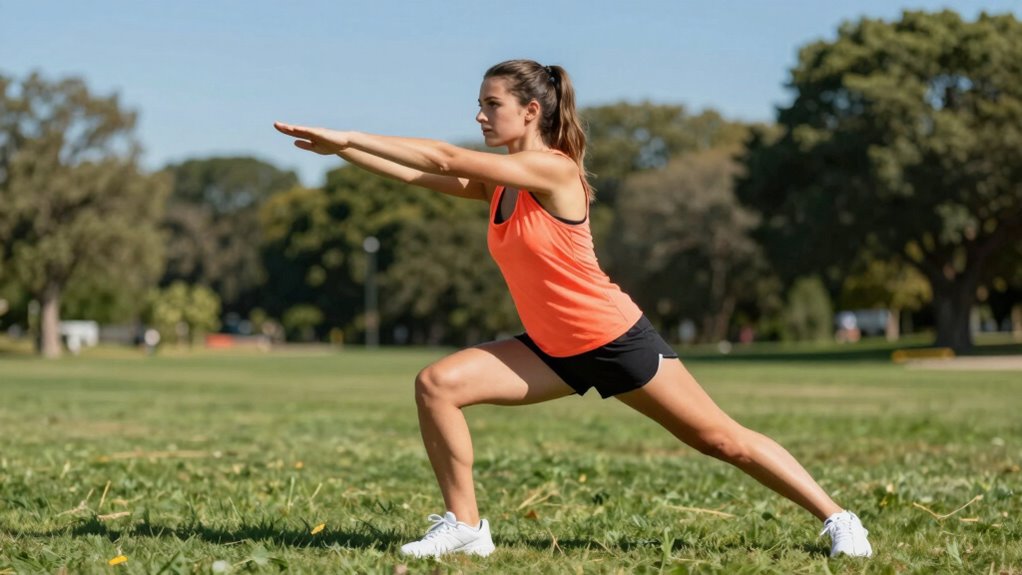
Start by focusing on dynamic stretches before you get active. These involve movement and help prepare your muscles for the demands of your sport. For example, leg swings, arm circles, and walking lunges are excellent choices. They increase blood flow, loosen up your muscles, and improve your range of motion. These stretches are especially effective for injury prevention because they mimic the motions you’ll perform during your activity. When you’re warmed up properly, your muscles are less likely to tighten suddenly or become strained during intense movements, which is a common cause of injuries among young athletes. Incorporating proper stretching techniques can further enhance your flexibility and safety.
Dynamic stretches like leg swings and arm circles prepare muscles and prevent injuries during your activity.
After your workout, switch to static stretches, holding each stretch for about 15-30 seconds. Focus on key muscle groups used during your activity, such as hamstrings, quadriceps, calves, and hip flexors. These stretches help lengthen muscles that may have shortened during exercise, promoting better muscle flexibility over time. Remember, stretching should never cause pain; if you feel discomfort, ease up and adjust your position. Consistent, gentle stretching enhances your flexibility gradually, making your muscles more resilient and less vulnerable to tears or strains in future training sessions or competitions.
Incorporating stretching exercises into your daily routine also supports injury prevention by maintaining healthy muscle and joint function. Tight muscles restrict movement and can pull on tendons and ligaments, leading to overuse injuries. By keeping your muscles supple, you’re reducing the strain on these connective tissues. It’s essential to listen to your body and stretch regularly, especially after intense workouts or when you feel muscle tightness creeping in. Over time, this habit not only boosts your muscle flexibility but also helps you recover faster and stay injury-free.
As an affiliate, we earn on qualifying purchases.
Frequently Asked Questions
How Often Should Young Athletes Stretch Before Practice?
You should stretch before practice at least 10-15 minutes, focusing on warm-up routines that gradually increase your heart rate and loosen muscles. Doing dynamic stretches helps improve flexibility benefits and prepares your body for activity. Aim to stretch daily or before every practice to enhance your range of motion, reduce injury risk, and boost performance. Consistent stretching keeps your muscles agile and ready for the demands of your sport.
Are There Any Stretches That Should Be Avoided?
You should avoid stretches that involve overstretching risks or feel painful, especially inappropriate stretches that don’t suit your age or sport. Don’t force your body into extreme positions, as overdoing it can cause injuries. Stay away from bouncy or ballistic stretches, which increase injury risk. Instead, focus on gentle, controlled movements that prepare your muscles without risking overstretching or injury. Always listen to your body and consult a coach or trainer for guidance.
What’s the Best Time of Day for Stretching?
The best time of day for stretching depends on your goals. If you want to improve morning flexibility, stretch after waking up when your muscles are warm and relaxed. For evening recovery, do gentle stretches post-exercise or before bed to help muscles relax and prevent stiffness. Both times are beneficial, so choose based on your schedule and how your body feels, ensuring safe and effective stretching.
How Can Parents Encourage Proper Stretching Habits?
Imagine planting seeds for lifelong habits—parental involvement is your best tool. You can encourage proper stretching by setting a routine, demonstrating enthusiasm, and joining your young athlete. Make it fun and show consistent support to foster discipline. Celebrate progress, and remind them that regular stretching not only prevents injuries but also boosts performance. Your active participation encourages consistency, turning stretching into a positive, ingrained part of their sports journey.
Do Stretching Routines Differ by Sport?
Yes, stretching routines differ by sport because of sport-specific flexibility needs and injury prevention techniques. For example, a gymnast may focus on shoulder and leg flexibility, while a soccer player emphasizes hamstring and groin stretches. By tailoring routines, you guarantee young athletes develop the right flexibility, reducing injury risks and improving performance. Always encourage athletes to incorporate sport-specific stretches into their warm-ups and cool-downs for maximum benefits.
As an affiliate, we earn on qualifying purchases.
Conclusion
By incorporating these stretching exercises into your daily routine, you’ll create a shield of flexibility and strength around your body, like a warrior preparing for battle. Feel your muscles gently awaken and loosen, ready to carry you through every sprint, jump, and turn with confidence. As you stretch and breathe, picture yourself gliding smoothly over the field or court, injury kept at bay. Keep moving, stay flexible, and let your active spirit soar without worry.
As an affiliate, we earn on qualifying purchases.
As an affiliate, we earn on qualifying purchases.
Halloween Picks
halloween
As an affiliate, we earn on qualifying purchases.