
You should replace your sports gear like balls and pads when you notice visible signs of wear, such as cracks, tears, or discoloration. If your gear feels less protective or affects your performance, it’s time for an upgrade. Check manufacturer recommendations for lifespan and safety standards, which often suggest replacing helmets and pads every few years. Keeping your equipment in top condition is vital for safety and efficiency. You’ll find more tips on maintaining gear ahead.
Open a free Amazon Business account
Business pricing, bulk buying and tax-exempt orders.
As an affiliate, we earn on qualifying purchases.
Key Takeaways
- Inspect for visible signs of wear like cracks, tears, or fraying, which indicate the need for replacement.
- Monitor performance decline; consistent underperformance may signal that your gear is no longer effective.
- Follow manufacturer recommendations for lifespan; gear should be replaced even if it appears functional.
- Check for material degradation, such as foam compression or discoloration, which can compromise safety.
- Regularly assess the integrity of protective gear; loss of shape or cushioning suggests it’s time for a change.
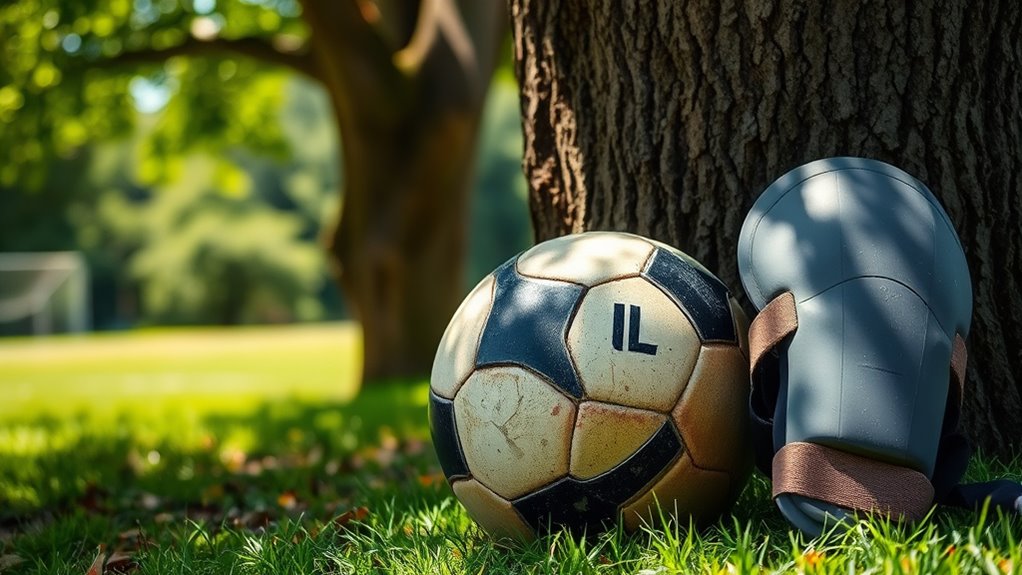
Have you ever wondered when it’s time to replace your sports gear? It’s a question that many athletes, casual players, or weekend warriors face more often than they think. Whether it’s your trusty basketball, well-worn pads, or any other equipment, knowing when to toss them can make a significant difference in performance and safety.
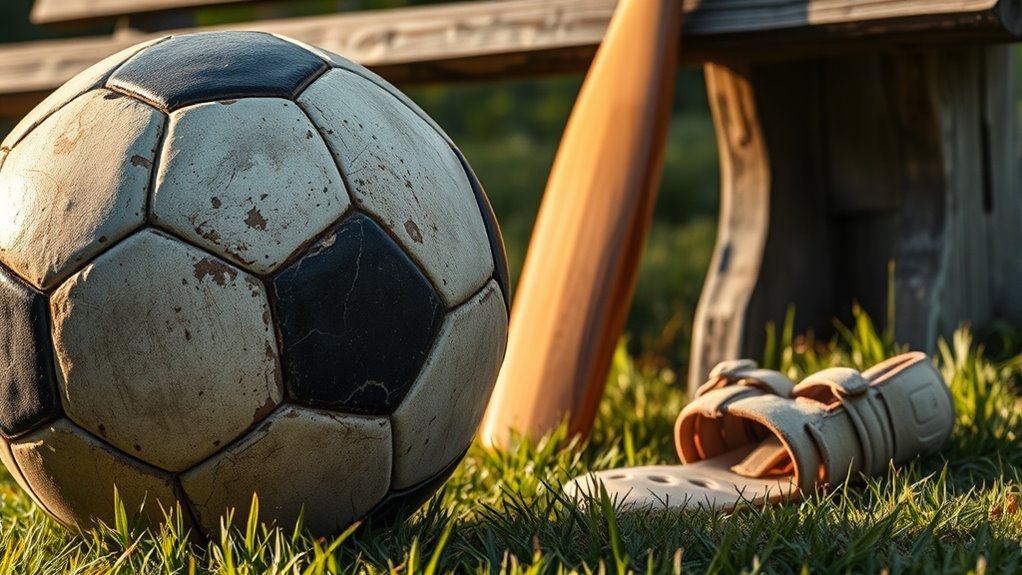
One important factor to weigh is material degradation. Over time, the materials in your sports gear can wear down, losing their effectiveness. For example, a basketball that’s seen better days might not bounce as it should, affecting your game. Similarly, protective pads can become less effective as the foam compresses or the outer material begins to fray. If you notice any visible signs of wear, such as cracks, tears, or discoloration, it’s probably time to reassess. Gear that doesn’t perform its job can lead to injuries, and that’s the last thing you want.
Material degradation can significantly impact your performance and safety. If you notice wear, it’s time to reassess your gear.
Safety considerations are vital when determining whether to replace your sports gear. If you’re feeling less protected than you used to, take that as a red flag. Your equipment should give you confidence, not anxiety. If your helmet’s padding is no longer as cushy or your shin guards have lost their shape, it might be time to upgrade. Many sports have specific guidelines about the lifespan of equipment; for instance, a bike helmet should be replaced every few years, even if it looks fine. Always check the manufacturer’s recommendations and adhere to them. Remember, just as you would prioritize high-quality protein sources for your dog’s nutrition, ensuring your gear is in top condition is essential for your performance and safety.
Another sign it’s time to replace your gear is a change in performance. If you find you’re consistently underperforming and can’t pinpoint a reason, your gear might be the culprit. Equipment that’s lost its integrity can hinder your ability to play at your best. It’s not just about aesthetics; performance and safety go hand in hand.
sports gear replacement safety helmet
As an affiliate, we earn on qualifying purchases.
As an affiliate, we earn on qualifying purchases.
Frequently Asked Questions
How Can I Tell if My Gear Is Still Safe to Use?
To tell if your gear’s still safe to use, conduct a thorough safety inspection. Look for signs of wear and tear, such as cracks, fraying, or unusual odors. Check straps, padding, and seams for damage. If you notice any significant deterioration, it’s time to reconsider using that gear. Remember, your safety is paramount, so don’t hesitate to replace any equipment that shows signs of heavy use or wear.
What Should I Do With Old Sports Gear?
You can donate your old sports gear to local charities or schools, giving others the chance to benefit from it. If the gear isn’t usable, consider eco-friendly disposal options, like recycling programs designed for athletic equipment. Many organizations focus on reducing waste, so check if there’s one near you. By taking these steps, you not only help your community but also contribute to a more sustainable environment.
Are There Specific Brands Known for Durability?
Yes, certain brands are known for their durability. Brands like Nike, Adidas, and Under Armour have strong reputations for producing long-lasting sports gear. It’s worth checking product warranties as they often indicate a brand’s confidence in their quality. However, don’t just rely on reputation; read customer reviews and do some research. You’ll find that investing in durable gear can save you money in the long run, keeping you active without frequent replacements.
How Do Climate Conditions Affect Sports Gear Lifespan?
Climate conditions profoundly impact your sports gear’s lifespan. Extreme heat can cause materials to break down faster, leading to gear deterioration. Cold, damp environments can also affect the performance and durability of your equipment, especially if it’s not designed for those conditions. Always monitor your gear for signs of wear, and consider how temperature and humidity might be affecting it. Taking care of your gear helps guarantee it lasts longer, no matter the climate.
Can I Repair My Sports Gear Instead of Replacing It?
Sure, you can definitely repair your sports gear instead of replacing it! Think of it like patching a tire; sometimes a little DIY repair can extend its life considerably. You might find simple fixes for minor issues, but for serious damage, consider professional servicing. They’ll ensure your gear meets safety standards and performs well. So, grab some tools, roll up your sleeves, and see what you can fix before you decide to toss it!
As an affiliate, we earn on qualifying purchases.
Conclusion
In summary, keeping your sports gear in top shape is vital for both performance and safety. For instance, imagine a basketball player using a worn-out ball that’s lost its grip; they could struggle during essential game moments, affecting their team’s chances of winning. By knowing when to replace your gear, you not only enhance your performance but also reduce the risk of injury. So, don’t wait—check your equipment regularly and replace it when needed!
As an affiliate, we earn on qualifying purchases.
sports equipment maintenance kit
As an affiliate, we earn on qualifying purchases.
As an affiliate, we earn on qualifying purchases.
Fall Picks
fall essentials
As an affiliate, we earn on qualifying purchases.