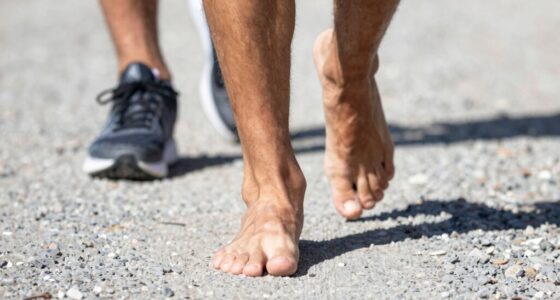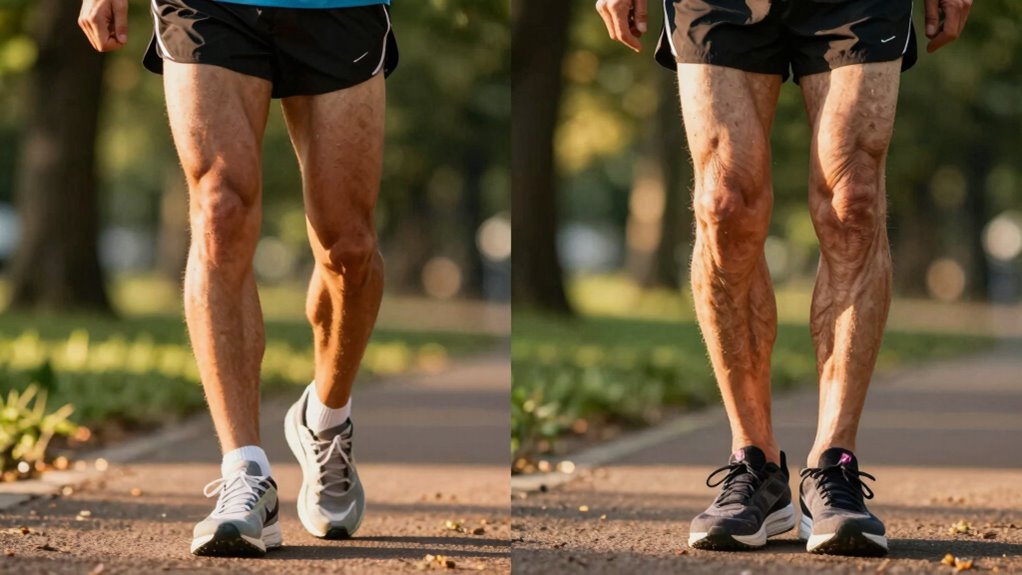

Running over time makes your heart more efficient, lowering your resting rate and stabilizing blood pressure. Your lungs expand, improving oxygen intake and breathing during exercise. Muscles, especially in your legs, become stronger and more efficient, helping you go longer without fatigue. Your capillary network grows, boosting blood flow and nutrient delivery, while bones get denser. These changes support overall health, resilience, and mood. Keep exploring how these adaptations continue to shape your body as you stay committed.

Get workout gear delivered free with Prime
- Fast, free delivery on millions of items
- Prime Video, Amazon Music and more included
- Member-only deals all year
Key Takeaways
- Running improves cardiovascular health by strengthening the heart and lowering resting heart rate and blood pressure.
- It increases lung capacity and breathing efficiency, enhancing oxygen delivery to muscles.
- Regular running boosts muscular endurance and efficiency in leg muscles, reducing fatigue and injury risk.
- Running promotes structural benefits like increased bone density and expanded capillary networks for better blood flow.
- Over time, running enhances overall health, mental well-being, and resilience, reducing long-term disease risks.

Running regularly can profoundly transform your body over time, impacting everything from your cardiovascular health to your muscle strength. As you stick with your routine, you’ll notice your heart becoming more efficient, pumping blood more effectively, and your overall cardiovascular health improving. This increased efficiency means your heart doesn’t have to work as hard during daily activities or exercise, reducing your risk of heart disease and boosting your stamina. Over months, your lungs expand their capacity, allowing you to breathe more deeply and supply oxygen more effectively to your muscles. These changes support sustained effort during runs and help you recover faster afterward.
Running regularly improves your heart efficiency, lung capacity, and overall endurance over time.
One of the most significant ways running influences your muscles is by enhancing muscle endurance. As you run consistently, your leg muscles—quads, hamstrings, calves, and glutes— adapt to handle prolonged activity with less fatigue. You develop a greater ability to sustain effort over longer distances or durations because your muscles become more efficient at using oxygen and nutrients. This improved endurance also translates to better performance in other physical activities and daily tasks, making you less prone to fatigue and injury.
Running also triggers various physiological adaptations that benefit your overall health. Your capillary network expands, improving blood flow and nutrient delivery to tissues. This process supports quicker recovery and reduces muscle soreness after runs. Additionally, your bones become stronger as they respond to the impact of running by increasing density, which helps prevent osteoporosis over time. The repetitive pounding also stimulates joint health, provided you maintain proper form and footwear, which can lead to increased stability and reduced injury risk. Proper training progression is essential to safely maximize these benefits and prevent overuse injuries.
As your cardiovascular system becomes more efficient, you’ll likely find that your resting heart rate drops, and your blood pressure stabilizes at healthier levels. These effects lower your long-term risk of cardiovascular issues and contribute to a longer, healthier life. You’ll also notice mental benefits, including clearer thinking and reduced stress, as running releases endorphins and promotes better mood regulation. Furthermore, incorporating proper monitoring of your power quality and ensuring your equipment is optimized can enhance your running experience and reduce the risk of injury.
In time, these cumulative changes make running an integral part of your life, not just for physical fitness but for overall well-being. Your body adapts by becoming stronger, more resilient, and more capable of handling life’s demands. The more consistently you run, the more noticeable these transformations become, creating a cycle of health improvements that motivate you to keep going. Over months and years, running’s impact on your body becomes undeniable, shaping you into a healthier, more vibrant version of yourself.
As an affiliate, we earn on qualifying purchases.
Frequently Asked Questions
How Does Running Impact Mental Health Long-Term?
Running boosts your mental health long-term by reducing stress and enhancing mindfulness benefits. As you run regularly, your body releases endorphins, which lift your mood and combat anxiety. It also helps you stay present, promoting mindfulness benefits that improve focus and emotional resilience. Over time, these effects build, making you better equipped to handle daily stressors, and fostering a more positive, balanced outlook on life.
Can Running Help With Age-Related Muscle Loss?
They say, “Use it or lose it,” and running proves it true. Running helps you fight age-related muscle loss by promoting muscle preservation, especially in the legs and core. It stimulates blood flow, encourages strength, and slows down age-related atrophy. Regular running keeps your muscles active and resilient, making it easier to maintain mobility and independence as you age. So, lace up and keep your muscles strong!
Does Running Improve Bone Density Over Time?
Yes, running can improve your bone density over time, enhancing bone strength and helping prevent osteoporosis. It stimulates bone growth through weight-bearing activity, which also benefits joint health by maintaining cartilage and reducing stiffness. Regular running encourages your body to adapt, making bones denser and joints more resilient. Keep in mind, consistency and proper technique are key to maximizing these benefits and avoiding injury.
How Does Running Influence Sleep Quality as You Age?
Running improves sleep quality as you age by boosting your metabolism and promoting deeper rest. It helps regulate your circadian rhythm, making it easier to fall asleep and stay asleep longer. Additionally, running enhances cardiovascular health, which supports better blood flow and oxygen delivery to your brain, leading to more restful sleep. Staying active with running can combat sleep disturbances common with aging, ultimately helping you wake up feeling refreshed.
Are There Specific Injuries More Common With Long-Term Running?
Long-term runners often face injuries like plantar fasciitis, stress fractures, and runner’s knee. These are linked to running biomechanics issues and improper running footwear selection. You might develop overuse injuries if your biomechanics cause uneven stress distribution or if your shoes don’t provide adequate support. To prevent this, pay attention to your running form, choose footwear suited for your gait, and incorporate strength training to reduce injury risk over time.
As an affiliate, we earn on qualifying purchases.
Conclusion
As you lace up your shoes and hit the pavement, you’re planting seeds of transformation within your body. Over time, running becomes a gentle sculptor, chiseling away doubt and layering strength like a fortress of resilience. With each stride, you’re rewriting your story—turning your body into a vibrant symphony of endurance and energy. Keep moving forward; your journey is a beautiful dance of change, where every step paints a masterpiece of your own becoming.
As an affiliate, we earn on qualifying purchases.
As an affiliate, we earn on qualifying purchases.
Columbus Day / Indigenous Peoples' Day Picks
long weekend sales
As an affiliate, we earn on qualifying purchases.