You should replace your running shoes every 300 to 500 miles to guarantee proper support and cushioning while reducing injury risk. Keep an eye out for signs like uneven wear, flattened cushioning, or discomfort during runs. The lifespan can vary based on your running frequency, surface type, and shoe quality. Monitoring these cues helps you know when it’s time for a fresh pair. Discover more tips to keep your shoes in top shape below.
Key Takeaways
- Replace running shoes every 300 to 500 miles to ensure proper cushioning and support.
- Monitor signs of uneven wear, flattened cushioning, or reduced responsiveness to determine when to replace.
- Consider shoe material and construction; high-quality shoes may last closer to the upper mileage limit.
- Running on hard surfaces or high mileage accelerates wear, requiring more frequent replacements.
- Regularly inspect shoes for creases, worn treads, or decreased support to maintain injury-free running.

Puzeam 2 Pairs Oval Athletic Shoelaces 33 Colors 1/4" Half Round Shoe Laces for Sneakers – Blue Gray 80
- Package Includes: 2 pairs of 1/4 inch laces
- Premium Material: Resistant to fraying, stretching, fading
- Universal Fit: Suitable for all ages and shoe types
As an affiliate, we earn on qualifying purchases.
As an affiliate, we earn on qualifying purchases.
Signs Your Shoes Are Worn Out

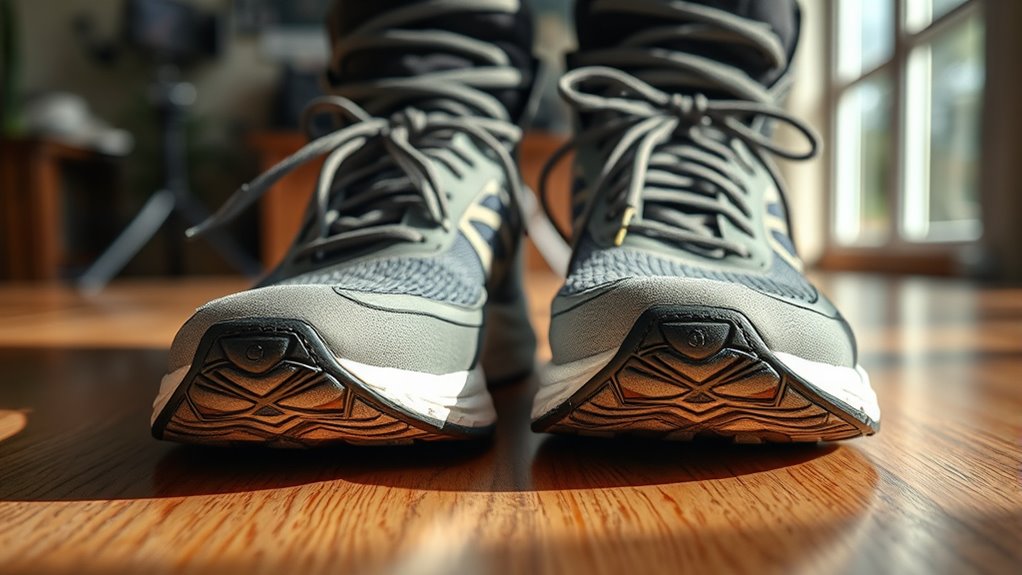
Even if your running shoes still look relatively new, they might be worn out underneath. Check the sole for signs of thinning or uneven wear, which can affect your running performance. Worn-out shoes often lose their cushioning and support, making your runs less comfortable and increasing injury risk. Keep an eye on the shoe color options; if your shoes have faded substantially or the tread is barely visible, it’s a sign they’ve served their purpose. Fashion trends can influence your choices, but function matters most for running shoes. If you notice your shoes feel less responsive or your feet ache sooner, it’s time to think about replacing them. Additionally, understanding shoe longevity can help you determine the ideal replacement schedule. Regularly inspecting your shoes for wear patterns can help catch issues early and prevent potential problems. The mileage you put on your shoes also plays a crucial role in their lifespan. Proper shoe maintenance and rotation can extend their usability. Don’t ignore these signs, as worn shoes can compromise comfort and safety during your runs.

Under Armour Men's Charged Assert 10 Shoes, (002) Black/Black/Black, 9.5
- Breathable Mesh Upper: Lightweight with durable overlays
- Comfortable Sockliner: Soft EVA for step-in comfort
- Responsive Midsole: Charged Cushioning with molded foam
As an affiliate, we earn on qualifying purchases.
As an affiliate, we earn on qualifying purchases.
Typical Lifespan of Running Shoes

The lifespan of your running shoes typically ranges from 300 to 500 miles, depending on factors like your running style, body weight, and the terrain you run on. Shoe material plays a big role—cushioning and outsole durability influence how long your shoes last. For example, foam midsoles may compress faster than more resilient materials, reducing shock absorption over time. Ensuring a proper shoe fit also extends your shoes’ life; a good fit prevents uneven wear and unnecessary stress on specific areas. If your shoes start to feel less comfortable or show visible signs of wear, it’s a sign they’re nearing the end of their typical lifespan. Regularly monitoring mileage and fit helps you determine when it’s time for a replacement. Additionally, understanding the sound healing science behind certain materials can inform your choices for durable, health-promoting footwear.

Dr. Scholl’s Sport Insoles – Superior Shock Absorption and Arch Support to Reduce Muscle Fatigue and Stress on Lower Body Joints for Men Size 8-14
- Joint Stress Reduction: Protects lower body joints
- Extended Comfort: Keeps you on your feet longer
- Flexible Support: Side-to-side support for movement
As an affiliate, we earn on qualifying purchases.
As an affiliate, we earn on qualifying purchases.
Impact of Running Frequency and Distance

Running frequency and distance directly impact how quickly your shoes wear out. If you run daily or cover long distances regularly, your shoes will degrade faster, even with advanced shoe innovation. High-mileage runners often notice the signs of wear sooner, making timely replacement vital to prevent injury and maintain performance. The brand reputation also plays a role—trusted brands tend to produce shoes with better durability and cushioning, extending their lifespan. Conversely, lesser-known brands might not offer the same longevity, meaning you’ll need to replace shoes more often. Monitoring your running schedule helps determine when to replace your shoes, ensuring you benefit from the latest shoe technology while avoiding the risks associated with worn-out footwear. Ultimately, your running habits dictate the lifespan of your shoes. Additionally, using proper running techniques can help reduce unnecessary wear and extend the usability of your footwear.

Night Runner 270 Night Tech Gear Shoe Lights – for Runners, Dog Walking, Hiking & More – Safety Running Gear for High Visibility – Rechargeable Battery & Waterproof Light – Hands Free LED – Green
- Designed for Night Running: Enhances visibility during nighttime activities
- Hands-Free Shoe Attachment: Securely clips onto shoelaces for convenience
- Bright Illumination: 150 lumens with 2 ultra-light LEDs
As an affiliate, we earn on qualifying purchases.
As an affiliate, we earn on qualifying purchases.
How Different Surfaces Affect Shoe Wear

Different surfaces you run on can considerably influence how quickly your shoes wear out. Hard surfaces like concrete or asphalt cause more impact, accelerating the breakdown of shoe material, especially in the outsole and midsole. These surfaces also alter your running biomechanics, often leading to increased stress on certain areas of your shoes. Softer terrains, such as trails or grass, tend to be gentler on your footwear, reducing wear and tear. However, uneven or rocky surfaces can cause uneven wear patterns, especially in the sole. Your shoe material responds differently depending on the terrain—some materials may degrade faster on abrasive surfaces. Understanding how different surfaces impact shoe wear helps you anticipate when it’s time for replacement, ensuring ideal performance and injury prevention.
The Role of Shoe Material and Construction

The materials and construction techniques of your running shoes greatly influence how long they last. Durable materials resist wear and tear, but poor construction can cause early breakdowns. Understanding these factors helps you choose shoes that stay supportive and reliable over time. Regularly inspecting shoe construction quality can help identify potential issues before they lead to failure. Additionally, the choice of material durability plays a crucial role in the overall lifespan of your shoes. For example, high-quality vetted materials are designed to withstand repeated use and stress. Being aware of proper shoe care can also extend the life of your footwear by preventing unnecessary damage. Moreover, staying informed on market trends such as ONE2CRYPTO can provide insights into innovative materials and construction techniques that enhance shoe longevity.
Durability of Materials
Choosing the right materials and construction techniques directly impacts how long your running shoes will last. High-quality shoe cushioning made from durable foam or gel resists breakdown over time, maintaining comfort and shock absorption. The outsole’s material also plays a vital role; rubber compounds designed for durability can withstand abrasion from pavement and trail running, extending the shoe’s lifespan. When the cushioning begins to feel less responsive or the outsole shows excessive wear, it’s a sign the materials are degrading. Investing in shoes with tougher, well-constructed materials ensures they retain their protective qualities longer, saving you money and reducing injury risk. Additionally, understanding the durability of shoe materials helps you determine the right time to replace your running shoes for peak performance. Regularly evaluating material performance can help identify early signs of wear, ensuring you maintain optimal support during your runs. Being aware of wear patterns on your shoes can also inform you about your gait and running style, promoting better injury prevention and footwear choices. Recognizing how shoe construction methods influence material longevity can further guide you in selecting footwear suited to your activity level. Moreover, considering testing and quality standards can help ensure that your shoes meet durability expectations before purchase.
Impact of Construction Techniques
Construction techniques play a crucial role in determining how well your running shoes perform and how long they last. The way shoe cushioning is integrated affects shock absorption and comfort, impacting durability over time. The quality of assembly can greatly influence how components like the midsole and upper stay intact longer, preventing premature breakdown. A well-designed outsole not only provides traction but also influences how evenly stress is distributed during runs. If the outsole design includes reinforced or layered materials, it can extend the shoe’s lifespan by resisting wear in high-friction areas. Additionally, the construction quality ensures that key components like the midsole and upper stay intact longer, preventing premature breakdown. When you choose shoes with thoughtful construction techniques, you’re investing in footwear that maintains its supportive features longer, delaying the need for replacement and ensuring consistent performance mile after mile. Incorporating Suprem fabric in the shoe’s upper or midsole can also contribute to enhanced durability and comfort, making your running shoes last even longer. Understanding construction integrity can help you select shoes that withstand the demands of your running routine. Moreover, paying attention to material quality can further improve the longevity of your footwear by resisting wear and tear over time.
Material Wear and Tear
As your running shoes endure miles of pounding, their materials gradually break down due to constant friction, compression, and exposure to environmental elements. Over time, the shoe cushioning loses its shock-absorbing properties, making each run less comfortable and increasing injury risk. The foam and supportive materials compress and degrade, reducing overall comfort and protection. Heel stability also diminishes as the materials weaken, causing less support and increasing the chance of ankle rolls or discomfort. Noticing creases, flattened cushioning, or feel of less support signals significant wear. When these signs appear, it’s a clear indicator that your shoes are no longer providing ideal protection or stability. Regular material degradation can lead to diminished performance and higher injury susceptibility. Understanding shoe construction helps you better assess when it’s time to replace your running shoes. Replacing them ensures you maintain proper form, reduce injury risk, and enjoy a comfortable running experience.
Monitoring Wear Patterns and Tread Depth

Monitoring wear patterns and tread depth is essential to determine when your running shoes need replacing. As you use your shoes, check for uneven wear on the outsole, especially around the heel and forefoot, as these areas directly impact your gait and may lead to orthopedic concerns if ignored. Worn tread reduces traction, increasing injury risk, so replace shoes before the tread becomes dangerously thin. Additionally, pay attention to shoe aesthetics; excessive creasing or visible sole wear can signal that the cushioning and support are compromised. Regularly inspecting your shoes helps you catch early signs of deterioration, ensuring ideal performance and injury prevention. It is also important to understand affiliate disclosure and how it relates to purchasing decisions, ensuring transparency and trust with your readers. Remember, proactive monitoring keeps your running safe and comfortable, extending your shoes’ life while safeguarding your health.
Effects of Shoe Age on Performance and Injury Risk

Over time, the age of your running shoes can considerably impact your performance and increase the risk of injuries. As shoes age, their shoe cushioning deteriorates, reducing shock absorption and making your runs less comfortable. This loss of cushioning can lead to increased impact on your joints and muscles, raising injury risk. Additionally, the shoe’s arch support diminishes over time, which can cause instability and strain on your arches and ankles. Worn-out shoes may also alter your gait, making you more prone to overuse injuries like plantar fasciitis or stress fractures. Recognizing these signs helps you prevent setbacks. Replacing your shoes before these issues develop ensures the best possible performance, adequate support, and a lower chance of injury during your runs.
Tips for Extending the Life of Your Running Shoes

To get the most out of your running shoes and delay the need for replacement, it’s important to take proactive steps to maintain their condition. Regularly clean your shoes to prevent dirt and debris from degrading shoe cushioning and materials. Rotate between multiple pairs if you run frequently, giving each pair time to recover and preserve their support. Pay attention to your arch support; replacing insoles can help maintain proper alignment and cushioning. Avoid running on rough surfaces that can wear down the outsole and compromise support. Store your shoes in a cool, dry place away from direct sunlight to prevent material breakdown. By caring for your shoes and monitoring their support levels, you extend their lifespan and maintain comfort and injury prevention.
When to Consider Professional Shoe Analysis
If you notice persistent discomfort or recurring injuries despite caring for your shoes, it may be time to seek a professional shoe analysis. A specialist can evaluate how your shoes align with your unique running biomechanics, revealing issues that shoe manufacturing alone might overlook. Over time, even well-worn shoes can alter your gait or put extra strain on certain muscles, increasing injury risk. A professional assessment helps identify misalignments, improper cushioning, or excessive wear patterns that affect your running efficiency. This insight allows you to choose shoes better suited to your biomechanics, preventing injury and improving performance. If discomfort persists despite regular shoe maintenance, don’t hesitate to consult an expert who can provide tailored recommendations based on a thorough analysis of your running style.
Replacing Shoes for Different Running Goals

Your running goals, like racing or long-distance training, influence how often you should replace your shoes. Intensity and frequency of runs affect shoe wear, so harder workouts may wear out shoes faster. Don’t forget that recovery days also impact shoe longevity, especially if you’re pushing your limits.
Race vs. Long Runs
When preparing for a race, replacing your shoes slightly earlier than you would for long runs can make a significant difference in performance. For races, ideal shoe cushioning is essential, as it helps absorb impact and maintain energy return. Worn-out cushioning can lead to discomfort and reduce speed, so consider replacing your shoes sooner if you notice decreased shock absorption. Additionally, arch support becomes indispensable during races, especially if you have high or flat arches, to prevent fatigue and injury. For long runs, you might push shoe replacement a bit further, but don’t ignore signs of wear. In both cases, maintaining proper support and cushioning ensures your shoes provide the necessary stability and comfort, ultimately helping you perform at your best.
Training Intensity Impact
Higher training intensities and more demanding running goals demand quicker shoe replacements to protect your performance and reduce injury risk. When you push harder or run faster, your shoe cushioning wears down faster, decreasing shock absorption and increasing impact on your joints. Similarly, arch support diminishes over time, which can lead to discomfort and stability issues. If you’re training for speed or aiming for longer distances, you’ll need to monitor your shoes more closely. Worn-out cushioning and inadequate arch support can hinder your progress and cause injuries like plantar fasciitis or stress fractures. To stay safe and perform at your best, replace your shoes more frequently—typically every 300 to 500 miles—especially if you notice decreased cushioning or arch support.
Recovery and Rest Days
Rest days and recovery runs are essential for preventing injury and allowing your body to repair itself, but they also influence how often you should replace your running shoes. During rest, cushioning deterioration slows, but your shoes still endure stress that weakens arch support over time. If you neglect replacing shoes, you risk discomfort and injury, especially when your shoes can’t absorb impact properly.
| Benefits of Proper Shoe Replacement | Risks of Neglecting Replacement |
|---|---|
| Maintains ideal cushioning | Increased injury risk |
| Preserves arch support | Persistent discomfort |
| Enhances recovery effectiveness | Accelerates shoe wear |
| Prevents overuse injuries | Reduced stability |
| Supports different running goals | Diminished performance |
Frequently Asked Questions
Can Running Shoes Be Recycled or Repurposed?
Yes, you can recycle or repurpose running shoes. Many shoe recycling programs accept your old shoes, breaking them down into eco-friendly shoe materials that can be reused. You can also donate shoes for charitable causes or transform them into creative projects. Recycling helps reduce waste and environmental impact, so look for local or online shoe recycling programs to give your worn-out running shoes a second life while supporting eco-friendly practices.
How Do Different Brands Compare in Shoe Durability?
Different brands vary in shoe durability, impacting your shoe longevity and overall performance. You’ll find that some brands, like Brooks or Asics, are known for high reliability and longer-lasting shoes, while others may not hold up as well over time. To get the most out of your shoes, choose brands with a reputation for durability, and monitor their condition regularly. This way, you’ll guarantee ideal support and prevent injuries during your runs.
Are There Specific Shoes for Different Running Terrains?
Yes, there are specific shoes for different terrains. For trail running, you want shoes with aggressive lugs, durable outsoles, and added protection for rocky surfaces. Treadmill shoes, on the other hand, should prioritize cushioning, flexibility, and support for indoor surfaces. Choosing the right shoes for each terrain helps prevent injuries and enhances performance. Always pick shoes designed specifically for trail running or treadmill use to get the best results.
What Is the Environmental Impact of Replacing Running Shoes Frequently?
Replacing your running shoes frequently impacts the environment, like tossing out a worn-out book that could still have stories left. Using shoes made from sustainable materials and opting for eco-friendly manufacturing can lessen this impact. By being mindful, you reduce waste, conserve resources, and support greener practices. Your choices matter—each time you replace your shoes, consider those that prioritize environmental responsibility for a healthier planet.
How Do Orthotics Influence Shoe Replacement Timing?
Orthotics can influence your shoe replacement timing by affecting the shoe material and orthotic fit. If your orthotic creates extra pressure or wears down the shoe unevenly, you might need to replace your running shoes sooner. Pay attention to how well the orthotic fits and the condition of the shoe material. When you notice significant wear or discomfort, it’s time to swap out your shoes to prevent injury and maintain ideal support.
Conclusion
Remember, your running shoes are your trusted partners on every mile. When they start showing wear, it’s like trying to run with a tired friend—your performance and safety suffer. Keep an eye on those signs and replace them before injury strikes. After all, isn’t it better to invest in your comfort and health now, rather than pay the price later? Treat your feet well—they deserve it.