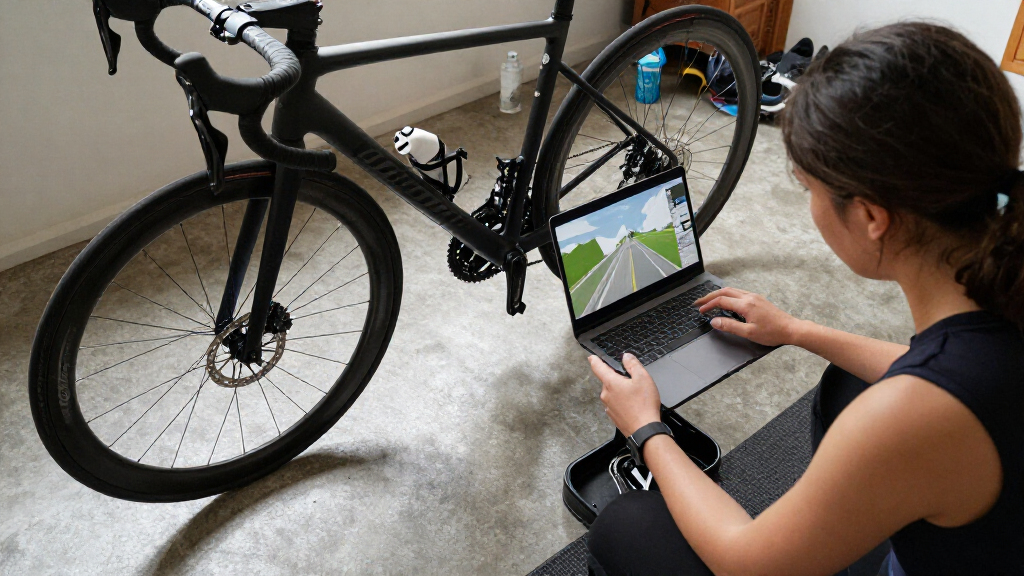

The best virtual cycling components depend on whether you want realistic indoor resistance, simpler setup, or power data you can use indoors and outdoors. My best overall pick is the Elite Avanti Smart Bike Trainer with Zwift Cog and Click, a strong all-around choice for connected training and virtual shifting. The Wahoo KICKR CORE 2 with Zwift Cog and Click is a compelling alternative for riders who prioritize a straightforward smart-trainer setup, while the Wahoo KICKR BIKE PRO suits those seeking a dedicated indoor bike with tilting grade simulation. The main tradeoffs are compatibility and setup, the realism and range of resistance, and whether you need one indoor component or a system that supports outdoor riding too. Read on for the full comparison, buying advice, and recommendations by rider type.

Get workout gear delivered free with Prime
- Fast, free delivery on millions of items
- Prime Video, Amazon Music and more included
- Member-only deals all year
Complete the kit



Key Takeaways
- Smart trainers lead this lineup for dedicated virtual riding: the Elite Avanti and Wahoo KICKR CORE 2 combine direct-drive training with Zwift Cog and Click, while cassette-equipped and other trainer versions suit different drivetrain preferences.
- A dedicated indoor bike is a different commitment from a trainer: the Wahoo KICKR BIKE PRO adds tilting grade simulation, but riders must weigh that immersive setup against the flexibility of using their own bike on a trainer.
- Gradient simulation and resistance are separate buying decisions: the Garmin Tacx Alpine is a simulator component, so it adds terrain movement rather than replacing a smart trainer.
- Power-meter pedals serve a wider riding routine: the Favero Assioma PRO MX-2 is aimed at MTB riders, and the Assioma PRO RS-2 at road riders; neither is a substitute for a smart trainer’s indoor resistance control.
- Entry decisions hinge on compatibility, not headline wattage alone: check your bike’s drivetrain, axle and space requirements, and training apps before choosing among the ThinkRider XXPRO, CYCPLUS R200, Saris M2, or other trainer options.
| Elite Avanti Smart Bike Trainer with Zwift Cog and Click |  | Best Overall for Zwift Virtual Shifting | Power accuracy: ±1% | Maximum power: 2,100W | Maximum simulated gradient: 18% | VIEW LATEST PRICE | See Our Full Breakdown |
| Wahoo KICKR CORE 2 Smart Bike Trainer with Zwift Cog and Click Shifting |  | Best for Easy App Setup | Trainer type: Direct drive | Maximum power: 1,800W | Connectivity: WiFi | VIEW LATEST PRICE | See Our Full Breakdown |
| ThinkRider XXPRO Smart Bike Trainer, 2500W, 25% Gradient, ANT+ and Bluetooth |  | Best for Steep Gradient Simulation | Maximum power: 2,500W | Maximum simulated gradient: 25% | Data accuracy: ±1% | VIEW LATEST PRICE | See Our Full Breakdown |
| CYCPLUS R200 Smart Bike Trainer, 2200 W |  | Best for Self-Powered Training | Peak power: 2,200W | Maximum torque: 80N·m | Power accuracy: ±1% | VIEW LATEST PRICE | See Our Full Breakdown |
| Garmin Tacx Alpine Gradient Simulator for Indoor Training |  | Best Gradient Add-On for Tacx NEO Owners | Product type: Indoor cycling gradient simulator | Simulated gradients: Up to 25% incline and down to −10% decline | Compatible trainers: Tacx NEO 3M and NEO 2T | VIEW LATEST PRICE | See Our Full Breakdown |
| Saris M2 Smart Indoor Electromagnetic Bike Trainer |  | Best Wheel-On Option | Resistance mechanism: Electronic | Resistance accuracy: ±5% | Connectivity: ANT+ FE-C and Bluetooth | VIEW LATEST PRICE | See Our Full Breakdown |
| Favero Assioma PRO MX-2 Dual-Sensing Pedal-Based MTB Power Meter |  | Best for MTB and Gravel Power Data | Model: Assioma PRO MX-2 | Compatibility: SPD; Shimano SM-SH51 compatible | Accuracy: ±1% | VIEW LATEST PRICE | See Our Full Breakdown |
| Garmin Tacx Nēra Indoor Smart Trainer with Zwift Cog and Click |  | Best for Immersive Virtual Shifting | Model: Nēra; model number 010-04825-60 | Weight: 54.5 lbs | Compatibility: 8- to 13-speed bikes | VIEW LATEST PRICE | See Our Full Breakdown |
| Wahoo KICKR CORE 2 Smart Bike Trainer – 11-Speed Cassette, Zwift Compatible |  | Best for Direct-Drive Training Versatility | Power output: Up to 1,800 W | Power accuracy: ±2% | Maximum simulated grade: 16% | VIEW LATEST PRICE | See Our Full Breakdown |
| Elite Rivo Direct Drive Smart Bike Trainer with Zwift Cog and Click |  | Best for Compact Storage and Virtual Gearing | Type: Direct-drive bicycle trainer | Power accuracy: ±2.5% | Maximum power: 2,100 W | VIEW LATEST PRICE | See Our Full Breakdown |
| Wahoo KICKR BIKE PRO Smart Indoor Bike with Tilting Grade Simulation |  | Best for Immersive Climb Simulation | Maximum power output: 2500 W | Power accuracy: ±1% | Grade simulation: Up to 20% uphill and 15% downhill | VIEW LATEST PRICE | See Our Full Breakdown |
| Wahoo KICKR V6 Smart Bike Trainer with Zwift Cog and Click |  | Best for Zwift Virtual Shifting | Maximum resistance: 2,200 W | Power accuracy: ±1% | Maximum simulated grade: 20% | VIEW LATEST PRICE | See Our Full Breakdown |
| Favero Assioma PRO RS-2 Dual-Sided Road Cycling Power Meter Pedals |  | Best Pedal-Based Power Upgrade | Measurement: Dual-sided power | Accuracy: ±1% | Cleat compatibility: SPD-SL; Shimano SM-SH10, SM-SH11, and SM-SH12 | VIEW LATEST PRICE | See Our Full Breakdown |
| Garmin Tacx Nēra Indoor Smart Trainer |  | Best for Natural Ride Movement | Weight: 54.5 lb | Dimensions: 24.76 in long | Power and cadence accuracy: Within 1% | VIEW LATEST PRICE | See Our Full Breakdown |
| virtual cycling component | Connectivity | Weight |
|---|---|---|
| Elite Avanti Smart Bike Traine | WiFi, Bluetooth Smart, ANT+ FE-C | — |
| Wahoo KICKR CORE 2 Smart Bike | WiFi | 13.6kg |
| ThinkRider XXPRO Smart Bike Tr | ANT+ and Bluetooth | — |
| CYCPLUS R200 Smart Bike Traine | BLE and ANT+ | — |
| Garmin Tacx Alpine Gradient Si | Bluetooth | 24lb |
| Saris M2 Smart Indoor Electrom | ANT+ FE-C and Bluetooth | 20 lbs |
| Favero Assioma PRO MX-2 Dual-S | Bluetooth and ANT+ | — |
| Garmin Tacx Nēra Indoor Smart | Wi-Fi | 54.5 lbs |
| Wahoo KICKR CORE 2 Smart Bike | Built-in Wi-Fi | 13.6 kg |
| Elite Rivo Direct Drive Smart | 2.4 GHz Wi-Fi and dual Bluetooth | — |
| Wahoo KICKR BIKE PRO Smart Ind | Wi-Fi, Bluetooth, ANT+ | 42 kg |
| Wahoo KICKR V6 Smart Bike Trai | 2.4 GHz Wi-Fi | 18 kg |
| Favero Assioma PRO RS-2 Dual-S | Bluetooth and ANT+ | — |
| Garmin Tacx Nēra Indoor Smart | Built-in Wi-Fi | 54.5 lb |
More Details on Our Top Picks
Elite Avanti Smart Bike Trainer with Zwift Cog and Click
The Elite Avanti earns its place as the most balanced pick here for riders who want a direct-drive trainer and virtual shifting in one ready-to-use package. Its pre-installed Zwift Cog and Click remove the need for a cassette and provide 24 virtual gears, while ±1% power accuracy and an 18% simulated gradient cover demanding indoor sessions. Compared with the Wahoo KICKR CORE 2, the Avanti offers higher stated maximum power and WiFi alongside Bluetooth and ANT+, giving it broader connection options. That versatility comes with a 13kg frame that is not especially convenient to move, and Zwift virtual shifting depends on compatible Zwift hardware and software. Riders who want a steeper climb simulation may prefer the ThinkRider XXPRO, but its listed bike compatibility is narrower.
Pros:- Pre-installed Zwift Cog and Click provide 24 virtual gears without a cassette.
- ±1% power accuracy supports precise training data.
- WiFi, Bluetooth Smart, and ANT+ FE-C provide broad connection options.
- Adapters support 8- to 12-speed drivetrains and multiple bike types.
Cons:- At 13kg, it is less convenient to carry and store than a lighter setup.
- Full smart features require an external power source.
- Virtual shifting depends on compatible Zwift hardware integration.
Best for: Zwift riders who want cassette-free virtual shifting, accurate power data, and support for road, gravel, or mountain bikes.
Not ideal for: Riders who frequently move or store their trainer, or who want virtual shifting without relying on Zwift-compatible hardware.
- Power accuracy:±1%
- Maximum power:2,100W
- Maximum simulated gradient:18%
- Connectivity:WiFi, Bluetooth Smart, ANT+ FE-C
- Virtual gears:24
- Drivetrain compatibility:8- to 12-speed Shimano, SRAM, and Campagnolo
- Axle compatibility:130–135mm QR; 142×12mm thru-axle
- Trainer weight:13kg
Our verdict“Choose the Avanti if you want a capable, widely compatible trainer with Zwift virtual shifting already included.”
Wahoo KICKR CORE 2 Smart Bike Trainer with Zwift Cog and Click Shifting
The Wahoo KICKR CORE 2 is a practical choice for riders who want direct-drive training with Zwift Cog and Click included, plus WiFi for pairing and automatic updates. Its 1,800W maximum power is lower than the Elite Avanti’s 2,100W and the ThinkRider XXPRO’s 2,500W, so those options offer more headroom on paper. For many indoor training sessions, the CORE 2’s electronic resistance and road-like feel are the more relevant draw than peak output. It supports 8- to 13-speed bikes, a wider range than the Avanti’s listed 8- to 12-speed compatibility. The tradeoff is reliance on an active WiFi network for WiFi pairing and updates; buyers without reliable home WiFi should compare its setup needs with other connection options in this lineup.
Pros:- Includes Zwift Cog and Click for cassette-free virtual shifting.
- Supports 8- to 13-speed bikes.
- WiFi supports pairing and automatic updates.
- Electronic resistance is designed for smooth, hard efforts and structured training.
Cons:- WiFi pairing and automatic updates require an active WiFi network.
- Its 1,800W maximum power is lower than the Elite Avanti and ThinkRider XXPRO.
- At 13.6kg, it is not a lightweight option to move around.
Best for: Riders with reliable home WiFi who want a direct-drive trainer, included Zwift shifting, and compatibility with 8- to 13-speed bikes.
Not ideal for: Cyclists without a dependable WiFi network or riders seeking the highest stated maximum power in this group.
- Trainer type:Direct drive
- Maximum power:1,800W
- Connectivity:WiFi
- Bike compatibility:8- to 13-speed bikes
- Shifting:Zwift Cog and Click shifter included
- Resistance mechanism:Electronic
- Weight:13.6kg
- Dimensions:20.4 × 23 × 18.5in
- Warranty:2 years
Our verdict“Pick the KICKR CORE 2 if WiFi-based setup and broad drivetrain compatibility matter more to you than maximum power headroom.”
ThinkRider XXPRO Smart Bike Trainer, 2500W, 25% Gradient, ANT+ and Bluetooth
For virtual routes with sharp climbs, the ThinkRider XXPRO stands apart with a stated 25% gradient simulation and 2,500W maximum power—the highest figures among these three smart trainers. Its ±1% data accuracy and no-calibration design also appeal to riders who want useful training data without a separate calibration step. Unlike the Elite Avanti and Wahoo KICKR CORE 2, the XXPRO does not list a Zwift Cog or virtual shifter, so it is less ready-made for cassette-free virtual gearing. ANT+ and Bluetooth connect it to compatible apps and devices, while self-generating power can reduce reliance on an outlet during use. The main fit caveat is its listed 26-inch wheel and road-bike compatibility; riders with other bike setups should check fit before choosing it.
Pros:- Simulates gradients up to 25%, more than the Elite Avanti and Wahoo KICKR CORE 2.
- ±1% data accuracy with no calibration required.
- ANT+ and Bluetooth support compatible apps, GPS devices, and PCs.
- Self-generating power allows use without relying on an adapter for power generation.
Cons:- Listed for 26-inch wheels and road bikes, which may restrict fit for other setups.
- Does not list an included Zwift Cog or Click shifter.
- The one-year warranty is shorter than the two-year warranty listed for the Wahoo KICKR CORE 2 and CYCPLUS R200.
Best for: Road cyclists who want steep virtual climbs, high stated power capacity, and ANT+ or Bluetooth connections without a calibration routine.
Not ideal for: Riders with bikes outside the listed 26-inch road-bike setup, or anyone seeking included Zwift Cog virtual shifting.
- Maximum power:2,500W
- Maximum simulated gradient:25%
- Data accuracy:±1%
- Connectivity:ANT+ and Bluetooth
- Resistance mechanism:Electromagnetic
- Listed bike type:Road bike
- Listed wheel size:26in
- Load capacity:242lb
- Warranty:1 year
Our verdict“Choose the XXPRO if steep gradient simulation is your priority and your bike matches its stated compatibility.”
CYCPLUS R200 Smart Bike Trainer, 2200 W
The CYCPLUS R200 suits riders who want a smart trainer that can operate self-powered or plugged in, with BLE and ANT+ for connecting to cycling apps. Its 2,200W peak power and 19% gradient simulation sit between the Wahoo KICKR CORE 2’s 1,800W maximum and the ThinkRider XXPRO’s 2,500W and 25% gradient figures. A built-in cooling fan is intended to support longer sessions, adding a practical touch for indoor use. The key compromise is virtual shifting: unlike the Elite Avanti and KICKR CORE 2, the R200 needs a separately sold CYCPLUS BC2 Shifter, and shifting is not compatible with ERG mode. A cassette is also not included, so buyers should account for the extra setup requirements before choosing it.
Pros:- BLE and ANT+ connect with compatible cycling apps.
- Can operate self-powered or plugged in.
- Simulates gradients up to 19% and lists 2,200W peak power.
- Built-in cooling fan is designed to support extended sessions.
Cons:- CYCPLUS BC2 Shifter is sold separately for virtual shifting.
- Virtual shifting is not compatible with ERG mode.
- Cassette is not included.
Best for: Indoor riders who want BLE and ANT+ app connections, self-powered operation, and are comfortable sourcing the required cassette or shifter separately.
Not ideal for: Cyclists seeking included virtual shifting or who rely on virtual gears during ERG-mode training.
- Peak power:2,200W
- Maximum torque:80N·m
- Power accuracy:±1%
- Gradient simulation:Up to 19%
- Connectivity:BLE and ANT+
- Virtual shifting:Requires separately sold CYCPLUS BC2 Shifter; not compatible with ERG mode
- Wheel size:29in
- Load capacity:250lb
- Warranty:2 years
Our verdict“Pick the R200 if self-powered operation and app connectivity appeal more than an all-in-one virtual-shifting setup.”
Garmin Tacx Alpine Gradient Simulator for Indoor Training
The Garmin Tacx Alpine takes a different route from the direct-drive trainers in this roundup: it moves the front of the bike to reproduce climbs up to 25% and descents down to −10%. Its motion base and dynamic fork mount add physical movement and steering, while buttons or an app allow grade adjustments. That makes it a terrain-focused add-on rather than a standalone virtual cycling component; compared with the Elite Avanti or CYCPLUS R200, it does not provide the trainer’s power measurement or resistance system. Compatibility is also narrow: it works exclusively with Tacx NEO 3M and 2T smart trainers. For owners of those models seeking more movement than the ThinkRider XXPRO’s gradient simulation alone, it offers a distinct upgrade, but it is unsuitable for riders using other trainers.
Pros:- Raises and lowers the bike to simulate gradients up to 25% and descents to −10%.
- Built-in motion base provides responsive movement.
- Dynamic fork mount supports interactive steering with compatible apps.
- Manual grade adjustments are available through buttons or an app.
Cons:- Works exclusively with Tacx NEO 3M and 2T smart trainers.
- Interactive steering depends on compatible apps.
- At 24lb, it adds a substantial component to an indoor setup.
Best for: Tacx NEO 3M or NEO 2T owners who want physical front-end movement, simulated descents, and interactive steering in supported apps.
Not ideal for: Riders without a Tacx NEO 3M or 2T, or anyone seeking a standalone trainer with power measurement and resistance control.
- Product type:Indoor cycling gradient simulator
- Simulated gradients:Up to 25% incline and down to −10% decline
- Compatible trainers:Tacx NEO 3M and NEO 2T
- Connectivity:Bluetooth
- Controls:Buttons and app
- Dimensions:12.4 × 18.7 × 29.6in
- Weight:24lb
Our verdict“Choose the Tacx Alpine only if you already own a compatible NEO trainer and want physical grade movement rather than another standalone trainer.”
Saris M2 Smart Indoor Electromagnetic Bike Trainer
The Saris M2 makes sense for riders who want app-controlled workouts without removing the rear wheel or fitting a cassette. Its wheel-on setup is simpler to move between indoor and outdoor riding than the direct-drive Wahoo KICKR CORE 2, though tire contact adds a different setup and ride feel from a direct-drive trainer. Electromagnetic resistance and ±5% accuracy support structured sessions, but its data precision is less exact than the Garmin Tacx Nēra’s stated 1% accuracy. ANT+ FE-C and Bluetooth connect it to compatible platforms such as Zwift and Rouvy. The tradeoff is audible operation: the listed level is 69 dB at 20 mph, and the supplied quick-release skewer may not fit every frame. I’d choose it for convenience, not the quietest or most precise training.
Pros:- Wheel-on design avoids removing the rear wheel for indoor setup.
- ANT+ FE-C and Bluetooth support compatible cycling apps.
- Electromagnetic resistance provides app-controlled workout adjustments.
- Includes a steel quick-release skewer.
Cons:- Listed noise level is 69 dB at 20 mph, which may be disruptive in shared living spaces.
- ±5% accuracy is less precise than the Garmin Tacx Nēra and direct-drive alternatives.
- Included quick-release skewer may not suit every bike frame.
Best for: Riders with a compatible quick-release bike who want app-controlled indoor workouts without removing the rear wheel.
Not ideal for: Riders prioritizing very quiet sessions, tighter power accuracy, or compatibility with a frame that cannot use the included quick-release skewer.
- Resistance mechanism:Electronic
- Resistance accuracy:±5%
- Connectivity:ANT+ FE-C and Bluetooth
- Noise level:69 dB at 20 mph
- Weight:20 lbs
- Dimensions:22 × 20 × 9 in
- Load capacity:300 lbs
- Warranty:Limited lifetime
Our verdict“Choose the M2 if easy wheel-on setup matters more than the quieter operation and tighter data accuracy of a direct-drive trainer.”
Favero Assioma PRO MX-2 Dual-Sensing Pedal-Based MTB Power Meter
The Favero Assioma PRO MX-2 is the specialist pick here: it measures power at the pedals for outdoor mountain and gravel rides, rather than supplying resistance like the Saris M2 or Wahoo KICKR CORE 2. That distinction matters if you want to carry consistent power data from trails into virtual training. Its dual-sided sensing and ±1% accuracy can show left-right balance and pedal smoothness, while Bluetooth and ANT+ connect it to compatible cycling devices and apps. Full SPD compatibility suits riders already using that cleat system. The aluminum body is modular, so pedal-body changes can support road and MTB setups without replacing the sensors. The tradeoffs are the need for compatible SPD cleats and careful setup when swapping bodies. Compared with a trainer, this is a data upgrade, not a source of indoor resistance.
Pros:- Dual-sided power measurement with stated ±1% accuracy.
- Provides left-right balance and pedal smoothness metrics.
- Modular pedal bodies can support road and MTB configurations while retaining the sensors.
- Over 160 hours of battery life with magnetic USB-C charging.
Cons:- Requires compatible SPD cleats, which may need replacement over time.
- Changing pedal bodies requires careful setup or recalibration for consistent readings.
- Unlike the Saris M2 or Wahoo KICKR CORE 2, it does not provide trainer resistance.
Best for: Mountain and gravel riders who want dual-sided power data across outdoor rides and compatible virtual cycling setups.
Not ideal for: Buyers seeking an indoor trainer with automatic resistance, or riders unwilling to use SPD-compatible cleats and manage pedal-body setup.
- Model:Assioma PRO MX-2
- Compatibility:SPD; Shimano SM-SH51 compatible
- Accuracy:±1%
- Connectivity:Bluetooth and ANT+
- Battery life:160+ hours
- Charging:Magnetic USB-C
- Material:Aluminum 6061-T6
- Included components:Pedals, SPD cleats, magnetic charging connectors, USB-C cable, washers, greasing kit, and cleaning cloth
Our verdict“Pick the MX-2 if accurate pedal-based power and MTB or gravel compatibility matter more than an indoor trainer’s resistance control.”
Garmin Tacx Nēra Indoor Smart Trainer with Zwift Cog and Click
The Garmin Tacx Nēra with Zwift Cog and Click is the most immersive, app-centered option in this group. Its built-in multidirectional motion adds movement that a conventional fixed trainer such as the Wahoo KICKR CORE 2 does not list, while the pre-installed Cog and Click let Zwift users change virtual gears without relying on a physical cassette shift setup. Power and cadence accuracy within 1%, auto-calibration, and Wi-Fi support precise, connected sessions. That package is appealing if virtual riding is the main reason for buying. The compromises are practical: at 54.5 pounds it is heavy to move, full virtual features depend on an active Zwift or ROUVY membership, and compatibility is limited to 8- to 13-speed bikes. Compared with the Elite Rivo, it prioritizes motion and stated accuracy over foldable portability.
Pros:- Built-in multidirectional motion adds movement during virtual rides.
- Power and cadence accuracy are stated within 1%, with auto-calibration.
- Pre-installed Zwift Cog and included Click enable virtual gear control.
- Wi-Fi connectivity supports connected training.
Cons:- At 54.5 pounds, it is cumbersome to relocate despite foldable legs.
- Full virtual riding features require an active Zwift or ROUVY membership.
- Compatibility is limited to 8- to 13-speed bikes.
Best for: Zwift or ROUVY riders who want virtual gearing, multidirectional movement, and highly precise power and cadence data.
Not ideal for: Riders who need a lightweight trainer, want to avoid an ongoing platform membership, or have a bike outside the listed 8- to 13-speed compatibility.
- Model:Nēra; model number 010-04825-60
- Weight:54.5 lbs
- Compatibility:8- to 13-speed bikes
- Connectivity:Wi-Fi
- Accuracy:Power and cadence within 1%
- Included virtual shifting:Zwift Cog and Zwift Click
- Included adapters:Quick release 130/135 mm and thru axle 142 × 12/148 × 12 mm
- Warranty:1-year limited warranty
Our verdict“Choose the Tacx Nēra for motion-rich virtual riding and precise data if membership requirements and a heavy frame are acceptable.”
Wahoo KICKR CORE 2 Smart Bike Trainer – 11-Speed Cassette, Zwift Compatible
The Wahoo KICKR CORE 2 is a strong fit for riders who want a direct-drive trainer with broad drivetrain coverage and conventional cassette-based setup. Its ±2% power accuracy, 1,800-watt output, and 16% grade simulation cover a wide range of structured sessions, while magnetic resistance is suited to home use. Built-in Wi-Fi supports pairing and automatic updates, and the included 11-speed cassette gives compatible bikes a ready starting point. Compared with the wheel-on Saris M2, direct drive avoids relying on rear-tire contact; compared with the Garmin Tacx Nēra, it lacks the listed multidirectional motion and 1% accuracy. The KICKR CORE 2 is a more straightforward training choice than the Nēra’s virtual-shifting package, but it is still a 13.6 kg unit, needs AC power, and supports only 8- to 13-speed setups.
Pros:- Direct-drive design avoids rear-tire contact and supports realistic road feel.
- Power accuracy is stated at ±2%, with up to 16% grade simulation.
- Built-in Wi-Fi supports pairing and automatic updates.
- Includes an 11-speed cassette and supports 8- to 13-speed setups.
Cons:- At 13.6 kg, it is not convenient to move frequently.
- Requires an AC power outlet and adapter.
- Compatibility is limited to 8- to 13-speed cassette setups.
Best for: Home cyclists seeking a direct-drive trainer for structured workouts, realistic grade changes, and compatible 8- to 13-speed bikes.
Not ideal for: Riders who need a lightweight trainer, lack a nearby AC outlet, or want built-in multidirectional motion and virtual shifting as supplied with the Tacx Nēra.
- Power output:Up to 1,800 W
- Power accuracy:±2%
- Maximum simulated grade:16%
- Connectivity:Built-in Wi-Fi
- Cassette compatibility:8- to 13-speed; includes 11-speed cassette
- Resistance mechanism:Magnetic
- Weight:13.6 kg
- Load capacity:250 lbs
Our verdict“Choose the KICKR CORE 2 for versatile direct-drive training and grade simulation if its weight and power requirement suit your setup.”
Elite Rivo Direct Drive Smart Bike Trainer with Zwift Cog and Click
The Elite Rivo suits riders who want direct-drive training with virtual shifting and easier storage. Its foldable legs and carry handle make it more practical to stow than the heavier Garmin Tacx Nēra, while included Zwift Cog and Click provide virtual gears without a cassette-based shifting routine. Automatic resistance, up to 18% simulated gradient, and 2.4 GHz Wi-Fi or dual Bluetooth cover the core needs of app-led workouts. Its 2,100-watt maximum power is higher on paper than the Wahoo KICKR CORE 2’s 1,800 watts, but the Elite’s stated ±2.5% accuracy is looser than the Wahoo’s ±2%. The key limitation is drivetrain fit: the Rivo lists 8- to 12-speed compatibility, not the Wahoo’s 8- to 13-speed range. Its 110 kg load capacity also rules it out for some riders.
Pros:- Foldable legs and an integrated carry handle ease storage and transport.
- Includes Zwift Cog and Click with 24 virtual gears.
- Simulates gradients up to 18% with automatic resistance.
- Offers Wi-Fi and dual Bluetooth connectivity.
Cons:- The 110 kg maximum load capacity excludes some riders.
- Supports 8- to 12-speed drivetrains, narrower than the KICKR CORE 2’s stated 8- to 13-speed range.
- ±2.5% stated power accuracy is less precise than the Wahoo KICKR CORE 2 and Garmin Tacx Nēra.
Best for: Riders who want a direct-drive trainer with Zwift virtual shifting and foldable storage for a home training space.
Not ideal for: Riders over the 110 kg load limit, owners of 13-speed drivetrains, or buyers prioritizing tighter stated power accuracy than ±2.5%.
- Type:Direct-drive bicycle trainer
- Power accuracy:±2.5%
- Maximum power:2,100 W
- Maximum simulated gradient:18%
- Connectivity:2.4 GHz Wi-Fi and dual Bluetooth
- Drivetrain compatibility:8- to 12-speed
- Axle compatibility:Quick-release 130–135 mm; thru-axle 142 × 12 mm
- Maximum load capacity:110 kg
Our verdict“Pick the Rivo if foldable storage and included virtual shifting outweigh its narrower drivetrain fit and 110 kg load limit.”
Wahoo KICKR BIKE PRO Smart Indoor Bike with Tilting Grade Simulation
The Wahoo KICKR BIKE PRO is the most immersive choice here for riders who want a virtual route to change the bike beneath them, not just the resistance. Its frame tilts for 20% climbs and 15% descents, while virtual shifting lets riders map gears without relying on a conventional drivetrain. Compared with the Wahoo KICKR V6, which attaches to a rider’s own bike, this is a dedicated indoor bike with grade movement built in; that can make setup more straightforward for a permanent training space, but it is a much larger commitment to move or store. App connectivity across Wi-Fi, Bluetooth, and ANT+ supports a broad training setup. The tradeoffs are its 42 kg weight, a 250 lb load limit, and a rider-height range that excludes some households.
Pros:- Tilting frame simulates climbs and descents rather than changing resistance alone.
- Virtual shifting supports custom gear mapping.
- Wi-Fi, Bluetooth, and ANT+ connectivity works with major training apps.
- Quiet operation suits shared indoor spaces.
Cons:- At 42 kg, it is cumbersome to move and store.
- The listed rider-height range is limited to 5 ft through 6 ft 4 in.
- Its 250 lb load capacity may rule it out for some riders.
Best for: Indoor cyclists who want physical uphill and downhill movement, virtual shifting, and a dedicated bike for a permanent training area.
Not ideal for: Riders with limited storage, people who need to move equipment often, or households with riders outside the listed 5 ft to 6 ft 4 in height range.
- Maximum power output:2500 W
- Power accuracy:±1%
- Grade simulation:Up to 20% uphill and 15% downhill
- Rider height range:5 ft to 6 ft 4 in
- Connectivity:Wi-Fi, Bluetooth, ANT+
- Weight:42 kg
- Dimensions:47 × 37 × 29 in
- Load capacity:250 lb
Our verdict“Choose the KICKR BIKE PRO if physical grade movement is your priority and you have room for a dedicated indoor bike.”
Wahoo KICKR V6 Smart Bike Trainer with Zwift Cog and Click
The KICKR V6 with Zwift Cog and Click suits riders who want virtual shifting without replacing their bike. The included Cog and Click provide the shifting interface, and compatibility with most 8–12-speed bikes gives it broader drivetrain flexibility than a dedicated indoor bike such as the Wahoo KICKR BIKE PRO. That makes the V6 a more practical fit for cyclists who want to train on their own familiar position and components. Its ±1% power accuracy, automatic calibration, and 20% simulated grade support structured workouts and virtual climbs, while AXIS feet add some side-to-side movement. The compromise is that it still depends on a compatible bike, and its 18 kg frame is not effortless to carry or pack away. Wi-Fi is listed at 2.4 GHz, so check network compatibility before setup.
Pros:- Zwift Cog and Click are included for virtual shifting.
- Works with most 8–12-speed bikes.
- Automatic calibration and stated ±1% power accuracy support consistent training data.
- AXIS feet provide side-to-side movement during rides.
Cons:- Requires a compatible bicycle, unlike the dedicated KICKR BIKE PRO.
- The 18 kg trainer may be awkward to move regularly.
- Wi-Fi connectivity is specified as 2.4 GHz.
Best for: Zwift riders with an 8–12-speed bike who want included virtual shifting and a trainer they can use with their existing setup.
Not ideal for: People without a compatible bike, riders seeking a complete indoor bike with physical tilting, or anyone who needs a very lightweight trainer to carry frequently.
- Maximum resistance:2,200 W
- Power accuracy:±1%
- Maximum simulated grade:20%
- Bike compatibility:Most 8–12-speed bikes
- Connectivity:2.4 GHz Wi-Fi
- Resistance mechanism:Electromagnetic
- Weight:18 kg
- Dimensions:17 × 20 × 27 in
- Included components:Zwift Click and Cog, power adapter, skewer, spacers, adapters, and AXIS feet
Our verdict“Pick the KICKR V6 if you already own a compatible bike and want Zwift virtual shifting without buying a dedicated indoor bike.”
Favero Assioma PRO RS-2 Dual-Sided Road Cycling Power Meter Pedals
The Favero Assioma PRO RS-2 is the most portable way in this group to add measured power to virtual cycling. Because the sensors are built into pedals, riders can move them between compatible bikes instead of dedicating a bike to one trainer setup. Dual-sided measurement and ±1% accuracy provide left/right balance and other pedal metrics that neither the Wahoo KICKR V6 nor the Garmin Tacx Nēra lists in its supplied data. That makes these pedals a useful fit for riders who want power data indoors and on the road. They do not provide resistance or connect a bike to a virtual route on their own, so they complement rather than replace a smart trainer. The main fit limitation is SPD-SL cleat compatibility; changing to MTB use also requires compatible pedal bodies.
Pros:- Dual-sided power measurement with stated ±1% accuracy.
- Pedal format makes it possible to move the sensors between compatible bikes.
- Modular pedal-body design supports different setups when compatible bodies are available.
- At least 160 hours of battery life per charge with magnetic charging.
Cons:- SPD-SL compatibility excludes riders using other cleat systems.
- Switching to an MTB setup requires compatible pedal bodies.
- Measures power but does not provide smart-trainer resistance or grade simulation.
Best for: Road cyclists who want transferable, dual-sided power data for indoor and outdoor training and already use SPD-SL cleats.
Not ideal for: Riders using non-SPD-SL cleats or shoppers looking for a standalone smart trainer that controls resistance for virtual rides.
- Measurement:Dual-sided power
- Accuracy:±1%
- Cleat compatibility:SPD-SL; Shimano SM-SH10, SM-SH11, and SM-SH12
- Connectivity:Bluetooth and ANT+
- Battery life:At least 160 hours per charge
- Charging:Magnetic charging system
- Metrics:Power, cadence, L/R balance, PCO, power phase, pedal smoothness, torque effectiveness, and rider position
- Operating temperature:-10°C to 55°C
Our verdict“Choose the Assioma PRO RS-2 as a transferable power-measurement upgrade, not as a replacement for a resistance-controlling smart trainer.”
Garmin Tacx Nēra Indoor Smart Trainer
The Garmin Tacx Nēra puts ride feel ahead of drivetrain customization, with multidirectional motion that allows the bike to move as a rider pedals. Its stated power and cadence accuracy within 1%, automatic calibration, built-in Wi-Fi, and race mode make it suited to virtual workouts and competition without a long list of setup steps. Compared with the Wahoo KICKR V6, whose Zwift Cog and Click are included in this listing, the Nēra’s Zwift Ready options are available only in select regions, so buyers should confirm what their local package supports. Foldable legs and a built-in handle help with storage, but at 54.5 lb it remains a substantial piece of equipment to move. This pick makes sense for riders who value motion and portability features more than an assured virtual-shifting bundle.
Pros:- Multidirectional movement adds bike motion during indoor rides.
- Power and cadence accuracy are listed within 1%, with automatic calibration.
- Built-in Wi-Fi and race mode support virtual training.
- Foldable legs and an integrated handle aid storage and transport.
Cons:- At 54.5 lb, it can still be cumbersome to move.
- Zwift Ready options are available only in select regions.
- The supplied listing does not specify a maximum resistance or simulated grade.
Best for: Virtual cyclists who want multidirectional movement, built-in Wi-Fi, and foldable legs for occasional storage or transport.
Not ideal for: Riders who need a light trainer to carry often or want Zwift Cog and Click guaranteed in their region.
- Weight:54.5 lb
- Dimensions:24.76 in long
- Power and cadence accuracy:Within 1%
- Connectivity:Built-in Wi-Fi
- Compatibility:Tacx Training app and other virtual riding platforms
- Zwift support:Zwift Cog and Click-compatible with Zwift Ready options in select regions
- Included components:Pre-installed cassette, power cable, quick-release skewer, adapters, 5 mm hex key, hardware, and documentation
- Warranty:1-year limited warranty
Our verdict“Choose the Tacx Nēra if natural side-to-side movement matters more than a guaranteed Zwift Cog and Click bundle.”
How We Picked
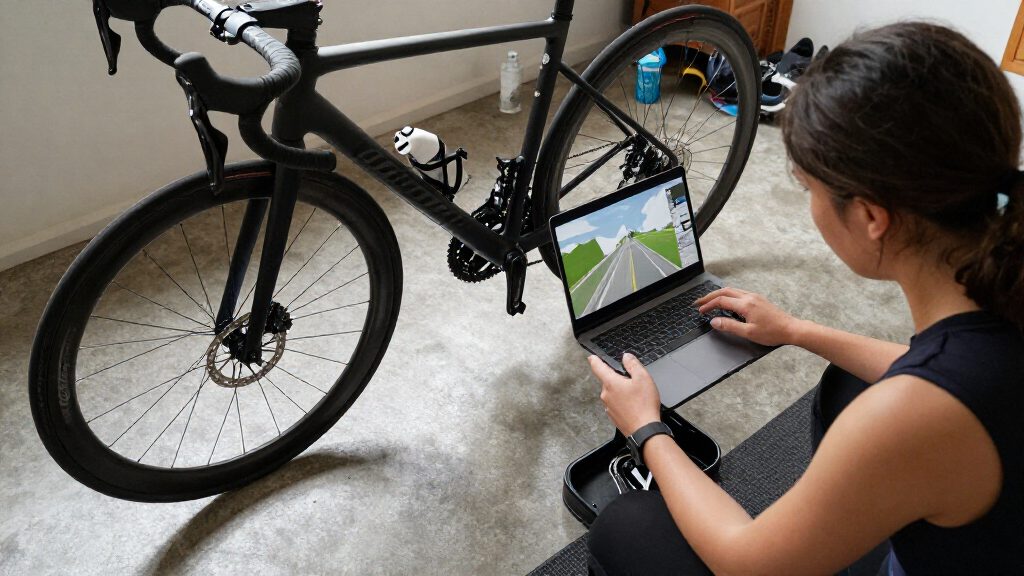
I compared these 14 components by the job they do in virtual cycling, rather than treating every item as a direct substitute. The lineup includes direct-drive and wheel-on smart trainers, a dedicated indoor bike, a gradient simulator, and pedal-based power meters. I prioritized the quality of the training role, app connectivity, practical setup, compatibility, build and maintenance demands, and whether a component remains useful beyond one indoor configuration.
The ranking favors options that offer a strong balance of virtual-training capability and everyday usability. The Elite Avanti leads as an all-around smart-trainer choice; the Wahoo KICKR CORE 2 and other direct-drive trainers follow according to their specific setup and feature tradeoffs. Specialized gear ranks for the riders who will use its distinct function, not because it replaces a general-purpose trainer. Buyers should still confirm current bike fit, drivetrain, device, and software compatibility before ordering, since these details can change the experience more than a single performance figure.
Factors to Consider When Choosing Best Virtual Cycling Components
Before choosing a component, decide what part of the virtual ride you want to improve: resistance control, shifting, grade movement, or reliable power data. These categories overlap in a connected training setup, but they do not perform the same job. I’d start with your current bike, indoor space, and app plans, then spend on the feature that solves your biggest limitation.
Choose the component by its job
A smart trainer controls resistance and reports ride data, while a power meter measures output and can travel with your bike. A gradient simulator changes the bike’s angle to reflect climbs, but it does not replace the trainer that supplies resistance. A dedicated indoor bike bundles the riding platform and training hardware into one setup. A common mistake is comparing all four types by a single headline specification. Start by naming the problem you want to solve, then choose the component designed for it. If you want virtual climbs to feel more physical, a simulator may complement a trainer rather than compete with one.
Check bike and drivetrain compatibility before buying
Trainer fit depends on more than whether a product is labeled smart or direct drive. Check your bike’s axle type, cassette or freehub needs, drivetrain speeds, and any manufacturer fit guidance. Virtual shifting options can simplify gear changes, but they may change how you interact with your existing cassette and controls. Riders with multiple bikes should confirm that the trainer can accommodate each one without repeated parts changes. Also verify that your chosen app supports the trainer’s connection and control features. Resolving these details first can prevent an otherwise capable component from becoming an awkward fit.
Match the setup to your room and routine
A trainer that uses your own bike can be a practical choice when storage and flexibility matter, but it still needs a stable place to mount and ride. A dedicated indoor bike can simplify a permanent training station, though it takes more room and does not double as your outdoor bike. Consider where you will store the equipment, how often you will set it up, and whether more than one rider needs to use it. Wheel-on designs may have different setup and tire-contact needs than direct-drive models, so account for routine upkeep too. Measure the usable floor area, including room to get on and off, instead of relying on the product footprint alone.
Understand what training data you actually need
For structured indoor sessions, dependable power data and consistent resistance control can matter more than chasing the largest stated wattage. Power-meter pedals are useful when you want readings on outdoor rides as well as indoors, but they do not create resistance for a virtual route. Dual-sided measurement can offer more detail than a single-sided approach, yet that detail is only useful if it informs your training decisions. If you mainly want group rides or casual virtual routes, prioritize stable app pairing and easy control. Select the data features you will use regularly; otherwise, extra measurement capability may add complexity without changing your routine.
Decide when a premium setup earns its place
More specialized equipment makes sense when its added function will change how often or how effectively you ride. A dedicated bike with grade simulation targets immersion and a consistent indoor station, while a gradient simulator adds physical movement to a compatible setup. These upgrades are less compelling if you have limited space or only ride indoors occasionally. A more adaptable trainer may be a better first purchase, especially if you are still learning which apps and sessions suit you. Avoid paying for overlapping features: a power meter, trainer, and simulator each serve different purposes. Build the setup in stages and add specialized hardware only after your routine shows what is missing.
Plan for connectivity and long-term use
Virtual riding depends on a chain of connections among the component, phone or computer, and training app. Check which wireless protocols your devices support and whether the app can control resistance or only receive ride data. If you use more than one device, verify how the trainer handles simultaneous connections and avoid assuming every feature works across every platform. Firmware updates, calibration guidance, and replacement-part availability also affect how easy a setup is to maintain. Think about whether you might change bikes, apps, or training spaces later. A component that fits your likely next step can be a better choice than one that only suits today’s arrangement.
Frequently Asked Questions
Should I buy a smart trainer or a power-meter pedal for virtual cycling?
Choose a smart trainer if you want controlled resistance that changes with a virtual route or workout. A power-meter pedal measures your effort but does not provide that resistance control on its own. Pedals can be a better fit if you want power data on both indoor and outdoor rides, or if you need to move the measurement between compatible bikes. Some riders use both, but check how your app handles readings from multiple sources before building that setup. If virtual routes are your main goal, start with the trainer function.
Will a Zwift Cog and Click setup work with my current bike?
Compatibility depends on your bike’s drivetrain, rear axle, and the trainer’s supported fit, so the product name alone is not enough to confirm a match. Check the trainer’s current compatibility information against your exact bike and drivetrain configuration. Also make sure you understand how the virtual shifting controller changes gear selection compared with your regular shifters. If you switch between bikes, confirm the setup works for each one before committing. A little fit checking can save repeated adjustments after installation.
Is a direct-drive trainer a better choice than a wheel-on trainer?
Neither design wins for every rider. Direct-drive trainers remove the rear wheel from the trainer connection and are often chosen for a dedicated indoor setup, while wheel-on models keep the bike’s rear wheel in place and may suit riders who value a simpler storage arrangement. The right choice depends on fit, noise and maintenance preferences, setup frequency, and your training goals. Check tire and wheel requirements for a wheel-on model, and confirm cassette or freehub needs for direct drive. Compare the whole setup rather than assuming one format is automatically easier.
Do I need a gradient simulator as well as a smart trainer?
A gradient simulator adds physical bike-angle movement to the indoor ride, while a smart trainer supplies resistance and ride data. That makes the simulator an add-on for buyers seeking a more immersive climbing feel, not a replacement for the trainer. Before adding one, confirm that your trainer, bike, and training software support the intended setup. Consider room height, mounting requirements, and whether the added movement is something you will use often. If your priority is accurate resistance or structured workouts, a trainer should come first.
What should I prioritize if this is my first virtual cycling setup?
Start with a trainer that fits your bike and the app you plan to use, then keep the rest of the setup simple. Stable connections, clear setup instructions, and straightforward compatibility usually matter more at the beginning than extra simulation features or detailed power analysis. Decide whether you want to use your own bike or keep a dedicated indoor bike in place. Check that your device can connect to the trainer and that you have space for safe mounting and riding. You can add power-meter pedals or a gradient simulator later if your riding routine gives you a clear reason.
Conclusion
For most riders building a virtual setup around a bike they already own, I’d start with the Elite Avanti as the best overall pick; it balances connected training with Zwift Cog and Click. The Wahoo KICKR CORE 2 with Zwift Cog and Click is my value-oriented choice for riders who want a direct-drive virtual-training setup without moving to a dedicated indoor bike. Beginners should compare that straightforward trainer approach with the Elite Rivo and prioritize confirmed bike and app compatibility over add-on features. For a premium, immersive indoor station, the Wahoo KICKR BIKE PRO is the standout, while the Garmin Tacx Alpine suits riders specifically seeking grade movement. Choose the Favero Assioma PRO MX-2 for MTB power measurement or the Assioma PRO RS-2 for road power data; those specialized pedals solve a different problem from resistance-controlled trainers.