The best mobility stretching tools help you reach, control, or support stretches that are hard to do comfortably with your hands alone. My best overall pick is the OPTP Original Stretch Out Strap for its straightforward, versatile strap design; the adjustable steel sticks stand out for upright, guided movement, while the UOPON Wooden Slant Board focuses on calf and ankle flexibility. The main tradeoff is choosing between a portable strap, a larger lever-style stick, and a specialized tool for one body area. I compare all 15 options by their intended use, adjustability, usability, and likely fit for different routines. Read on for the full breakdown and guidance on which type makes sense for you.

Get workout gear delivered free with Prime
- Fast, free delivery on millions of items
- Prime Video, Amazon Music and more included
- Member-only deals all year
Complete the kit


Key Takeaways
- Straps are the most versatile category in this lineup: the OPTP, Comness, Abiarst, Trideer, and CTRL Sports options support controlled stretches without requiring a large setup.
- Adjustable mobility sticks suit upright, guided movement: the steel and yoga-stick designs offer more leverage than a strap, but need more storage space and a suitable grip.
- The slant board is a focused calf-and-ankle choice: UOPON fills a narrower role than the straps or sticks, so it makes more sense for targeted lower-leg work than a varied full-body routine.
- Loop count is not the same as fit: straps with multiple loops can make hand placement easier, while a non-elastic strap prioritizes controlled positioning over stretch-assisted movement.
- Release tools serve a different purpose from stretching aids: the Optimized Athletics and PSO-RITE devices target pressure-based muscle release rather than guided range-of-motion work.
| PAETA 5 ft Bamboo Yoga Stretching Stick with Non-Slip Grip |  | Best Simple Bamboo Stretching Stick | Material: Bamboo | Listed length: 57.9 in; also listed as 60 in | Weight: 1.4 lb | VIEW LATEST PRICE | See Our Full Breakdown |
| Adjustable 5-Foot Steel Yoga and Mobility Stretching Bar |  | Best Adjustable Bar | Material: High-strength alloy stainless steel | Adjustable lengths: 30.7 in, 45 in, and 59.2 in | Design: Detachable, modular construction | VIEW LATEST PRICE | See Our Full Breakdown |
| FlexBuddy 2-in-1 Stretching Tool |  | Best Strap-and-Handle Combination | Material: Beech wood and organic cotton | Size: One size | Adjustable: Yes | VIEW LATEST PRICE | See Our Full Breakdown |
| Comness Foot and Calf Stretching Strap with Six Loops, Black | 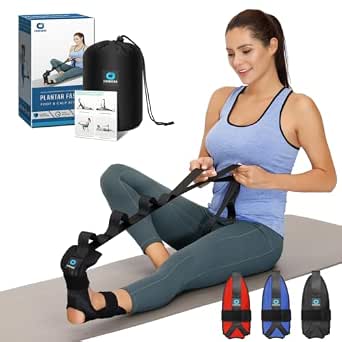 | Best Loop Strap for Lower-Body Stretching | Material: Cotton, neoprene, nylon, and polyester | Dimensions: 60 in L x 5 in W | Design: Cradle design with six-loop webbing | VIEW LATEST PRICE | See Our Full Breakdown |
| UOPON Portable Wooden Slant Board for Calf Stretching |  | Best for Adjustable Calf and Ankle Stretches | Material: 11-ply AA-grade poplar core | Surface: Textured PVC | Base: Non-slip EVA | VIEW LATEST PRICE | See Our Full Breakdown |
| OPTP Original Stretch Out Strap with Exercise Booklet |  | Best for Guided, Versatile Stretching | Brand: OPTP | Material: Nylon | Length: 6 feet | VIEW LATEST PRICE | See Our Full Breakdown |
| 5 ft Bamboo Yoga Stretching Stick with Non-Slip Grips |  | Best for Full-Body Stick Mobility | Length: 5 feet | Material: Bamboo | Construction: One piece | VIEW LATEST PRICE | See Our Full Breakdown |
| Abiarst 10-Loop Non-Elastic Stretching Strap |  | Best Simple, Washable Strap | Brand: Abiarst | Model: AB-11 | Material: Durable, washable fabric | VIEW LATEST PRICE | See Our Full Breakdown |
| Trideer Non-Elastic Stretching Strap with Loops |  | Best for Gentle Stretching and Leg Assistance | Brand: Trideer | Material: Polyester | Dimensions: 75 × 1 in | VIEW LATEST PRICE | See Our Full Breakdown |
| KUZARO Adjustable Yoga and Mobility Stick for Stretching |  | Best Compact Adjustable Stick | Brand: KUZARO | Material: Alloy steel core with NBR foam | Core thickness: 0.8 mm | VIEW LATEST PRICE | See Our Full Breakdown |
| CTRL Sports Stretching Strap with Loops |  | Best for Measured, Repeatable Stretches | Brand: CTRL Sports | Type: Non-elastic stretching strap | Material: Nylon strap with neoprene-padded handles | VIEW LATEST PRICE | See Our Full Breakdown |
| Optimized Athletics Psoas Release and Stretching Tool |  | Best for Versatile Targeted Release | Brand: Optimized Athletics | Product type: Psoas release and stretching tool | Uses: Psoas release, hip hook, hip-flexor stretching, massage, mobilization, and trigger-point work | VIEW LATEST PRICE | See Our Full Breakdown |
| PSO-RITE Psoas Muscle Release Tool, Deep Tissue Massage Device |  | Best for Firm, Focused Pressure | Material: Rigid plastic | Dimensions: 10.7 × 5 × 5.3 in | Peak-to-peak distance: 6.3 in | VIEW LATEST PRICE | See Our Full Breakdown |
| 5 ft Adjustable Steel Mobility Stick for Stretching |  | Best for Multi-Length Mobility Routines | Brand: WOQQW | Material: Alloy steel core with NBR foam padding | Adjustable lengths: 30.7 in, 45 in, and 59.2 in | VIEW LATEST PRICE | See Our Full Breakdown |
| GHCTFE Adjustable Yoga Stick for Stretching and Balance |  | Best for Compact Travel Storage | Brand: GHCTFE | Product type: Adjustable yoga stick | Material: Steel core with NBR foam covering | VIEW LATEST PRICE | See Our Full Breakdown |
| mobility stretching tool | Material | Brand |
|---|---|---|
| PAETA 5 ft Bamboo Yoga Stretch | Bamboo | — |
| Adjustable 5-Foot Steel Yoga a | High-strength alloy stainless steel | — |
| FlexBuddy 2-in-1 Stretching To | Beech wood and organic cotton | — |
| Comness Foot and Calf Stretchi | Cotton, neoprene, nylon, and polyester | — |
| UOPON Portable Wooden Slant Bo | 11-ply AA-grade poplar core | — |
| OPTP Original Stretch Out Stra | Nylon | OPTP |
| 5 ft Bamboo Yoga Stretching St | Bamboo | — |
| Abiarst 10-Loop Non-Elastic St | Durable, washable fabric | Abiarst |
| Trideer Non-Elastic Stretching | Polyester | Trideer |
| KUZARO Adjustable Yoga and Mob | Alloy steel core with NBR foam | KUZARO |
| CTRL Sports Stretching Strap w | Nylon strap with neoprene-padded handles | CTRL Sports |
| Optimized Athletics Psoas Rele | — | Optimized Athletics |
| PSO-RITE Psoas Muscle Release | Rigid plastic | — |
| 5 ft Adjustable Steel Mobility | Alloy steel core with NBR foam padding | WOQQW |
| GHCTFE Adjustable Yoga Stick f | Steel core with NBR foam covering | GHCTFE |
More Details on Our Top Picks
PAETA 5 ft Bamboo Yoga Stretching Stick with Non-Slip Grip
The PAETA bamboo stick is a straightforward choice for standing shoulder, posture, balance, and mobility drills that benefit from a rigid bar. Its 1.4-pound weight makes it easier to carry than a bulky stretching station, while the non-slip handles give the hands defined grip areas during controlled movements. Compared with the Adjustable 5-Foot Steel Yoga and Mobility Stretching Bar, PAETA is simpler to pick up and use because it has no length configurations to manage; the steel option is more adaptable for storage and exercises requiring a shorter bar. The tradeoff is that this bamboo model cannot change length, and its listed length varies between 57.9 and 60 inches. Its firm, unpadded construction also won’t suit buyers who want a cushioned or flexible bar.
Pros:- Lightweight bamboo construction is easy to carry and handle.
- Non-slip grips provide designated hand positions.
- Useful for mobility, flexibility, posture, and balance drills.
- Includes a video guide for exercise instruction.
Cons:- Length is listed as both 57.9 and 60 inches.
- Fixed length is less versatile than the adjustable steel bar.
- Rigid, unpadded bamboo may not suit users who prefer a softer contact surface.
Best for: People who want a lightweight, fixed-length bar for standing mobility, posture, and balance exercises at home or while traveling.
Not ideal for: Buyers who need multiple bar lengths, padded contact points, or a precisely confirmed overall length.
- Material:Bamboo
- Listed length:57.9 in; also listed as 60 in
- Weight:1.4 lb
- Handle length:4.7 in
- Grip:Anti-slip handles
- Color:Natural bamboo
- Included:Video guide
Our verdict“Choose PAETA for a simple, portable fixed bar, but pick the adjustable steel model if you need more length options.”
Adjustable 5-Foot Steel Yoga and Mobility Stretching Bar
For buyers who want one bar to serve different drills, this detachable steel model offers three working lengths: 30.7, 45, and 59.2 inches. A shorter setup can be easier to store or use for compact movements, while the full-length configuration suits broader shoulder and back stretches. That makes it more adaptable than the fixed-length PAETA bamboo stretching stick, though PAETA is lighter and simpler to grab without assembly. This bar’s foam grip, padded section, and rubber tips add comfort and contact stability, and its threaded connection is designed to hold the sections together. The tradeoff is that changing lengths takes assembly, and the longest configuration is less convenient to carry than a compact strap such as the Comness Foot and Calf Stretching Strap.
Pros:- Three lengths accommodate a wider range of exercises and storage needs.
- Detachable construction supports transport and compact storage.
- Foam grip and padded section add comfort during stretches.
- Threaded connection and anti-slip rubber tips support steadier use.
Cons:- Requires assembly and adjustment to change length.
- The longest configuration is less convenient to carry.
- Rigid steel construction is less compact than a stretching strap.
Best for: Home or travel users who want a bar for several stretching setups and can accept assembling it between lengths.
Not ideal for: People who want a one-piece bar for quick use or a small, soft-sided tool that packs down without rigid sections.
- Material:High-strength alloy stainless steel
- Adjustable lengths:30.7 in, 45 in, and 59.2 in
- Design:Detachable, modular construction
- Grip:5 mm sweat-absorbing foam
- Connection:Threaded connection with internal structure
- Tips:Anti-slip rubber
- Included:Exercise guide
Our verdict“Choose this bar if adjustable reach matters more than instant setup or the compactness of a strap.”
FlexBuddy 2-in-1 Stretching Tool
The FlexBuddy 2-in-1 pairs an adjustable cotton strap with rounded wooden components, giving users a way to guide stretches for the feet, calves, thighs, hips, back, and shoulders. Its strap-based setup allows reach to be adjusted without relying on a long rigid bar, and the wooden handles offer a defined grip. Compared with the Comness Foot and Calf Stretching Strap, FlexBuddy adds wooden components intended to help position the body for a straight-spine stretch; Comness instead has six webbing loops and two orientations for changing handholds and positions. FlexBuddy’s main tradeoff is that its loose wooden foot part must be placed into the strap loops, which takes more setup than a simple looped strap. The product data also gives no dimensions or weight, so packability is harder to judge.
Pros:- Combines an adjustable strap with wooden components for varied stretches.
- Adjustable fit can accommodate different body sizes and reach needs.
- Rounded beech-wood handles provide defined grip points.
- Suitable for beginner and advanced stretching routines.
Cons:- The loose wooden foot part must be positioned in the strap loops.
- Dimensions and weight are not specified.
- A strap-and-handle layout is less direct than a rigid bar for standing mobility drills.
Best for: Stretchers who want an adjustable strap with wooden grip components for guided lower- and upper-body mobility work.
Not ideal for: People who prefer a single-piece strap with clearly stated dimensions or want to avoid positioning separate components before stretching.
- Material:Beech wood and organic cotton
- Size:One size
- Adjustable:Yes
- Color:Brown
- Model number:10551
- Part number:10551-FBMAU
- Pack count:1
Our verdict“Pick FlexBuddy if adjustable strap reach and wooden grip points appeal more than the simpler loop layout of Comness.”
Comness Foot and Calf Stretching Strap with Six Loops, Black
The Comness six-loop strap is the most focused pick here for seated foot, calf, hamstring, thigh, and lower-back stretches. Its cradle design and two usable orientations give users different ways to position the strap, while the loops provide multiple places to hold rather than requiring a fixed grip. Compared with the FlexBuddy 2-in-1 Stretching Tool, Comness has a more straightforward webbing layout and includes a pouch; FlexBuddy adds wooden components but requires extra positioning. Comness is also easier to pack than either rigid stretching bar, though it offers less support for standing balance or posture exercises. The one-size design and unspecified adjustable length may limit fit and preferred hand placement, so buyers seeking a defined length-adjustment system should look at a different strap.
Pros:- Six-loop webbing provides several handhold positions.
- Two orientations support different stretching setups.
- Designed for the feet, calves, hamstrings, thighs, and lower back.
- Includes an instruction manual and carrying pouch.
Cons:- One-size design may not match every user or preferred stretch position.
- Adjustable strap length is not specified.
- Offers less support for standing balance and posture exercises than a bar.
Best for: People who want a portable, looped strap for seated or floor-based foot, calf, hamstring, and thigh stretches.
Not ideal for: Buyers who need a rigid tool for standing mobility drills or a strap with clearly specified length adjustment.
- Material:Cotton, neoprene, nylon, and polyester
- Dimensions:60 in L x 5 in W
- Design:Cradle design with six-loop webbing
- Orientations:Two
- Size:One size
- Color:Black
- Included:Instruction manual and carrying pouch
Our verdict“Choose Comness for portable, loop-based lower-body stretching, not for bar-style standing mobility work.”
UOPON Portable Wooden Slant Board for Calf Stretching
The UOPON slant board takes a different approach from the straps and bars in this roundup: rather than extending reach, it elevates the feet to set the angle for calf and ankle stretches, mobility work, and heel-elevated squats. Its five incline settings from 23° to 45° let users choose among several positions, while the textured surface and EVA base are intended to improve foot and floor traction. Compared with the Comness Foot and Calf Stretching Strap, this board gives a stable platform for weight-bearing stretches but is less useful for hamstrings, back, or shoulder work. It folds and has a carrying handle, yet at roughly four to 4.5 pounds it is less packable than a strap. Product information also gives conflicting weight and capacity figures, so those limits are not clear.
Pros:- Five incline angles allow users to vary stretch position.
- Textured PVC surface and non-slip EVA base are designed for traction.
- Foldable design and carrying handle support transport and storage.
- Arrives assembled and can also be used for heel-elevated squats.
Cons:- Listed weight differs between 4 and 4.5 pounds.
- Maximum capacity is listed as both 300 and 460 pounds.
- Must be positioned securely in an angle slot before use.
Best for: People focused on calf and ankle mobility or heel-elevated squats who want adjustable incline angles and a standing platform.
Not ideal for: Travelers who need a lightweight, flexible tool for full-body stretching or buyers who require confirmed weight-capacity specifications.
- Material:11-ply AA-grade poplar core
- Surface:Textured PVC
- Base:Non-slip EVA
- Adjustable angles:23°, 30°, 35°, 40°, and 45°
- Weight:Listed as 4 lb and 4.5 lb
- Maximum weight capacity:Listed as 300 lb and 460 lb
- Design:Foldable board with carrying handle and locking mechanism
- Included:Training poster and instruction guide
- Assembly:Arrives assembled; no tools required
Our verdict“Choose UOPON for adjustable, weight-bearing calf and ankle work, but choose a strap for lighter, more varied stretching.”
OPTP Original Stretch Out Strap with Exercise Booklet
The OPTP Original Stretch Out Strap is a strong choice for people who want a clear range of hand and foot positions rather than a stretch stick. Its 10 loops make it easier to adjust reach during leg, shoulder, and other mobility stretches, while the non-elastic nylon keeps each hold steady instead of adding rebound. The included 40-page booklet and video guide give beginners a route into exercises without relying on a separate tutorial source. Compared with the Abiarst 10-Loop Strap, OPTP supplies more guidance and states that it is made in the USA, but both use non-elastic loop designs. The tradeoff is that it cannot provide elastic resistance, and the 6-foot length may feel like more strap than some compact routines need.
Pros:- Ten loops allow multiple grip and foot-placement options
- Non-elastic nylon supports controlled holds without rebound
- Includes a 40-page exercise booklet and video stretching guide
- Made in the USA
Cons:- Does not provide elastic stretch or resistance
- A six-foot strap may be cumbersome for users who want a very compact tool
Best for: Beginners and home exercisers who want a looped strap plus printed and video guidance for varied mobility stretches
Not ideal for: People seeking resistance-band training or a rigid tool for shoulder and posture drills
- Brand:OPTP
- Material:Nylon
- Length:6 feet
- Loops:10
- Elasticity:Non-elastic
- Weight:4 ounces
- Included:40-page exercise booklet and video stretching guide
- Country of manufacture:USA
Our verdict“Choose this strap if you want plenty of positioning options and included instruction, but pick a stick if you need a rigid guide for mobility movements.”
5 ft Bamboo Yoga Stretching Stick with Non-Slip Grips
For mobility work that calls for a long, rigid guide, this 5-foot bamboo stick covers a different job from the looped OPTP Original Stretch Out Strap. Its one-piece construction avoids joints that could shift during shoulder, balance, or posture movements, and non-slip grips help keep hand placement secure. The included video library, with more than 20 tutorials, can help users follow routines for the hips, shoulders, and back. Compared with the KUZARO Adjustable Yoga and Mobility Stick, this bamboo model is ready as one piece and avoids assembly, but it does not break down into shorter sections for carrying. That fixed length also needs storage space and may be unwieldy in a small room. Buyers should be comfortable accessing the video library for its guided instruction.
Pros:- One-piece construction avoids connection points that can wobble
- Non-slip grips support a secure handhold
- Bamboo construction is described as lightweight
- Video library includes more than 20 guided tutorials
Cons:- Five-foot length requires ample storage and exercise space
- Does not adjust or detach for compact transport
- Video guidance depends on access to the video library
Best for: Home exercisers with room to store a full-length stick who want guided routines for shoulders, hips, balance, and posture
Not ideal for: Travelers or people with limited storage who need a tool that packs down or adjusts to shorter lengths
- Length:5 feet
- Material:Bamboo
- Construction:One piece
- Grip:Non-slip grips
- Included:Access to video library
- Tutorial count:20+
- Stated exercise focus:Stretching, mobility, balance, and strength
Our verdict“Choose this stick for stable, guided mobility work at home, but opt for the KUZARO if adjustable lengths and packability matter more.”
Abiarst 10-Loop Non-Elastic Stretching Strap
The Abiarst 10-Loop Strap suits buyers who want flexible hand and foot placement in a straightforward, washable format. Its 75-inch length and 10 loops let users change their grip during leg, yoga, Pilates, or dance stretches without needing a second person to hold the other end. The skin-friendly washable fabric is a practical distinction from the OPTP Original Stretch Out Strap, which stands out more for its included booklet and video guide. Abiarst keeps the tool simple, but its product details do not list comparable instructional materials, so newcomers may need to find routines elsewhere. Like the OPTP and Trideer straps, it is non-elastic: that helps with steady positioning, but it will not add resistance or provide the rebound of an elastic band.
Pros:- Ten loops allow varied hand and foot placement
- Washable fabric supports routine cleaning
- Skin-friendly fabric is suited to direct contact during stretching
- Designed for stretching across yoga, Pilates, dance, fitness, and gymnastics
Cons:- Non-elastic construction does not provide resistance-band training
- No exercise booklet or video guide is listed
- One-inch width may feel narrow during long holds for some users
Best for: Yoga, Pilates, dance, and fitness users who want a washable looped strap for adjustable, controlled stretches
Not ideal for: Beginners who want included exercise instruction or anyone looking for elastic resistance
- Brand:Abiarst
- Model:AB-11
- Material:Durable, washable fabric
- Dimensions:75 in L × 1 in W
- Loops:10
- Elasticity:Non-elastic
- Weight:0.1 kg
- Pack quantity:1
Our verdict“Choose Abiarst for a simple washable strap with many grip positions, but choose OPTP if included guidance is a priority.”
Trideer Non-Elastic Stretching Strap with Loops
The Trideer Non-Elastic Stretching Strap is the most functionally distinct strap here because it is described for both stretching and helping lift a leg into bed or a car. Its looped design gives users adjustable hand positions for controlled work on the legs, hips, back, ankles, and feet, while non-elastic polyester avoids a springy pull during holds. Compared with Abiarst’s 10-loop strap, Trideer lists transfer assistance as a use, making it a better match for some home recovery routines; Abiarst, by contrast, specifies washable fabric and skin-friendly material. The Trideer product details do not state an exact loop count or include instructional materials. Its narrow one-inch width may also be less comfortable during longer holds, and light gloves or socks may help with grip.
Pros:- Multiple loops allow adjustable hand and foot positions
- Non-elastic construction supports steady holds without rebound
- Can assist with leg lifting for bed or car transfers
- Designed for mobility work across several areas, including hips, legs, back, ankles, and feet
Cons:- Does not provide elastic resistance
- One-inch width may be uncomfortable during longer holds
- No exercise booklet or video guide is listed
Best for: People doing gentle home mobility or recovery routines who also want a strap to assist with lifting a leg into bed or a car
Not ideal for: Users who need elastic resistance, detailed included guidance, or a wide strap for extended holds
- Brand:Trideer
- Material:Polyester
- Dimensions:75 × 1 in
- Weight:0.08 kg
- Design:Non-elastic strap with multiple loops
- Pack count:1
- Listed uses:Stretching, mobility exercises, and leg lifting
- Color:Black
Our verdict“Choose Trideer if leg-lifting assistance is useful alongside gentle stretching; choose Abiarst if washability is your main priority.”
KUZARO Adjustable Yoga and Mobility Stick for Stretching
The KUZARO Adjustable Yoga and Mobility Stick is the strongest fit for buyers who want a rigid mobility tool that can pack down between sessions. Its four detachable sections connect to form three lengths: 30.7, 45, and 59.2 inches, so users can change the setup for different movements or carry only the assembled sections they need. The padded NBR foam grip adds a softer contact point than the bare length of a bamboo stick, while the alloy steel core and threaded connections are designed for stability. Compared with the one-piece 5 ft Bamboo Yoga Stretching Stick, KUZARO is more portable and adjustable, but takes assembly and has connection points that a one-piece stick avoids. Its longest setting is just under five feet, which may not suit every movement or user.
Pros:- Three assembled lengths suit different movements and users
- Four detachable sections pack more compactly than a one-piece stick
- NBR foam grip provides a padded contact surface
- Alloy steel core and threaded connections are designed for stability
Cons:- Threaded sections require assembly before use
- Longest stated length is 59.2 inches, which may be too short for some exercises
- Connections add moving parts absent from the one-piece bamboo stick
Best for: Traveling exercisers and people with limited storage who want a stick that adjusts for different mobility and posture exercises
Not ideal for: Users who want a full-length one-piece stick with no assembly or need a stick longer than 59.2 inches
- Brand:KUZARO
- Material:Alloy steel core with NBR foam
- Core thickness:0.8 mm
- Foam thickness:5 mm
- Sections:4 detachable sections
- Section length:15.4 in
- Adjustable lengths:30.7 in, 45 in, and 59.2 in
- Color:Pink
Our verdict“Choose KUZARO for a portable stick with adjustable reach, but pick the bamboo model if you prefer a fixed, joint-free construction.”
CTRL Sports Stretching Strap with Loops
The numbered loops make this strap a strong choice for mobility routines where you want to track hand placement and gradually adjust a stretch. Its non-elastic nylon keeps the strap steady rather than adding spring, while padded handles give you a more comfortable grip during longer holds. Compared with the Comness Foot and Calf Stretching Strap, this model is suited to a wider range of whole-body stretching, not just foot and calf positioning. It also includes a guide and carry bag, which help with setup and storage. The tradeoff is that it offers no elastic assistance, so you supply the tension yourself. Check the version carefully: the 10-loop and 12-loop options differ in both length and loop count.
Pros:- Numbered loops make hand placement easier to track between stretches
- Non-elastic nylon provides stable tension without springing back
- Neoprene-padded handles offer a more comfortable grip
- Includes a carrying bag and stretching guide
Cons:- No elasticity to assist with reaching or ease tension
- The 10-loop and 12-loop versions have different lengths, so selection matters
Best for: People following repeatable mobility or physical-therapy-style stretches who want clear hand-position cues and a stable strap
Not ideal for: Stretchers who want elastic give to assist a movement, or buyers who do not want to choose between two different strap lengths
- Brand:CTRL Sports
- Type:Non-elastic stretching strap
- Material:Nylon strap with neoprene-padded handles
- Available versions:10 loops, 78 in long; or 12 loops, 96 in long
- Width:1.5 in
- Included accessories:Carrying bag and stretching guide
- Model number:10LLRED2017
Our verdict“Choose this strap if you want a stable, clearly indexed tool for repeatable full-body stretches and do not need elastic assistance.”
Optimized Athletics Psoas Release and Stretching Tool
This tool stands out for combining targeted pressure with several mobility uses: it can serve as a hip hook, stretching aid, mobilization wedge, or trigger-point tool. That range makes it more adaptable than the PSO-RITE Psoas Muscle Release Tool, which is described as a rigid pressure device with a defined hold-time recommendation. Here, users can adjust how much pressure they apply, making it possible to work across areas such as the hips, back, quads, and shoulders. That flexibility also calls for care: pressure on the psoas should be approached cautiously, and this is not a passive stretching strap or stick. The product details do not specify its material or dimensions, which makes it harder to judge firmness, fit, and storage needs before choosing it.
Pros:- Supports massage, stretching, mobilization, and trigger-point work
- Can target the psoas, hips, back, quads, shoulders, and other areas
- Users can adjust the pressure they apply
- Designed and tested in the USA
Cons:- Pressure on the psoas requires caution and may not suit inexperienced users
- Material and dimensions are not specified in the product details
Best for: Experienced self-massage users who want one tool for adjustable pressure, hip-flexor work, and trigger-point mobility across several body areas
Not ideal for: Beginners unsure how to apply pressure safely, or buyers who need clear material and size details before purchasing
- Brand:Optimized Athletics
- Product type:Psoas release and stretching tool
- Uses:Psoas release, hip hook, hip-flexor stretching, massage, mobilization, and trigger-point work
- Target areas:Psoas, hips, back, quads, shoulders, and other body areas
- Pressure:Applied pressure can be adjusted by the user
- Designed and tested:USA
Our verdict“Pick this if you want an adaptable tool for careful, targeted pressure work rather than a simple strap or mobility stick.”
PSO-RITE Psoas Muscle Release Tool, Deep Tissue Massage Device
The PSO-RITE is a more purpose-built choice for people seeking firm, localized pressure than the adjustable-use Optimized Athletics tool. Its rigid plastic body is shaped for psoas and other muscle-group work, and its compact footprint makes it practical to keep at home, in an office, or with workout equipment. The stated 5–60-second hold range gives users a clear starting point for working one position at a time, rather than moving continuously through stretches as they might with a strap such as the CTRL Sports Stretching Strap. That focused approach is also the main limitation: rigid construction may feel too intense for sensitive users, and this is not a general-purpose aid for assisted range-of-motion stretches. Careful positioning and pressure control matter.
Pros:- Rigid shape is intended for focused pressure on the psoas and other muscle groups
- Can be used on the hips, back, legs, and arms
- Compact size suits home, office, or workout-area storage
- Specified hold times offer a clear duration range for each position
Cons:- Rigid plastic may feel too firm for sensitive users
- Requires holding positions rather than providing continuous assisted stretching
Best for: People familiar with self-release techniques who want a compact, firm tool for targeted psoas, hip, back, leg, or arm pressure
Not ideal for: Beginners or pressure-sensitive users who prefer a softer, adjustable stretch aid, or anyone seeking a strap for assisted stretching
- Material:Rigid plastic
- Dimensions:10.7 × 5 × 5.3 in
- Peak-to-peak distance:6.3 in
- Weight:1.15 lb
- Made in:USA
- Recommended hold time:5–60 seconds per position
- Patent:US Pat. No. D823,479
Our verdict“Choose the PSO-RITE for compact, firm pressure work if you are comfortable managing intensity and do not need a conventional stretching aid.”
5 ft Adjustable Steel Mobility Stick for Stretching
This stick’s main advantage is three usable lengths: 30.7, 45, and 59.2 inches. That range lets one tool support shorter movements and longer shoulder or back mobility drills, unlike a fixed-length stick such as the PAETA 5 ft Bamboo Yoga Stretching Stick. Its alloy steel core provides a supportive structure, while 5 mm NBR foam adds a cushioned, non-slip grip for warm-ups, balance work, and stretching. The four-section design packs down for storage or transport, but it takes assembly and length adjustment, so quick changes are less convenient than using a one-piece bar. Even detached, the sections need a place to be stored together. This is a good fit for varied routines, less so for buyers who want the simplest setup.
Pros:- Three length settings support a broader mix of exercises
- Alloy steel core provides a supportive structure
- 5 mm NBR foam offers a cushioned, non-slip grip
- Detachable sections make storage and transport easier
Cons:- Four sections require assembly and adjustment
- The assembled full-length stick takes more storage space than its detached sections
Best for: People who rotate between shoulder, back, balance, and full-body mobility drills and want adjustable length in one stick
Not ideal for: Buyers who want a ready-to-use one-piece bar or do not want to assemble and adjust sections between routines
- Brand:WOQQW
- Material:Alloy steel core with NBR foam padding
- Adjustable lengths:30.7 in, 45 in, and 59.2 in
- Design:Four-section detachable
- Foam thickness:5 mm
- Intended uses:Stretching, yoga, Pilates, mobility, balance, and warm-ups
- Number of items:1
Our verdict“Choose this stick for varied mobility routines that benefit from multiple lengths, provided you are comfortable assembling it.”
GHCTFE Adjustable Yoga Stick for Stretching and Balance
The GHCTFE stick focuses on a straightforward combination: a 59.2-inch working length for stretching and balance, with four sections that pack down to 16.5 inches. That compact stored length gives it an advantage for travel or limited storage over the WOQQW adjustable stick, whose listed details provide three working lengths but do not specify a packed length. A steel core supplies structure, and the sweat-resistant NBR foam covering cushions the grip. Twist-lock assembly needs no tools, and an illustrated manual helps explain setup. Unlike the WOQQW model, this option has only one stated extended length, so it offers less flexibility for exercises that call for a shorter stick. The sections still need assembling before use, and the warranty duration is unclear in the product details.
Pros:- Breaks down to 16.5 inches for compact storage or travel
- Steel core provides structure for stretching and balance exercises
- NBR foam covering is described as sweat-resistant
- Twist-lock sections assemble without tools and an illustrated manual is included
Cons:- Only one extended length is specified, limiting length options compared with the WOQQW stick
- Four sections must be assembled before use
- The listed warranty duration is unclear
Best for: Travelers and apartment dwellers who want a full-length mobility stick that stores in a short, packable form
Not ideal for: People who need several working lengths for different drills or want a clearly stated warranty duration
- Brand:GHCTFE
- Product type:Adjustable yoga stick
- Material:Steel core with NBR foam covering
- Sections:4
- Extended length:59.2 in
- Disassembled length:16.5 in
- Assembly:Twist-lock sections; no tools required
- Included components:Instruction manual
- Warranty:Duration unclear in product details
Our verdict“Pick this stick if compact packed storage matters more than having multiple working lengths.”

How We Picked
I compared the 15 products by the mobility task each one supports, how easy its design is to use for that task, and how well it may fit a regular home routine. The main criteria were control and reach, adjustability or loop placement, portability and storage, construction type, and whether the tool has a broad or specialized use. I also separated assisted stretching from pressure-based release devices, since those serve different purposes and should not be treated as interchangeable.
The ranking favors tools with a clear use case and fewer barriers to fitting into varied routines. That places the OPTP strap first for broad, straightforward assisted stretching, while adjustable sticks rank as stronger choices for upright movement and the slant board ranks for focused calf work. Specialized release tools and duplicate-style stick or strap options rank lower for general use, not because they lack a purpose, but because they address a narrower set of needs. Product descriptions alone do not establish clinical results, so I do not treat any tool as a treatment or a substitute for professional guidance.
Factors to Consider When Choosing Best Mobility Stretching Tools
Start with the movement you want help performing, not the number of features on the package. A stretching strap, mobility stick, slant board, and release tool each solve a different problem, and choosing the wrong format can leave a capable tool unused. I would weigh the following factors before choosing between them.
Match the Tool to the Movement
Decide whether you need help reaching a limb, guiding an upright motion, changing the angle under your feet, or applying pressure to a specific area. A strap can extend your reach during floor or seated stretches, while a stick gives you a longer lever for standing movements. A slant board changes your foot and ankle position, so it is more targeted than either option. Release devices are not stretching straps with a different shape; they apply focused pressure and call for a different approach. A common mistake is buying for a body part when the real issue is the movement or position you cannot comfortably reach.
Choose Control Before Complexity
For many routines, predictable support matters more than a high loop count or multiple configurations. Loops can give you defined hand or foot positions, while a non-elastic strap offers a stable length rather than adding spring to the stretch. An adjustable stick can accommodate different positions, but its moving parts and setup may be unnecessary if you only need one simple exercise. Think about whether you will use the tool independently and whether its design makes the intended position easy to understand. If you are new to stretching aids, a simple format may be easier to use consistently than a more elaborate one.
Account for Storage and Portability
A strap usually packs away with little effort, making it a practical choice for travel or a small home. A five-foot stick needs room to store and maneuver, even if it provides more reach for upright movements. A slant board occupies a different kind of space and may be less convenient to carry between locations. Before choosing a larger tool, check whether you have enough clear floor area to use it without hitting furniture or walls. The best fit is the one that can stay accessible without making setup a chore.
Read Material and Construction for Your Use
Material labels matter most when they affect grip, rigidity, or how the product is handled. A bamboo stick and a steel stick have different construction, but the right choice depends on the feel and support you want rather than the material name alone. For straps, consider whether you prefer loops for set hand positions or a simpler length that can be adjusted by how you hold it. With adjustable products, inspect how the parts lock or stay in place based on the product’s instructions. Do not assume that a more rigid or elaborate design automatically provides better control for your body or routine.
Separate Stretching From Pressure-Based Release
Stretching tools help position or guide a movement; pressure-based devices apply localized contact to an area. The psoas tools in this roundup belong to the latter category, so they should not be selected as a substitute for a strap or mobility stick. Deep pressure can feel intense, and a product name does not establish that a particular technique is appropriate for everyone. If you have pain, an injury, or uncertainty about a target area, get qualified guidance before using a release device. Choose the method that matches your goal rather than combining categories based on a broad mobility label.
Think About Routine Fit, Not Just Range
A tool only adds value if it fits the way you plan to stretch. Someone who follows a short floor routine may benefit more from a compact strap than from a long stick that requires extra room. Someone working on upright mobility may find a stick easier to incorporate, while a person focused on calves may prefer a slant board’s specific setup. Consider how often you expect to use it, whether you need guidance such as an included booklet, and how much setup you will tolerate. Avoid buying several tools that duplicate the same function before you know which format you will use regularly.
Frequently Asked Questions
Should I choose a stretching strap or a mobility stick?
Choose a strap if your main need is extra reach for controlled stretches, especially seated or floor-based movements. A stick is a better match when you want a longer lever to guide upright movements or work through positions while standing. Straps are generally easier to store and carry, while sticks need clear space and more deliberate handling. Neither format replaces the other across every routine. If you are unsure, start with the movement you struggle to reach or control and select the tool designed to assist that position.
Do I need a strap with loops, or is a plain stretching strap enough?
Loops can make it easier to repeat a hand or foot position without constantly adjusting your grip. A plain strap can be simpler and may suit people who prefer to set their own hold rather than use defined sections. More loops do not automatically mean better stretching or a better fit, so check whether the positions they offer match your exercises. If you are learning a routine, clear, repeatable hand placement may be useful. If you already know how you want to hold the strap, a less structured design may be all you need.
Is a slant board a good substitute for a stretching strap?
No: these tools support different kinds of movement. A slant board changes the angle under your feet and is aimed at positions such as calf and ankle stretching, while a strap helps extend your reach or hold a limb in a controlled position. A board may be a strong fit if lower-leg mobility is your main focus, but it is less adaptable for a varied full-body routine. A strap can support more types of stretches, though it does not recreate the board’s angled platform. Choose based on the exercises you expect to do most often.
Are psoas release tools the same as mobility stretching tools?
They are related only in the broad sense that both may appear in mobility routines. A psoas release device applies pressure to a targeted area, while straps, sticks, and slant boards assist positioning or stretching movements. That difference affects how you use the tool and what guidance may be appropriate. Do not assume a pressure device will improve flexibility in the same way as a stretching aid. If you have pain, a medical condition, or uncertainty about using pressure in that area, seek advice from a qualified professional first.
What should a beginner prioritize when buying a mobility stretching tool?
A beginner should prioritize an understandable use, comfortable handling, and a tool that fits the intended exercise space. A straightforward strap can be easier to store and use for assisted stretches than a long adjustable stick with several possible positions. If you want more guidance, an included exercise booklet may help you get started, but it does not replace professional instruction when you need it. Avoid choosing a tool solely because it has more loops, adjustments, or functions. A focused, repeatable routine is a better starting point than a complicated setup.
Conclusion
For the broadest mix of assisted stretching needs, I would choose the OPTP Original Stretch Out Strap as the best overall option. The Comness, Abiarst, Trideer, and CTRL Sports straps are worth comparing for buyers who want loop-based hand placement, while the PAETA bamboo stick is a practical value-oriented pick for someone who wants a longer, upright stretching aid. For beginners, I would start with a simple strap and consider the OPTP option for its included exercise booklet. Buyers seeking a premium-style, more focused setup can look at the UOPON slant board for calf work, but it is not a full-body substitute. Choose an adjustable steel or yoga stick for guided standing movements, and reserve the Optimized Athletics or PSO-RITE release tools for those specifically seeking pressure-based work and who understand how to use it. The best match depends on your main movement goal, available space, and preferred level of structure.