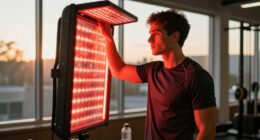
For most buyers, I’d start with the Hooga PRO300: its panel format and 660nm red plus 850nm near-infrared light offer a practical middle ground between compact devices and larger setups. The Shark CryoGlow stands out for a face-focused routine that adds under-eye cooling, while the Comfytemp mat suits people who want a broader, hands-free treatment area. The main tradeoffs are coverage versus portability, targeted versus full-body use, and how much setup a device asks of you. I compare all 15 picks by format, usability, and intended use below. Read on for the full breakdown and help matching a device to your routine.

Get workout gear delivered free with Prime
- Fast, free delivery on millions of items
- Prime Video, Amazon Music and more included
- Member-only deals all year
Complete the kit


Key Takeaways
- Panel size changes the routine: Hooga’s PRO300 and BestQool’s Pro100 are panel-style choices, while the HG200 and BestQool BQ60 offer smaller panel formats for more limited spaces or targeted use.
- Face devices are not interchangeable with body panels: Shark CryoGlow and iRestore are designed around facial use, so they make more sense for face-focused routines than broad-area coverage.
- Wearable formats trade coverage flexibility for convenience: The Lifepro Allevared belt and corded therapy pad are easier to position on a chosen area than a standing panel, but they do not serve the same whole-body role.
- Several panel picks share red and near-infrared wavelengths: Viconor, Hooga, BestQool, and INTEO offer panel or lamp formats with 660nm and 850nm light, making form factor and setup central points of comparison.
- More features are only useful when they fit the routine: Four wavelengths on the BestQool Pro100 or cooling on the Shark CryoGlow may appeal to specific buyers, while a simpler device can be a better fit if its size and setup match the intended use.
| BestQool Pro100 Red Light Therapy Panel, 4 Wavelengths, 160W |  | Best for Expandable Coverage | Wavelengths: 4 | Power: 160W | Dimensions: 19.7 × 8.4 × 2.6 inches | VIEW LATEST PRICE | See Our Full Breakdown |
| Viconor Red Light Therapy Panel, 660nm and 850nm, 60 Dual-Chip LEDs |  | Best for Timed Panel Sessions | Wavelengths: 660nm red and 850nm near-infrared | LEDs: 60 dual-chip LEDs (120 beads) | Power: 300W | VIEW LATEST PRICE | See Our Full Breakdown |
| Hooga HG300 Red and Near-Infrared Light Therapy Panel with Adjustable Stand |  | Best for Targeted Sessions | Wavelengths: 660nm red and 850nm near-infrared | LED count: 60 | Irradiance: Over 73 mW/cm² at 6 inches | VIEW LATEST PRICE | See Our Full Breakdown |
| Shark CryoGlow LED Face Mask with Red Light Therapy and Under-Eye Cooling |  | Best for Facial Skincare Routines | Model: FW312PK | Light types: Red, blue, and deep infrared LED | Treatment modes: Better Aging, Skin Clearing, Skin Sustain, and Under-Eye Revive | VIEW LATEST PRICE | See Our Full Breakdown |
| Viconor Red Light Therapy Lamp for Face and Body, 660 nm Red and 850 nm Infrared LEDs with Adjustable Stand |  | Best for Flexible Home Positioning | LED count: 120 | LED configuration: 1 × 660nm red light and 2 × 850nm infrared lights per LED | Wavelengths: 660nm red and 850nm near-infrared | VIEW LATEST PRICE | See Our Full Breakdown |
| Viconor Red Light Therapy Lamp for Face and Body with Stand |  | Best for Flexible Positioning | LED count: 120 | Wavelengths: 660 nm red and 850 nm near-infrared | Panel shape: Curved | VIEW LATEST PRICE | See Our Full Breakdown |
| iRestore Red Light Therapy LED Face Mask with 360 LEDs |  | Best for Multicolor Facial Treatments | LED count: 360 | Red wavelength: 635 nm | Infrared wavelength: 830 nm | VIEW LATEST PRICE | See Our Full Breakdown |
| LifePro LumiCure Handheld Red Light Therapy Wand |  | Best Compact Pick | Light wavelengths: 3 | Light type: Red and near-infrared | Design: Handheld | VIEW LATEST PRICE | See Our Full Breakdown |
| Corded Red Light Therapy Pad with Adjustable Strap, 660nm Red and 850nm Near-Infrared Light |  | Best for Secured, Targeted Body Use | Light wavelengths: 660 nm red and 850 nm near-infrared | Light beads: 105 beads, 315 chips total | Pulse mode: 10 Hz | VIEW LATEST PRICE | See Our Full Breakdown |
| Comfytemp Red Light Therapy Mat, 33 x 17 in, 660 nm and 850 nm |  | Best for Broad Coverage | Size: 33 x 17 in | LED count: 480 | Wavelengths: 660 nm and 850 nm | VIEW LATEST PRICE | See Our Full Breakdown |
| Hooga HG200 Red and Near-Infrared Light Therapy Panel, 660nm/850nm, 40 LEDs |  | Best Compact Panel | Wavelengths: 660nm red and 850nm near-infrared | LEDs: 40, 5W each, 1:1 red-to-near-infrared ratio | Power: 48 watts | VIEW LATEST PRICE | See Our Full Breakdown |
| INTEO Red Light Therapy Lamp for Body and Face | 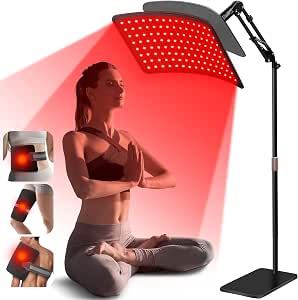 | Best for Adjustable Positioning | Light source: Dual LED chips in each lamp unit | Brightness levels: 5 | Timer settings: 9 | VIEW LATEST PRICE | See Our Full Breakdown |
| BestQool BQ60 Red Light Therapy Panel, 660nm Red and 850nm Near-Infrared, 105W |  | Best for Flexible Home Setup | Power: 105W | Wavelengths: 660nm red and 850nm near-infrared | Irradiance: 95.6 mW/cm² at 3 inches | VIEW LATEST PRICE | See Our Full Breakdown |
| Hooga PRO300 Red Light Therapy Panel for Body and Face, 660nm Red and 850nm Near-Infrared, 60 LEDs |  | Best for Expandable Panel Setups | Model: PRO300 | Wavelengths: 660nm red and 850nm near-infrared | LEDs: 60 dual-chip LEDs | VIEW LATEST PRICE | See Our Full Breakdown |
| Lifepro Allevared Red Light Therapy Belt with 105 Triple-Chip LEDs |  | Best Wearable Option | LED count: 105 triple-chip LEDs | Wavelengths: 660nm red and 850nm near-infrared | Light modes: Red, near-infrared, or both | VIEW LATEST PRICE | See Our Full Breakdown |
| red light therapy device | Wavelengths | Power |
|---|---|---|
| BestQool Pro100 Red Light Ther | 4 | 160W |
| Viconor Red Light Therapy Pane | 660nm red and 850nm near-infrared | 300W |
| Hooga HG300 Red and Near-Infra | 660nm red and 850nm near-infrared | 300 watts |
| Shark CryoGlow LED Face Mask w | — | — |
| Viconor Red Light Therapy Lamp | 660nm red and 850nm near-infrared | — |
| Viconor Red Light Therapy Lamp | 660 nm red and 850 nm near-infrared | — |
| iRestore Red Light Therapy LED | — | — |
| LifePro LumiCure Handheld Red | — | — |
| Corded Red Light Therapy Pad w | — | Corded; USB controller with adapter |
| Comfytemp Red Light Therapy Ma | 660 nm and 850 nm | Requires adapter connection |
| Hooga HG200 Red and Near-Infra | 660nm red and 850nm near-infrared | 48 watts |
| INTEO Red Light Therapy Lamp f | — | — |
| BestQool BQ60 Red Light Therap | 660nm red and 850nm near-infrared | 105W |
| Hooga PRO300 Red Light Therapy | 660nm red and 850nm near-infrared | 300 watts |
| Lifepro Allevared Red Light Th | 660nm red and 850nm near-infrared | USB-powered |
More Details on Our Top Picks
BestQool Pro100 Red Light Therapy Panel, 4 Wavelengths, 160W
The BestQool Pro100 is the most adaptable panel here for buyers who may want to expand their treatment area later. Its four wavelengths and three lighting modes provide more configuration options than the two-wavelength Hooga HG300, while the 60-degree beam angle is suited to focused sessions. The standout advantage is its connectable modular design: one panel can serve as a starting point, with additional PRO series panels linked for wider coverage. That flexibility comes with a limitation—one Pro100 alone is not a full-body setup, and its 6.61-pound weight makes it less convenient to move around than a compact tabletop unit. I’d choose it for a planned, expandable home setup, not for buyers who want broad coverage from a single panel.
Pros:- Four wavelengths and three lighting modes allow more configuration than simpler two-wavelength panels.
- Connectable PRO series design lets buyers expand the treatment area over time.
- 60-degree beam angle supports focused light delivery.
- Low heat release supports use close to the skin.
Cons:- A wider treatment area requires connecting additional panels.
- At 6.61 pounds, it is less portable than smaller tabletop options.
- Its feature flexibility may be unnecessary for buyers who only want a straightforward two-wavelength panel.
Best for: Buyers who want a panel they can use for targeted sessions now and expand into a wider setup by connecting compatible PRO series panels.
Not ideal for: Anyone seeking full-body coverage from one lightweight, ready-to-use panel or a device that is easy to carry between rooms.
- Wavelengths:4
- Power:160W
- Dimensions:19.7 × 8.4 × 2.6 inches
- Weight:6.61 pounds
- Irradiance:109 mW/cm² at 3 inches
- Beam angle:60 degrees
- Lighting modes:3
- Light types:Visible red and near-infrared
- Design:Connectable modular PRO series panels
Our verdict“Choose the BestQool Pro100 if you want a configurable panel that can grow with your setup, and skip it if you need broad coverage from a single compact device.”
Viconor Red Light Therapy Panel, 660nm and 850nm, 60 Dual-Chip LEDs
The Viconor 60 dual-chip panel suits buyers who want a panel with session controls and built-in cooling rather than the more customizable wavelength setup of the BestQool Pro100. Its 660nm red and 850nm near-infrared LEDs combine two commonly used light types, and the 5–30 minute timer gives sessions a defined endpoint without relying on a separate timer. A cooling fan and included eye protection add practical support for routine use; the hanging kit also allows tabletop or wall placement. The tradeoff is limited fit information: dimensions are not specified, so I can’t judge how much area it covers or how it will fit a particular space. It also needs a suitable surface or mounting location, unlike a mask worn directly on the face.
Pros:- 660nm red and 850nm near-infrared light are combined in 60 dual-chip LEDs.
- Timer can be set from 5 to 30 minutes.
- Built-in cooling fan supports operation during sessions.
- Hanging kit allows tabletop or wall placement.
Cons:- Panel dimensions are not provided, making space and coverage planning harder.
- Must be positioned or hung before use rather than worn like the Shark CryoGlow mask.
- The listed 300W power rating alone does not explain treatment-area coverage.
Best for: Buyers who want a timer-equipped red and near-infrared panel with a cooling fan and flexible tabletop or wall placement.
Not ideal for: People who need known panel dimensions before planning a small treatment space, or who want a wearable facial device instead of a positioned panel.
- Wavelengths:660nm red and 850nm near-infrared
- LEDs:60 dual-chip LEDs (120 beads)
- Power:300W
- Irradiance:140 mW/cm² at 6 inches
- Timer:5–30 minutes
- Cooling:Built-in cooling fan
- Included accessories:Hanging kit, eye protection, and user manual
- Mounting options:Tabletop or wall hanging
Our verdict“Pick this Viconor if timed, cooled panel sessions and mounting flexibility matter more than known dimensions or wearable convenience.”
Hooga HG300 Red and Near-Infrared Light Therapy Panel with Adjustable Stand
The Hooga HG300 is the clearest fit for focused sessions on smaller areas: its compact 12.6-inch height and adjustable tabletop stand make positioning easier than with the larger BestQool Pro100. Independent controls let you use red light, near-infrared light, or both, so the panel offers useful flexibility without the Pro100’s four-wavelength setup. It also includes protective eyewear, a timer, and active cooling, making it a more complete small-panel package. The tradeoff is its intended scale: the 60-LED panel is better for targeted use than broad body coverage, and the power cord limits placement to somewhere near an outlet. I’d favor it for a desk or tabletop routine, not as a substitute for a larger panel when coverage is the priority.
Pros:- Compact dimensions and adjustable stand make it easier to position for targeted use than the BestQool Pro100.
- Independent red and near-infrared controls allow single-light or combined sessions.
- Built-in timer, active cooling, and included protective eyewear support a ready-to-use setup.
- Three-year warranty is specified.
Cons:- Small panel is designed for targeted sessions rather than broad body coverage.
- Requires a power cord and access to an outlet.
- Its listed irradiance is lower than the Viconor panel’s stated figure, though the measurements use different distances.
Best for: People who want a compact, adjustable tabletop panel for repeatable sessions on a specific body area.
Not ideal for: Buyers who want to treat broad areas without repositioning the panel, or who need a cordless device.
- Wavelengths:660nm red and 850nm near-infrared
- LED count:60
- Irradiance:Over 73 mW/cm² at 6 inches
- Power:300 watts
- Dimensions:12.6 × 4.92 × 2.44 inches
- Beam angle:60 degrees
- Controls:Independent red and near-infrared controls
- LED lifespan:50,000 hours
- Warranty:3 years
Our verdict“Choose the Hooga HG300 for adjustable, targeted tabletop sessions; choose a larger panel if minimizing repositioning matters more.”
Shark CryoGlow LED Face Mask with Red Light Therapy and Under-Eye Cooling
The Shark CryoGlow takes a different approach from the panels in this lineup: it is a wearable facial skincare device, not a general-purpose body panel like the Hooga HG300. Its red, blue, and deep infrared LEDs are organized around four facial treatment modes, while clip-on chill pads add adjustable under-eye cooling. That combination makes it the most specialized choice here for someone building a face-focused routine rather than treating larger body areas. The adjustable fit is designed for a range of face shapes and sizes, and USB-C charging avoids the fixed placement required by a panel. The tradeoff is routine commitment: treatments call for a clean, bare, dry face, and some modes require daily use over multiple weeks. It won’t replace a panel for broader coverage.
Pros:- Combines red, blue, and deep infrared LED treatments in one facial device.
- Four modes address different skincare routines, including skin clearing and maintenance.
- Three adjustable under-eye chill levels add cooling absent from the Hooga HG300 panel.
- Adjustable fit and USB-C charging support wearable use.
Cons:- Designed for facial use rather than broad body treatment.
- Requires a clean, bare, dry face before sessions.
- Some treatment modes call for daily use over a multiweek cycle.
Best for: People seeking a dedicated at-home facial routine with multiple LED skincare modes and adjustable under-eye cooling.
Not ideal for: Buyers primarily seeking red-light coverage for the body, or anyone unlikely to keep up with device-specific, repeated facial sessions.
- Model:FW312PK
- Light types:Red, blue, and deep infrared LED
- Treatment modes:Better Aging, Skin Clearing, Skin Sustain, and Under-Eye Revive
- Treatment durations:4, 6, 8, and 5–15 minutes, depending on mode
- Under-eye cooling:3 adjustable chill levels
- Fit:Adjustable; designed for a range of face shapes and sizes
- Skin types:Dry, oily, normal, combination, and sensitive
- In the box:LED mask, clip-on chill pads, remote, and USB-C charging cable
Our verdict“Choose the Shark CryoGlow for a mode-based facial skincare routine with under-eye cooling, not for general body coverage.”
Viconor Red Light Therapy Lamp for Face and Body, 660 nm Red and 850 nm Infrared LEDs with Adjustable Stand
This Viconor adjustable lamp is the positioning-focused pick: its curved panel can stand independently or hang, and the included stand rotates up to 180 degrees to aim light at different body areas. That makes it more adaptable around the home than the fixed wearable Shark CryoGlow, while avoiding the BestQool Pro100’s modular-panel approach. Its 120 LEDs each combine 660nm red and two 850nm near-infrared lights, offering both light types in one compact arrangement. The main compromise is coverage: the panel is small, so treating a larger area may mean repositioning it. The product description also calls for regular 15–30 minute sessions, which takes more routine commitment than a quick placement change alone suggests. I’d choose it for flexible targeted use, not for hands-free broad coverage.
Pros:- Stand adjusts up to 180 degrees for positioning at different body areas.
- Curved panel can be placed independently or hung.
- Each of 120 LEDs combines 660nm red with two 850nm near-infrared lights.
- Includes both a stand and a hook for different placement options.
Cons:- Small panel may need repositioning to cover larger areas.
- Product guidance calls for regular 15–30 minute sessions.
- The listed details do not specify irradiance or panel dimensions, limiting comparisons of output and coverage.
Best for: Home users who want to aim a red and near-infrared lamp at different areas using a rotating stand or hanging setup.
Not ideal for: People who want broad coverage without moving the device, or who prefer a wearable mask designed specifically for facial use.
- LED count:120
- LED configuration:1 × 660nm red light and 2 × 850nm infrared lights per LED
- Wavelengths:660nm red and 850nm near-infrared
- Stand adjustment:Up to 180 degrees
- Power cord length:1.8m
- Placement:Curved panel can stand independently or be hung
- Included accessories:Stand and hook
- Suggested session duration:15–30 minutes
Our verdict“Pick this Viconor lamp if adjustable placement matters for targeted home sessions, and skip it if you want broad coverage with minimal repositioning.”
Viconor Red Light Therapy Lamp for Face and Body with Stand
I’d pick this Viconor lamp when adjustable placement matters more than treating a large area at once. Its curved 120-LED panel combines 660 nm red and 850 nm near-infrared light, while the stand tilts through 180 degrees and adjusts in height. That makes it easier to aim at different body areas than a wearable pad such as the Corded Red Light Therapy Pad, which needs to be strapped in place. The included hook also offers another way to position the lamp. The tradeoff is coverage: its panel is small, so larger areas may need repositioning. And because 850 nm light is invisible, you won’t see both wavelengths operating. I’d choose a larger mat like the Comfytemp for broad coverage, but this lamp suits buyers who want flexible, hands-free aiming.
Pros:- Combines 660 nm red light and 850 nm near-infrared light.
- Stand adjusts in height and angle for different target areas.
- Curved panel is designed to focus light toward the treatment area.
- Portable setup includes both a stand and a hook.
Cons:- Small panel may require repositioning to cover larger areas.
- The 850 nm near-infrared light is invisible during operation.
- Stand-based positioning takes more setup than wearing a pad.
Best for: People who want to direct light at different facial or body areas from a stand or hanging position.
Not ideal for: Buyers seeking broad, simultaneous coverage across a large body area, or those who want visible confirmation of both wavelengths.
- LED count:120
- Wavelengths:660 nm red and 850 nm near-infrared
- Panel shape:Curved
- Stand adjustment:180° angle and adjustable height
- Power cord:3 m
- Included accessories:Stand and hook
Our verdict“Choose this Viconor if you want adjustable, hands-free positioning; pick the Comfytemp mat instead for broader coverage at once.”
iRestore Red Light Therapy LED Face Mask with 360 LEDs
This iRestore mask is the clearest choice here for buyers focused on facial treatments with multiple light options. It pairs red light at 635 nm with infrared at 830 nm and blue light at 415 nm, giving it a different emphasis from the Viconor lamp, which uses red and near-infrared light but is positioned for both face and body. The mask’s 10-minute sessions and lightweight, dual-strap design support a repeatable routine, while eye shielding helps block direct light. In exchange for that face-specific fit, the mask covers the face during use and limits what you can do comfortably. It also calls for regular sessions three to five times weekly, so it’s less suited to occasional, targeted treatment than the handheld LifePro LumiCure. I’d choose it for a dedicated facial routine, not for flexible body coverage.
Pros:- Offers red, infrared, and blue light wavelengths.
- Lightweight mask uses dual straps for a wearable fit.
- Eye shielding blocks direct light.
- Recommended 10-minute sessions can fit into a short routine.
Cons:- Recommended use requires sessions three to five times per week.
- Face-covering design can limit activities during treatment.
- Designed for facial use rather than flexible treatment across the body.
Best for: People building a recurring facial skincare routine who want red, infrared, and blue light options in a wearable format.
Not ideal for: Buyers who want to treat body areas, move around freely during sessions, or prefer occasional use over several sessions per week.
- LED count:360
- Red wavelength:635 nm
- Infrared wavelength:830 nm
- Blue wavelength:415 nm
- Session duration:10 minutes
- Recommended use:3–5 times per week
- Design:Lightweight mask with dual straps and eye shielding
Our verdict“Pick the iRestore for a consistent, multicolor facial routine; choose the Viconor lamp if you need to target areas beyond the face.”
LifePro LumiCure Handheld Red Light Therapy Wand
The LifePro LumiCure makes the most sense for buyers who value portability and targeted use over broad coverage or hands-free sessions. Its handheld design combines three wavelengths of red and near-infrared light, and the included wrist strap and zippered case make it easier to store or carry than the stand-based Viconor lamp. That compact format also means you can direct the device at a specific area without setting up a panel. The tradeoff is that the description provides no wavelength values or coverage dimensions, so buyers have less detail for comparing treatment areas. It also requires direct contact with the button to operate, which may be awkward during positioning. Compared with the Comfytemp mat, this wand is far less suited to covering a broad area, but it is the more portable choice for localized use.
Pros:- Combines three wavelengths of red and near-infrared light.
- Handheld format supports targeted positioning.
- Lightweight design is easy to carry.
- Includes a wrist strap and zippered carrying case.
Cons:- Direct contact with the button is required to operate it.
- No individual wavelength values are provided in the product data.
- Handheld use is less suited to broad coverage than the Comfytemp mat.
Best for: People who want a compact device for targeted use at home or while traveling, with a case for storage.
Not ideal for: Buyers seeking broad coverage, hands-free operation, or exact wavelength specifications before choosing.
- Light wavelengths:3
- Light type:Red and near-infrared
- Design:Handheld
- Included accessories:Wrist strap and zippered carrying case
- Operation:Button requires direct contact
- Portability:Lightweight
Our verdict“Choose the LumiCure for portable, localized treatment; choose a mat or panel if you need a larger hands-free treatment area.”
Corded Red Light Therapy Pad with Adjustable Strap, 660nm Red and 850nm Near-Infrared Light
I’d shortlist this pad for buyers who want to secure light over a specific body area rather than hold a device in place. Its 16.1-by-7.9-inch surface combines 660 nm red light and 850 nm near-infrared light, and the included adjustable elastic strap helps keep it positioned. Compared with the LifePro LumiCure, it covers a more defined area without requiring a hand to hold the device; compared with the much larger Comfytemp mat, it is easier to target one section but offers less coverage at once. The 30-minute timer with automatic shutoff adds a simple endpoint to sessions. Its main limitation is the corded setup: it needs an outlet and may restrict where you can use it. The modest pad size also means it won’t cover a large area simultaneously.
Pros:- Pairs 660 nm red light with 850 nm near-infrared light.
- Adjustable elastic strap helps secure the pad in position.
- 30-minute timer shuts the device off automatically.
- Lightweight pad weighs 0.44 lb.
Cons:- Corded power requires access to an outlet.
- Pad dimensions limit coverage of larger areas at once.
- The included strap adds another item to position and adjust.
Best for: People who want a wearable, strapped pad for a defined body area and value an automatic session shutoff.
Not ideal for: Buyers who need cordless use or want one device to cover a large body area at once.
- Light wavelengths:660 nm red and 850 nm near-infrared
- Light beads:105 beads, 315 chips total
- Pulse mode:10 Hz
- Pad dimensions:16.1 x 7.9 in
- Elastic strap dimensions:35.2 x 4 in
- Timer:30 minutes with automatic shutoff
- Power:Corded; USB controller with adapter
- Weight:0.44 lb
Our verdict“Choose this pad for secured treatment of a specific body area with a timer; choose the Comfytemp mat for wider coverage.”
Comfytemp Red Light Therapy Mat, 33 x 17 in, 660 nm and 850 nm
Among these five, the Comfytemp is my pick for covering the largest area at once. Its 33-by-17-inch mat and 480 LEDs give it a clear coverage advantage over the 16.1-by-7.9-inch Corded Red Light Therapy Pad, which is better suited to a smaller target area. Four light modes and three adjustable levels also give buyers more ways to tailor operation than the simpler Viconor lamp setup. Button controls keep the interface straightforward once the mat is connected. The tradeoff is that it still depends on an adapter, so this is not a cordless option, and its larger format is less focused on precise positioning than a handheld wand. Product data lists 660 nm and 850 nm wavelengths but does not explain the four modes, so buyers should not assume what each mode changes. I’d choose it for area coverage, not travel or highly localized use.
Pros:- 33 x 17-inch surface offers broad coverage.
- 480 LEDs span a larger area than the smaller Corded Red Light Therapy Pad.
- Four light modes provide multiple operating options.
- Three adjustable levels and button operation offer simple control.
Cons:- Requires connection to an adapter for use.
- Large mat is less compact than the handheld LifePro LumiCure.
- Product data does not specify what distinguishes the four light modes.
Best for: People who want a larger mat for broad-area use at home and prefer several modes and adjustable levels.
Not ideal for: Travelers, buyers who need cordless use, or anyone seeking a compact device for precise targeting.
- Size:33 x 17 in
- LED count:480
- Wavelengths:660 nm and 850 nm
- Light modes:4
- Adjustable levels:3
- Power:Requires adapter connection
- Controls:Button operation
Our verdict“Choose the Comfytemp if broad coverage is your priority; opt for the Corded Red Light Therapy Pad for a smaller, strapped treatment area.”
Hooga HG200 Red and Near-Infrared Light Therapy Panel, 660nm/850nm, 40 LEDs
The Hooga HG200 is a space-conscious choice for targeted home sessions: its 9.8-by-6.3-inch panel fits on a tabletop, and the adjustable stand helps aim light at a particular area. Its 660nm red and 850nm near-infrared modes can run separately or together, giving it more wavelength control than a basic single-mode lamp. The built-in timer and cooling fan add practical session controls, though the fan needs room and may require cooling time between uses. Compared with the larger BestQool BQ60, the HG200 takes up less space but covers a smaller area; it is better for focused use than broad-body sessions. It is corded, indoor-only, and not water resistant, so it suits a fixed home setup rather than travel or damp spaces.
Pros:- Separate red, near-infrared, and combined modes
- Compact panel with an adjustable tabletop stand
- Built-in timer and cooling fan
- Three-year manufacturer warranty
Cons:- Small panel limits the area covered in each session
- Corded and intended for indoor use only
- Fan needs clearance, and the panel may need time to cool between sessions
Best for: People who want a compact tabletop panel for focused face or body-area sessions and have a stable indoor spot for it.
Not ideal for: Buyers seeking broad-body coverage, cordless use, or a panel suited to humid or wet spaces.
- Wavelengths:660nm red and 850nm near-infrared
- LEDs:40, 5W each, 1:1 red-to-near-infrared ratio
- Power:48 watts
- Irradiance:Over 90mW/cm² at 6 inches
- Dimensions:9.8 × 6.3 × 1.2 inches
- Modes:Red, near-infrared, or both
- Mounting:Adjustable tabletop stand
- Warranty:3 years
Our verdict“Choose the HG200 if a small, adjustable tabletop panel matters more than the wider coverage of the BestQool BQ60.”
INTEO Red Light Therapy Lamp for Body and Face
The INTEO lamp is built around flexible positioning rather than published output figures: its lamp head rotates 360 degrees, the stand adjusts up to 46.5 inches, and the detachable light can be used independently with an elastic strap. That setup gives it more placement options than the fixed tabletop Hooga HG200, especially for someone switching between a stand-mounted session and a strapped-on treatment. Five brightness levels, three working modes, and nine timer settings provide fine-grained controls. The tradeoff is a key information gap: the supplied product details do not state its wavelengths or light output, making it harder to compare its specifications with the HG200 or BestQool BQ60. Its stand height also limits positioning for some seated or standing setups.
Pros:- Detachable lamp supports stand-mounted or strapped use
- 360-degree rotating head and adjustable stand offer flexible positioning
- Five brightness levels and nine timer settings
- Three working modes
Cons:- Product details do not specify wavelengths or light output
- Maximum stand height is 46.5 inches
- No supplied irradiance figure for comparing output with panel options
Best for: Buyers who want a lamp they can reposition between a stand and strap-based use, with multiple brightness and timer settings.
Not ideal for: Specification-focused shoppers who need stated wavelengths and light output, or people who need a stand taller than 46.5 inches.
- Light source:Dual LED chips in each lamp unit
- Brightness levels:5
- Timer settings:9
- Working modes:3
- Stand material:Aviation-grade aluminum
- Maximum height:46.5 inches (1.4 m)
- Lamp head rotation:360°
- Power cord length:1.4 m
Our verdict“Choose the INTEO for adaptable placement and session controls, but pick the Hooga HG200 or BestQool BQ60 if stated wavelengths and output are priorities.”
BestQool BQ60 Red Light Therapy Panel, 660nm Red and 850nm Near-Infrared, 105W
The BestQool BQ60 pairs 660nm red and 850nm near-infrared light with a 105W panel and three operating modes, making it a more substantial home setup than the compact Hooga HG200. The adjustable U-shaped stand allows tabletop positioning, while the included wall-mounting kit offers a more permanent alternative; that flexibility is useful when a buyer wants to choose between moving the panel and keeping it in one treatment area. Its stated 95.6 mW/cm² irradiance at 3 inches gives a reference point, but output at other distances is not specified, so the figure should not be treated as a general-use measurement. Touchscreen controls and a cooling system round out the panel. Dimensions and weight are missing, which makes it harder to judge placement and storage before purchase.
Pros:- Three modes for red, near-infrared, or combined use
- Adjustable stand and included wall-mounting kit
- Touchscreen controls
- Flicker-free LEDs and cooling system
Cons:- Irradiance figure is stated only at 3 inches
- Panel dimensions and weight are not provided
- Larger 105W panel is less compact than the Hooga HG200
Best for: Home users who want red and near-infrared modes plus a choice between a stand-mounted and wall-mounted panel.
Not ideal for: Shoppers with tight space constraints who need published dimensions and weight before choosing a mounting location.
- Power:105W
- Wavelengths:660nm red and 850nm near-infrared
- Irradiance:95.6 mW/cm² at 3 inches
- Modes:3
- Controls:Touchscreen
- Stand:Adjustable U-shaped stand
- Mounting:Included wall-mounting kit
- LEDs:Flicker-free
Our verdict“Choose the BQ60 if you want a more adaptable mounting setup than the HG200, provided you can confirm the panel will fit your space.”
Hooga PRO300 Red Light Therapy Panel for Body and Face, 660nm Red and 850nm Near-Infrared, 60 LEDs
The Hooga PRO300 stands apart from the smaller HG200 through its 60 dual-chip LEDs and ability to connect with other PRO Series panels. That makes it the more expandable choice for buyers planning a larger panel arrangement, while the HG200 is easier to fit into a compact tabletop space. Independent controls for 660nm red and 850nm near-infrared let users select either wavelength or both, and a digital timer keeps sessions straightforward. The supplied adjustable tabletop stand, flicker-free LEDs, and internal cooling fans support regular indoor use. Its main limitation is the tabletop-first format: the product details do not list wall mounting, and the fans may make noise. The listed dimensions are unusually large relative to the stated weight, so buyers should confirm the actual fit before setting it up.
Pros:- 60 dual-chip LEDs provide red and near-infrared light
- Independent wavelength controls and digital timer
- Can connect to other PRO Series panels
- Flicker-free design with internal cooling fans
Cons:- Designed for tabletop mounting
- Internal fans may produce operating noise
- Listed dimensions may make space planning difficult
Best for: Buyers who want a panel that can join a larger Hooga PRO Series setup and have room for tabletop placement.
Not ideal for: People seeking a portable or wall-mounted panel, or anyone sensitive to fan noise during sessions.
- Model:PRO300
- Wavelengths:660nm red and 850nm near-infrared
- LEDs:60 dual-chip LEDs
- Power:300 watts
- Dimensions:61.2 × 15.7 × 3.1 inches
- Weight:4.3 kg
- Beam angle:60 degrees
- Warranty:3 years
Our verdict“Choose the PRO300 over the HG200 if expandability matters more than a compact footprint and quiet operation.”
Lifepro Allevared Red Light Therapy Belt with 105 Triple-Chip LEDs
The Lifepro Allevared takes a different approach from the rigid panels in this roundup: its flexible belt wraps around the waist, back, or legs, keeping light close to a chosen area while leaving the user’s hands free. It offers 660nm red and 850nm near-infrared in red-only, near-infrared-only, or combined modes, much like the Hooga HG200, but trades the HG200’s adjustable tabletop aim for a wearable fit. The 1–30-minute timer and automatic shutoff make session timing simple. Its USB-powered design adds flexibility around power sources, but it still requires a compatible supply, and the product details do not provide an irradiance figure or belt dimensions. Buyers should read the manual before use rather than treating the adjustable fit as a substitute for setup guidance.
Pros:- Flexible wrap contours to the waist, back, or legs
- Red, near-infrared, and combined light modes
- Timer runs from 1 to 30 minutes with automatic shutoff
- USB-powered for use with a compatible power source
Cons:- Requires a compatible USB power source
- Product details do not provide irradiance or belt dimensions
- Manual should be read before first use
Best for: People seeking hands-free, targeted sessions around the waist, back, or legs without positioning a tabletop panel.
Not ideal for: Shoppers who want a stand-mounted device, broad area coverage, or published irradiance and fit measurements.
- LED count:105 triple-chip LEDs
- Wavelengths:660nm red and 850nm near-infrared
- Light modes:Red, near-infrared, or both
- Timer:1–30 minutes with automatic shutoff
- Power:USB-powered
- Fit:Flexible, adjustable wraparound belt
Our verdict“Choose the Allevared if wearable, hands-free treatment of a specific body area matters more than the broad aiming options of a panel like the Hooga HG200.”
How We Picked
I ranked these 15 red light therapy devices by how well their formats, listed wavelengths, coverage, and setup suit distinct home-use needs. I weighed whether a device targets the face, a chosen body area, or a broader area; whether it can be positioned or worn with little fuss; and whether its listed features give a buyer a clear reason to choose it over another option. I also treated usability and build details as practical factors: a device that is awkward to place or mismatched to the intended area can be a poor fit even when its specifications look appealing.
The order reflects versatility and buyer fit, not a claim that every device delivers the same results or that one format is universally better. Panel models with useful coverage and familiar red/near-infrared combinations rank well for flexible routines; face masks, mats, pads, belts, and wands earn their places when their focused design answers a specific need. I separated close alternatives by their distinguishing listed features, such as panel size, four versus two wavelengths, an adjustable stand, or added cooling. Where the supplied product details do not establish output or treatment guidance, I avoid treating those claims as proven performance advantages.
Factors to Consider When Choosing Best Red Light Therapy Devices
Before choosing a device, I’d match its format to the area you actually plan to treat and the routine you can repeat. These buying factors help prevent a common mismatch: paying for features or coverage that do not suit your available space, comfort, or use pattern.
Match the device format to the treatment area
A panel can serve more than one body area, but its coverage depends on panel size and how you position it. Masks, wands, pads, and belts are built around more specific placement, which can simplify a targeted routine but limit flexibility. Decide whether you want to treat your face, a particular body area, or a broader area before comparing features. A frequent mistake is buying a small device while expecting it to cover a large area quickly. Check the product’s stated dimensions and intended placement, then think through where you would use it at home. If you need to reposition the device often, an adjustable stand or wearable format may matter more than extra light settings.
Read wavelength claims alongside the intended use
Many devices here list 660nm red light, 850nm near-infrared light, or both; the BestQool Pro100 lists four wavelengths. A wavelength count alone does not tell you how much area a device covers or whether its form fits your routine. Compare the manufacturer’s wavelength and output information with the intended use, and avoid treating a longer feature list as proof of better results. Another common mistake is comparing product names without checking whether the device is a panel, mask, lamp, or wearable. Those formats affect placement and usability in ways a wavelength label cannot capture. If a listing leaves output details unclear, treat that as missing information rather than filling the gap with assumptions.
Choose a setup you will use consistently
Setup friction can matter more than a small difference in listed features. A standing panel needs a suitable location and a repeatable position; a mask or belt may be simpler to put on but can feel restrictive or fit differently from person to person. Think about storage, power access, how long setup takes, and whether you can use the device comfortably without assistance. Adjustable stands can help with placement, though they also take space. For a shared room or travel, a compact wand or wearable item may be easier to store than a larger panel. I would prioritize a format that fits your habits over buying a device that is difficult to place or put away.
Separate coverage from convenience
Hands-free use does not always mean broad coverage: a mask can be hands-free while remaining face-specific, and a pad or belt may target one body area at a time. Larger panels can offer more flexible positioning, but they require space and may involve more setup. Decide which inconvenience you would rather avoid: moving a smaller device between areas, or finding room for a larger one. Buyers sometimes assume a mat or wearable covers every need because it sits close to the body; its dimensions and placement still define what it can reach. For multiple treatment areas, flexibility may be worth a more involved setup. For one specific area, a dedicated format can reduce hassle.
Pay more only for features that solve a real problem
Extra wavelengths, cooling features, adjustable stands, and larger panels can each address a different buyer need, but they are not automatic upgrades for everyone. A face-focused buyer may value the Shark CryoGlow’s cooling feature, while a buyer seeking a straightforward panel may place more weight on size and positioning. Before choosing a more feature-rich model, name the problem each added feature solves in your routine. Check what is included, how the device is meant to be operated, and whether the manufacturer provides clear instructions and safety guidance. Avoid paying for a feature you will not use or for broad coverage you do not need. A simpler device that fits your space and intended area may be the better choice.
Frequently Asked Questions
Should I choose a panel or a wearable red light therapy device?
I’d choose a panel if I want flexible positioning or may use the device on more than one area, provided I have room for it. A wearable belt or pad is more targeted and can be easier to place on a chosen area without setting up a stand. Neither format is automatically better: the useful choice depends on the area, available space, and how you plan to use it. Check dimensions and placement instructions rather than assuming a wearable covers a large area. If you expect to move between several areas, panel versatility may justify its setup needs.
Are 660nm and 850nm wavelengths enough, or should I choose a device with more wavelengths?
The products in this lineup show that many devices use a 660nm red and 850nm near-infrared pairing, while the BestQool Pro100 lists four wavelengths. A higher wavelength count by itself does not establish better performance for your intended use. I would first check the device’s stated output, treatment area, instructions, and whether its format suits the routine. If the added wavelengths are not clearly explained by the manufacturer, they may not be a useful reason to choose one model over another. Compare the full specification and avoid treating a count as a results guarantee.
Can I use a face mask instead of a panel for body areas?
A face mask is designed around facial placement, so it is not a practical substitute for a panel when you want flexible body-area coverage. The Shark CryoGlow and iRestore mask are focused picks, while panel models are easier to reposition for different areas. A mask’s fit and coverage are also tied to the face, which can make it unsuitable for other locations. If your main goal is facial use, a dedicated mask may offer a more straightforward routine. For broader use, choose a device whose instructions and design support the areas you plan to treat.
What should I check before buying a red light therapy device online?
Check the exact device format, dimensions, listed wavelengths, output information, included stand or straps, and manufacturer instructions. Confirm what comes with the product rather than assuming an adjustable stand or other accessory is included based on an image. Look for guidance on safe operation and suitability for your circumstances, and contact the manufacturer or a qualified health professional if those details are unclear. Also check the power setup and storage needs so the device fits your home. Clear specifications make it easier to compare products without relying on broad marketing language.
Which type makes the most sense if I am new to red light therapy?
I’d begin by picking the area and format you want, then favor a device with simple controls, clear instructions, and manageable setup. A compact panel such as the Hooga HG200 or BestQool BQ60 may be easier to place than a larger setup, while a dedicated mask can suit a face-only routine. The right beginner option depends on where you intend to use it, not on a general claim that one device is easiest for everyone. Read the manufacturer’s directions before use and avoid adding multiple devices or complicated routines at once. If you have a health concern or questions about safety, ask a qualified professional.
Conclusion
For a flexible home panel, I’d choose the Hooga PRO300 as best overall; its 660nm and 850nm setup and panel format make it a balanced starting point among these picks. The BestQool BQ60 is my best-value-style choice for buyers who want a smaller panel with those same two listed wavelengths, while the BestQool Pro100 is the premium-leaning pick for shoppers drawn to its four-wavelength specification. For beginners, I’d favor a compact, straightforward format such as the Hooga HG200 if panel use suits their space. For specific needs, choose the Shark CryoGlow or iRestore for face-focused use, the Comfytemp mat for broader contact coverage, or a belt, pad, or wand for targeted placement. Match the format to the area and routine you can realistically maintain, then compare the manufacturer’s details before buying.