
TL;DR
A randomized trial of 162 adults aged 65 and older with probable mild cognitive impairment compared 24 weeks of progressive resistance training with gentler exercise. The resistance-training group performed slightly better on two cognitive tests, but the groups had similar story-memory scores, and the study did not establish effects on daily independence or dementia risk.
A 24-week resistance-training program was associated with slightly higher scores on two thinking tests than gentler exercise among 162 adults aged 65 and older with probable mild cognitive impairment, according to a randomized trial. The results offer limited evidence of a cognitive benefit; the study did not establish whether the score differences affect everyday activities or reduce dementia risk.

Get workout gear delivered free with Prime
- Fast, free delivery on millions of items
- Prime Video, Amazon Music and more included
- Member-only deals all year
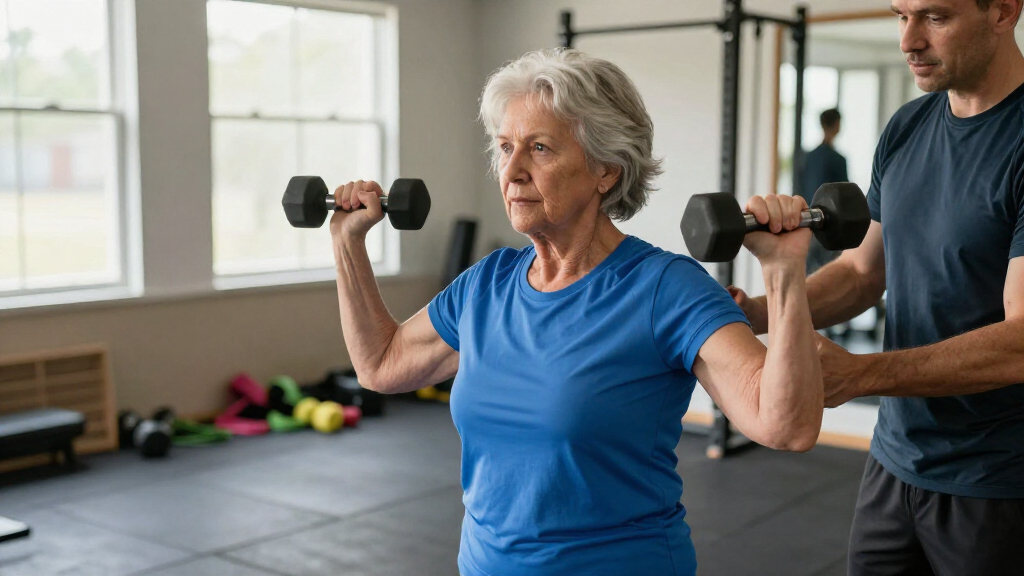
The trial compared a progressive program of resistance exercises with gentler exercise. Participants had signs of probable mild cognitive impairment, meaning they experienced more difficulty with memory or thinking than is typical for their age while remaining able to manage most everyday tasks. The resistance exercises became harder over time.
During the second half of the program, participants in the training group performed some exercises on unstable surfaces such as foam pads, adding a balance challenge. At the end of 24 weeks, that group scored slightly higher on a test requiring participants to repeat number strings immediately and on a test asking them to name as many words beginning with “A” as possible in one minute.
The groups had similar results on story-memory tasks, both when asked to recall a story immediately and after half an hour. The study therefore did not show advantages across all the cognitive measures described. Researchers compared the combined training program with gentler exercise, so the trial cannot show whether resistance work, balance practice, or another part of the program accounted for the differences.
Resistance training and older adults What the evidence shows
A 24-week trial found slight advantages on two thinking tests, but did not show that training improves daily independence or prevents dementia.
What changed on the tests
The trial compared progressive resistance training with gentler exercise in adults with probable mild cognitive impairment.
- Immediate number recall
- Naming words beginning with “A” in one minute
- Story recall immediately
- Story recall after half an hour
What the results mean
The measured differences were slight and do not establish benefits beyond the specific tests.
Limited signal
The training group did better on two tests, not across all the cognitive measures described.
Still unclear
The study did not show improved independence, everyday function, or confidence.
Important limits
The study tested a combined program, so the contribution of each part remains uncertain.
Resistance work and balance challenges were part of the program; their separate effects are unknown.
The trial did not establish whether training changes dementia risk.
It is unclear whether test-score differences last or translate into everyday changes.
What the Cognitive Scores Show
The findings may interest older adults and clinicians considering exercise as part of maintaining strength and function, but they should not be read as proof that resistance training prevents dementia. The measured differences were described as slight, and it is unclear whether they would translate into practical changes such as remembering appointments, managing household tasks, or living independently.
Resistance training can support physical abilities that matter in daily life, including standing from a chair and carrying groceries. Improved mobility may make it easier for some people to leave home and take part in social activities. However, the trial results reported here concern performance on specific tests; they do not demonstrate that participants became more confident, more independent, or more socially active.
The study also does not establish that resistance exercise works as a treatment for mild cognitive impairment. Its findings are one piece of evidence about a particular program and participant group, not a guarantee that other older adults will have the same results.
Products Worth Considering

Blueair Blue Pure 311i Max Smart Air Purifier

LEVOIT Vital 200S-P Smart Air Purifier for Large Rooms, White

Garmin Forerunner 265S GPS Running Smartwatch, 42 mm, Black/Amp Yellow
As an affiliate, we earn on qualifying purchases.
How Exercise Could Connect to Thinking
Early strength gains can occur before muscles visibly grow, partly because the brain and nerves become more effective at activating muscles for practiced movements. Training can also require people to remember exercise sequences and adjust their effort. Those mechanisms make a connection between physical practice and cognitive performance plausible, but they do not prove that improvements on one task carry over to unrelated thinking skills.
The source material describes several possible pathways under investigation. Strength training may influence blood pressure, insulin response, or signs of chronic inflammation; these factors are relevant to health, but the material does not establish that changes from this program altered participants’ brain health. Researchers are also studying proteins associated with brain-cell function and muscle-released signals known as myokines. Findings in people have varied, and these possible biological explanations remain research questions.
The article also cites a review involving more than 2.6 million adults, which estimated that fewer than one in four did muscle-strengthening exercise at least twice a week. That figure describes the review’s estimate, not participation in the trial. Interviews cited in the source found that some women who trained regularly had previously felt unsure of their abilities or viewed strength training as an activity for men. Those observations speak to access and confidence, not to the cognitive results of the 24-week trial.
Limits of the Trial Evidence
The report does not provide the exact score differences, confidence intervals, or enough information here to judge how large the effects were beyond the description that they were slight. It is also unclear whether the differences would persist after the program ended or correspond to changes in participants’ daily lives. The trial’s comparison does not isolate the contribution of balance challenges from the rest of the resistance-training program.
Whether the program changes the likelihood of developing dementia remains unknown. Dementia involves changes in memory or thinking that interfere with daily life; a short-term change on selected tests is not evidence that this outcome has been prevented. The source does not report longer-term follow-up or establish effects for older adults without mild cognitive impairment.
The source identifies the study as a randomized, assessor-blinded, sham-controlled trial, published in The Journal of Nutrition, Health and Aging, but the supplied material does not include details such as participant adherence, adverse events, or the full statistical analysis. Those details would help readers assess how the results apply to individuals and how the program was tolerated.
Longer Follow-Up Is Needed
The study details cited in the source are from a 2027 paper by Dayane Tays da Silva and colleagues. The next evidence needed includes follow-up to determine whether test-score differences last and whether they correspond to meaningful changes in everyday function. Future studies could also compare resistance training with and without balance challenges to identify which parts of a program may contribute to results.
For readers considering strength exercise, the trial is not a personal prescription and does not establish a dementia-prevention plan. Older adults should choose activity suited to their abilities; people with existing health conditions or concerns about balance can discuss safe options with a qualified health professional before starting or changing an exercise routine.
Key Questions
What did the 24-week study find?
Among 162 adults aged 65 and older with probable mild cognitive impairment, the resistance-training group scored slightly higher than the gentler-exercise group on immediate number recall and a one-minute word-generation task. The groups scored similarly on story-memory tests.
Does the study show that strength training prevents dementia?
No. The trial did not establish an effect on dementia risk. Whether the program changes the chance of developing dementia remains unknown.
Did the training improve everyday independence?
The supplied study summary reports cognitive test results, not a demonstrated improvement in daily independence. Whether the small score differences affect everyday life is unclear.
Was balance training tested separately?
No. Some resistance exercises were performed on foam pads, but researchers compared the whole program with gentler exercise. The study cannot determine how much the balance challenge contributed.
Should older adults start resistance training based on this study?
The findings do not provide individual medical advice or a specific exercise prescription. Anyone considering a new routine, especially someone with a health condition or balance concerns, can discuss appropriate activity with a qualified health professional.
Source: medicalxpress.com