
To improve your balance with yoga, focus on strengthening your core and mastering breathing techniques. Incorporate poses like Warrior III, tree pose, and planks that demand core engagement. Slow, deep breaths help you stabilize during challenging movements. Practicing mindfulness in different environments, like outdoors, can enhance your focus. Make balance a part of your daily routine, even when brushing your teeth. Stick with it, and you’ll find greater stability on and off the mat. Discover more tips that can elevate your practice!
Key Takeaways
- Engage your core through poses like planks and tree pose to build stability and improve overall balance.
- Practice breath control by inhaling deeply and exhaling slowly to enhance steadiness during movements.
- Incorporate challenging poses like Warrior III that require focus, strength, and core engagement for improved balance.
- Utilize mindful breathing and external environments to increase concentration and tranquility during your yoga practice.
- Integrate balance exercises into daily routines, such as standing on one leg, to gradually build strength and confidence.
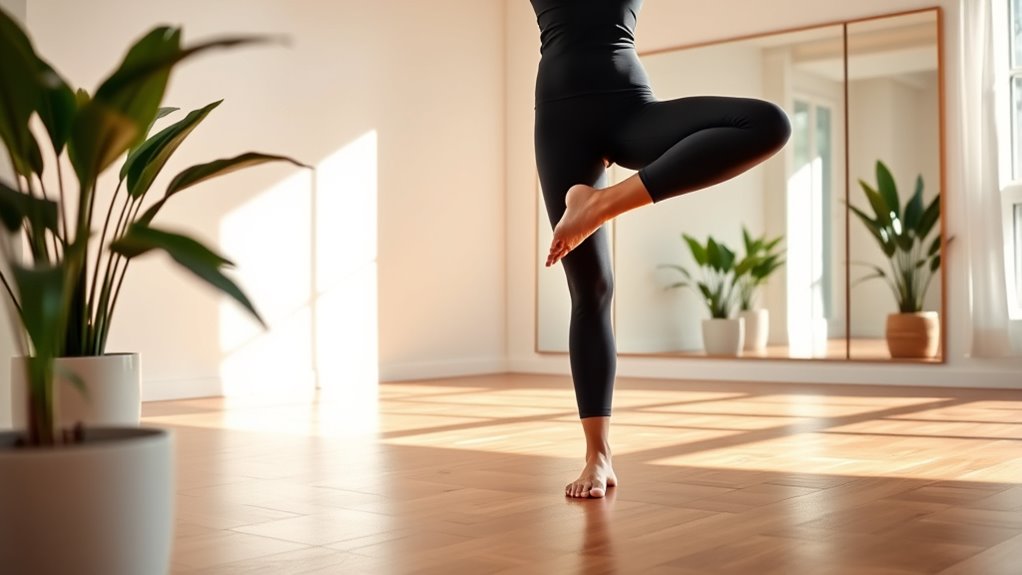
If you’ve ever found yourself wobbling during a yoga pose, you’re not alone. Many practitioners struggle with balance, especially when they’re just starting out. The good news is that you can improve your stability through focused practice. One of the key components to better balance in yoga is developing your core strength. When your core is strong, it acts like a sturdy foundation, helping you maintain your center of gravity.
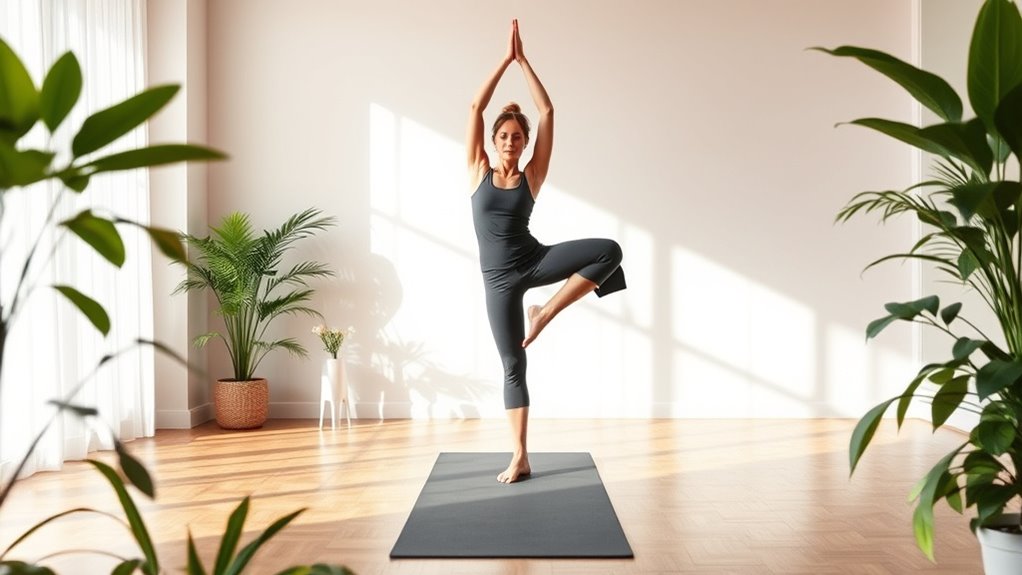
Start by incorporating poses that specifically target your abdominal muscles. Planks, boat poses, and even simple standing poses like tree pose can help you engage your core effectively. While you’re in these poses, pay attention to your breathing techniques. Inhale deeply through your nose, filling your lungs, and then exhale slowly. This not only calms your mind but also helps you control your movements, making it easier to stay steady. As you breathe, visualize your core tightening, almost like pulling your belly button toward your spine. This mental image can enhance your focus and connection to your body.
Incorporate core-targeting poses and mindful breathing to enhance your stability and connection in yoga practice.
Next, practice poses that challenge your balance while requiring core engagement. Warrior III, for example, demands both strength and stability. As you lift one leg behind you and reach your arms forward, concentrate on your core. Keep your gaze fixed on a point ahead to minimize distractions. It might feel wobbly at first, but with each attempt, you’ll find yourself improving. Remember that balance is a skill that develops over time. Be patient with yourself and trust the process.
Additionally, don’t underestimate the power of breath in enhancing balance. When you focus on your breathing, you create a rhythm that can ground you. In challenging poses, when you feel your body shifting, deep breaths can help you regain control. Try to inhale as you prepare for a pose and exhale as you move into it. This synchronization between breath and movement can make a world of difference. Incorporating outdoor elements into your practice, like practicing yoga near a pool or garden, can also enhance your focus and tranquility.
Finally, integrate balance training into your daily routine. Practice standing on one leg while brushing your teeth or waiting for your coffee to brew. These small moments can build your strength and confidence. Remember, it’s not just about the poses; it’s about how you engage your body and breath. With dedicated practice, you’ll notice significant improvements in your balance, making your yoga journey even more rewarding.

Gaiam Yoga Block – Supportive Latex-Free Eva Foam – Soft Non-Slip Surface with Beveled Edges for Yoga, Pilates, Meditation – Yoga Accessories for Stability, Balance, Deepen Stretches
- Enhances Stability and Balance: Supports optimal alignment and deeper poses
- Durable Latex-Free Foam: Lightweight, supportive, with non-slip surface
- Beveled Edges for Grip: Easy to grip and handle
As an affiliate, we earn on qualifying purchases.
As an affiliate, we earn on qualifying purchases.
Frequently Asked Questions
Can Yoga Help With Improving Athletic Performance?
Yes, yoga can definitely enhance your athletic performance. It improves your cardiovascular health by increasing blood flow and oxygen delivery to your muscles. You’ll also find that yoga enhances your mental well-being, helping you focus and manage stress. This mental clarity translates into better performance during training and competition. Incorporating yoga into your routine allows you to build strength, flexibility, and endurance, giving you that edge you need to excel in your sport.
What Are the Best Yoga Poses for Beginners?
For beginners, some of the best yoga poses include Mountain Pose, Downward-Facing Dog, and Child’s Pose. As you flow through these poses, you’ll find that breathing techniques can help you stay centered. Combine them with meditation practices to deepen your experience. You might even feel a sense of calm wash over you, reminding you that each breath connects you to the moment. Embrace the journey, and watch your confidence grow!
How Often Should I Practice Yoga for Balance?
You should practice yoga at least three to four times a week for ideal balance improvement. Consistency is key, so try to incorporate a mix of poses targeting stability and strength. Even short sessions can be effective, so don’t worry if you’re short on time. Listen to your body, and adjust your yoga frequency as needed. Over time, you’ll notice significant enhancements in your balance and overall well-being.
Is It Safe to Practice Yoga With Injuries?
Yes, it can be safe to practice yoga with injuries, but you need to approach it carefully. Focus on injury management and listen to your body. Use modifications for injuries to avoid exacerbating your condition. Consider gentle poses that promote healing rather than strain. Consulting a qualified instructor can help you find the right adjustments. Always prioritize your safety and comfort while practicing, so you can enjoy the benefits of yoga without risking further injury.
What Should I Wear for a Yoga Session?
Think of your yoga attire as your second skin, embracing you while you flow. For a yoga session, choose appropriate clothing that’s comfortable and flexible, like fitted leggings or shorts and a breathable top. Avoid anything too loose that might distract you during poses. Remember, the right yoga attire not only helps with your movements but also keeps you cool and focused, allowing you to fully immerse yourself in your practice.

Trideer Stretching Strap Yoga Strap Physical Therapy for Home Workout, Exercise, Pilates and Gymnastics, 10 Loops Non-Elastic Stretch Bands with Aesthetic Packaging for Women & Men (Black)
- Home Physical Therapy Aid: Supports knee, hip, and leg mobility
- Non-Elastic for Safety: Provides steady, rebound-free stretches
- Multiple Loops for Ease: Adjusts stretch depth and tracks progress
As an affiliate, we earn on qualifying purchases.
As an affiliate, we earn on qualifying purchases.
Conclusion
So, if you’re still wobbling like a newborn giraffe on roller skates, it’s time to hit the mat! Embrace those tree poses and warrior stances, and soon enough, you’ll be balancing like a tightrope walker at a circus. Remember, yoga isn’t just about flexibility; it’s about mastering the art of not toppling over at the most inconvenient moments. So, channel your inner flamingo and let’s get that balance game strong—after all, nobody wants to be the star of a yoga fall montage!

Retrospec Sedona Meditation Cushion, Buckwheat Pillow, Meditation Pillow
- Natural Buckwheat Filling: Supports spine and hips during meditation
- Customizable Firmness: Unzip to add or remove hulls
- Eco-Friendly Cotton Cover: Machine washable and microplastic-free
As an affiliate, we earn on qualifying purchases.
As an affiliate, we earn on qualifying purchases.

Amazon Basics 1/2 Inch Extra Thick Exercise Yoga Mat with Carrying Strap for Home Workouts and Fitness, 74" x 24", Black
- Extra Thick Cushioning: 1/2 inch padded support
- Textured Surface: Enhanced traction for stability
- Durable Foam Material: Flexible and resilient for repeated use
As an affiliate, we earn on qualifying purchases.
As an affiliate, we earn on qualifying purchases.