
To improve your swimming breathing technique, focus on timing your breaths with your head’s turn to the side. Keep your head movement quick and low, ensuring your mouth clears the water for inhalation. Practice bilateral breathing to enhance balance and streamline your stroke. Count strokes between breaths to build consistency and confidence, gradually reducing your breath frequency. Stay relaxed to avoid tension and shallow breathing. You’ll discover even more strategies that can elevate your performance.
Key Takeaways
- Practice bilateral breathing to improve balance and symmetry in your strokes, making breathing more efficient.
- Focus on inhaling quickly as you turn your head to the side, keeping movements minimal to maintain momentum.
- Count strokes between breaths to build consistency and gradually increase the number of strokes to enhance endurance.
- Use snorkels during training to concentrate on stroke technique without the distraction of head turning for breaths.
- Stay relaxed and calm while swimming to promote deeper breathing and better oxygen intake for improved performance.
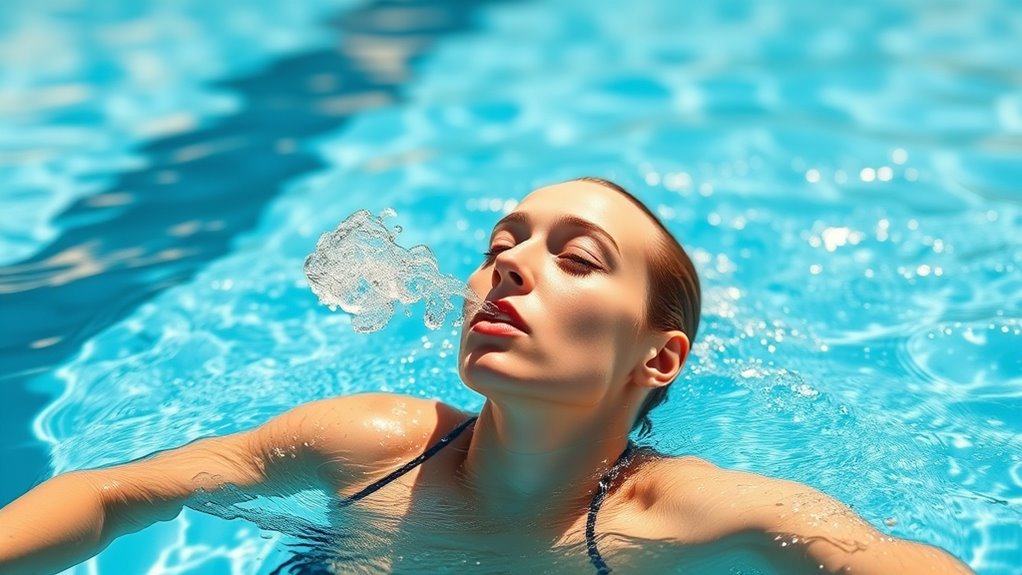
Mastering your breathing technique can considerably enhance your swimming performance. The way you manage your breath directly affects your speed, endurance, and overall efficiency in the water. To swim effectively, you need to develop solid breath control and hone your inhalation timing. This isn’t just about taking a breath; it’s about timing your breaths so they seamlessly integrate into your strokes.
Start by focusing on your breath control. When you swim, it’s essential to maintain a steady rhythm, and your breathing should match that tempo. If you’re gasping for air, you’re disrupting your stroke and wasting energy. Practice inhaling deeply before you start your stroke, allowing yourself to fill your lungs fully. This will provide you with more oxygen, helping you swim longer distances without fatigue.
Focus on breath control to maintain a steady rhythm and enhance your swimming efficiency. Deep inhalations will fuel longer distances without fatigue.
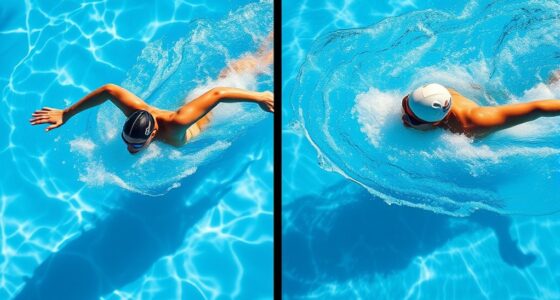
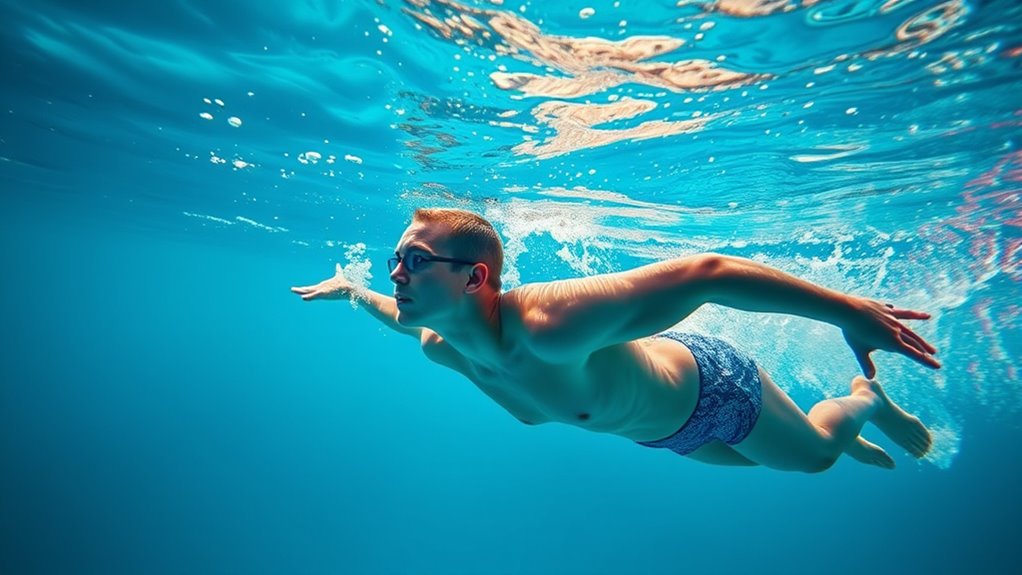
Inhalation timing is equally vital. You want to breathe just as your head turns to the side, allowing for a quick and efficient breath. Don’t lift your head out of the water too high; that’ll cause your body to drop, creating drag. Instead, think of it as a quick turn of your head, just enough to allow your mouth to clear the water’s surface. As you inhale, keep your body streamlined. This keeps your momentum and helps maintain your speed.
Another effective way to improve your breath control is through consistent practice. Try swimming laps focusing solely on your breathing technique. Count the strokes between breaths, gradually increasing the number as you become more comfortable. This helps your body adapt to the demands of breath control while swimming. As you gain confidence, you’ll notice you can take fewer breaths without compromising your performance.
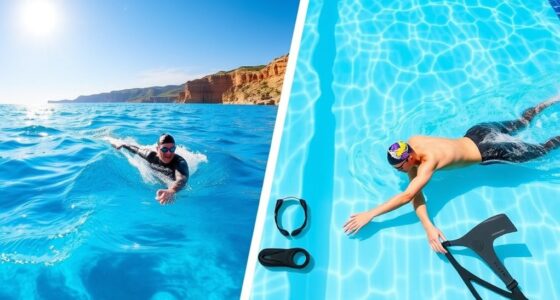
Incorporate drills into your routine to enhance your inhalation timing. For example, practice bilateral breathing, where you alternate sides for your breaths. This not only improves your timing but also promotes balance in your stroke. If you find yourself struggling with breath control, consider using a snorkel during practice. This allows you to focus on your stroke technique without worrying about turning your head to breathe.
Finally, don’t forget the importance of relaxation. The more relaxed you are in the water, the easier it’ll be to control your breath. Tension can lead to shallow breathing, which decreases your performance. As you swim, remind yourself to stay calm and focus on smooth, controlled breaths. By honing in on these techniques, you’ll notice significant improvements in your swimming efficiency and stamina. Additionally, consider using eco-friendly natural pools as they can contribute to a more enjoyable swimming experience in a sustainable environment.
Amazon Product B07K521B4L
As an affiliate, we earn on qualifying purchases.
Frequently Asked Questions
How Can I Reduce Anxiety While Swimming and Breathing?
To reduce anxiety while swimming and breathing, practice mindfulness exercises before you hit the water. Focus on your breath, feeling each inhale and exhale. Incorporate relaxation techniques, like progressive muscle relaxation, to ease tension. Visualize calmness as you swim; picture yourself gliding smoothly through the water. When you feel anxious, take a moment to pause, refocus on your breath, and remind yourself that you’re in control. Enjoy the moment!
What Are Common Mistakes to Avoid in Breathing Techniques?
“You can’t teach an old dog new tricks,” but you can improve your breathing technique! Common mistakes to avoid include losing your breathing rhythm and not timing your inhalation properly. Many swimmers hold their breath or inhale too late, which disrupts their stroke. Focus on exhaling fully before your next breath, and practice coordinating your inhalation with your stroke for a smoother experience. Avoiding these pitfalls will enhance your swimming confidence!
Can Yoga Help Improve My Swimming Breathing?
Yes, yoga can definitely help improve your swimming breathing. By practicing yoga breathing techniques, you’ll learn diaphragmatic breathing, which enhances your lung capacity and breath control. This method encourages deep, controlled breaths, allowing you to stay calm and focused in the water. As you incorporate these techniques into your routine, you’ll notice better air management while swimming, leading to improved endurance and overall performance in the pool.
How Does My Body Position Affect My Breathing While Swimming?
Your body position considerably impacts your breathing while swimming. When your body alignment is streamlined, you reduce drag, making it easier to breathe. If your head position is too high or low, it can strain your neck and disrupt your rhythm, causing you to take shallow breaths. Keeping your head in line with your spine helps maintain a relaxed posture, allowing you to inhale deeply and exhale effectively while you swim.
Are There Specific Drills for Enhancing Breathing Efficiency?
Yes, there are specific drills to enhance your breathing efficiency. Focus on inhalation exercises that help you establish a consistent breathing rhythm. Practice side breathing drills, where you alternate between strokes, allowing you to time your breaths with your strokes. You can also use a snorkel to concentrate on your body position and technique without worrying about when to breathe. These drills will improve your comfort and effectiveness in the water.

Birdz Eyewear Oriole Padded Motorcycle Riding Sunglasses Gloss Black Frame with Red G-Tech Reflective Lenses
UV400 red G-Tech reflective lenses block 100 percent of harmful UVA and UVB rays for complete eye protection.
As an affiliate, we earn on qualifying purchases.
Conclusion
Incorporating these breathing techniques into your swimming routine will help you glide through the water like a dolphin in a high-tech underwater city. Remember to practice regularly, maintain a relaxed posture, and keep your focus on your breath. With time, you’ll find that your stamina and efficiency improve, making your swims more enjoyable. So, take a deep breath and plunge in—you’re on your way to mastering the art of swimming breathing!

BMW MOTORSPORT Sunglasses BS0024, Black, 66 Man, Black
matte black / smoke polarized
As an affiliate, we earn on qualifying purchases.

ROCKBROS Polarized Sports Sunglasses Men Women - UV400 Protection Goggle with Myopia Frame for Running Cycling Driving
100% UV400 lens protection blocks 100% of UVA/UVB rays
As an affiliate, we earn on qualifying purchases.