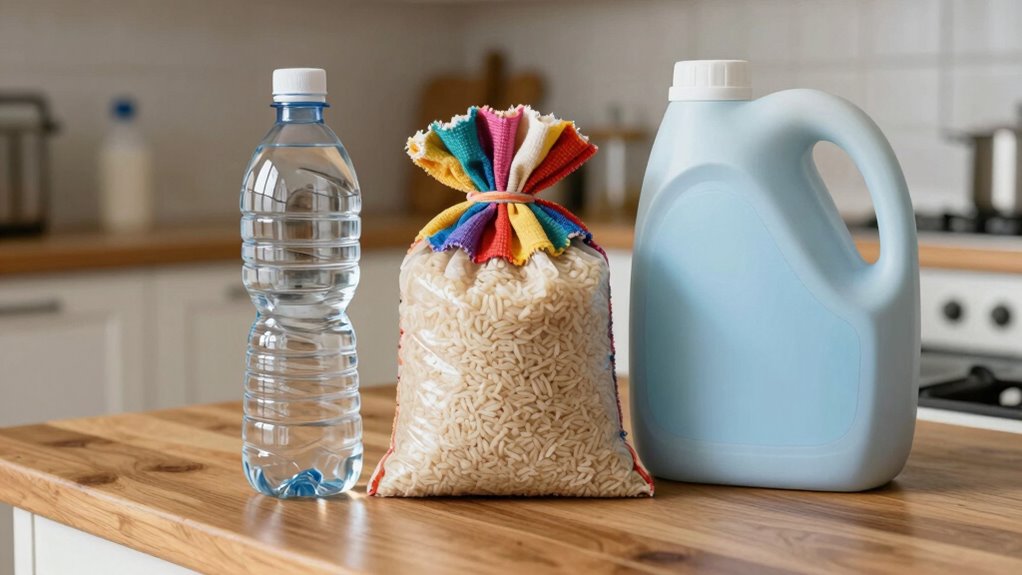
To improvise weights at home, choose stable, easy-to-hold household items like water bottles, canned goods, or filled backpacks. Make certain these objects are balanced and won’t slip or break during your workout. Wrap fragile items in cloth for safety, and test their weight beforehand. Focus on proper grip and technique to avoid injury, and use ergonomic principles to increase comfort. Keep exploring for more tips to create safe, effective DIY weights for your routine.

Get workout gear delivered free — and shop member deals
- Fast, free delivery on millions of items
- Access to Prime Big Deal Days deals on October 6–7
- Prime Video, Amazon Music and more included
Key Takeaways
- Use filled water bottles or canned goods for lightweight, manageable resistance.
- Wrap fragile items like glass jars in towels to prevent breakage and ensure safety.
- Choose sturdy household objects, such as backpacks filled with books or bags of rice, for heavier resistance.
- Test the weight and balance of items before exercising to ensure stability and safety.
- Prioritize objects with secure grips and proper weight distribution to maintain control during workouts.
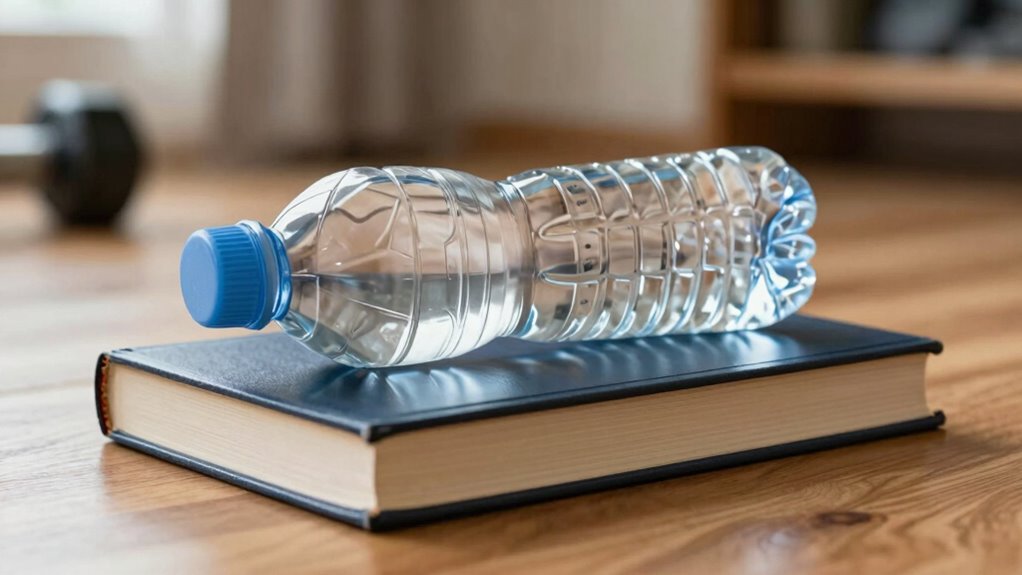
When you don’t have access to traditional weights, improvising with household items can be a practical solution to keep up with your workout routine. However, exercise safety should always come first. Before you start lifting, make sure your improvised weights are stable and won’t slip or break during your exercises. Using items that are too fragile or unstable can lead to injury, so opt for sturdy objects and test their weight and balance beforehand. This way, you minimize risk and guarantee your workout remains safe and effective.
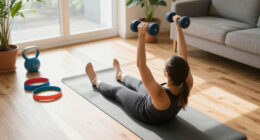
Creativity is key when finding household items to serve as weights. Think beyond the usual dumbbells—consider filled water bottles, canned goods, or bags of rice or beans. These items are often heavy enough for various exercises and are easy to grip. For example, a filled water jug can mimic a kettlebell or a dumbbell, while canned food can serve as light weights for arm curls. You can also use heavy textbooks or backpacks filled with books for added resistance. The goal is to select objects that are manageable to hold, evenly weighted, and won’t cause damage when dropped. Additionally, proper weight distribution is important to maintain balance and control during your exercises, which can help prevent strain or injury. Research indicates that ergonomic principles can significantly improve your safety and comfort during improvised workouts, making your exercise routine more effective and sustainable.
When choosing household items, consider their weight and shape. Avoid items that are awkward to grip or could cause strain, like fragile glass jars or items with sharp edges. Wrap fragile items in a towel or cloth to protect your hands and reduce the risk of breakage. If you’re working on upper body strength, focus on objects that allow a secure grip—small bottles, bags with handles, or even household tools like a sturdy broomstick with weights attached. For lower body exercises, use heavier, stable objects that won’t shift or topple easily, like filled laundry baskets or large water bottles. Additionally, understanding proper lifting techniques can help prevent injuries when working with improvised weights. Incorporating ergonomic principles into your lifting can significantly reduce the risk of muscle strain or joint issues.
DIY household weights for exercise
As an affiliate, we earn on qualifying purchases.
As an affiliate, we earn on qualifying purchases.
Frequently Asked Questions
Are Homemade Weights Safe for Intense Workouts?
Homemade weights can be safe for intense workouts if you take proper precautions. DIY kettlebells and household dumbbells made from sturdy, non-toxic materials can work well, but guarantee they’re well-constructed and balanced to prevent injury. Avoid using items that might break or spill. Always test your improvised weights gently before heavy use, and listen to your body. For high-impact training, consider investing in professionally made equipment for added safety.
How Do I Avoid Injury Using Improvised Weights?
Did you know that improper lifting causes over 30% of workout injuries? To avoid injury with improvised weights, always focus on proper grip and safe lifting techniques. Keep your movements controlled, avoid sudden jerks, and make sure your grip is firm but comfortable. Start with lighter weights, listen to your body, and don’t push through pain. This way, you minimize injury risk and stay safe while exercising at home.
Can Household Items Replace All Gym Weights?
Household items can replace gym weights for DIY resistance, but they might not be a perfect substitute for all exercises. While you can use water bottles, canned goods, or bags of rice for light resistance, they often lack the precise weight control and stability of gym equipment. For complete workouts, household alternatives work best for beginners or as a temporary solution, but for serious training, investing in proper weights is recommended.
What’s the Best Way to Measure Weight for Accuracy?
When it comes to measuring weight accurately, precision is key. Think of calibration like fine-tuning a musical instrument—using calibration methods guarantees your digital scales give reliable readings. Always check your scales against a known weight, like a certified calibration weight or a household item of known mass. For the most accurate results, invest in a good-quality digital scale, and regularly recalibrate it to keep your measurements spot on.
How Often Should I Replace Homemade Weights?
You should replace your homemade weights whenever you notice signs of wear or inconsistency, ensuring accurate weight calibration. Regularly check their weight with a reliable scale, especially if you use them frequently. For creative alternatives, consider using sturdy household items like sealed water bottles or canned goods. Replacing them periodically keeps your workouts safe and effective, maintaining proper calibration and preventing potential accidents caused by weakened or damaged weights.
improvised workout weights water bottles
As an affiliate, we earn on qualifying purchases.
As an affiliate, we earn on qualifying purchases.
Conclusion
Now that you know how to turn everyday household items into weights, there’s no need to wait for a gym. With a little creativity, you can craft a workout that’s as effective as a Bach fugue—full of harmony and rhythm—right in your living room. Whether it’s water bottles or canned goods, you’ve got the tools to stay fit, no matter if you’re in the 21st century or the age of chivalry. Keep moving and stay strong!
canned goods for strength training
As an affiliate, we earn on qualifying purchases.
As an affiliate, we earn on qualifying purchases.
homemade dumbbells and kettlebells
As an affiliate, we earn on qualifying purchases.
As an affiliate, we earn on qualifying purchases.
Fall Picks
fall essentials
As an affiliate, we earn on qualifying purchases.