Training splits help you structure your workouts for efficiency and recovery. A full body routine targets all major muscle groups in each session and is great for beginners or those with limited time, typically done 2-3 times a week. On the other hand, the push/pull/legs (PPL) split allows for more focused sessions, ideal for advanced lifters aiming for hypertrophy with about 6 workouts a week. Discovering the right fit for you can maximize your gains and progress.
Key Takeaways
- Full body routines target all major muscle groups in each session, ideal for 2-3 workouts per week.
- Push/Pull/Legs (PPL) splits divide workouts into focused sessions, allowing for 6 workouts per week.
- Full body routines promote muscle recovery and are suitable for beginners or those with limited schedules.
- PPL splits enable more intense muscle targeting, making them better suited for hypertrophy and advanced lifters.
- Choosing between splits depends on individual fitness levels, goals, and availability for training sessions.

When you’re looking to optimize your workout routine, understanding training splits can make a significant difference. Training splits refer to how you divide your workout sessions throughout the week, and they play a vital role in improving exercise frequency and guaranteeing adequate muscle recovery. Two popular training splits are the full body routine and the push/pull/legs (PPL) split. Each has its benefits and suits different fitness goals and schedules.
In a full body routine, you target all major muscle groups in each workout session. This approach is great if you can only commit to training two or three times a week. By hitting all muscle groups in one session, you can effectively increase your overall exercise frequency, maximizing your time in the gym. This method also allows for more frequent muscle engagement, which helps stimulate growth and strength gains. However, since you’re working multiple muscle groups in one session, it’s essential to manage the volume and intensity to avoid overtraining and guarantee proper muscle recovery.
On the flip side, the push/pull/legs split breaks your workouts into three focused sessions: push exercises (like bench presses and shoulder presses), pull exercises (like rows and pull-ups), and leg exercises (like squats and deadlifts). This method typically allows you to train more frequently, as you can comfortably fit in six workouts per week. With PPL, each muscle group gets targeted more intensely, leading to better muscle hypertrophy. However, the downside is that it requires a greater time commitment, which might not work for everyone’s schedule.
Choosing between these two splits often depends on your fitness level, goals, and how many days you can realistically dedicate to the gym. If you’re a beginner or someone pressed for time, a full body routine might be ideal as it promotes muscle recovery while still providing a balanced approach. On the other hand, if you’re more advanced and can train regularly, the push/pull/legs split can offer you the intensity and focus needed to break through plateaus.
Ultimately, finding the right training split for you means considering your personal goals, recovery needs, and schedule. By understanding how each split impacts exercise frequency and muscle recovery, you can tailor your workouts for maximum effectiveness, guaranteeing that every session counts toward your fitness objectives. Additionally, using effective document management techniques can help you keep track of your training progress and optimize your routines over time.

111 Full Body Dumbbell Workouts Book for Men and Women: Big Guide with Easy-to-Follow 111 Dumbbell Workouts with Illustrated Exercise Images for Strength, Endurance & Fat Loss
As an affiliate, we earn on qualifying purchases.
As an affiliate, we earn on qualifying purchases.
Frequently Asked Questions
How Do I Choose Between Full Body and Push/Pull/Legs?
To choose between full body and push/pull/legs, consider your exercise intensity and recovery strategies. If you prefer shorter workouts and can handle higher intensity, full body might suit you. However, if you want to focus more on specific muscle groups and have adequate recovery time, push/pull/legs could be better. Think about your schedule, fitness goals, and how often you can train each week to make the best decision for your routine.
Can Beginners Use Push/Pull/Legs Training Splits?
Absolutely, beginners can use push/pull/legs training splits! This approach allows you to focus on different muscle groups while managing training intensity effectively. By splitting your workouts, you can target specific areas and still prioritize recovery strategies between sessions. Just be sure to listen to your body, adjust your intensity, and give yourself enough time to recover. With consistency and the right plan, you’ll see great progress in no time!
How Often Should I Train Each Muscle Group?
You should aim to train each muscle group about twice a week for essential results. I know you might worry about overtraining, but don’t forget that recovery time is vital for growth. By spacing out your workouts, you allow your muscles to repair while maximizing workout frequency. Picture yourself hitting the gym, feeling energized, and seeing progress. That balance between training hard and giving your body time to recover is key to your success.
What Are the Benefits of Full Body Workouts?
Full body workouts offer several benefits, including improved recovery efficiency and enhanced workout variety. You’re engaging multiple muscle groups in each session, which can boost your overall strength and endurance. Plus, with less frequent training sessions per week, your muscles get ample time to recover, reducing the risk of overtraining. This variety keeps your workouts interesting, helping you stay motivated and consistent in your fitness journey.
How Do I Adjust My Diet for Different Training Splits?
To adjust your diet for different training splits, focus on macronutrient timing. For full body workouts, prioritize protein and carbs around your sessions to fuel and recover. If you’re doing a push/pull/legs split, consider meal planning strategies that emphasize higher carbs on leg days for energy, while keeping protein intake consistent throughout the week. Don’t forget to hydrate and include healthy fats to support overall performance and recovery.
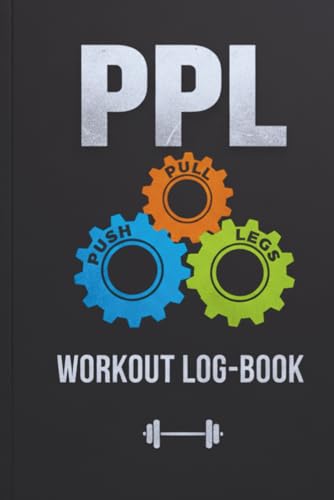
PPL Workout Log Book: 1-Year Push Pull Legs Gym Tracker: Track Workouts, Water Intake & Monthly Progress | Structured Planner for Strength Training and Consistency
As an affiliate, we earn on qualifying purchases.
As an affiliate, we earn on qualifying purchases.
Conclusion
In summary, choosing between a full body workout and a push/pull/legs split is like picking a route on a road trip; each path leads to your fitness destination but in different ways. If you crave variety and extensive strength development, the full body approach might suit you. However, if you prefer focused muscle work and recovery, the push/pull/legs split could be your best bet. Ultimately, it’s all about what fits your goals and lifestyle best.

TriggerPoint Grid 1.0 Foam Roller – 13" Multi-Density Massage Roller for Deep Tissue & Muscle Recovery – Relieves Tight, Sore Muscles & Kinks, Improves Mobility & Circulation – Targets Key Body Parts
- Enhances Muscle Recovery: Promotes tissue aeration and blood flow
- Comfortable Foam Construction: Distrodensity Zones for sore and soft tissues
- Customizable Massage Feel: Varying ridges and nodules for targeted relief
As an affiliate, we earn on qualifying purchases.
As an affiliate, we earn on qualifying purchases.

WHATAFIT Resistance Bands,Exercise Bands,Workout Bands with Handles,Door Anchor and Ankle Straps,5 Resistance Levels Fitness Bands,for Strength,Training, Physical Therapy, and Home Gym Equipment
- Five Resistance Levels: Includes 10-50 lbs bands for versatile training
- High-Quality Latex Material: Made from durable, elastic natural latex
- Secure Hardware and Handles: Steel carabiners, reinforced stitching, non-slip handles
As an affiliate, we earn on qualifying purchases.
As an affiliate, we earn on qualifying purchases.