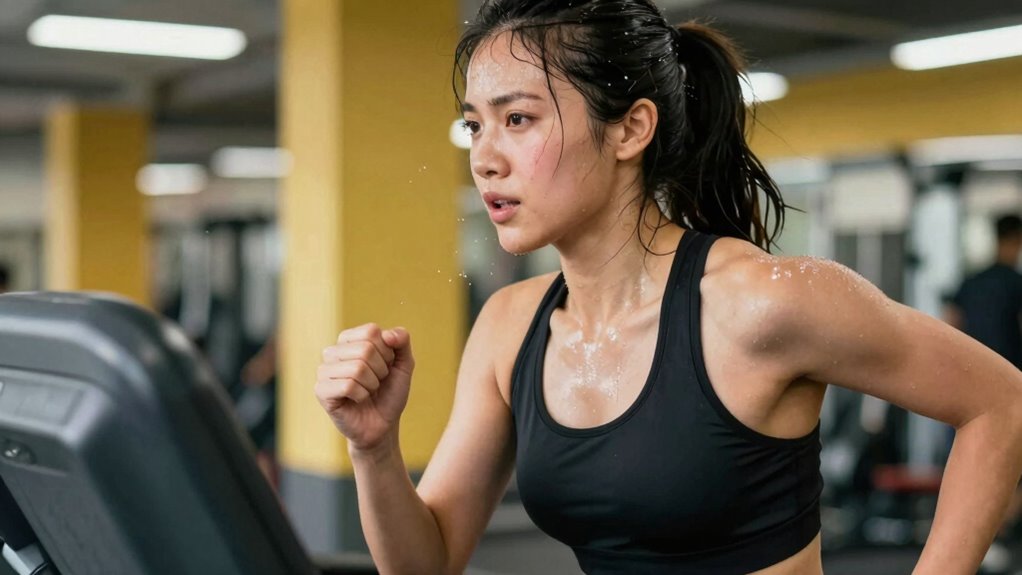
Sweating more during exercise indicates you’re working harder, but it doesn’t mean your workout is more effective. Your sweat level depends on effort, genetics, and environment, not just the quality of your cardio. High effort can lead to more sweat, but that doesn’t automatically translate to better results. To truly gauge your workout’s effectiveness, focus on your breathing, heart rate, and fatigue. Keep going, and you’ll discover ways to optimize your effort for real benefits.
Key Takeaways
- Sweating indicates effort but does not necessarily reflect workout effectiveness or calorie burn.
- External factors like environment and genetics influence sweat levels, making it an unreliable sole indicator.
- Effective cardio depends on effort, heart rate, and fatigue, not just the amount of sweat produced.
- Proper hydration is essential regardless of sweat amount to maintain performance and safety.
- Monitoring effort with tools like heart rate monitors offers a more accurate measure of workout quality.
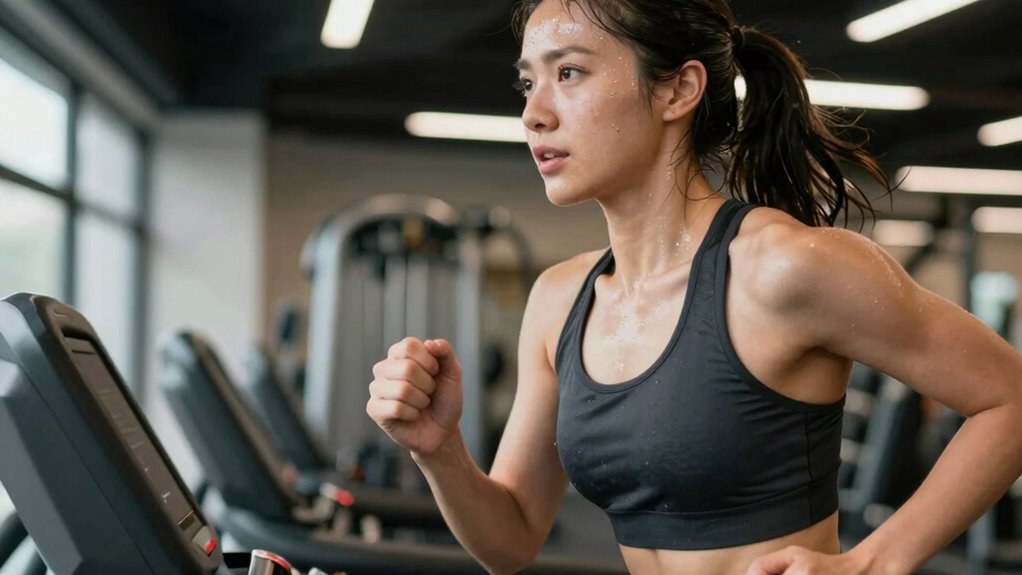
Have you ever wondered if sweating more during a workout means you’re getting a better cardio session? It’s a common assumption—after all, if you’re pouring sweat, you must be working hard, right? But the truth is, sweating alone doesn’t determine the quality or effectiveness of your workout. What really matters is your workout intensity and maintaining proper hydration.
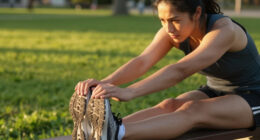
When you push yourself harder during exercise, your body produces more heat, and sweating is your body’s way of cooling down. This increased sweat rate signals that your workout is likely more intense, but it doesn’t automatically mean you’re burning more calories or improving your cardiovascular health. The key is to find the right balance of effort to challenge your heart without overexerting yourself. If you’re working at a moderate to high intensity, you’ll notice yourself sweating more, but it’s the effort behind that sweat that counts.
Sweating more indicates higher effort, but the quality of your workout depends on intensity, not sweat alone.
Hydration importance becomes clear here. When you sweat, you lose fluids, electrolytes, and minerals crucial for your overall health and workout performance. Staying properly hydrated helps regulate your body temperature, prevents dehydration, and keeps your muscles functioning efficiently. Without adequate hydration, you might feel fatigued, experience cramps, or even risk heat exhaustion—all of which can hamper your progress and safety during cardio sessions. Drinking water before, during, and after your workout helps replace lost fluids and keeps your sweat response effective.
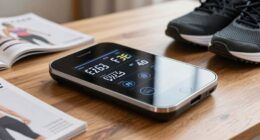
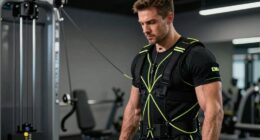
Additionally, factors like projector technology and environmental conditions can influence how much you sweat, regardless of your effort level. It’s tempting to judge your workout by how much you sweat, but that can be misleading. Some people sweat more due to genetics or environmental factors, not necessarily because they’re working harder. Conversely, some highly effective cardio sessions might produce minimal sweat if the environment is cool or if you’re naturally less prone to sweating. It’s also important to recognize that individual differences can impact how much you sweat during exercise, making sweat a less reliable indicator of workout intensity. Instead, focus on how your body feels—your breathing rate, heart rate, and muscle fatigue—rather than sweat alone. Using tools like a heart rate monitor can give you a more accurate picture of workout intensity and effectiveness.
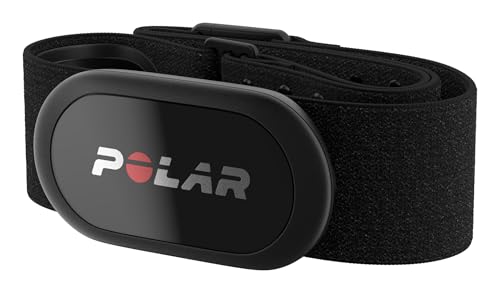
Polar H10 Heart Rate Monitor Chest Strap – ANT + Bluetooth, Waterproof HR Sensor for Men and Women, Black, M-XXL
- Compatibility: Works with all HRM-compatible devices
- Accuracy: Highly accurate heart rate measurement
- Connectivity: Bluetooth, ANT+, and 5 kHz support
As an affiliate, we earn on qualifying purchases.
As an affiliate, we earn on qualifying purchases.
Frequently Asked Questions
Can Dehydration Affect How Much I Sweat During Exercise?
Dehydration can substantially affect how much you sweat during exercise. When you’re dehydrated, your body struggles to regulate temperature, leading to reduced sweating and impaired electrolyte balance. This makes it harder to stay cool and maintain performance. To prevent this, use proper hydration strategies, like drinking fluids with electrolytes before, during, and after exercise. Staying hydrated helps your body sweat effectively, supports electrolyte balance, and keeps you performing at your best.
Does Climate Influence Sweating During Cardio Workouts?
Climate definitely influences sweating during cardio workouts. In hot or humid conditions, your body adapts through climate adaptation, increasing sweat production to regulate temperature. Conversely, in cooler environments, your sweat regulation decreases, making you sweat less. So, you might notice more sweating in summer or tropical climates, but less in winter or cooler areas. Adjust your hydration and intensity accordingly, based on how climate impacts your body’s sweat response.
Is Sweating More a Sign of Increased Calorie Burn?
Sweating more doesn’t necessarily mean you’re burning more calories. While increased sweat indicates your body is working hard, it’s mainly your metabolic rate and thermoregulation processes kicking in to cool you down. You might sweat heavily during a low-calorie workout if your body struggles to regulate temperature, but that doesn’t mean you’re burning more calories. Focus on workout intensity and consistency rather than sweat as the sole indicator of calorie burn.
Can Certain Medications Impact Sweating Levels?
Certain medications can impact your sweating levels due to their side effects on sweat regulation. Some drugs, like antidepressants and blood pressure medications, may cause increased sweating, while others might reduce it. You should be aware of these potential medication side effects, as they can influence your body’s natural sweat response. If you notice unusual sweating patterns, consult your healthcare provider to discuss possible adjustments or alternatives.
How Does Individual Fitness Level Affect Sweating Intensity?
Your fitness level directly influences sweating intensity through fitness adaptation and sweat regulation. As you become more conditioned, your body adapts to exercise, often sweating more efficiently to cool down. Beginners may sweat less initially, but over time, your sweat response improves. This doesn’t necessarily mean a better workout, but it shows your body’s ability to regulate temperature better, enabling you to exercise longer and more effectively.

Waterboy Workout Hydration, Variety Pack, Sugar Free Electrolytes 30ct
- High Electrolyte Content: Contains 2,960mg electrolytes per stick
- All-Natural & Dietary Friendly: Gluten-free, dairy-free, keto, vegan, non-GMO
- Sugar-Free & Low Calorie: 0 sugar, 10 calories per serving
As an affiliate, we earn on qualifying purchases.
As an affiliate, we earn on qualifying purchases.
Conclusion
Remember, sweating more doesn’t automatically mean a better workout—think of it like the age of chariots: it’s not just about speed but how you’re using your strength. Focus on your heart rate and how you feel during exercise, not just the number of sweat beads on your brow. So, channel your inner gladiator, stay consistent, and trust that true fitness is about effort, not just the sweat. Keep at it, and you’ll see results—no magic, just hard work!

WEGO Active Activity Tracker To Track Steps, Distance, and Activity, Also Includes Calorie Burn Calculation
- Calorie Burn Calculation: Tracks calories burned during activity
- Step and Distance Tracking: Monitors steps taken and distance traveled
- Activity Time Monitoring: Records duration of activity sessions
As an affiliate, we earn on qualifying purchases.
As an affiliate, we earn on qualifying purchases.

Steel Sweat Weight Lifting Belt for Women – 6 inch Flexible Lightweight Contoured Belt – Best for Gym, Exercise, Workout, Training, Weightlifting Columba Pink XS
- Contoured Fit with Velcro: Secure and comfortable fit for better tension
- Easy Adjustment Buckle: Quickly tighten or loosen during workouts
- Flexible Support Design: 6-inch foam core with nylon exterior for stability
As an affiliate, we earn on qualifying purchases.
As an affiliate, we earn on qualifying purchases.