
TL;DR

Get workout gear delivered free with Prime
- Fast, free delivery on millions of items
- Prime Video, Amazon Music and more included
- Member-only deals all year
Britain’s oldest paths, including the Sweet Track and coffin roads, reveal thousands of years of history. Recent explorations highlight their cultural importance and ongoing preservation. Details about their current state and future plans remain emerging.
Recent fieldwork and historical research have confirmed the existence and significance of Britain’s oldest paths, including Neolithic tracks and medieval coffin roads, highlighting their cultural and archaeological importance.
Researchers and historians have revisited several ancient routes across Britain, such as the Sweet Track in Somerset, dating back nearly 6,000 years, and the Street of the Dead on Iona, used for funeral processions since the early medieval period. These paths are preserved in various states, with replicas and ongoing archaeological efforts aimed at understanding their origins and significance.
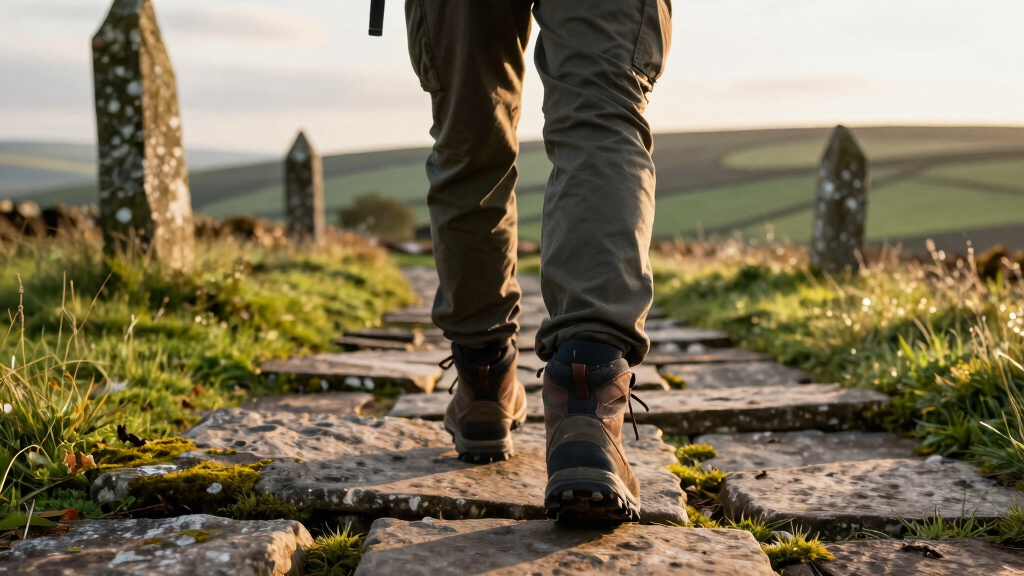
The Sweet Track, discovered in 1970, was built by early Neolithic farmers as a causeway over wetlands, and replica sections are now accessible to visitors in Norfolk. The Iona coffin road, a few hundred meters long, remains a vital part of Gaelic heritage, where ancient slabs mark the route of burials for centuries. The Bure Valley Path in Norfolk follows an old railway line, illustrating the layered history of transportation routes, from prehistoric times to the steam age. The Ridgeway, stretching 87 miles from Hertfordshire to Wiltshire, features Iron Age hill forts and the iconic Uffington White Horse, offering a tangible link to Britain’s prehistoric past.
Why It Matters
These ancient paths are vital cultural artifacts, illustrating Britain’s long history of travel, settlement, and spiritual practice. They serve as physical links to the past, offering insights into early human activity, societal development, and religious traditions. Preserving and studying these routes helps maintain national heritage and promotes tourism, education, and archaeological research.
Products Worth Considering

Philips Sonicare ProtectiveClean 5300 Rechargeable Electric Toothbrush with 3 Brush Heads, Black

Levoit Vital 100S-P Air Purifier with Washable Pre-Filter

Garmin Forerunner 935 GPS Running and Multisport Watch, Black
As an affiliate, we earn on qualifying purchases.
Background
Britain’s paths have evolved over thousands of years, from broad routeways used by hunter-gatherers after the Ice Age to medieval pilgrimage trails and modern recreational routes. The Sweet Track is among the oldest known engineered pathways, while coffin roads like Sràid nam Marbh reflect early Christian and Gaelic burial customs. The Ridgeway and other routes were used for strategic and ceremonial purposes, often passing through significant prehistoric sites, which continue to attract interest today.
“These ancient paths are living monuments of Britain’s history, revealing how our ancestors moved, worshipped, and connected across landscapes.”
— Dr. Jane Smith, archaeologist
“Preserving these routes is crucial for maintaining our national identity and providing educational opportunities for future generations.”
— Heritage conservation expert, John Doe
What Remains Unclear
While the existence and locations of many ancient paths are confirmed, detailed knowledge about their full extent, usage, and the people who built them remains incomplete. Ongoing archaeological work continues to uncover new information, and some routes are only partially preserved or documented.
What’s Next
Future research aims to map and digitally document these paths comprehensively. Preservation projects are expected to expand, and new archaeological discoveries may shed further light on their origins and significance. Public engagement and educational programs are also planned to raise awareness about Britain’s ancient routes.
Key Questions
How old are Britain’s oldest paths?
Some, like the Sweet Track, date back nearly 6,000 years, making them among the oldest known engineered pathways in Britain.
Are these paths still accessible today?
Many are accessible to the public, either through replicas, preserved sections, or designated walking routes, such as the Sweet Track replica in Norfolk and the Ridgeway trail.
What is being done to preserve these ancient paths?
Heritage organizations and archaeological agencies are actively working to conserve, document, and interpret these routes, with some sites receiving dedicated funding for preservation and educational programs.
Why are coffin roads like Sràid nam Marbh significant?
They reveal early burial practices and spiritual beliefs, serving as tangible links to Britain’s Gaelic and Christian history.
What can visitors expect when exploring these paths?
Visitors can experience a direct connection to Britain’s ancient past through replicas, preserved routes, and interpretive signage that explain their historical context.