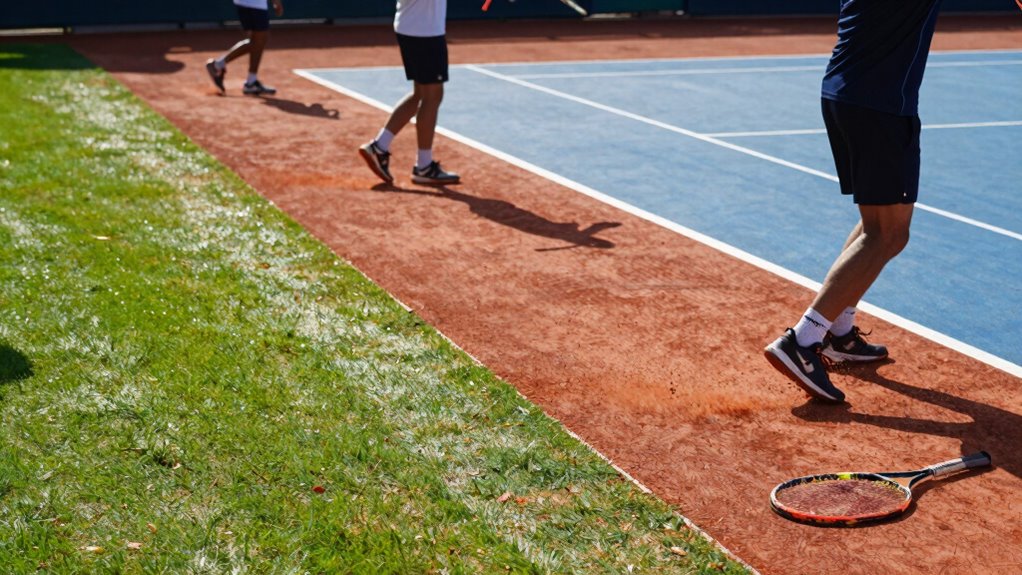

On clay, you’ll see longer rallies, slower ball bounce, and more sliding, which tests your endurance and patience. Grass courts favor quick, aggressive points with faster play, encouraging sharp volleys and swift movement. Hard courts promote resilience and powerful shots, leading to high-impact rallies. Each surface requires different strategies, equipment, and adaptation. Understanding these differences will help you improve your game and fully appreciate how surface changes can reshape tennis play—exploring these nuances further can elevate your skills.
Key Takeaways
- Surface type influences gameplay pace, with clay favoring long rallies, grass enabling quick points, and hard courts supporting aggressive play.
- Player endurance and movement strategies vary, requiring adaptation to each surface’s unique bounce and speed.
- Equipment wear differs: clay accelerates shoe and racket wear, grass affects slipping and shoe grip, hard courts cause impact stress.
- Maintenance quality impacts safety, with well-kept courts ensuring fair play and reducing injury risks across surfaces.
- Match duration and physical demands fluctuate, with clay demanding stamina, grass favoring agility, and hard courts emphasizing resilience.
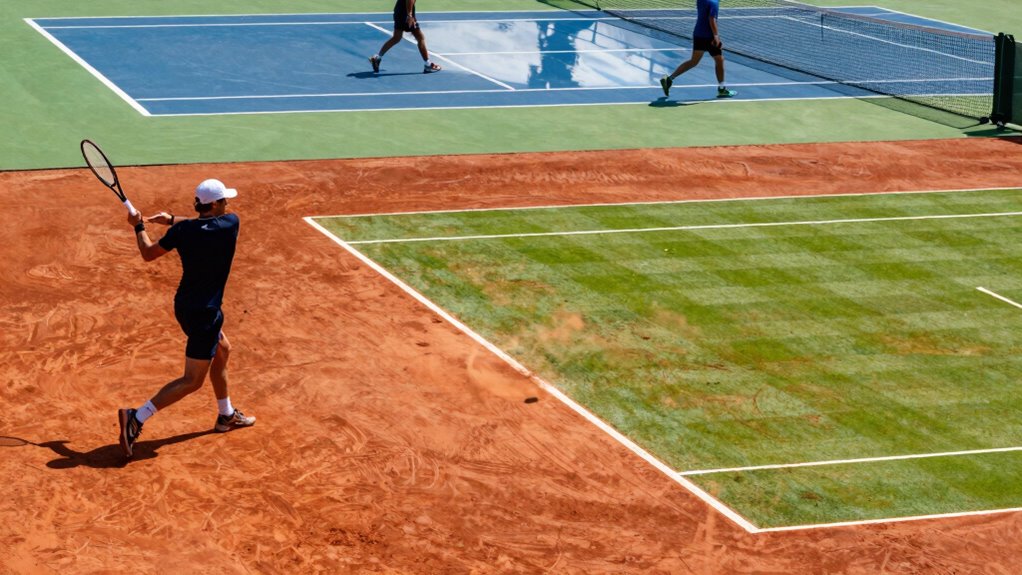
Have you ever wondered how different tennis courts impact the game? The surface you play on can dramatically change not only the style of play but also how you prepare and adapt. On clay courts, players often find that the game demands more from their endurance. The slower surface causes longer rallies, meaning you need stamina to keep up with extended points and recover quickly between shots. You might notice that matches last longer on clay because the ball bounces higher and slows down, requiring you to stay focused and energetic throughout. This continuous movement and extended play test your endurance more than faster surfaces do. Plus, the constant sliding and digging into the surface can take a toll on your body over time, making physical conditioning essential. Additionally, the surface composition of clay courts influences ball behavior and player movement, further impacting gameplay. Proper surface maintenance also plays a crucial role in how the game unfolds on different courts, affecting surface consistency and safety. A well-maintained surface can reduce the risk of injuries and ensure fair play for all participants.
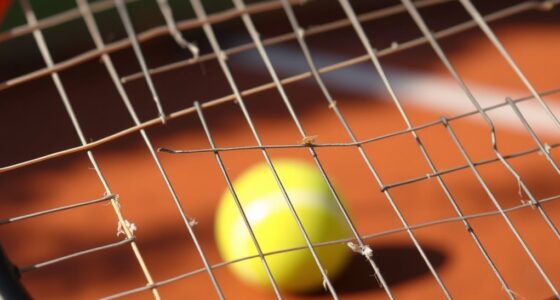
The type of court also influences equipment durability. On clay, your shoes tend to wear down faster because of the gritty, loose surface. You need shoes with good grip and support to prevent slipping and to withstand the abrasive texture. Rackets and strings can also face more wear and tear, especially if you’re smashing the ball repeatedly against the rough surface. Conversely, grass courts tend to be gentler on your equipment because the softer surface causes less abrasion. Still, the unevenness and moisture can lead to slipping, so selecting the right shoes with sturdy soles is vital. On hard courts, the surface is much more abrasive and unforgiving, which can accelerate wear on your shoes and strings. Hard courts demand durable equipment to withstand the constant impact and friction, especially if you play frequently. Surface durability is a key consideration for players who want to prolong the lifespan of their gear.
Playing on each surface requires different strategies and equipment considerations. Clay courts slow down the game, favoring baseline players who excel in endurance and patience, while grass courts favor quick, aggressive play due to their faster pace. Hard courts strike a balance but still demand durability from your gear and stamina from your body. You’ll find yourself adjusting your movement, shot selection, and even your maintenance routine depending on where you play. If you’re serious about the game, understanding these differences helps you prepare better—whether it’s improving your fitness for longer rallies on clay or choosing the right shoes for grass or hard courts. Each surface challenges you in unique ways, making you a more adaptable and well-rounded player.
best tennis shoes for clay courts
As an affiliate, we earn on qualifying purchases.
As an affiliate, we earn on qualifying purchases.
Frequently Asked Questions
How Does Weather Affect Each Court Surface’s Playability?
Weather impact markedly influences each court surface’s playability. Rain makes clay and grass courts slippery, reducing surface durability and increasing the risk of slipping. Hard courts are less affected but can become slick if wet. Hot, dry weather can cause clay to dry out and crack, impacting play and surface durability. Overall, weather conditions directly affect how each surface performs, altering game speed, bounce, and player safety.
Which Court Surface Causes the Most Injuries?
Hard courts tend to cause the most injuries because their rigid surface can put extra strain on your joints and muscles. To promote injury prevention and enhance player durability, it’s essential to wear proper footwear and incorporate strength training into your routine. Staying aware of your body’s signals and allowing adequate rest also help you stay healthy, especially when playing on the hard court, which is less forgiving than clay or grass.
How Do Court Surfaces Influence Player Strategies?
Oh, the subtle art of deception—your court surface influences your strategy more than you’d like to admit. On clay, you’ll rely on patient rallying and slide-friendly player movement, exploiting surface traction for spin. Grass demands quick, low-bouncing shots, forcing aggressive net play. Hard courts encourage powerful, flat shots, emphasizing your aggressive baseline game. Each surface’s unique grip shapes your tactics, making tennis a game of adaptation and cunning.
Are Certain Courts More Suitable for Beginners?
Yes, some courts are more suitable for beginners. Hard courts often provide consistent bounce and require less court maintenance, making them ideal for newbies. Grass courts may be less forgiving, demanding quick player adaptability due to faster play. Clay courts, while slower, help beginners develop patience and shot accuracy. Your choice depends on your comfort with court maintenance and your ability to adapt to different playing surfaces.
How Do Court Surfaces Impact Ball Bounce Consistency?
You might think all courts offer similar ball bounce, but surface texture heavily influences it. On hard courts, the ball bounce is consistent and predictable, helping your timing. Grass courts have a low, uneven ball bounce, which can throw you off. Clay courts slow the ball and create a higher, more variable bounce. Knowing how surface texture impacts ball bounce lets you adjust your game and stay competitive.
As an affiliate, we earn on qualifying purchases.
Conclusion
No matter which court you step onto—whether it’s the slow, gritty embrace of clay, the lush, unpredictable bounce of grass, or the firm, relentless surface of hard court—you’re stepping into a different story. Each surface challenges your skills and sharpens your instincts, like a sculptor shaping your game. Embrace the unique rhythm of each, and you’ll find yourself dancing across the court, adapting, evolving, and truly becoming a player in every sense.
non-slip tennis shoes for grass courts
As an affiliate, we earn on qualifying purchases.
As an affiliate, we earn on qualifying purchases.
As an affiliate, we earn on qualifying purchases.