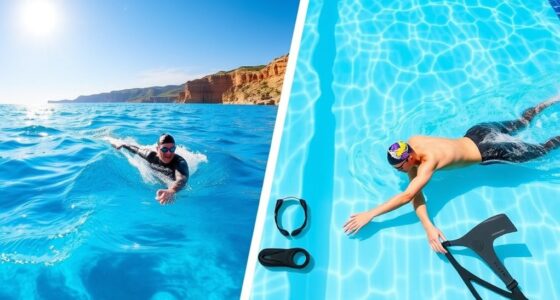

When choosing a wetsuit for open water swimming, make certain it fits snugly without restricting movement, especially around shoulders, chest, and hips. Pick a suit with the right thickness for the water temperature—thinner for warm water, thicker for colder conditions—and look for flexibility and durability features like stretch panels and strong seams. Proper sizing and a good fit boost performance, comfort, and warmth. Keep these tips in mind, and you’ll find the perfect suit to enhance your swim.

Get workout gear delivered free with Prime
- Fast, free delivery on millions of items
- Prime Video, Amazon Music and more included
- Member-only deals all year
Key Takeaways
- Ensure the wetsuit fits snugly without restricting movement, especially around shoulders, chest, and hips.
- Select thickness based on water temperature: thinner for warm water, thicker for cold conditions.
- Prioritize flexibility features like stretch panels for unrestricted arm and leg movement.
- Consider durability and seam quality for longevity in regular or rough use.
- Try different brands and sizes to find the best contour for optimal hydrodynamic performance.
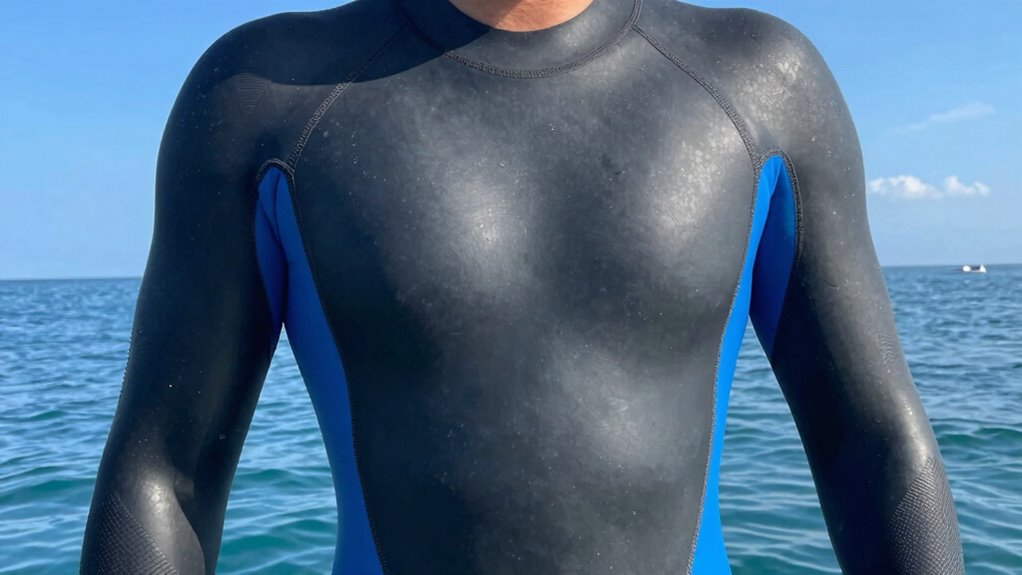
Choosing a wetsuit is essential for open water swimming, especially since conditions can vary greatly. A well-fitting wetsuit enhances your performance and comfort, making your swim safer and more enjoyable. One of the most critical factors to consider is the hydrodynamic fit. A wetsuit that hugs your body snugly reduces drag and allows you to glide through the water efficiently. If your wetsuit is too loose, water can seep in, increasing resistance and slowing you down. Conversely, if it’s too tight, it can restrict your movement and cause discomfort. To find the perfect fit, try different brands and sizes, paying close attention to how the suit contours to your body, especially around your shoulders, chest, and hips. Remember, a proper hydrodynamic fit isn’t just about size; it’s about how well the suit moves with you during your swim. Additionally, selecting a wetsuit with appropriate thickness** ensures better thermal insulation** tailored to your typical water temperatures.
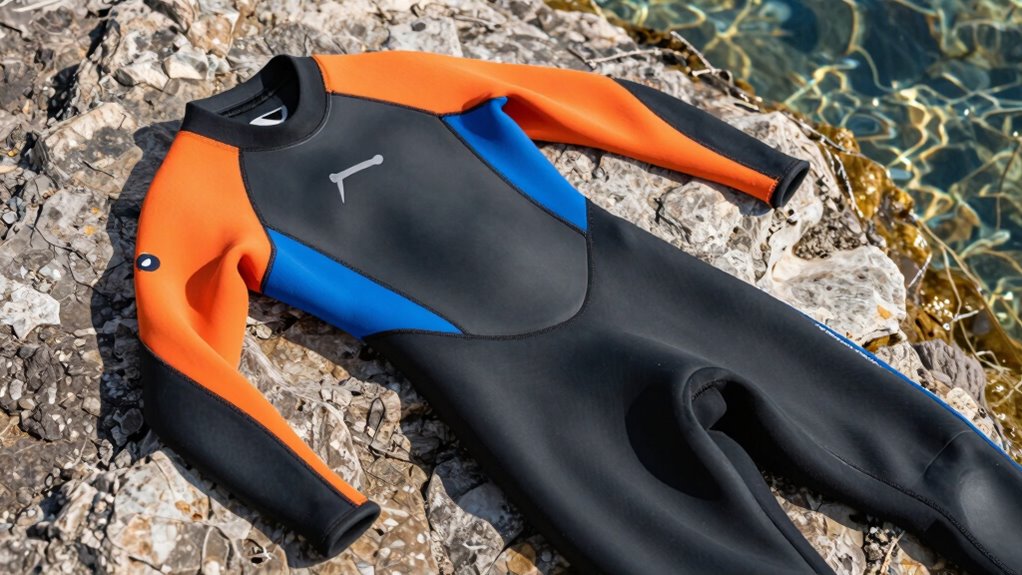
Thermal insulation is another vital aspect. Open water temperatures can fluctuate considerably, so you need a wetsuit that provides adequate warmth without overheating you. Thicker neoprene offers better thermal insulation, but it also adds bulk and can hinder flexibility. Conversely, thinner wetsuits are lighter and more flexible but may not provide enough warmth in colder waters. Think about the typical water temperatures where you swim most often and choose a wetsuit with an appropriate thickness—usually indicated in millimeters—such as 3/2mm or 5/4mm. Some wetsuits also incorporate insulating linings or special materials to boost warmth without sacrificing mobility. Moreover, considering the cultural influences on wetsuit design, such as regional preferences, can help you select a suit that aligns with your needs. Keep in mind that a wetsuit that’s too warm can cause discomfort and fatigue, while one that’s too cold can impair your performance and safety. It’s also helpful to read reviews from other swimmers to understand how different suits perform in various conditions.
In addition to fit and insulation, consider the suit’s flexibility and durability. You want a wetsuit that allows free movement of your arms and legs, especially around the shoulders and hips. Look for suits with flexible panels or targeted stretch zones. Durability matters too, particularly if you plan to swim regularly or in rough conditions. Quality neoprene and reinforced seams help extend the life of your wetsuit. Furthermore, some suits feature advanced seam construction techniques that improve water tightness and longevity.
Ultimately, choosing the right wetsuit involves balancing hydrodynamic fit, thermal insulation, flexibility, and durability. It’s worth trying on various options and consulting sizing charts. Investing in a suit that fits well and suits your typical swimming conditions can dramatically improve your open water experience. When you find the right fit, your swims will feel smoother, warmer, and more efficient.
As an affiliate, we earn on qualifying purchases.
Frequently Asked Questions
How Often Should I Replace My Open Water Wetsuit?
You should replace your open water wetsuit when its durability diminishes considerably, usually after 3 to 5 years with proper maintenance. Regularly rinse it with fresh water, avoid sharp objects, and store it properly to extend its lifespan. Over time, neoprene can stretch or develop tears, reducing insulation and flexibility. If you notice these signs, it’s time for a new wetsuit to guarantee your comfort and safety in the water.
Are There Eco-Friendly Wetsuit Options Available?
Yes, eco-friendly wetsuit options are available. You can find suits made from eco-friendly materials like limestone-based neoprene or recycled rubber, which help reduce environmental impact. Many brands now focus on sustainable manufacturing practices, ensuring their products are better for the planet. By choosing these options, you’re making a conscious decision to support environmentally responsible practices, subtly emphasizing your commitment to preserving the waters you love to swim in.
Can I Wear a Wetsuit in Saltwater Versus Freshwater?
Yes, you can wear a wetsuit in saltwater, but you should rinse it thoroughly afterward to prevent saltwater corrosion. Salt can accelerate wear and tear, affecting wetsuit durability over time. Regularly cleaning and drying your wetsuit helps maintain its flexibility and resilience. Opt for wetsuits made from materials resistant to saltwater corrosion for better longevity, ensuring your gear stays in top shape for open water swims.
How Do I Prevent Chafing With a Wetsuit?
Ironically, your wetsuit’s neoprene material is designed to prevent chafing, yet poor seam construction can cause it. To avoid discomfort, make certain your wetsuit fits snugly without restricting movement. Check for flatlock seams instead of bulky, exposed stitches, which reduce friction. Applying a wetsuit-specific lubricant or body glide before swimming also helps minimize chafing. Remember, a well-made wetsuit with quality seams makes all the difference between comfort and irritation.
Are There Specific Wetsuits for Different Water Temperature Ranges?
Yes, different water temperatures require specific wetsuits. For colder water, you’ll want a wetsuit with thicker neoprene, usually 5mm or more, to keep warm. In milder temps, thinner neoprene like 3mm or 2mm works better. Also, consider zipper placement; back zippers make donning easier in colder water, while chest zippers offer more flexibility and reduce water entry. Choose based on your comfort and water conditions.
neoprene wetsuit for cold water swimming
As an affiliate, we earn on qualifying purchases.
As an affiliate, we earn on qualifying purchases.
Conclusion
Choosing the right wetsuit is like selecting a trusted compass on your open water journey. It guides you through unpredictable currents, sharp rocks, and chilly waves, ensuring you stay confident and steady. When you find that perfect fit, it becomes more than gear — it’s your partner in adventure, helping you push boundaries and discover new depths. Trust your instincts, choose wisely, and let your wetsuit be the sail that carries you forward into the unknown.
As an affiliate, we earn on qualifying purchases.
thermal insulation wetsuit for open water
As an affiliate, we earn on qualifying purchases.
As an affiliate, we earn on qualifying purchases.
Halloween Picks
halloween
As an affiliate, we earn on qualifying purchases.