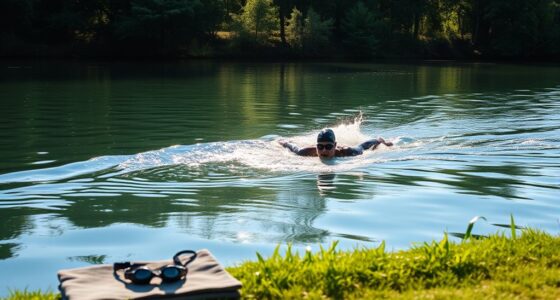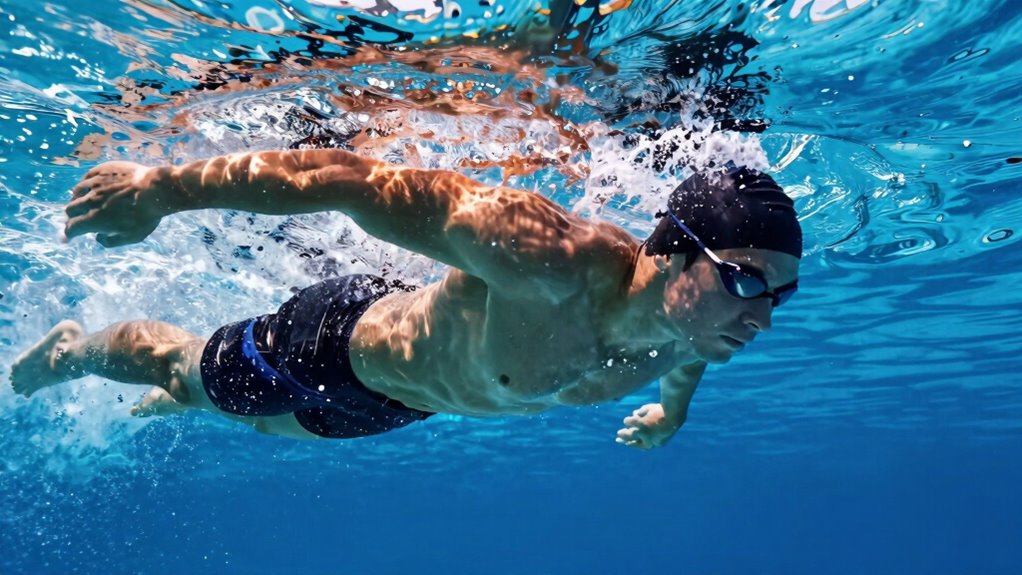
Yes, swimming can build muscle by engaging specific muscle groups through different strokes like freestyle, breaststroke, butterfly, and backstroke. The water’s resistance forces you to use your muscles more deliberately, especially with controlled, slow movements. Using tools like paddles or fins can boost resistance further. Consistent, focused efforts and variation in your routine help maximize muscle growth while being gentle on your joints. Keep exploring to discover how to optimize your swimming for muscle development.
Key Takeaways
- Swimming engages multiple muscle groups, promoting overall muscle development and tone.
- Water resistance provides a natural, dynamic form of resistance that aids in muscle hypertrophy.
- Different strokes target specific muscles, enhancing balanced muscle growth.
- Incorporating resistance tools and controlled movements increases muscle engagement.
- Swimming improves muscle endurance and size when combined with consistent effort and proper technique.
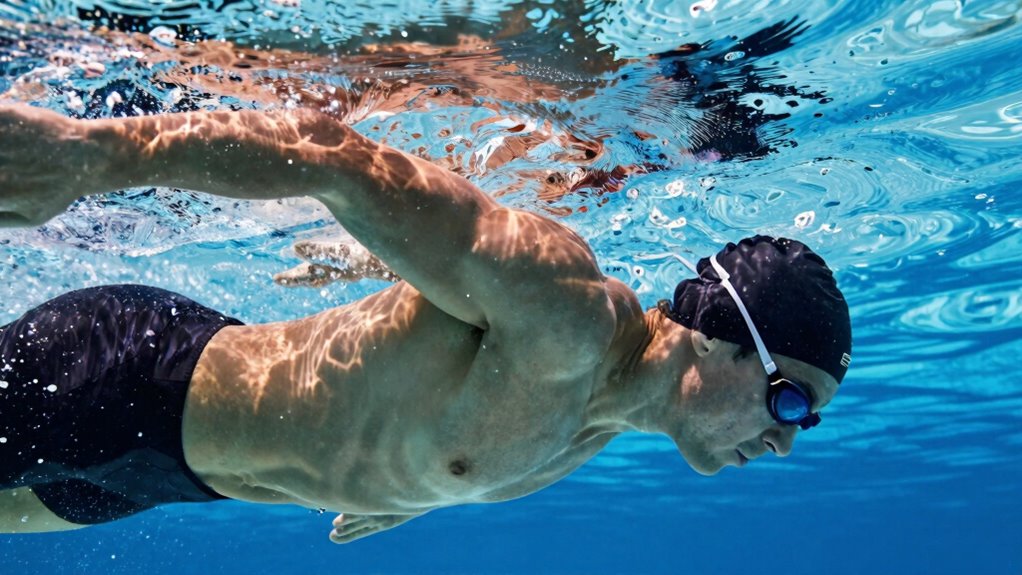
Ever wondered if swimming can help you build muscle? The answer is yes, but it depends on how you approach it. Swimming involves more than just moving through water; it’s a full-body workout that can promote muscle growth when you incorporate the right techniques. One way to maximize muscle development is by exploring different swim stroke variations. Each stroke targets different muscle groups, giving you an all-encompassing workout. For example, freestyle emphasizes your shoulders, back, and core, while breaststroke works your chest, inner thighs, and arms. Butterfly is excellent for your upper body and core strength, and backstroke focuses on your lats and shoulders. By switching between these strokes, you engage various muscles, preventing plateaus and encouraging balanced growth.
Varying swim strokes targets different muscle groups for a balanced, effective full-body workout.
Water resistance training is the cornerstone of swimming’s muscle-building potential. Unlike lifting weights, where you push against a static resistance, water provides continuous, dynamic resistance that challenges your muscles throughout every movement. When you push, pull, or kick in water, you’re fighting against its resistance, which is considerably greater than air. This resistance forces your muscles to work harder, leading to increased strength and endurance over time. The key is to move deliberately and with purpose, focusing on proper technique to maximize resistance. Slower, controlled movements tend to generate more resistance, making your muscles work harder and promoting hypertrophy. Incorporating muscle engagement techniques can further enhance your workout by ensuring you activate the correct muscles during each stroke. Additionally, understanding how to maintain proper technique can help you optimize the benefits of resistance training and prevent injury.
You might notice that swimming isn’t as explosive as traditional weightlifting, but it offers a unique kind of resistance that’s gentler on your joints. This makes it an excellent option for recovery days or if you’re dealing with joint issues. Consistent water resistance training can lead to muscle endurance, tone, and size gains, especially if you incorporate interval training or resistance tools like paddles and fins. These tools amplify resistance and challenge your muscles further, accelerating growth. Moreover, understanding the importance of proper technique can help you optimize the benefits of resistance training and prevent injury. A balanced approach by combining swimming with other strength exercises can yield the best overall results in muscle development. Ultimately, swimming can build muscle effectively when you approach it with intention. Varying your strokes keeps your muscles guessing and avoids adaptation, while focusing on controlled, resistance-based movements enhances muscle development. It’s not just about moving through water; it’s about engaging your muscles actively and consistently. With dedication, swimming can be a powerful addition to your muscle-building routine, offering a low-impact, versatile, and highly effective way to develop strength and size.
As an affiliate, we earn on qualifying purchases.
Frequently Asked Questions
Can Swimming Help Improve Muscle Endurance?
Yes, swimming can help improve your muscle endurance. When you swim against aqua resistance, you challenge your muscles continuously, which boosts endurance over time. Plus, swimming enhances your cardiovascular endurance, allowing you to sustain activity longer without fatigue. With regular practice, you’ll find your muscles become more resilient and efficient, making swimming an excellent workout for increasing both endurance and overall fitness.
How Does Swimming Compare to Weightlifting for Muscle Growth?
Is lifting weights or swimming more effective for muscle growth? You’ll find that weightlifting typically offers greater muscle activation and hypertrophy because it targets specific muscles with added resistance. Swimming, however, uses hydrodynamic resistance, engaging multiple muscle groups simultaneously for endurance and toning. For maximum muscle growth, combining both methods works best—weightlifting for focused strength and swimming for overall muscle activation and endurance.
What Are the Best Swimming Strokes for Muscle Building?
The best swimming strokes for muscle building are the butterfly and breaststroke. The butterfly technique engages your chest, shoulders, and core intensely, promoting muscle growth. Breaststroke benefits your arms, chest, and legs with controlled, powerful movements. Incorporating these strokes into your swim routine helps target multiple muscle groups, enhances strength, and builds muscle effectively. Focus on proper form to maximize benefits and avoid injury.
How Often Should I Swim to See Muscle Gains?
You should swim about three to five times a week to see muscle gains, but don’t forget the irony—more isn’t always better. Your training frequency needs balance, so incorporate recovery strategies like stretching, rest days, and proper nutrition. Pushing too hard without recovery can stall progress. Listen to your body, stay consistent, and you’ll notice muscle gains without risking burnout or injury.
Does Swimming Target Specific Muscle Groups More Than Others?
Yes, swimming targets specific muscle groups more than others due to water resistance and muscle activation. For example, strokes like freestyle and butterfly engage your shoulders, back, and core intensely, while kicking works your legs. Water resistance acts as added resistance, increasing muscle activation in these areas. By varying strokes and techniques, you can focus on different muscle groups, making swimming a thorough workout that develops multiple muscles simultaneously.
swimming fins for muscle building
As an affiliate, we earn on qualifying purchases.
As an affiliate, we earn on qualifying purchases.
Conclusion
So, think of swimming as a sculptor shaping a masterpiece. It works your muscles in ways that are both gentle and powerful, carving out strength with every stroke. While it might not bulk you up like weightlifting, it definitely builds lean, toned muscle through resistance and movement. Immerse yourself with consistency, and you’ll find your body transforming into a smooth, resilient sculpture—strong, flexible, and beautifully balanced beneath the water’s surface.
As an affiliate, we earn on qualifying purchases.
As an affiliate, we earn on qualifying purchases.