TL;DR

Get workout gear delivered free — and shop member deals
- Fast, free delivery on millions of items
- Access to Prime Big Deal Days deals on October 6–7
- Prime Video, Amazon Music and more included
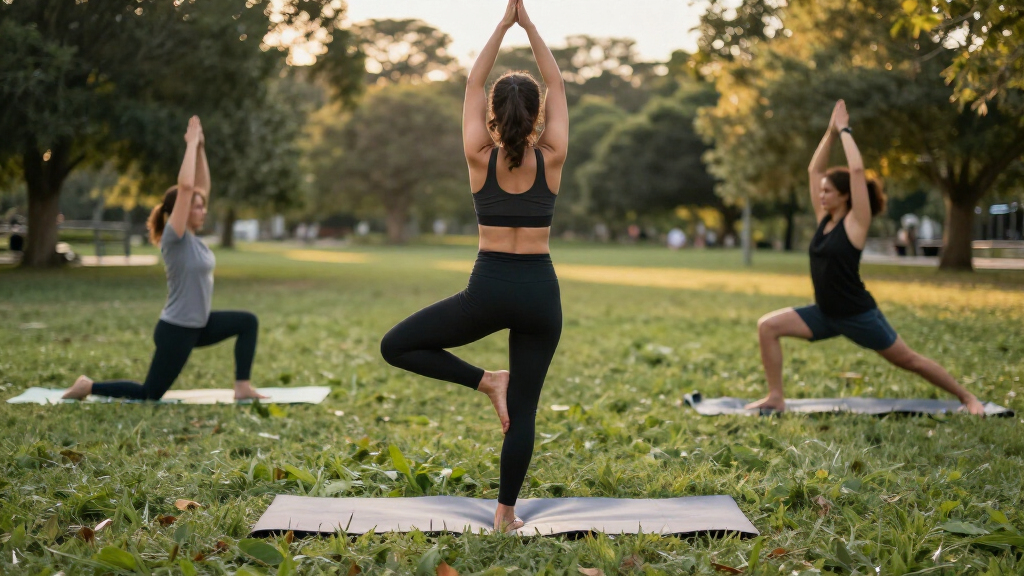
Yoga teacher Cheryl McColgan recommends tree pose, eagle pose and warrior three as single-leg exercises that can help train balance and stability. She advises beginners to start with tree pose, use a fixed gaze and hold a wall or chair if needed; the source does not report clinical results or compare the poses in a study.
A yoga teacher has recommended tree pose, eagle pose and warrior three as three ways to practice balance and stability, with simpler options for people new to the poses. Cheryl McColgan, founder of Heal, Nourish, Grow, says the single-leg work challenges the muscles around the ankles, knees and hips while training the body’s awareness of its position.
McColgan describes proprioception—the body’s ability to sense its movement and position—as one reason yoga can support balance practice. She says yoga also works on muscular strength and endurance, particularly in poses that require standing on one leg. These are her professional recommendations, not findings from a trial comparing the poses or measuring their effects.
Her suggested progression begins with tree pose, then moves to eagle pose and warrior three. For each pose, she recommends holding for three to 10 breaths before switching sides. A fixed gaze can help with steadiness, and a wall or sturdy chair can provide support while learning.
In tree pose, shift weight onto one foot and place the other foot at the standing ankle, calf or inner thigh, not against the knee. Eagle pose adds a crossed-leg position, with the toes of the raised foot allowed to remain on the floor if wrapping the leg is not manageable. Warrior three involves hinging forward from the hips as the other leg extends behind; the standing knee can remain slightly bent.
How the Poses Build Balance Practice
Balance is used in everyday activities such as standing, turning and walking, so practicing it may be relevant to people who want to maintain confidence and steadiness as they age. McColgan’s recommendations offer a step-by-step progression from a relatively accessible standing pose to more demanding positions. They do not establish that these poses prevent falls or produce a particular health outcome.
The suggested adaptations make the guidance more accessible: a practitioner can keep a hand on a wall or chair, choose an easier foot placement, or leave the toes down in eagle pose. That means the poses can be approached as adjustable practice rather than a test of how long someone can balance unsupported. Anyone with an injury, significant balance difficulty or a medical condition should seek appropriate professional guidance before starting a new routine.
As an affiliate, we earn on qualifying purchases.
A Gradual Route Through Three Poses
The Fit&Well report presents these movements as practical yoga exercises rather than a newly published research finding. McColgan’s rationale is that single-leg poses require the body to make small adjustments to stay upright, while engaging muscles around the joints involved in supporting the leg. The article does not cite a study that ranks these three poses against other balance exercises.
The sequence moves from tree pose, where the lifted foot can remain low on the standing leg, to eagle pose’s crossed-leg stance and then warrior three’s forward hinge and extended leg. The increasing coordination demands explain why McColgan recommends that beginners start with tree pose. In all three, she advises looking at one stationary point and using external support as needed.
For a very low-barrier starting point, McColgan also suggests briefly standing on one leg while brushing teeth. That suggestion is an alternative practice idea, not a required step or a guarantee of improved balance. The source provides pose instructions and coaching guidance, but no schedule for how often to practice or how quickly to progress.
“One of my favorite things about yoga is that it trains proprioception—your body’s ability to sense its own movements and position—so it can definitely help with balance and stability.”
— Cheryl McColgan, yoga teacher and founder of Heal, Nourish, Grow
As an affiliate, we earn on qualifying purchases.
What the Recommendations Do Not Show
The report does not provide clinical evidence that the three poses improve balance more than other exercises, reduce falls or deliver a specific result. It also gives no measured effect size, participant group, practice frequency or timeline. The phrase “best” reflects the article’s framing of McColgan’s recommendations, not a documented comparison across yoga poses.
Individual ability varies, and the source does not set out screening guidance for people with injuries, mobility limitations or conditions that affect balance. It also does not specify how long someone should follow the sequence before moving to a harder pose. Practitioners should use support, stop if they feel unsafe or develop pain, and ask a qualified health professional for advice when personal health concerns apply.
As an affiliate, we earn on qualifying purchases.
How to Begin the Sequence
For readers who choose to try the routine, the source’s guidance is to start with tree pose, keep a hand near a wall or chair if useful, and focus on one fixed point. The recommended hold is three to 10 breaths on each side. Eagle pose and warrior three can follow as comfort and control allow; the source does not prescribe a fixed timetable for advancing.
Fit&Well’s report does not announce a follow-up study or further milestone. The practical next step is therefore individual practice within a safe range, rather than a promised outcome. People who are uncertain whether single-leg exercises are appropriate for them can consult a qualified instructor or health professional before proceeding.
As an affiliate, we earn on qualifying purchases.
Key Questions
Which three poses does Cheryl McColgan recommend?
She recommends tree pose, eagle pose and warrior three as poses involving single-leg balance work.
Which pose should a beginner try first?
McColgan advises beginners to start with tree pose, then work toward eagle pose and warrior three. A wall or chair can be used for support.
How long should each pose be held?
The instructions in the report suggest holding each pose for three to 10 breaths, then switching sides. They do not specify how often to repeat the sequence.
Does the report prove these poses prevent falls?
No. It reports a yoga teacher’s recommendations and rationale, but provides no study results or evidence that the poses prevent falls or outperform other exercises.
How can someone make the poses easier?
Use a wall or chair for balance support. In tree pose, place the lifted foot at the ankle or calf rather than higher up; in eagle pose, the lifted foot’s toes can remain on the floor.
Source: rss
Halloween Picks
halloween
As an affiliate, we earn on qualifying purchases.