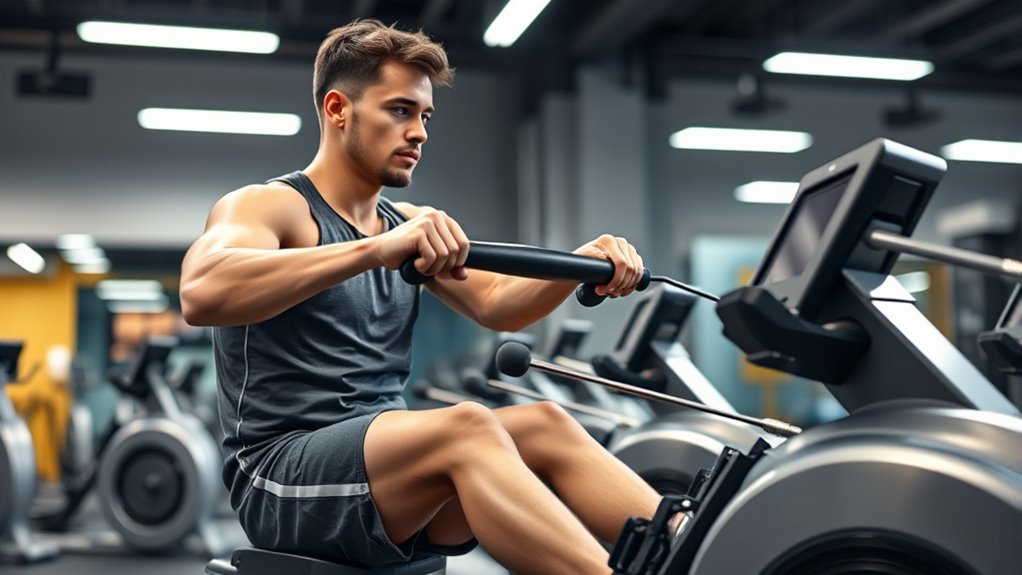

To use a rowing machine effectively, start by adjusting your seat so your knees are slightly bent at the catch position, sitting upright with a straight back. Push off strongly with your legs, then lean back slightly while pulling the handle towards your chest. During recovery, extend your arms and legs smoothly, maintaining proper posture and breathing rhythm. Practicing controlled, fluid movements helps maximize benefits and prevent injuries—continue exploring these tips for a safe, efficient workout.
Key Takeaways
- Adjust the seat so your knees are slightly bent at the start, maintaining proper posture throughout.
- Push off with your legs first, then lean back slightly and pull the handle towards your chest in one smooth motion.
- Keep your back straight and core engaged, avoiding hunching or overextending during each stroke.
- Exhale during the drive phase and inhale during recovery to promote proper breathing.
- Relax your arms and hinge at the hips during recovery, controlling movement and maintaining rhythm.
As an affiliate, we earn on qualifying purchases.
Understanding the Components of a Rowing Machine
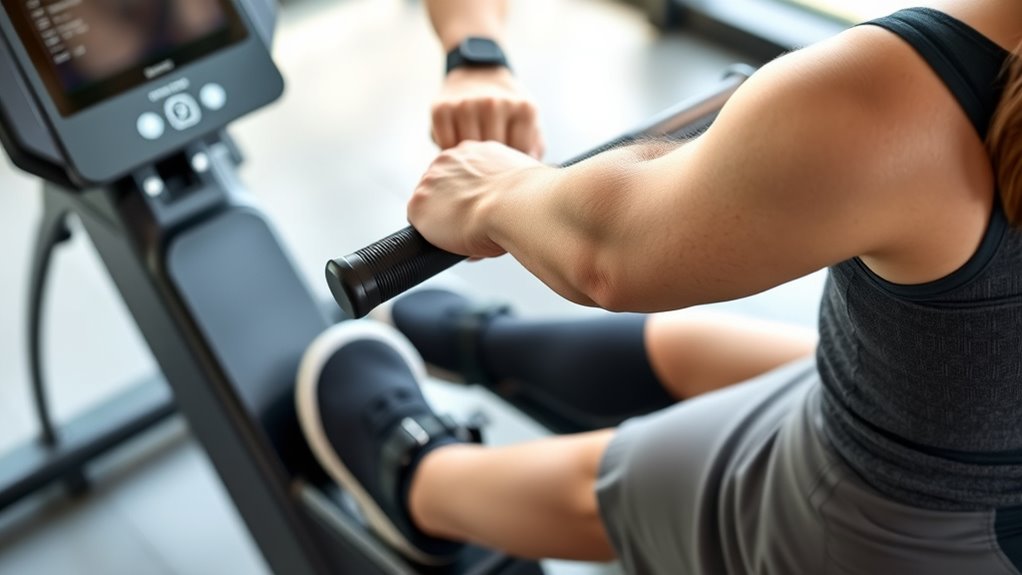
A rowing machine is made up of several key components that work together to simulate the experience of rowing on water. The ergonomic design of the seat, handle, and footrests guarantees you stay comfortable during your workout, reducing strain and improving efficiency. The resistance settings are a vital part of the machine, allowing you to customize the intensity of your rowing sessions. Whether you prefer a gentle glide or a tough challenge, adjusting these settings helps you target different fitness levels and goals. The flywheel or magnetic brake system provides smooth, consistent resistance, enhancing your workout experience. Understanding these components helps you operate your rowing machine effectively, making your exercise sessions safer and more enjoyable. Proper knowledge of the machine’s parts empowers you to get the most out of your workouts. Familiarity with the different parts can also help you troubleshoot common issues and maintain your equipment properly. Additionally, understanding the resistance mechanisms enables you to optimize your workouts and extend the lifespan of your rowing machine.
As an affiliate, we earn on qualifying purchases.
Proper Starting Position and Posture
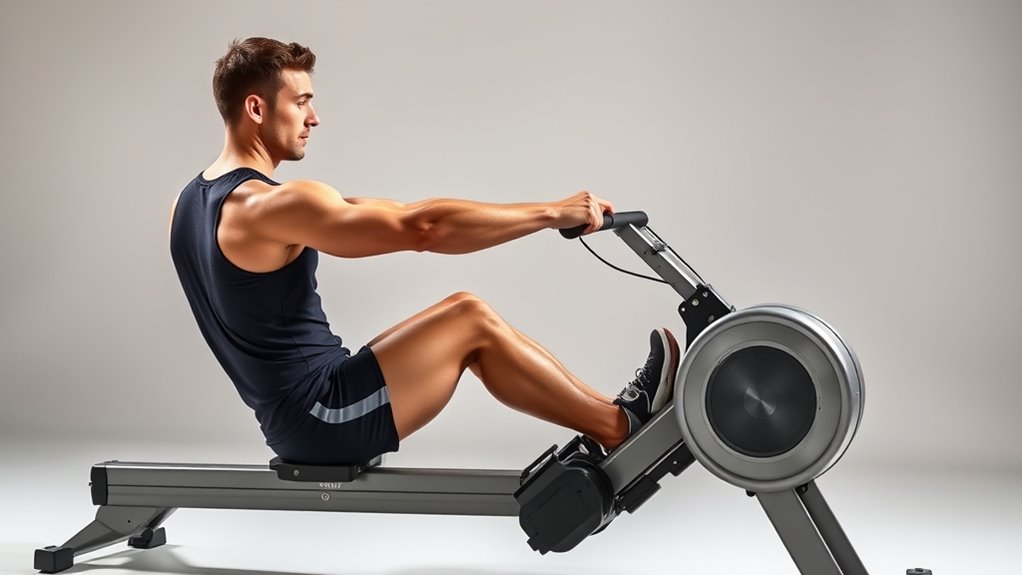
To get the most from your rowing workout, starting in the correct position and maintaining proper posture is essential. Begin by adjusting the seating so your knees are slightly bent at the catch position, ensuring your hips are not too far forward or back. Sit upright with a straight back, engaging your core to support good posture. Your arms should be extended forward, grasping the handle with a relaxed but secure hand grip, using proper hand grip techniques to avoid unnecessary tension. Keep your shoulders relaxed and down, avoiding hunching or shrugging. This setup helps prevent strain and prepares you for an efficient stroke. Correct seating adjustments and mindful hand grip techniques set the foundation for a safe, effective rowing session. Additionally, maintaining body alignment throughout the movement maximizes efficiency and reduces the risk of injury. Being mindful of your technique ensures you get the most benefit from each stroke while minimizing fatigue. Paying attention to your movement mechanics can further enhance your performance and safety during rowing. Incorporating proper breathing patterns can also improve endurance and overall workout quality. Developing an awareness of muscle engagement can help optimize your effort and prevent overexertion during the exercise.
As an affiliate, we earn on qualifying purchases.
The Drive: Using Your Legs and Back
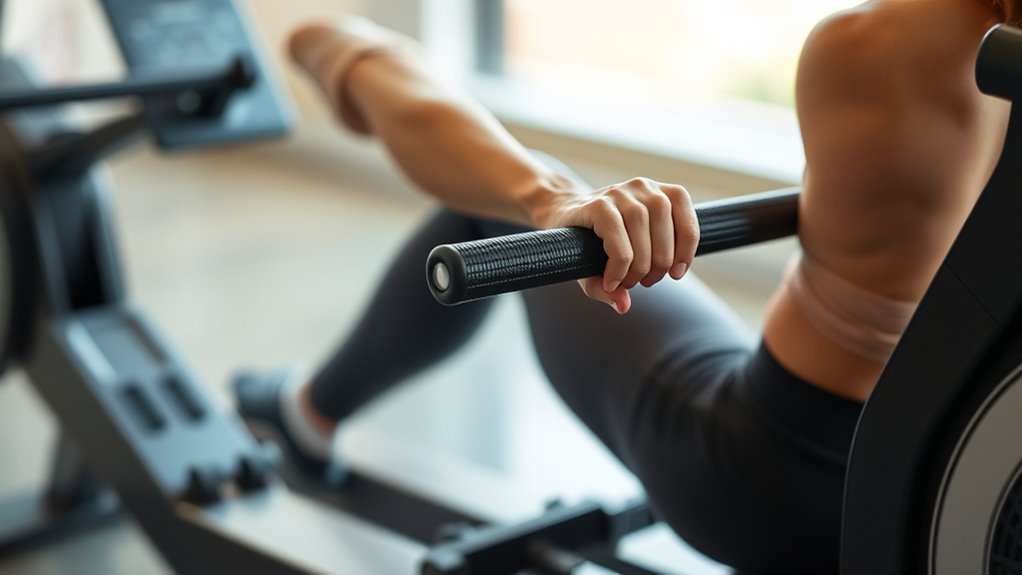
As you begin the drive phase, focus on engaging your legs first by pushing off strongly with your feet against the footrests. This leg drive generates power and sets the rhythm for your stroke. As your legs straighten, lean back slightly using your back muscles, keeping your core engaged to maintain stability. Maintain a steady stroke rhythm, coordinating your leg push with a smooth pull of the arms. Remember to incorporate proper breathing techniques: exhale as you drive back and pull, inhale as you prepare for the next stroke. Avoid rushing this phase; controlled movements maximize efficiency and reduce fatigue. Proper use of your legs and back ensures a powerful, smooth drive that propels you forward with each stroke. Paying attention to technique can significantly improve your rowing efficiency and overall performance. Developing a consistent power application during each stroke will help you build endurance and achieve better results over time. Focusing on muscle engagement can further enhance your strength and stability throughout the stroke. Additionally, maintaining proper posture helps prevent injury and promotes longevity in your rowing practice. Incorporating core stability exercises can also support better control and power transfer during your strokes.
rowing machine with magnetic brake system
As an affiliate, we earn on qualifying purchases.
As an affiliate, we earn on qualifying purchases.
The Recovery Phase and Finish

After completing the drive phase, focus on the recovery to prepare for the next stroke. Relax your arms and hinge at your hips, letting your legs extend fully. Maintain steady breath control, inhaling smoothly during the recovery and exhaling as you begin the next drive. This phase is essential for resetting your form and conserving energy. Incorporate a cool down routine by gradually slowing your pace, allowing your heart rate to decrease naturally. Keep your movements controlled and fluid, avoiding rushing or jerking. Proper recovery ensures you stay balanced and ready for the next powerful pull. Proper recovery is also key to maintaining consistency and avoiding injury. Additionally, paying attention to breath control during this phase helps improve overall technique and endurance. Practicing mindful recovery techniques can enhance your rowing efficiency and prevent fatigue, especially when you focus on technique for beginners to build a solid foundation.
Tips for Maintaining Good Technique and Avoiding Injury
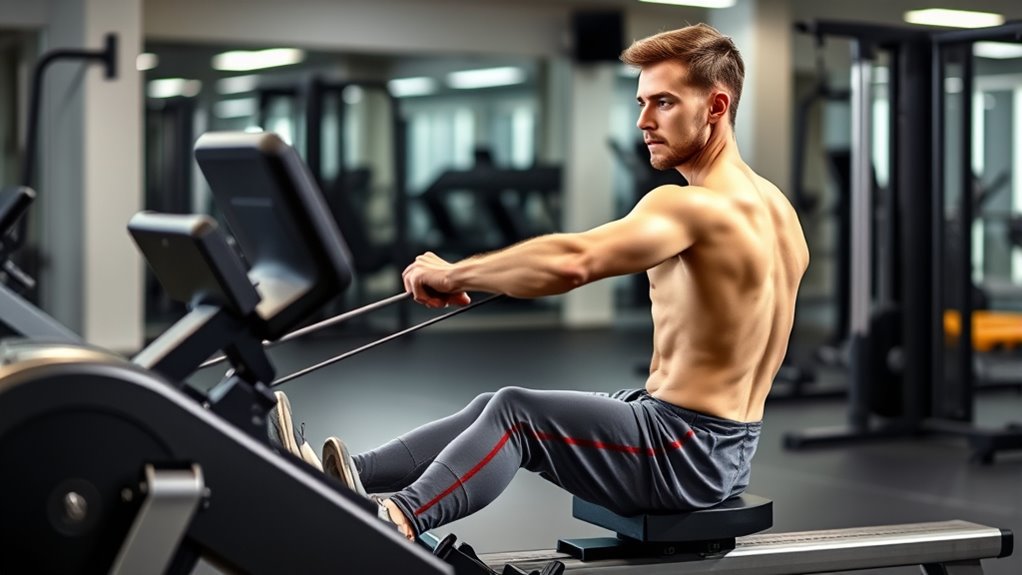
Maintaining good technique on a rowing machine is essential to prevent injuries and maximize workout efficiency. Focus on core engagement throughout each stroke; a strong core stabilizes your body and reduces strain on your back. Keep your back straight and avoid hunching or overextending. Use proper breathing techniques: inhale during the recovery phase and exhale as you power through the drive. This rhythm helps maintain consistent effort and prevents fatigue. Always control your movements, avoiding jerky or rapid strokes that can lead to injury. Concentrate on smooth, coordinated motions, and listen to your body. Regularly check your form, especially if you feel discomfort, and don’t rush your progress. Practicing local automation and routine adjustments can help develop a consistent technique, ensuring a safe, effective workout every time. Additionally, paying attention to proper rowing posture can significantly improve your efficiency and reduce the risk of injury. Incorporating mindful movement into your routine can also enhance your overall technique and help prevent fatigue. Developing a focused training routine can further reinforce good habits and maintain proper form, leading to better results and fewer setbacks. Consistently reviewing your technique with smart fitness technology can provide real-time feedback and help you stay on track. Good technique ensures a safe, effective workout every time.
Frequently Asked Questions
How Often Should I Row for Optimal Fitness Results?
For ideal fitness results, you should row 3 to 5 times a week, balancing training frequency with your recovery needs. Aim for sessions lasting 20 to 30 minutes, which is a perfect duration for building endurance and strength without overtraining. Consistency is key, so stick to a schedule that challenges you but also allows your body to recover and adapt. Adjust your intensity for best progress.
What Are Common Mistakes Beginners Make on a Rowing Machine?
Did you know that nearly 60% of beginners struggle with proper form on a rowing machine? Common mistakes include neglecting proper grip and breathing techniques. You might grip the handle too tightly or forget to breathe rhythmically, both of which reduce efficiency and increase fatigue. Focus on keeping a relaxed grip and inhaling on the drive, exhaling on the recovery. These adjustments help you row more effectively and prevent injury.
How Can I Increase Resistance Safely During Workouts?
To increase resistance safely during workouts, focus on proper resistance adjustment and resistance progression. Start by gradually raising the resistance level, listening to your body and avoiding sudden jumps that cause strain. Keep proper form, engaging your core and using controlled movements. As your strength improves, incrementally increase resistance to challenge yourself without risking injury. Consistent, mindful adjustments help build endurance and make certain you get the most benefit from each session.
Is It Necessary to Warm up Before Rowing?
Warming up before rowing is essential, as studies show it can reduce injury risk by up to 50%. You should always warm up because it prepares your muscles, increases blood flow, and improves flexibility. Doing a few minutes of light rowing or dynamic stretches helps you activate your muscles, making your workout safer and more effective. Don’t skip this step—it’s a simple way to prevent injuries and enhance performance.
How Do I Adjust the Machine for My Height?
To modify the machine for your height, start by setting the seat height so that when you’re seated, your legs are slightly bent at the knees at the front of the stroke. Next, adjust the foot straps so your feet are snug but comfortable, with heels firmly secured. This guarantees proper form and prevents injury. Make small adjustments and test your setup before starting your workout.
Conclusion
Mastering the rowing machine is like steering a finely-tuned vessel—your technique guides you smoothly across the water. Keep your posture upright, engage your legs and back with purpose, and glide through each recovery with grace. With practice, you’ll turn your workout into a symphony of power and rhythm, transforming each stroke into a dance that propels you toward strength and endurance. Stay steady, and let your technique be the compass on this journey.