To corner safely on a bicycle, slow down gradually and keep your hands relaxed on the handlebars. Shift your body slightly toward the inside of the turn, keeping your weight balanced and your center of gravity low. Lean into the turn smoothly while focusing on where you want to go next. Use your body and bike position to stay stable, and straighten up and accelerate gently after the turn. If you keep practicing, you’ll master safe, confident turns every time.

Get workout gear delivered free with Prime
- Fast, free delivery on millions of items
- Prime Video, Amazon Music and more included
- Member-only deals all year
Key Takeaways
- Slow down gradually before entering the turn to maintain control and avoid sudden braking.
- Keep your body relaxed and shift weight slightly toward the inside of the curve for better balance.
- Lean into the turn while keeping your eyes focused ahead on your intended path.
- Maintain a relaxed grip on the handlebars to allow smooth steering and quick reactions.
- Keep inside pedal up and outside pedal down to prevent foot contact and improve stability during the turn.
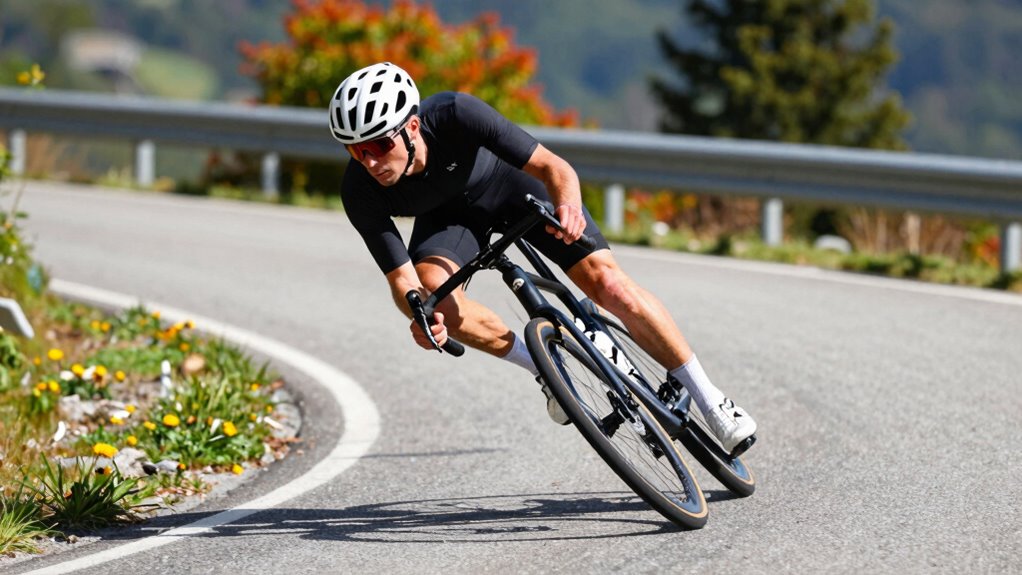
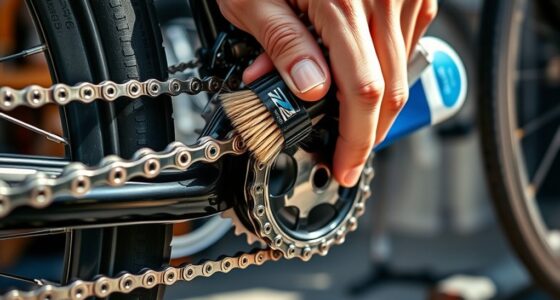
Cornering safely on a bicycle requires more than just leaning into turns; it involves proper technique and awareness. Before you even start practicing your turns, you need to guarantee your bike is in good condition. Regular bicycle maintenance is essential for safe cornering. Check that your tires are properly inflated, as underinflated tires can reduce grip and make turns more dangerous. Make sure your brakes are responsive, so you can control your speed effectively before entering a turn. Also, inspect your chain, gears, and steering components to prevent mechanical failures that could compromise your safety during a turn.
Ensure your bike is well-maintained with proper tire pressure and responsive brakes for safe, confident cornering.
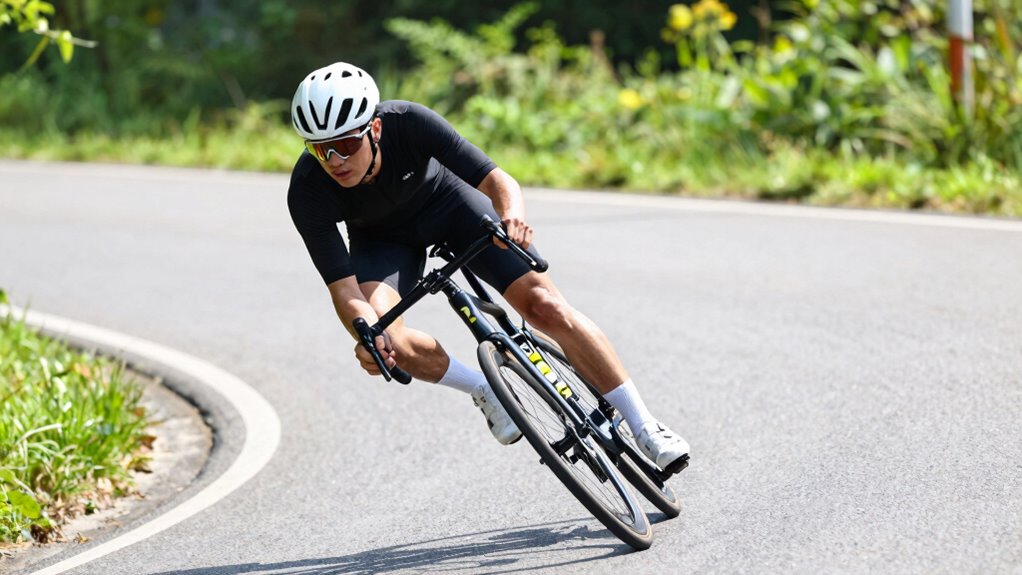
When approaching a corner, slow down gradually rather than braking sharply at the last second. This allows you to maintain better control and balance through the turn. Keeping your hands on the handlebars with a relaxed grip helps you steer smoothly and react quickly if needed. As you lean into the turn, shift your weight slightly towards the inside of the curve, but avoid leaning the bike too far, which can cause loss of traction. Instead, focus on positioning your body to counterbalance the bike’s tilt, keeping your center of gravity low and centered.
Your eyes should be focused on where you want to go, not just the road immediately in front of you. Looking ahead helps you anticipate the curve and adjust your speed and position accordingly. Use your body weight and bike position to help make the turn more stable. Keep your inside pedal up and outside pedal down to prevent your foot from hitting the ground and to help stabilize your bike. As you complete the turn, gradually straighten the bike and accelerate out of the corner smoothly, maintaining control and balance.
Road safety tips are vital when cornering. Always be aware of your surroundings, including other vehicles, pedestrians, and road conditions. Be cautious on wet or uneven surfaces, which can reduce traction and increase the risk of slipping. When riding in traffic, signal your turns clearly and follow traffic laws. Remember, your safety depends on your ability to control your bike during turns, so practicing good techniques and keeping your bicycle well-maintained are your best defenses. Mastering these skills takes time, but with consistent practice and attention to detail, you’ll corner confidently and safely on your bike every time.
bicycle handlebar grips for control
As an affiliate, we earn on qualifying purchases.
As an affiliate, we earn on qualifying purchases.
Frequently Asked Questions
How Do Different Bike Types Affect Cornering Techniques?
Different bike types influence your cornering by affecting bike stability and turning efficiency. Road bikes, with their lightweight frames and thin tires, let you lean sharply and turn quickly, boosting efficiency. Mountain bikes, with broader tires and suspension, offer more stability over rough terrain but require slower turns. Hybrid bikes balance comfort and control, making turns smoother but less sharp. Knowing your bike’s design helps you adjust your technique for safer, more effective cornering.
What Should I Do if I Feel Unstable During a Turn?
If you feel unstable during a turn, focus on maintaining your balance by keeping your body centered over the bike. Adjust your hand positioning on the handlebars to stay steady, and look through the turn to help guide your bike smoothly. Slow down slightly if needed, and don’t stiffen up—relax your arms. Practicing these techniques improves your confidence, making future turns safer and more controlled.
Are There Specific Safety Gear Recommendations for Sharp Turns?
For sharp turns, you should wear protective gloves to guarantee a firm grip and protect your hands if you fall. Additionally, don’t forget to wear reflective clothing to increase visibility, especially in low-light conditions. These safety gear items help you stay safe by improving control and making sure others see you clearly. Always check your gear before riding, and combine it with proper turning techniques for the safest experience.
How Can I Practice Cornering Safely as a Beginner?
To practice cornering safely as a beginner, start on a quiet, flat road with smooth pavement. For example, imagine you’re practicing a gentle right turn, maintaining steady speed and looking through the turn. Make sure your bike is well-maintained, especially brakes and tires, to handle sudden needs. Pay attention to road conditions, avoiding wet or uneven surfaces. Gradually increase your confidence by practicing different angles and speeds in safe environments.
What Common Mistakes Should I Avoid When Taking Corners?
When taking corners, avoid oversteering hazards by keeping your bike steady and looking through the turn. Don’t brake suddenly or harshly while cornering, as braking errors can cause loss of control. Maintain a smooth, controlled pace, and lean into the turn without jerking the handlebars. Staying relaxed and focused helps prevent these common mistakes, ensuring safer, more confident cornering.
As an affiliate, we earn on qualifying purchases.
Conclusion
By mastering these cornering tips, you’ll turn like a pro and navigate every bend with confidence. Remember, your bike and body work together like a perfectly synchronized dance team—no wobbling or slipping should hold you back. With practice, you’ll be able to tackle corners faster than a cheetah on the hunt! So, keep practicing, stay alert, and enjoy the thrill of smooth, safe turns that make every ride feel like a victory lap.
As an affiliate, we earn on qualifying purchases.
As an affiliate, we earn on qualifying purchases.
Halloween Picks
halloween
As an affiliate, we earn on qualifying purchases.