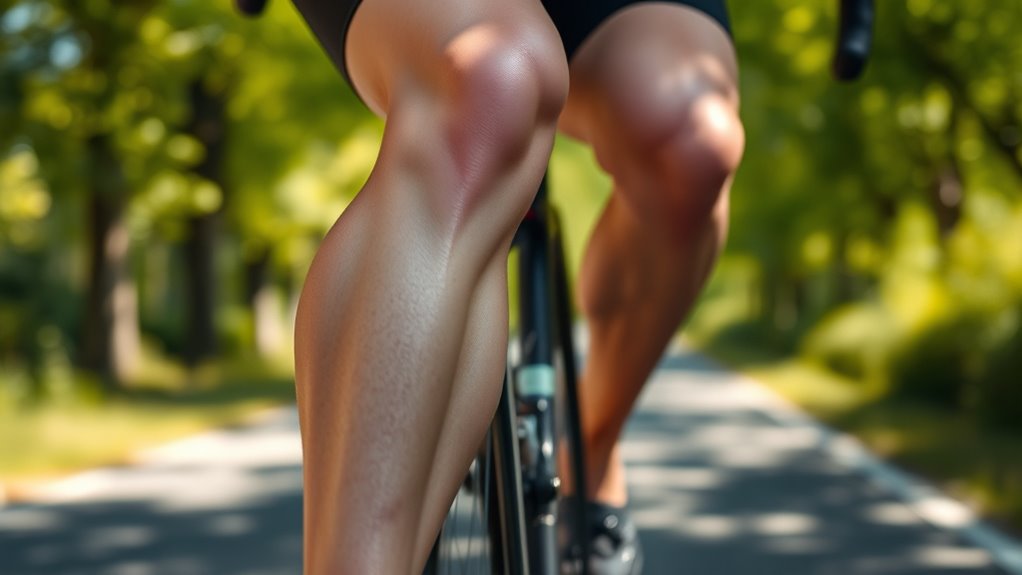

Cycling’s great for your knees! It strengthens the muscles around your knee, supports joint stability, and offers a low-impact workout that’s kinder to your joints than running. However, poor bike fit or improper technique can lead to injuries like patellar tendinitis. It’s important to listen to your body and set up your bike correctly to avoid strain. If you’re curious about optimizing your cycling for knee health, there’s more to explore on this topic!
Open a free Amazon Business account
Business pricing, bulk buying and tax-exempt orders.
As an affiliate, we earn on qualifying purchases.
Key Takeaways
- Cycling strengthens knee-supporting muscles, enhancing joint stability and function while providing a low-impact cardiovascular workout.
- Proper bike fit is crucial; incorrect adjustments can lead to increased strain and potential knee injuries.
- While cycling is generally safe, overuse injuries like patellar tendinitis can occur if proper technique isn’t followed.
- Listening to your body and addressing any discomfort early can help prevent long-term knee issues.
- Regular assessments of bike setup and riding technique are essential for maintaining knee health and preventing injuries.

When you hop on your bike, you’re not just enjoying the fresh air; you’re also giving your knees a solid workout. Cycling is a fantastic way to boost your cardiovascular health while engaging your lower body, especially the muscles surrounding your knee. However, it’s essential to understand how knee joint biomechanics play a role in both the benefits and potential drawbacks of this activity.
As you pedal, your knees flex and extend, allowing you to generate power with each rotation. This motion can strengthen the muscles around your knee, such as the quadriceps, hamstrings, and calves. When these muscle groups are strong, they provide better support to your knee joint, which can improve its overall stability. However, improper bike fit or form can lead to excessive strain, increasing your risk of injury. That’s why understanding knee joint biomechanics is *crucial* for anyone who cycles regularly.
You might be surprised to learn that cycling is generally low-impact, making it easier on your joints compared to high-impact activities like running. However, this doesn’t mean you can ignore proper technique and equipment. Ensuring your bike is fitted correctly can help align your knee joint *optimally* as you pedal. If your seat’s too high or low, or if your pedals aren’t positioned correctly, you may end up putting undue stress on your knees. This is where cycling injury prevention comes into play. Taking the time to adjust your bike and learning the right technique can save you from discomfort and long-term issues.
Another *vital* aspect of knee health while cycling is listening to your body. If you start to feel pain or discomfort, it’s essential to address it immediately rather than pushing through. Overuse injuries, like patellar tendinitis or IT band syndrome, can occur if you ignore these signals. Incorporating rest days, cross-training, and stretching into your routine can help avoid these problems. Additionally, ensuring your bike setup incorporates proper fit techniques is essential for minimizing strain on your knees.
ergonomic bike saddle for knee comfort
As an affiliate, we earn on qualifying purchases.
As an affiliate, we earn on qualifying purchases.
Frequently Asked Questions
Can Cycling Help Rehabilitate Knee Injuries?
Yes, cycling can help rehabilitate knee injuries. By focusing on proper cycling posture, you can improve knee biomechanics, reducing strain while strengthening the muscles around your knee. Start with low resistance and gradually increase intensity as you gain strength. Always listen to your body; if you feel pain, adjust your posture or intensity. This gentle movement helps promote healing and increases mobility, making cycling a great option for knee rehabilitation.
How Does Bike Fit Influence Knee Pain?
If you think riding a bike without considering bike fit is a genius idea, think again! Poor bike ergonomics can turn your knees into a symphony of pain. Saddle positioning plays an essential role; if it’s too high or low, your knees will be begging for mercy. Proper fit guarantees your joints move smoothly, helping you avoid unnecessary discomfort. So, adjust that saddle and keep those knees happy while you pedal away!
Is Cycling Safe for People With Arthritis?
Yes, cycling can be safe for you if you have arthritis. It helps build knee strength and promotes joint lubrication, which can reduce stiffness and pain. You’ll find that low-impact cycling puts less strain on your joints compared to other exercises. Just make sure your bike fits well to avoid any unnecessary discomfort. Start slowly, listen to your body, and gradually increase your intensity for the best results.
What Types of Cycling Are Best for Knee Health?
If you envision yourself gliding smoothly on a bike, consider cycling on flat surfaces with gentle terrain variation. This way, you can focus on gear selection, using lower gears to keep the pedal resistance light. Try leisurely rides on paved trails or scenic routes, where you can enjoy the view without straining your knees. Remember, the key is to balance effort and comfort, allowing your joints to stay healthy while you ride.
How Often Should I Cycle to Protect My Knees?
You should cycle about three to five times a week to protect your knees. Focus on maintaining proper cycling posture to avoid unnecessary strain. Start with low pedal resistance to build strength gradually. As you become more comfortable, you can increase resistance, but always listen to your body. If you feel discomfort, it’s wise to adjust your routine. Consistency is key, so find a balance that works for you and your knees.
adjustable bike pedals for proper fit
As an affiliate, we earn on qualifying purchases.
As an affiliate, we earn on qualifying purchases.
Conclusion
In cycling, you’ll find a delicate balance; it can strengthen your knees while also stressing them. If you ride with proper form, you’ll enjoy the benefits of improved joint mobility and muscle support. Yet, push too hard or neglect proper gear, and you might invite pain and injury. Embrace the ride, but listen to your body. With mindful practice, cycling can be a friend to your knees, promoting health rather than harm. Keep pedaling wisely!
As an affiliate, we earn on qualifying purchases.
As an affiliate, we earn on qualifying purchases.
Fall Picks
fall essentials
As an affiliate, we earn on qualifying purchases.