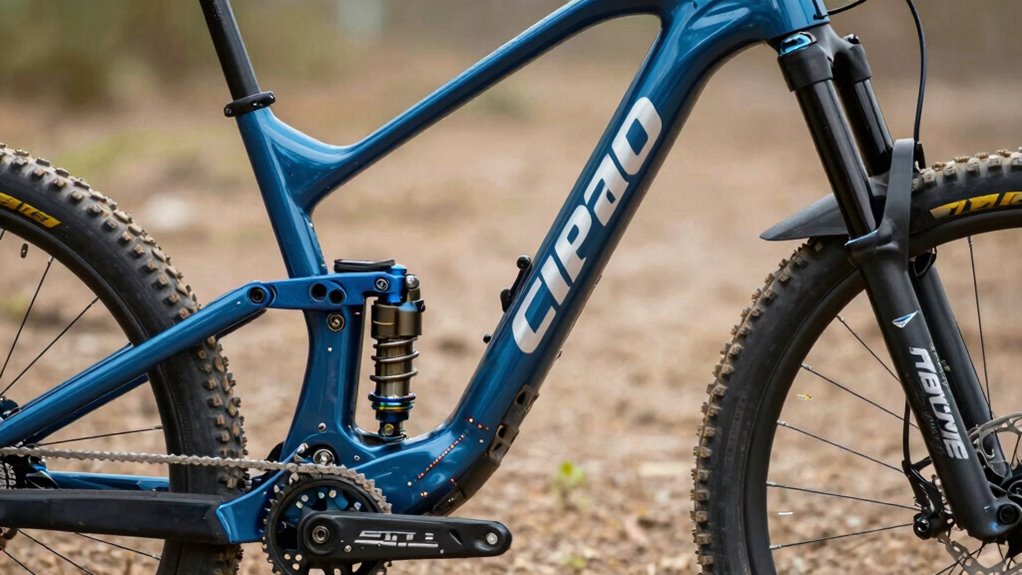
Full suspension mountain bikes cost more because they feature advanced frame designs and complex suspension systems that require precise engineering and high-quality materials. These bikes incorporate sophisticated damping, multiple linkages, and adjustable components, which drive up manufacturing and maintenance costs. The added engineering effort guarantees durability, improved ride comfort, and better trail handling. If you want to discover how these factors make full suspension bikes worth the investment, keep exploring.
Key Takeaways
- Full suspension bikes require complex frame design and high-quality materials for durability, increasing manufacturing costs.
- Advanced suspension systems with specialized components and adjustable features add to production expenses.
- Extensive research, development, and strict quality control ensure safety and performance, raising overall costs.
- More parts and precise engineering needed for smooth operation lead to higher assembly and maintenance costs.
- Enhanced trail handling and ride comfort from innovative technology justify the premium price point.
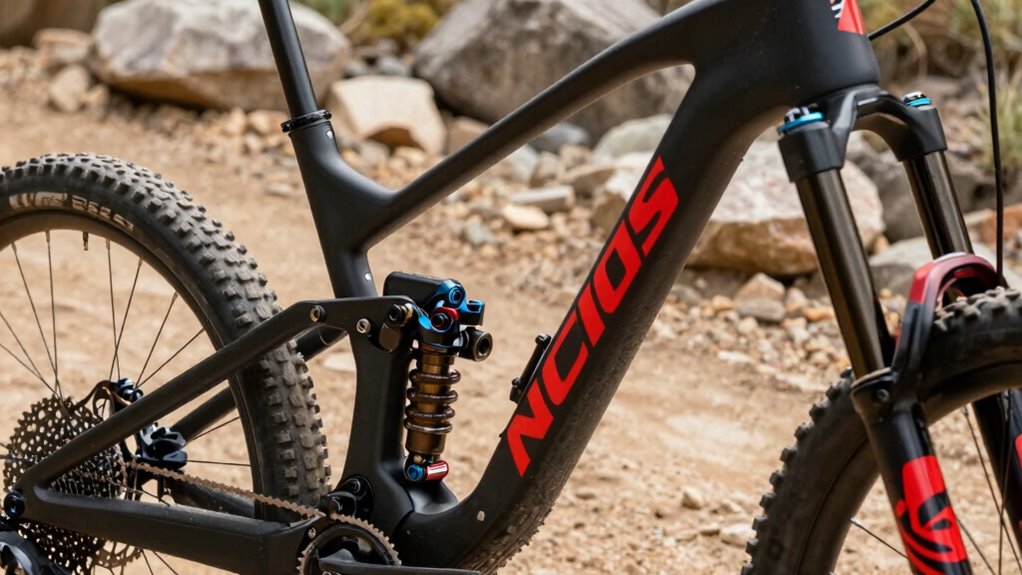
Have you ever wondered why full suspension mountain bikes tend to cost considerably more than their hardtail counterparts? The main reason lies in the complexity and quality of their construction, especially when it comes to frame durability and suspension technology. Full suspension bikes are engineered to absorb shocks from rough terrain, which demands a more sophisticated frame design. Unlike hardtails, which rely solely on a rigid frame with a front fork suspension, full suspension bikes incorporate additional components that require precise engineering and high-quality materials. This heightened durability isn’t just about making the frame last longer; it’s about guaranteeing it can handle the constant stress of absorbing impacts without bending, cracking, or losing performance over time. As a rider, you benefit from a frame that’s built to withstand the rigors of challenging trails, but that durability comes with increased manufacturing costs. Furthermore, the integration of these complex systems necessitates meticulous quality control during production to ensure optimal performance and safety.
Suspension technology is at the core of what makes full suspension bikes more expensive. These bikes feature front and rear suspension systems that are far more complex than the basic shock absorbers found on hardtails. High-end suspension systems use advanced damping mechanisms, multiple linkages, and adjustable settings, all of which require meticulous design and precision manufacturing. The components involved—like shock absorbers, pivot points, and linkage systems—are made from specialized materials that need to balance lightweight properties with strength and durability. The integration of these parts into a seamless system isn’t simple or cheap, and the cost of R&D and quality control adds up quickly. You’ll notice that the better the suspension technology, the more expensive the bike is likely to be, but also the more comfortable and controlled your ride will be, especially on rough terrain. Additionally, advancements in suspension technology continue to drive up costs as manufacturers incorporate innovative features to improve ride quality. In addition, the complexity of the engineering and design process means that each component must meet strict standards for safety and reliability, further increasing production costs.
The additional parts and engineering precision involved in full suspension bikes also mean more frequent maintenance and higher production costs. Every joint, bearing, and suspension component has to be crafted and assembled with care to ensure smooth operation and longevity. While hardtails are simpler in design and cheaper to produce, full suspension bikes require a significant investment in both materials and engineering expertise. That investment pays off in performance and comfort, but it’s also the reason why you’ll pay a premium when choosing a full suspension mountain bike. The engineering complexity involved in designing these bikes is a key factor in their higher price point. In essence, the higher price reflects the advanced frame durability, the sophisticated suspension technology, and the overall engineering effort that goes into making these bikes capable of tackling the toughest trails. Additionally, the ongoing advancement of suspension technology continues to drive up costs as manufacturers incorporate innovative features to improve ride quality.

Canyon Spectral 125 AL 5, Real Raw, Small
- Trail-Ready Design: Playful, agile, and built for speed
- Lightweight Alloy Frame: Durable, progressive geometry for handling
- Advanced Suspension: 140mm front and 125mm rear travel with RockShox
As an affiliate, we earn on qualifying purchases.
As an affiliate, we earn on qualifying purchases.
Frequently Asked Questions
Do Full Suspension Bikes Require More Maintenance Than Hardtails?
Yes, full suspension bikes generally require more maintenance than hardtails. The additional components like the rear shock and linkages need regular checks to guarantee frame durability and smooth operation. You’ll also need to pay attention to tire compatibility, as full suspension bikes often have more complex setups that can affect tire choices. Regular cleaning, lubrication, and inspection help keep your full suspension bike performing well and prolong its lifespan.
How Does Suspension Travel Affect Bike Price?
Suspension travel considerably impacts bike price because longer travel requires more advanced components, affecting frame geometry and pedal efficiency. You’ll notice that bikes with greater suspension travel, like those designed for downhill riding, often cost more due to the need for stronger frames and specialized parts. This guarantees ideal handling and comfort, but it also means manufacturers invest more in engineering, making the bike more expensive for you.
Are Expensive Full Suspension Bikes Worth the Cost?
Yes, expensive full suspension bikes are worth the cost if you prioritize better ride quality and durability. A high-quality bike frame combined with advanced suspension types, like full or rear suspension, offers smoother handling and improved control on rough trails. While they cost more, investing in a top-tier bike guarantees long-term performance, comfort, and reliability, making your rides more enjoyable and reducing maintenance needs over time.
What Materials Are Used in High-End Suspension Components?
You might worry that high-end suspension components are fragile, but materials innovation guarantees they’re both lightweight and durable. Manufacturers use advanced materials like carbon fiber, titanium, and high-strength alloys for superior component durability. These materials reduce weight without sacrificing strength, improving ride quality and longevity. While they cost more, investing in such components means your bike withstands tough terrains and frequent use, making the extra expense worthwhile.
Can Beginner Riders Benefit From Full Suspension Bikes?
Yes, beginner riders can benefit from full suspension bikes, especially for comfort and control on rough trails. They help absorb shocks, making rides smoother and reducing fatigue. While there’s a learning curve to mastering full suspension, it ultimately boosts confidence and enjoyment. If you’re new to mountain biking, a full suspension bike can make your learning experience more comfortable, encouraging you to ride more and improve faster.

Flow Suspension Treatment – 2oz by SCC Tech
- Enhances suspension performance: Optimizes shocks and dropper posts
- Reduces friction: Improves responsiveness and smoothness
- Seal conditioning technology: Keeps seals clean and extends lifespan
As an affiliate, we earn on qualifying purchases.
As an affiliate, we earn on qualifying purchases.
Conclusion
Investing in a full suspension mountain bike is like planting a sturdy tree—it takes effort and resources upfront, but the long-lasting benefits are worth it. I remember my first ride, bouncing smoothly over rocky trails, feeling unstoppable. That’s the magic of quality suspension; it transforms your ride and boosts your confidence. So, yes, it costs more, but just like a strong tree withstands storms, your bike’s durability and performance will support countless adventures ahead.

VLUOO Mountain Bike Rear Shock Absorber, 125mm 1200lbs Heavy Duty Bike Suspension MTB Rear Shock with Fixing Screws, Durable Electric Bicycle Suspension for Outdoor Cycling Riding
- Durable Metal Construction: High-quality, wear-resistant metal for longevity
- 125mm, 1200lbs Capacity: Effective shock absorption for smooth rides
- Includes Installation Screws: Ready for easy installation and replacement
As an affiliate, we earn on qualifying purchases.
As an affiliate, we earn on qualifying purchases.
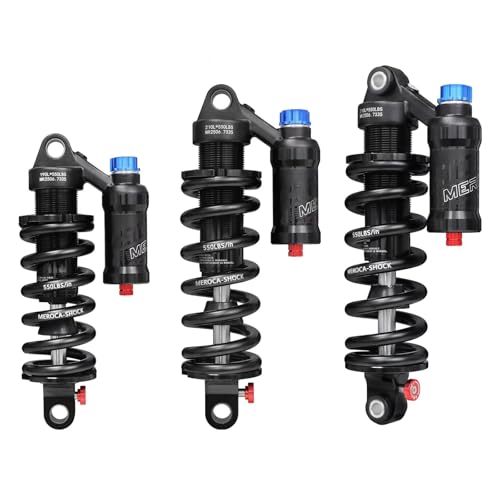
MEROCA Adjustable Air Spring Coil Over Shock Absorber for Mountain Bikes, 190-265mm, 550LBS Spring, Rebound, Compression, Preload, and Air Pressure (200-300 PSI) Fits MTB/Downhill/eBikes
- Adjustable Rebound: Independent rebound control for ride tuning
- Adjustable Compression: Customize shock response for terrain
- Adjustable Preload: Set initial spring tension
As an affiliate, we earn on qualifying purchases.
As an affiliate, we earn on qualifying purchases.