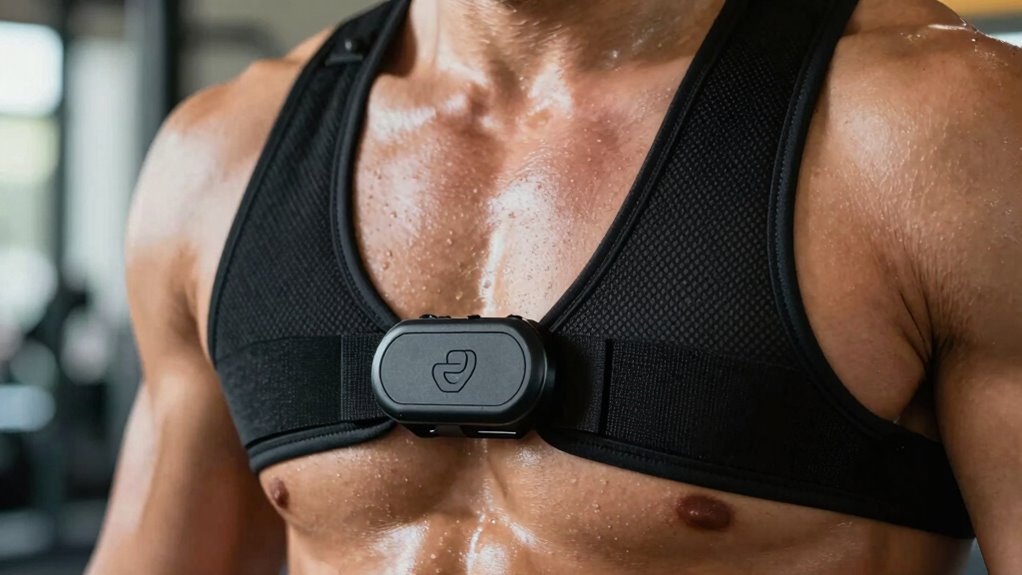
Serious athletes still prefer chest strap heart rate monitors because they offer unmatched accuracy and consistent data, essential for precise training. Unlike optical sensors, they measure electrical signals directly from your heart, reducing errors caused by movement or external light. Their durability, reliable connectivity, and longer battery life make them ideal for intense workouts in any conditions. If you want to understand why these monitors stay top choice for elite athletes, keep exploring further.
Key Takeaways
- Provide higher data accuracy by measuring electrical signals directly from the heart, reducing errors from movement or external factors.
- Ensure reliable real-time data transmission during high-intensity activities through Bluetooth or ANT+.
- Are durable and resistant to sweat, rain, and rigorous use, suitable for long-term training.
- Offer longer battery life, supporting extended workout sessions without interruption.
- Are compatible with various fitness platforms, enabling comprehensive performance analysis for serious athletes.
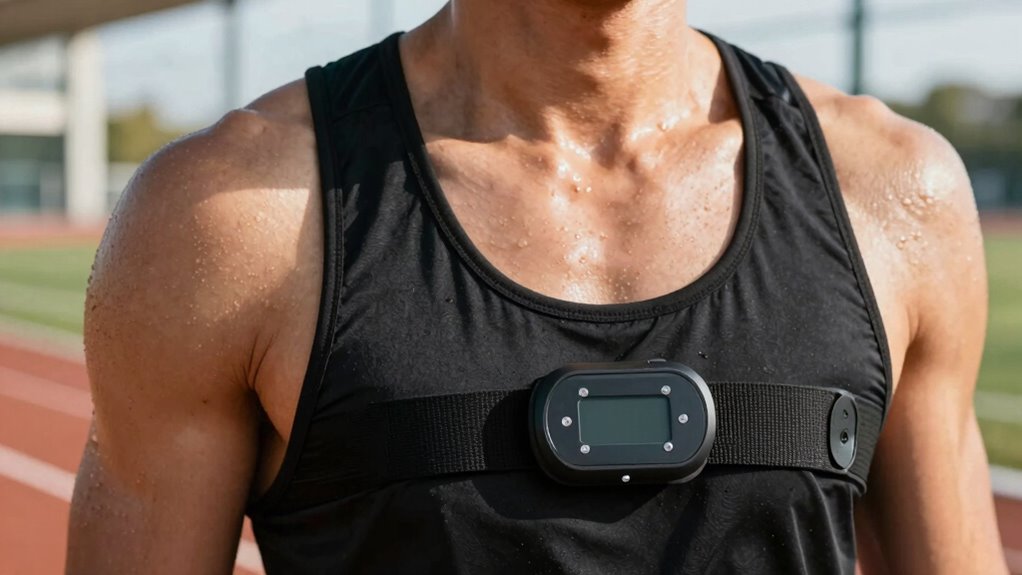
One reason serious athletes continue to favor chest straps is their wireless convenience. Modern models connect seamlessly to your fitness devices via Bluetooth or ANT+, eliminating cumbersome wires or uncomfortable attachments. This wireless setup means you can wear the monitor comfortably during any activity—running, cycling, swimming—and stay connected to your training app or smartwatch without interruptions. This freedom of movement makes it easier to focus on your workout, knowing your heart rate data is being transmitted reliably in the background. This unobtrusive design is especially valuable during high-intensity or long-duration sessions, where every second counts. Furthermore, the wireless technology used in these monitors ensures real-time data transmission with minimal latency, which is crucial for precise training adjustments. Data accuracy is another major reason chest strap monitors remain a preferred choice. They measure electrical signals from your heart directly, providing a level of precision that optical wrist sensors often can’t match. This direct measurement reduces errors caused by movement, skin tone, or external light interference. As a result, you get consistent, trustworthy readings that you can depend on, whether you’re training for a race or just trying to stay within a target heart rate zone. Many models also record detailed metrics that can be uploaded for analysis later, giving you insights into your performance trends over time. Additionally, chest straps tend to be more durable and longer-lasting than wrist-based options, which often need frequent recalibration or replacement. Since they’re designed for rigorous use, they hold up well through sweat, rain, and repeated workouts. Their battery life is often superior, letting you train for hours without concern. Plus, the compatibility with numerous fitness platforms makes them versatile tools for serious athletes who want to integrate heart rate data into broader training plans. In essence, if you’re committed to precise, reliable heart rate monitoring that blends wireless convenience with data accuracy, a chest strap heart rate monitor remains a top choice. It offers the performance edge needed to push your limits and track your progress with confidence. For athletes seeking consistent and precise data, investing in a quality chest strap can make all the difference in achieving your training goals. Additionally, advancements in sensor technology continue to enhance the reliability and comfort of these devices, making them even more appealing for dedicated fitness enthusiasts. Staying updated on the latest monitor features can help you select the best device tailored to your training needs.
chest strap heart rate monitor for athletes
As an affiliate, we earn on qualifying purchases.
As an affiliate, we earn on qualifying purchases.
Frequently Asked Questions
How Do Chest Strap Monitors Compare to Wrist-Based Devices?
You’ll find chest strap monitors generally offer better data accuracy than wrist-based devices because they directly measure your heart rate through wireless connectivity with minimal interference. While wrist-based devices are more convenient, they can sometimes miss subtle changes or be affected by movement. If you want precise, real-time heart rate data, especially during intense workouts, a chest strap monitor is your best choice for reliability.
Are Chest Straps Suitable for Swimming and Water Activities?
You can definitely use chest strap heart rate monitors for swimming and water activities. Their waterproof features guarantee they don’t get damaged by water, unlike some wrist devices. Imagine the comfort of a snug, secure strap that stays put even when you’re diving or splashing around. While some may worry about strap comfort in water, many models are designed specifically to float, resist water, and stay comfortably in place during your aquatic workouts.
What Is the Average Battery Life of Chest Strap Monitors?
You’ll typically get a battery lifespan of about 6 to 12 months from chest strap monitors, depending on power consumption and usage frequency. These devices are designed to be energy-efficient, with low power consumption ensuring longer battery life. Regularly replacing or recharging the batteries keeps your monitor functioning accurately. Remember, higher-end models or those with advanced features might have slightly shorter or longer battery lives based on their power needs.
Can Chest Strap Monitors Track Heart Rate Variability?
Yes, chest strap monitors can track heart rate variability (HRV). They provide high heart rate accuracy and data consistency, making them ideal for detailed analysis like HRV. By capturing precise data, you can monitor your recovery, stress levels, and overall fitness more effectively. This level of detail is why serious athletes prefer chest straps—they trust their accuracy to optimize training and performance.
How Often Should the Chest Strap Be Cleaned and Maintained?
You should clean your chest strap regularly, ideally after every few uses, to guarantee sensor calibration stays accurate and fabric durability isn’t compromised. Use mild soap and water, avoiding harsh chemicals that could damage the sensor or fabric. Check for signs of wear and tear, and replace the strap if the fabric becomes frayed or the sensor no longer calibrates properly. Proper maintenance keeps your monitor reliable and extends its lifespan.
wireless heart rate monitor Bluetooth ANT+
As an affiliate, we earn on qualifying purchases.
As an affiliate, we earn on qualifying purchases.
Conclusion
So, whether you’re pushing your limits or just starting out, a chest strap heart rate monitor quietly proves its worth. It’s funny how, in a world full of high-tech gadgets, this simple device remains trusted—almost as if it’s meant to be. You might never know exactly why, but sometimes, the most straightforward tools deliver the most reliable results. In the end, it’s these little coincidences that keep serious athletes coming back to the chest strap.
professional chest strap HR monitor
As an affiliate, we earn on qualifying purchases.
As an affiliate, we earn on qualifying purchases.
durable sweat-resistant heart rate monitor
As an affiliate, we earn on qualifying purchases.
As an affiliate, we earn on qualifying purchases.