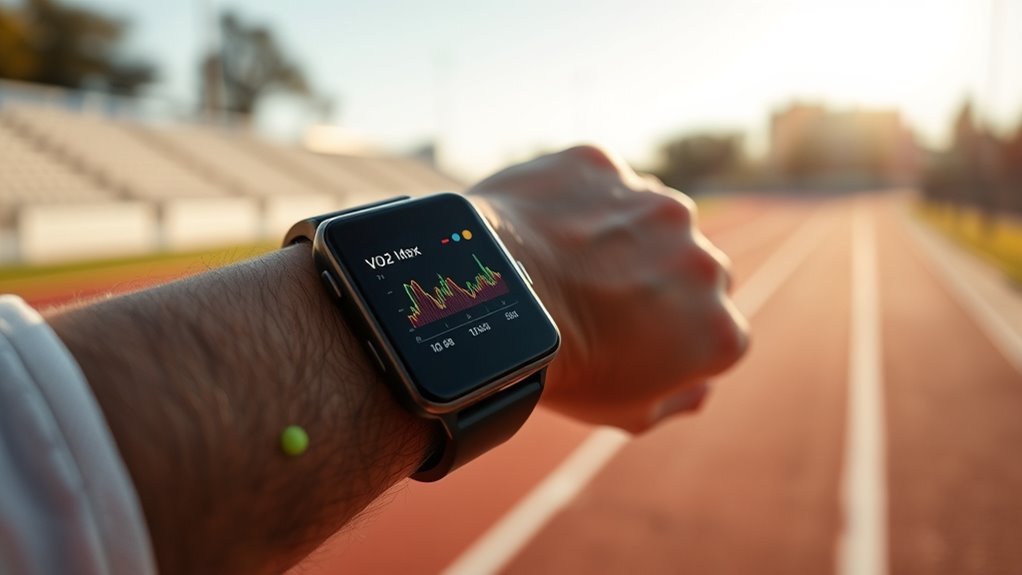
VO2 Max measures how efficiently your body uses oxygen during intense exercise, showing your aerobic fitness level. Wearable trackers estimate it based on heart rate, movement, and activity data, often during running or cycling. They use sensors and algorithms to calculate your fitness capacity without needing lab tests. Understanding your VO2 Max helps you track progress and improve endurance. Keep going, and you’ll discover how these devices can give you a clearer picture of your health and performance.

Get workout gear delivered free — and shop member deals
- Fast, free delivery on millions of items
- Access to Prime Big Deal Days deals on October 6–7
- Prime Video, Amazon Music and more included
Key Takeaways
- VO2 Max measures the maximum amount of oxygen your body can utilize during intense exercise, indicating aerobic fitness.
- Traditional methods involve lab tests with graded exercise protocols to directly measure oxygen intake.
- Wearable fitness trackers estimate VO2 Max using sensors, heart rate, and activity data through advanced algorithms.
- These devices analyze heart rate variability and accelerometer data to assess activity intensity and cardiovascular response.
- Tracking VO2 Max over time helps monitor fitness progress and guides training adjustments for better health and endurance.
As an affiliate, we earn on qualifying purchases.
Understanding the Concept of VO2 Max
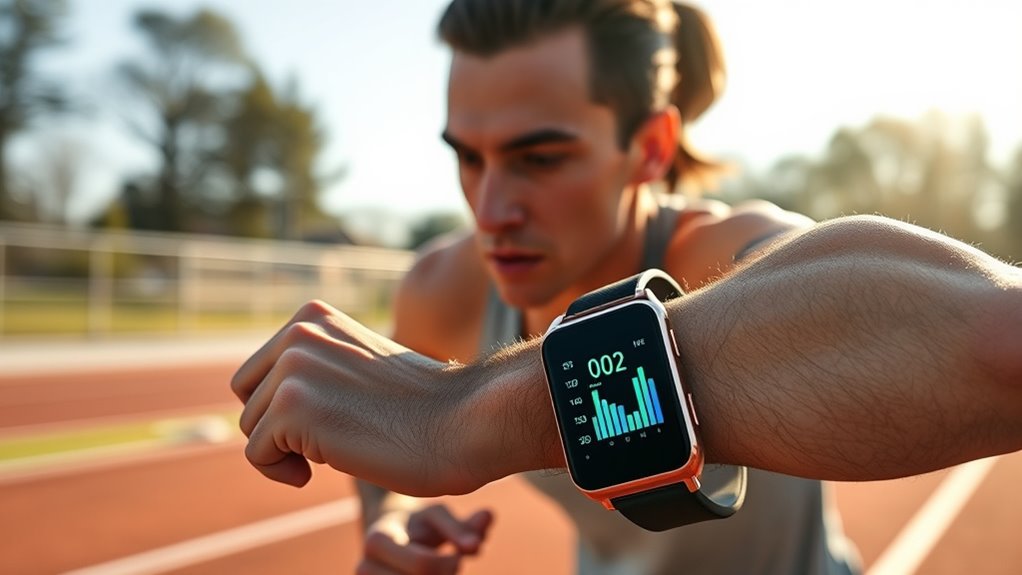
Understanding VO2 max begins with recognizing it as a key measure of your body’s aerobic capacity. In exercise physiology, this term reflects how efficiently your body uses oxygen during intense activity. When you exercise, your muscles depend on oxygen to produce energy, and VO2 max indicates the maximum amount your body can deliver and utilize. Higher aerobic capacity means your heart, lungs, and blood work together more effectively, allowing you to sustain longer, more intense workouts. It’s a crucial indicator of endurance and overall fitness. By understanding this concept, you realize that improving your VO2 max can enhance your athletic performance and health. This measurement offers insight into how well your body adapts to physical challenges, emphasizing the importance of aerobic capacity in your fitness journey. Recognizing the manipulation tactics that can influence perceptions of fitness can also be valuable in maintaining honest self-assessment and motivation. Additionally, understanding how training methods can impact VO2 max helps in designing effective workout routines. Moreover, incorporating aerobic exercise into your routine has been shown to significantly boost VO2 max levels over time. Monitoring progress through regular testing can also help you stay motivated and adjust your training as needed.
As an affiliate, we earn on qualifying purchases.
The Significance of VO2 Max in Fitness and Health
Your VO2 max reveals your aerobic capacity, showing how efficiently your body uses oxygen during exercise. It also predicts your endurance performance, helping you set realistic fitness goals. Additionally, a higher VO2 max can indicate lower health risks, making it a valuable tool for overall wellness. Improving your VO2 max through evidence‑based training can lead to better athletic performance and enhanced health outcomes. Understanding the contrast ratio of your training environment can further optimize your aerobic capacity development. Incorporating proper sleep hygiene can also support recovery and improve your training results. Exploring training techniques that target different energy systems can further enhance your VO2 max and overall fitness. Regular monitoring of your performance metrics can provide valuable feedback for optimizing your training plan.
Indicator of Aerobic Capacity
VO2 max serves as a vital indicator of your aerobic capacity, reflecting how efficiently your body can utilize oxygen during intense exercise. A higher VO2 max means you can sustain higher intensities before fatigue sets in. It relates closely to your anaerobic threshold and lactate threshold, which mark points where your muscles start to produce excess lactate, limiting performance. Understanding this helps you gauge endurance potential and fitness level. Additionally, measurement methods such as fitness trackers and lab testing can help you monitor your VO2 max more accurately.
Predictor of Endurance Performance
Since VO2 max directly influences your ability to sustain high-intensity activities, it serves as a key predictor of overall endurance performance. A higher VO2 max indicates better training adaptation, meaning your body becomes more efficient at delivering and utilizing oxygen during exercise. This efficiency translates into improved stamina and the capacity to perform at higher intensities for longer periods. Tracking your VO2 max helps reveal your athletic potential, allowing you to tailor training programs that optimize endurance gains. It’s not just about pushing harder; understanding this measurement guides you to make informed adjustments that enhance your aerobic capacity. Additionally, advancements in modern fitness technology enable more accurate and accessible methods for measuring VO2 max outside of clinical settings. The development of Auditory Processing Disorder sound therapy techniques also emphasizes the importance of personalized intervention strategies, which can be relevant for athletes seeking to optimize sensory processing for better performance. Ultimately, maintaining or improving your VO2 max boosts your endurance, making you more resilient in various physical activities and sports, and connected fitness devices are increasingly providing real-time feedback to help monitor these improvements more effectively.
Health Risk Assessment
Have you ever wondered how your cardiovascular health is assessed beyond traditional methods? VO2 max provides a valuable health risk assessment by measuring how efficiently your body uses oxygen during exercise. A higher VO2 max indicates better cardiovascular health, meaning your heart and lungs work effectively together. Conversely, a low VO2 max can signal increased risk for heart disease and other health issues. Tracking your VO2 max helps you understand your fitness level and potential health vulnerabilities. This measurement also directly impacts athletic performance, as a higher VO2 max allows you to exercise longer and more intensely. Regularly monitoring it gives you insight into your progress and motivates lifestyle changes to improve overall health and reduce risks associated with poor cardiovascular function.
running activity tracker with VO2 Max
As an affiliate, we earn on qualifying purchases.
As an affiliate, we earn on qualifying purchases.
How VO2 Max Is Traditionally Measured
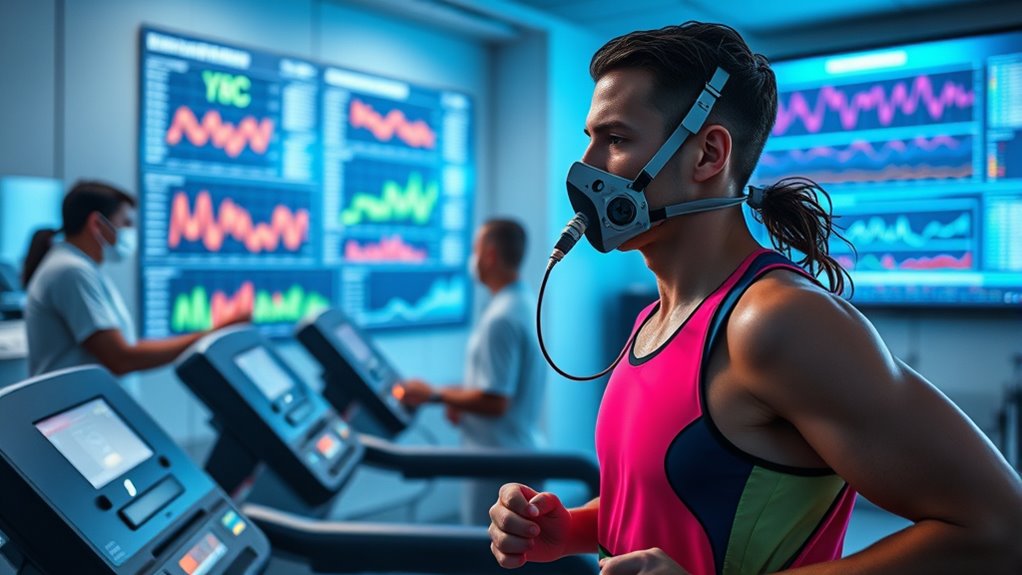
Traditionally, measuring VO2 Max involves having you perform a graded exercise test on a treadmill or cycle ergometer while your oxygen intake is closely monitored. This method is rooted in exercise physiology and is considered the gold standard for evaluating aerobic capacity. During laboratory testing, your workload increases incrementally until exhaustion, while specialized equipment measures the volume of oxygen you consume and carbon dioxide you produce. These measurements help determine your maximal oxygen uptake, reflecting your cardiovascular and respiratory efficiency. Because of its accuracy, this testing is often used in research and clinical settings to evaluate athletic performance or health status. Additionally, understanding aerobic capacity can help tailor training programs to improve overall endurance and performance. To better comprehend your fitness level, this testing offers a comprehensive assessment of your cardiovascular health, which is crucial for designing effective training regimens. Modern wearable devices and fitness trackers are increasingly incorporating estimates of VO2 Max based on innovative technology, making it accessible to a broader population. Newer methods utilize wearable sensors and algorithms to estimate VO2 Max more conveniently outside of laboratory environments.
As an affiliate, we earn on qualifying purchases.
The Role of Wearable Devices in Estimating VO2 Max
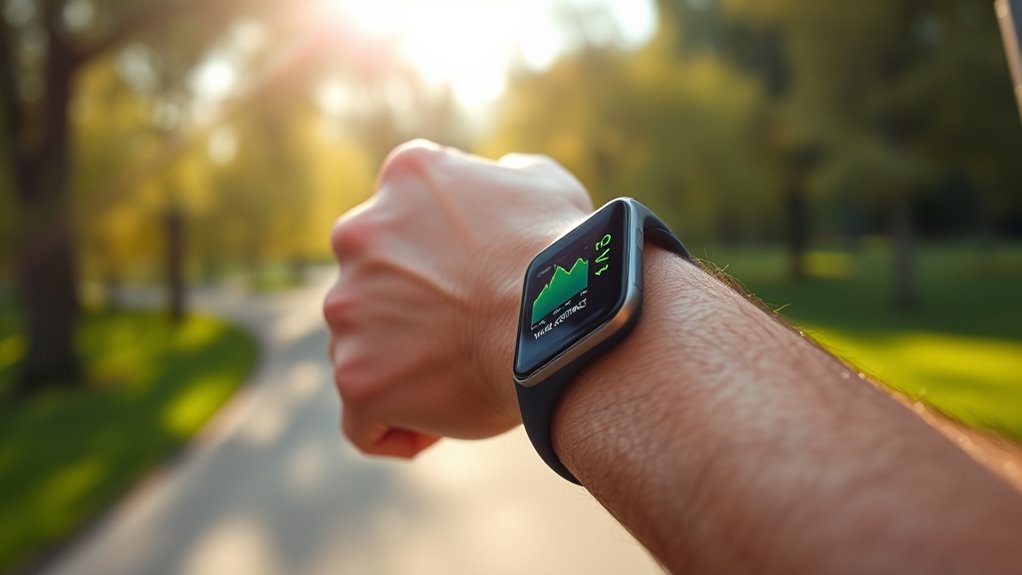
Wearable devices have revolutionized how you can estimate your VO2 Max outside the lab by providing convenient, real-time data during your workouts. These devices use advanced wearable technology and sensors to monitor your heart rate, pace, and other metrics, giving you immediate insights into your fitness level. With fitness tracking capabilities, they analyze your performance patterns over time, helping you track improvements and set realistic goals. Many wearables incorporate algorithms that estimate VO2 Max based on your activity data, making it easier to understand your cardiovascular fitness without specialized equipment. This accessibility motivates you to stay consistent and engaged in your training, turning complex measurements into actionable information right on your wrist or fitness device. Additionally, some devices utilize evidence-based insights to improve the accuracy of their estimations, ensuring you have reliable data to guide your fitness journey. Understanding how these devices utilize sensor data can further enhance your confidence in their estimates and help you optimize your training. By combining performance metrics with personalized feedback, these trackers empower you to make informed decisions about your exercise routines. Moreover, incorporating natural movement patterns can improve the precision of VO2 Max estimations, making your tracking even more reliable. Furthermore, advancements in wearable technology continue to enhance measurement accuracy, providing more detailed insights into your cardiovascular health.
Different Methods Trackers Use to Calculate VO2 Max

Different trackers use a variety of methods to estimate your VO2 max, including analyzing heart rate data and accelerometer readings. They also rely on estimation algorithms that process this information to provide a score. Understanding these methods helps you see how your device calculates your fitness level more accurately. Additionally, some devices incorporate advanced sensor technology to improve the precision of their estimates.
Heart Rate Analysis Methods
Heart rate analysis methods are essential for estimating VO2 max accurately, as they rely on your heart’s response to exercise to gauge fitness levels. These methods often analyze heart rate variability, which reflects your autonomic nervous system’s balance and can indicate how efficiently your heart responds under stress. By tracking changes in your heart rate during activity, devices estimate your metabolic equivalents (METs), representing the energy cost of physical activities. Higher VO2 max values typically correlate with a more responsive heart rate and better cardiovascular health. Wearables monitor these parameters continuously, using algorithms that interpret fluctuations and overall patterns. This approach allows for a personalized assessment of your aerobic capacity, providing insights into your endurance and helping tailor training programs for ideal performance.
Accelerometer Data Usage
Accelerometer data plays a fundamental role in how activity trackers estimate VO2 max by measuring movement patterns and intensity. By analyzing accelerometer data, these devices recognize specific activities such as walking, running, or cycling through activity recognition techniques. This information helps determine your level of effort and movement consistency, which are essential for estimating aerobic capacity. When you engage in physical activity, the accelerometer detects changes in motion, allowing the tracker to differentiate between resting and active states. This data provides insights into your activity duration and intensity, which are necessary components in calculating VO2 max. Accurate activity recognition ensures that the tracker captures relevant movement patterns, giving a more precise estimate of your cardiovascular fitness level.
Estimation Algorithms Employed
To estimate VO2 max, activity trackers employ a variety of algorithms that interpret the data collected from sensors and user inputs. Many use machine learning models trained on large datasets to improve accuracy, adapting to individual fitness levels. These algorithms analyze factors like heart rate, pace, and activity type, often incorporating data calibration to correct sensor inaccuracies. By continuously refining their estimations through machine learning, trackers can account for variations in sensor performance and user behavior. Some methods combine multiple data points, such as GPS and accelerometer readings, to enhance precision. Overall, these sophisticated algorithms enable trackers to provide more reliable VO2 max estimates, giving you a clearer picture of your cardiovascular fitness without the need for laboratory testing.
Interpreting Your VO2 Max Results and Tracking Progress
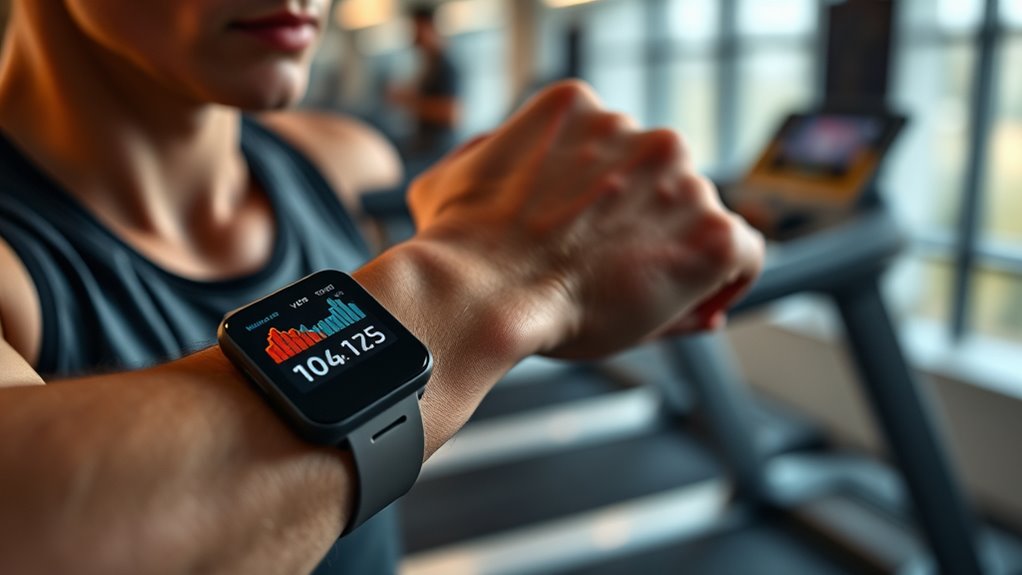
Understanding your VO2 Max results is essential for gauging your cardiovascular fitness, but interpreting these numbers can sometimes be confusing. Your results serve as a baseline to measure training improvements over time. Look for upward trends, which indicate increasing endurance and fitness. Keep in mind that individual factors like age and genetics influence your score, so compare your current results to your past ones rather than others’. Tracking progress helps you adjust your training intensity and incorporate nutritional strategies that support recovery and performance. Consistent monitoring allows you to identify plateaus or declines, prompting changes in your workout plan. Remember, small improvements add up, and understanding these results empowers you to optimize your fitness journey effectively.
Frequently Asked Questions
How Accurate Are Wearable VO2 Max Estimates Compared to Laboratory Tests?
Wearable VO2 max estimates are generally less accurate than lab equipment, but they offer a convenient way to track your fitness progress. While trackers use algorithms that approximate measurement precision, factors like movement, heart rate variability, and device quality can affect accuracy. Lab tests provide highly precise, controlled measurements, but wearables give you useful, real-world insights—even if they’re slightly less exact.
Can VO2 Max Be Improved Through Specific Training Programs?
Yes, you can improve your VO2 max through targeted training methods like interval training and endurance runs. Incorporate nutritional strategies that boost energy levels and aid recovery, such as balanced carbs and proper hydration. Consistent effort and gradually increasing intensity challenge your cardiovascular system, leading to better oxygen utilization. Combining specific training and nutrition helps you optimize your VO2 max, enhancing overall fitness and athletic performance over time.
How Often Should I Track My VO2 Max for Meaningful Progress?
You should aim to track your VO2 max every 4 to 6 weeks for meaningful progress. Consistent tracking helps you identify trends and evaluate your training effectiveness. Keep your training frequency steady, so changes in VO2 max reflect true improvements rather than fluctuations. Regular checks motivate you to stay committed and adjust your workouts as needed, ensuring you’re continuously pushing toward higher fitness levels.
Does Age or Gender Significantly Affect VO2 Max Readings?
In the days of chivalry, age influence and gender differences play a role in VO2 max readings. As you age, your VO2 max naturally declines, and men typically have higher scores than women due to physiological differences. However, regular training can mitigate these effects. So, don’t let age or gender discourage you—stay consistent and focus on your progress, regardless of these factors.
Are There Any Health Risks Associated With Measuring VO2 Max?
Measuring VO2 max is generally safe, but there are some health risks if you have underlying conditions like heart issues or respiratory problems. Always guarantee proper measurement accuracy by using reliable devices and following guidelines. If you’re concerned about safety, consult with a healthcare professional beforehand. This way, you minimize risks and get accurate results that truly reflect your fitness level without compromising your health.
Conclusion
Understanding your VO2 max is like having a window into your cardiovascular engine. Wearable trackers make it easier to keep an eye on your fitness journey, but remember, they’re like weather vanes — good at sensing the wind but not always perfect. Use your results as a compass, guiding you toward better health. Keep pushing forward, and over time, you’ll see your fitness levels rise like a phoenix taking flight.
Fall Picks
fall essentials
As an affiliate, we earn on qualifying purchases.