TL;DR

Get workout gear delivered free with Prime
- Fast, free delivery on millions of items
- Prime Video, Amazon Music and more included
- Member-only deals all year
Certified personal trainer Francesco Zen told Fit&Well that shifting weight toward the outer edges of the feet and pressing the knees outward helped him engage his glutes during overhead squats. He recommends building mobility and stability progressively, starting with bodyweight or a dowel rather than a loaded barbell.
Certified personal trainer Francesco Zen says shifting weight toward the outer edges of the feet and pushing the knees outward helped him engage his glutes while performing an overhead squat, according to a report by Fit&Well. The advice matters for people learning the demanding movement because Zen recommends building the required mobility and stability with easier variations before attempting a barbell overhead.
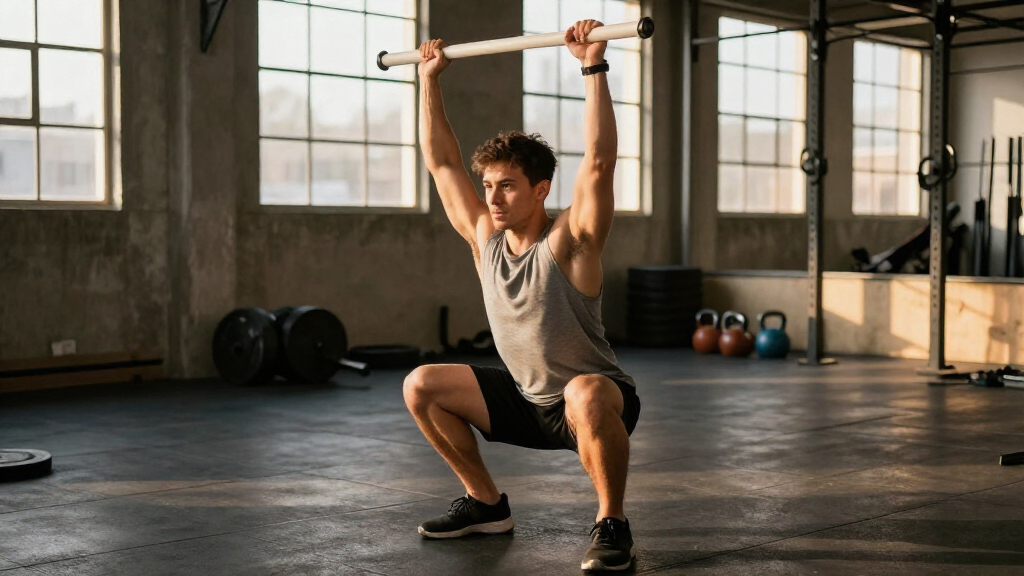
Zen, founder of ZLIFE, described the overhead squat as a full-body movement requiring mobility, core activation and flexibility. In the exercise, a person squats while holding a pipe or bar overhead. Zen told Fit&Well that stability and activation through the quadriceps, core and especially the glutes support the movement. He said the glutes help support the squat from its start through its finish.
His specific cue is to keep the knees pressing outward as the body lowers and to shift weight toward the outer parts of the feet. Zen said changing the angle of the position can alter how the movement feels. This is his coaching advice and personal experience, not a guarantee that the cue will work identically for everyone.
Fit&Well’s report recommends progressing in stages. Beginners can first practice a bodyweight squat with their arms raised, then use a gym dowel, plastic pipe or broomstick to rehearse overhead positioning. Zen also recommends the Frankenstein squat, with arms extended forward at shoulder height, as a more stable way to practice related core, glute and mobility demands. The article advises seeking help from an exercise professional or spotter when learning the more advanced overhead squat.
A Cue for Safer Skill Progression
The overhead squat places demands on several parts of the body at once: the lifter must squat while maintaining an overhead position and keeping the implement steady. Zen’s cue gives learners a practical focus—knee direction and foot pressure—rather than treating the movement as simply a deeper squat. The report also stresses that improved technique depends on practice and the mobility and stability needed to control the position.
For readers, the main takeaway is that the movement does not need to begin with a loaded barbell. Using bodyweight or a light training stick can let someone rehearse balance and alignment first. That staged approach may also be useful for people who do not intend to lift overhead: the article says preparatory work can help develop squat mechanics, though it does not present measured evidence of a specific benefit.
Products Worth Considering

Fitbit Versa Smart Watch – Black Aluminum, One Size (S & L Bands Included)

Fitbit Sense Advanced Smartwatch – Sage Grey/Silver (One Size, S & L Bands Included)

Philips Sonicare DiamondClean 9500 Smart Electric Toothbrush with 2 Brush Heads, Black
As an affiliate, we earn on qualifying purchases.
From Bodyweight to Overhead Load
The source report presents the overhead squat as an advanced variation rather than a beginner exercise. It recommends having adequate mobility in the ankles, hips, spine and shoulders before progressing. Suggested early drills include squatting with the arms raised and using wall-based squat-and-reach movements to work on shoulder and spinal positioning.
After that, a dowel or plastic pipe can be held overhead to practice alignment without the demands of a barbell. The Frankenstein squat offers another intermediate option: the arms extend forward, or a bar rests across the front of the shoulders, which Zen says is easier to stabilize than an overhead position. The source does not provide a training schedule, load progression or formal assessment criteria for moving between stages.
“The glutes support the whole movement, top to bottom.”
— Francesco Zen, speaking to Fit&Well
What the Report Does Not Establish
The article reports Zen’s personal experience and coaching cue; it does not cite a study comparing this foot-and-knee positioning with other techniques or establish that it is suitable for every lifter. Individual mobility, comfort and technique can differ. The source also gives no publication date, detailed progression timeline or objective test for deciding when someone is ready to add weight.
It does not describe Zen’s own training history in detail or quantify how much the cue changed his performance. Readers should not treat the tip as a substitute for individualized instruction, particularly if they have pain, movement limitations or difficulty maintaining control of the implement.
Practice Before Adding Weight
The source outlines a progression rather than a scheduled follow-up: begin with bodyweight movement and raised arms, then rehearse the position with a dowel or similar lightweight object. A Frankenstein squat can provide another step before trying the full overhead version. The report recommends working with an exercise professional or spotter when learning the advanced movement, and says regular practice is needed to develop its mobility and stability demands.
No further announcement or training milestone is specified in the report. Anyone experiencing discomfort or unsure whether they can maintain a stable position should stop and seek qualified coaching rather than advancing to a loaded barbell on the basis of a single cue.
Key Questions
What squat cue did Francesco Zen share?
Zen advised shifting weight toward the outer edges of the feet and pushing the knees outward while lowering, which he says helped him engage his glutes.
Should beginners start with a barbell overhead?
No. The Fit&Well report recommends beginning with bodyweight practice and then using a dowel, plastic pipe or similar light object to rehearse alignment before attempting a barbell.
What is a Frankenstein squat?
It is a squat variation performed with the arms extended forward at shoulder height, or with a bar balanced across the front of the shoulders. Zen says that position is easier to stabilize than holding a bar overhead.
What abilities does an overhead squat require?
Zen says it calls for mobility, core activation and flexibility. The report specifically points to the ankles, hips, spine and shoulders as areas to prepare.
Does the cue guarantee better form?
No. It is Zen’s reported coaching advice and personal experience; the source does not establish that the cue works for everyone. A qualified exercise professional can help assess technique and appropriate progressions.
Source: rss