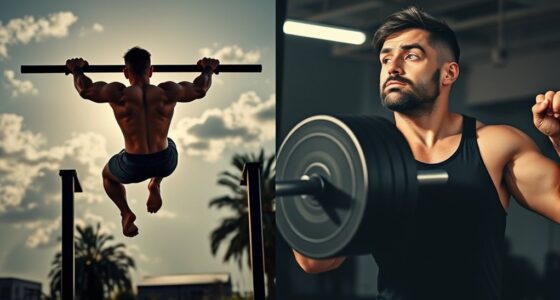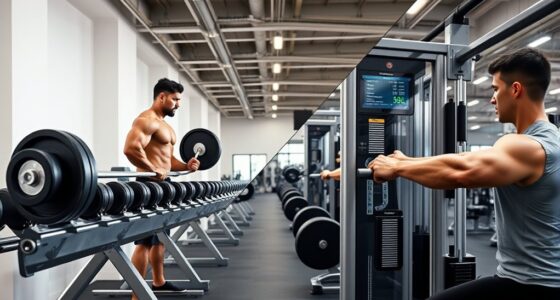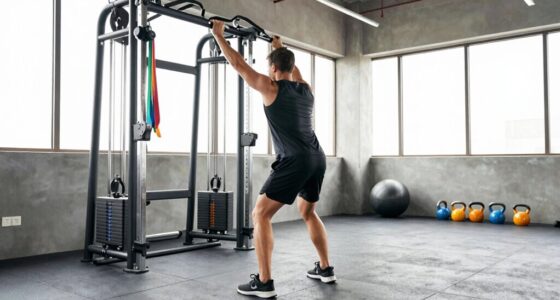

When you’re looking to maximize your workout, supersets might be your best bet if you’re short on time or craving intensity. They keep your heart rate up and promote quicker muscle fatigue, which can lead to faster growth. However, if you’re focused on perfecting your form and prefer a steady progression, traditional sets work well. Ultimately, it depends on your goals and preferences. Stick around to see how each method can fit into your routine!
Key Takeaways
- Supersets reduce rest time between exercises, maximizing workout efficiency and calorie burn compared to traditional sets.
- Traditional sets allow for focused work on specific muscle groups, which is beneficial for perfecting form and technique.
- Supersets promote faster muscle fatigue and growth due to continuous tension and elevated heart rates, enhancing overall intensity.
- Traditional sets are better suited for beginners who need to gauge progress and gradually increase lifting loads.
- The choice between supersets and traditional sets depends on individual goals, with supersets favoring intensity and traditional sets emphasizing control.

When you hit the gym, you might wonder whether to stick with traditional sets or give supersets a try. Traditional sets involve performing a specific number of repetitions for one exercise before resting, whereas supersets require you to do two exercises back-to-back with little to no rest in between. Both methods have their merits, but if you’re looking for increased workout efficiency and want to push your limits, supersets might be the way to go.
Supersets can substantially enhance your workout efficiency by maximizing your time in the gym. Instead of resting between sets, you move directly to another exercise. This not only keeps your heart rate up, but it also helps you hit different muscle groups in a shorter period. For instance, you could pair a chest exercise with a back exercise. While one muscle group is working, the other can rest, allowing you to maintain intensity throughout your session. This approach not only saves time but also promotes muscle fatigue more quickly, which can lead to greater gains.
When you engage in supersets, you challenge your muscles in ways that traditional sets might not. By targeting opposing muscle groups or even the same group with a different angle, you push your muscles to work harder and reach fatigue faster. This increased muscle fatigue can stimulate muscle growth and strength improvements, making your workouts more effective. Additionally, the elevated heart rate during supersets can enhance calorie burning, contributing to weight loss or muscle definition goals. Incorporating ventilation considerations in your workout space can also improve your overall performance by ensuring a comfortable environment.
However, traditional sets have their own advantages. They allow for more focused work on specific muscle groups, giving you the time to perfect your form and technique. If you’re new to weightlifting, sticking with traditional sets can help you build a strong foundation. They also provide a more manageable approach to gauging your progress since you can easily track the weights and reps for each exercise.
Ultimately, the choice between supersets and traditional sets comes down to your goals and preferences. If you’re short on time or want to amp up your intensity, supersets can be a fantastic option. On the other hand, if you’re aiming for precision and gradual progression in your lifts, traditional sets might suit you better. Whichever method you choose, remember that consistency and dedication will always be key to achieving your fitness goals.

Adjustable Dumbbell Set Pair 50 lb, Adjustable Dumbbells 10-in-1 Free Weight Set, 1-Second Dial Weight Adjustment,Space-Saving Design with Storage Base, Home Gym Strength Training Equipment
ADJUSTABLE DUMBBELL SET 10-IN-1:This adjustable dumbbell set replaces multiple dumbbells with 10 weight options in one:6/12/16/22/25/31/35/41/44/50 lbs. Ideal…
As an affiliate, we earn on qualifying purchases.
As an affiliate, we earn on qualifying purchases.
Frequently Asked Questions
Can Beginners Use Supersets Effectively in Their Workouts?
Absolutely, beginners can use supersets effectively in their workouts! Incorporating supersets for beginners into your routine can save time and boost intensity. You’ll find that combining two exercises back-to-back helps build endurance and strength without overwhelming yourself. Just focus on beginner-friendly routines, starting with lighter weights and manageable exercises. As you gain confidence and experience, you can gradually increase the complexity and weight of your supersets, leading to great progress!
How Do Supersets Impact Muscle Recovery Time?
Supersets can actually reduce muscle recovery time, don’t you think? By combining exercises back-to-back, you create muscle fatigue, which forces your body to adapt quicker. This increased intensity enhances workout efficiency, allowing you to work different muscle groups while one rests. As a result, you’ll likely find you can return to training those muscles sooner than with traditional sets, leading to faster overall progress in your fitness journey.
Are There Specific Exercises Better Suited for Supersets?
Yes, some exercises are definitely better suited for supersets. When you choose exercises that target opposing muscle groups, like bicep curls followed by tricep extensions, you maximize efficiency and minimize rest time. Incorporating compound movements, such as squats and bench presses, can also enhance your workout structure, pushing your limits effectively. Focus on exercise selection that promotes balance and allows you to maintain intensity without compromising form or risking injury.
Can I Combine Strength and Cardio in Supersets?
Sure, you can combine strength and cardio in supersets—who wouldn’t want to tire themselves out even faster? It’s a great way to boost muscle endurance while cramming in a workout that feels efficient. By alternating between strength exercises and cardio bursts, you maximize your time and keep your heart rate up. Just remember, it’s not about how much you lift, but how quickly you can gas yourself out!
What Equipment Is Needed for Effective Superset Training?
For effective superset training, you’ll need a variety of equipment to keep your workouts dynamic. Dumbbells, resistance bands, and kettlebells are great for strength exercises, while a jump rope or medicine ball can add cardio elements. If you’ve got the space, a squat rack or bench can enhance your routine. Make sure to optimize your workout space for seamless shifts between exercises, ensuring you stay focused and energized throughout your session.

Heavy Resistance Bands for Working Out, 300LBS Exercise Bands with Handles, Workout Bands for Men, Weight Fitness Bands Set for Muscle Training, Strength, Slim, Yoga, Home Gym Equipment
Upgraded 300LB Resistance Band: Fed up with flimsy, low-resistance bands that just don’t cut it? So were we….
As an affiliate, we earn on qualifying purchases.
As an affiliate, we earn on qualifying purchases.
Conclusion
In the debate between supersets and traditional sets, it’s clear that both have their merits. Supersets can boost intensity and save time, making them great for those looking to maximize efficiency. On the other hand, traditional sets allow for better focus on individual muscle groups and form. Ultimately, it boils down to your goals and preferences. Experiment with both methods to see what feels right for you, and you’ll discover the most effective way to reach your fitness aspirations.

3 Tier Dumbbell Rack, Weight Rack for Home Gym, 390 lb Capacity
Adjustable Width for Versatile Storage – Designed with adjustable horizontal bars, this 3 tier dumbbell rack accommodates a…
As an affiliate, we earn on qualifying purchases.
As an affiliate, we earn on qualifying purchases.

Fitbit Inspire 3 Health & Fitness Tracker with Stress Management, Workout Intensity, Sleep Tracking, 24/7 Heart Rate – 3-Month Google Health Premium Membership Included – Midnight Zen/Black
Inspire 3 is the tracker that helps you find your energy, do what you love and feel your…
As an affiliate, we earn on qualifying purchases.
As an affiliate, we earn on qualifying purchases.