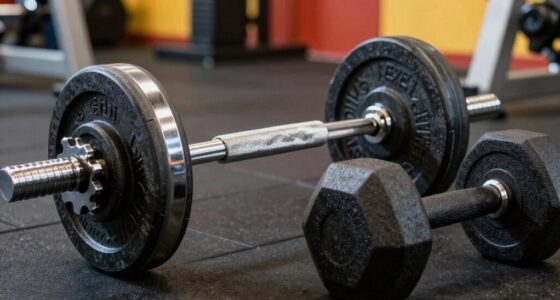
A deadlift platform for your garage gym provides a stable, level surface that protects your floor and equipment while enhancing safety during heavy lifts. It’s usually made from durable materials like wood, rubber, or composites, which absorb shock and reduce noise. Choosing the right materials guarantees stability, longevity, and safety by preventing slips and promoting proper lifting biomechanics. Keep exploring to discover how the ideal platform can boost your lifting experience and protect your space.

Get workout gear delivered free with Prime
- Fast, free delivery on millions of items
- Prime Video, Amazon Music and more included
- Member-only deals all year
Key Takeaways
- Deadlift platforms protect garage floors and equipment by absorbing impact and distributing weight evenly.
- They are typically made from durable materials like layered wood and rubber to ensure safety and stability.
- Proper platform design provides a flat, level surface to improve lifting biomechanics and technique.
- Eco-friendly and low-maintenance options support sustainability and long-term use in garage gyms.
- Safety features such as anti-slip surfaces and shock absorption enhance stability and reduce injury risk.
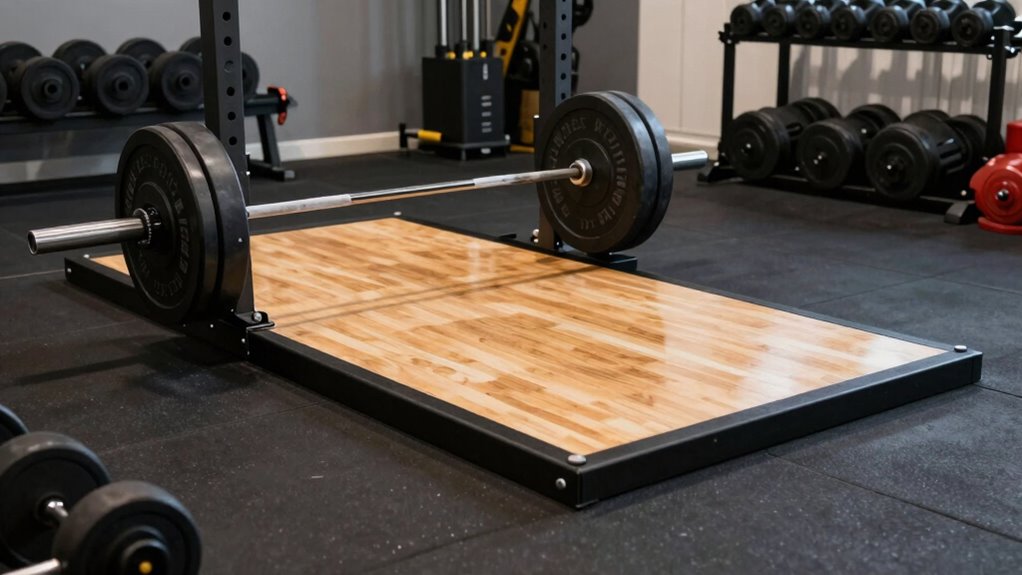
If you’re setting up a garage gym, understanding the role of deadlift platforms is vital for safe and effective lifting. These platforms serve as dedicated spaces designed to minimize damage to your flooring, protect your equipment, and provide a stable surface that improves your lifting biomechanics. When you lift, proper form and stability are critical, and a good platform helps you maintain balance, especially during heavy lifts. It’s not just about safety; a well-designed platform can enhance your performance by offering a consistent, level surface that supports your lifting mechanics. The materials used in your deadlift platform are essential because they influence durability, shock absorption, and overall safety. Common platform materials include wood, rubber, and composite surfaces. Wooden platforms are popular because they are sturdy, easy to customize, and provide excellent grip. You might opt for a layered design with a plywood top, combined with a shock-absorbing underlayer, to reduce impact stress on your joints and flooring. Rubber mats or tiles are also used, especially for the top layer, as they absorb impact and reduce noise. Some lifters combine materials—like a plywood base topped with rubber mats—to optimize both stability and shock absorption. Choosing the right platform material depends on your lifting style, space constraints, and budget, but always prioritize durability and safety. Additionally, understanding biodiversity and sustainable living practices can inspire environmentally conscious choices in selecting materials that are eco-friendly and sustainable, reducing your gym’s ecological footprint. Your deadlift platform should also promote proper lifting biomechanics. This means providing a flat, level surface that encourages correct posture and technique. An uneven surface can throw off your balance, increase the risk of injury, and compromise your form. When you’re deadlifting, your feet need firm, stable footing to generate maximum power and maintain control. A good platform ensures your stance remains consistent, helping you lift with proper alignment. Incorporating anti-slip features into your platform design can further enhance safety during intense lifts. Additionally, selecting shock-absorbing materials can help reduce joint stress and extend the lifespan of your flooring and equipment. Using low-maintenance materials can also prolong the life of your platform, ensuring it remains safe and effective over time. The right platform material and construction support these biomechanics by offering the stability and grip you need to perform lifts safely and efficiently.
deadlift platform for garage gym
As an affiliate, we earn on qualifying purchases.
As an affiliate, we earn on qualifying purchases.
Frequently Asked Questions
How Long Does a Typical Deadlift Platform Last?
A typical deadlift platform lasts around 5 to 15 years, depending on material durability and usage. If you select high-quality wood or rubber, it’ll withstand frequent lifts longer. Regular maintenance also helps prolong its life. When considering cost comparison, investing in a durable platform might be pricier initially but saves money over time by resisting wear and tear. Ultimately, the lifespan varies based on quality and how often you use it.
Can I Build a DIY Deadlift Platform?
Absolutely, you can build a DIY deadlift platform, like assembling a puzzle piece by piece. Start with careful material selection—wood, rubber, or composite—and plan your design for durability and safety. With some basic tools and a bit of patience, you’ll create a sturdy, functional platform tailored to your garage gym. Just make certain your measurements are precise, and choose high-quality materials to withstand heavy lifts.
Are There Specific Brands Recommended for Garage Gym Platforms?
Yes, there are several trusted brands for garage gym platforms. Brands like Rogue, Titan, and Eleiko are known for their platform durability and quality construction. These brands offer sturdy materials that withstand heavy lifting, ensuring safety and longevity. When choosing a platform, look for reputable brand recommendations and durable materials to support your lifting routine. Investing in a quality brand guarantees your platform will last and perform well over time.
How Do I Maintain My Deadlift Platform?
Think of your deadlift platform as a trusted friend needing care. To maintain its material durability, regularly sweep away dust and debris, and wipe down with a damp cloth to prevent dirt buildup. Check for any signs of wear or damage, especially on the surface and edges. Applying a protective sealant annually can extend its lifespan. Consistent maintenance keeps your platform sturdy, safe, and ready for every lift.
Is a Thicker Platform Better for Heavy Lifting?
A thicker platform can be better for heavy lifting because it offers more durability and shock absorption. When choosing material, opt for high-density wood or rubber, which withstands heavy weights longer. Keep cost considerations in mind—thicker, high-quality materials tend to be pricier but provide better longevity and safety. Ultimately, investing in a thicker platform with durable materials helps protect your floor and equipment during intense lifts.
As an affiliate, we earn on qualifying purchases.
Conclusion
By investing in a deadlift platform, you create a safer, more professional setup for your garage gym. Imagine you’re lifting heavy, and your platform absorbs the impact, protecting your floors and reducing noise. For example, a hobbyist improved their lifts and avoided floor damage by installing a sturdy platform. With the right platform, you’ll enjoy consistent, safe training sessions—making your garage gym feel like a true strength training sanctuary.
heavy lifting platform with shock absorption
As an affiliate, we earn on qualifying purchases.
As an affiliate, we earn on qualifying purchases.
As an affiliate, we earn on qualifying purchases.
Halloween Picks
halloween
As an affiliate, we earn on qualifying purchases.