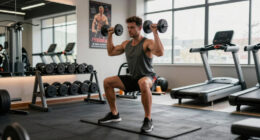
Choosing between dumbbells and kettlebells depends on your fitness goals. Dumbbells are great for targeted, controlled exercises and are easy to store, perfect for building strength and muscle isolation. Kettlebells excel in dynamic, full-body movements that boost cardio, balance, and functional fitness. Consider your space and workout style. Want to understand which tool aligns best with your goals? Keep exploring to find the perfect fit for your routine.
Key Takeaways
- Dumbbells are ideal for targeted, controlled strength training and muscle isolation, while kettlebells excel in dynamic, full-body, ballistic exercises.
- Dumbbells are compact and easy to store, making them suitable for limited space, whereas kettlebells require more storage due to their bulkier design.
- Kettlebells promote cardiovascular fitness and improve balance through swinging and ballistic movements, unlike dumbbells which focus on stability.
- Both tools support high-repetition routines to build muscular endurance, but your choice depends on your fitness goals—strength vs. functional and cardio training.
- Select dumbbells for precise, controlled workouts and kettlebells for functional, dynamic, full-body conditioning exercises.
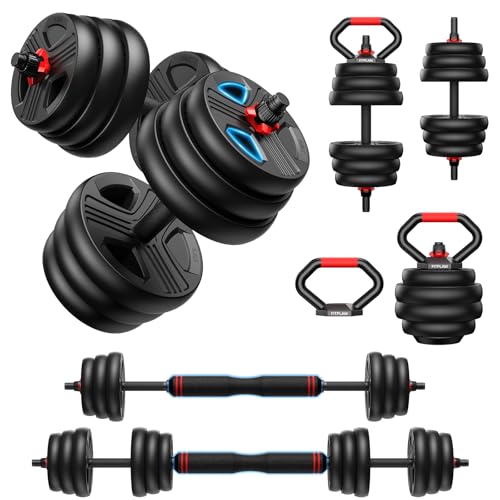
FDS1 Adjustable dumbbell set, 45lbs Free Weights set with upgraded nut, 5 in 1 Weight Set Used as Kettlebells, Barbell, Push up Stand, Fitness Exercise for Home Gym Suitable Men/Women
【5 in 1 Multifunctional Dumbbell Set】This versatile dumbbell set quickly converts into dumbbells, barbells, kettlebells, and push-up stands,…
As an affiliate, we earn on qualifying purchases.
As an affiliate, we earn on qualifying purchases.
Comparing Design, Handling, and Versatility

When it comes to design, handling, and versatility, dumbbells and kettlebells each have distinct advantages. Dumbbells feature a straightforward, ergonomic design that offers excellent grip comfort, making them easy to hold during various exercises. They typically come with a compact shape, allowing for simple storage options—stackable or in racks—saving space in your workout area. Kettlebells, on the other hand, have a unique shape with a handle that facilitates dynamic movements like swings and snatches, but their bulkier design can make storage more challenging. The handle’s shape provides a secure grip, especially during high-rep or ballistic exercises. Overall, your choice depends on whether you prioritize comfort and convenience or dynamic versatility in your workout setup.

Fitvids Kettlebell Sets 4 Piece Strength Training KettleBells Weight Set 5lb, 10lb, 15lb, 20lb Kettle Bell
Set of 4 Kettlebells: Includes 5lb, 10lb, 15lb and 20lb kettlebell. The set offers several weights to help…
As an affiliate, we earn on qualifying purchases.
As an affiliate, we earn on qualifying purchases.
Assessing Benefits for Different Fitness Goals

Choosing between dumbbells and kettlebells depends largely on your specific fitness goals, as each tool offers distinct benefits. If you’re aiming to improve muscle engagement, dumbbells allow for targeted, controlled movements that isolate muscles effectively. For cardio benefits, kettlebells excel with dynamic swings and ballistic movements that elevate your heart rate. Consider your goals:
- Focused muscle engagement with dumbbells for strength training
- Full-body conditioning using kettlebell swings for cardio
- Improving balance and stability through dynamic movements
- Enhancing functional fitness with kettlebell exercises
- Building endurance with high-repetition routines

Yagud Adjustable Dumbbell Set, 52.5/90 lbs Weights Dumbbells, 1 Hand Rotation, Safety Lock System, Anti-Slip Textured Handle, Space-Saving Dumbbell Set for Full-Body Home Gym
Please Note:There is only one adjustable dumbbell in package
As an affiliate, we earn on qualifying purchases.
As an affiliate, we earn on qualifying purchases.
Frequently Asked Questions
Which Equipment Is More Suitable for Home Gyms?
For your home gym, dumbbells are more suitable because they offer space-saving options and easy storage solutions. You can choose adjustable dumbbells to minimize space and keep your area organized. Kettlebells, while versatile, take up more room and can be harder to store neatly. If space is limited, go for dumbbells to maximize workout variety without cluttering your home.
Are Kettlebells Better for Cardio Workouts Than Dumbbells?
Kettlebells are better for cardio workouts than dumbbells because they promote dynamic, full-body movements that boost heart rate, aiding in weight loss. While both tools help with muscle building, kettlebells excel in combining strength and cardio, making workouts more efficient. If you’re aiming to burn calories and improve endurance, kettlebells offer a versatile option. Dumbbells are great for targeted muscle building but may not provide the same cardio benefits.
How Do Costs Compare Between Dumbbells and Kettlebells?
Ever wondered about the cost comparison between dumbbells and kettlebells? Generally, kettlebells tend to be more affordable, especially when buying in sets, due to their simpler design. Price differences can vary depending on material and brand, but dumbbells often cost more per unit, especially adjustable ones. You get what you pay for, so consider your budget and workout needs before choosing. Are you ready to invest wisely?
Can Both Tools Be Safely Used by Beginners?
Yes, both dumbbells and kettlebells can be safely used by beginners. To prevent injuries, focus on proper technique mastery and start with lighter weights. Gradually increase resistance as you become more comfortable and confident with your form. Pay attention to your body’s signals and avoid rushing your progress. With consistent practice and proper guidance, you’ll build strength safely and effectively using either tool.
Which Equipment Offers More Variety for Functional Training?
You’re in for a surprise when it comes to training versatility. Kettlebells often offer more variety for functional training because their unique design enhances muscle activation during dynamic movements. With kettlebells, you can perform swings, snatches, and presses that engage multiple muscle groups simultaneously. Dumbbells are versatile too, but if you crave dynamic, full-body workouts that push your limits, kettlebells might just be the game-changer you need.

KETTLE GRYP – The Original – As Seen on SHARK TANK! Converts Your Dumbbells Into Kettlebells – Made in the USA – Dumbbell Grip Handle
TURNS DUMBBELLS INTO KETTLEBELLS IN A SNAP: Simply, open hinged handle, place your own dumbbell into the grip,…
As an affiliate, we earn on qualifying purchases.
As an affiliate, we earn on qualifying purchases.
Conclusion
Choosing between dumbbells and kettlebells is like picking your dance partner—each brings its own rhythm and flair. Dumbbells offer steady control, perfect for building strength, while kettlebells swing in with dynamic momentum, boosting power and endurance. Think of them as two sides of the same coin—complementing your fitness journey. So, mix and match, and let your workout flow like a well-choreographed dance, fueling progress with every move.